
NC educators and students travel to DC to advocate for music education, meet with Congress

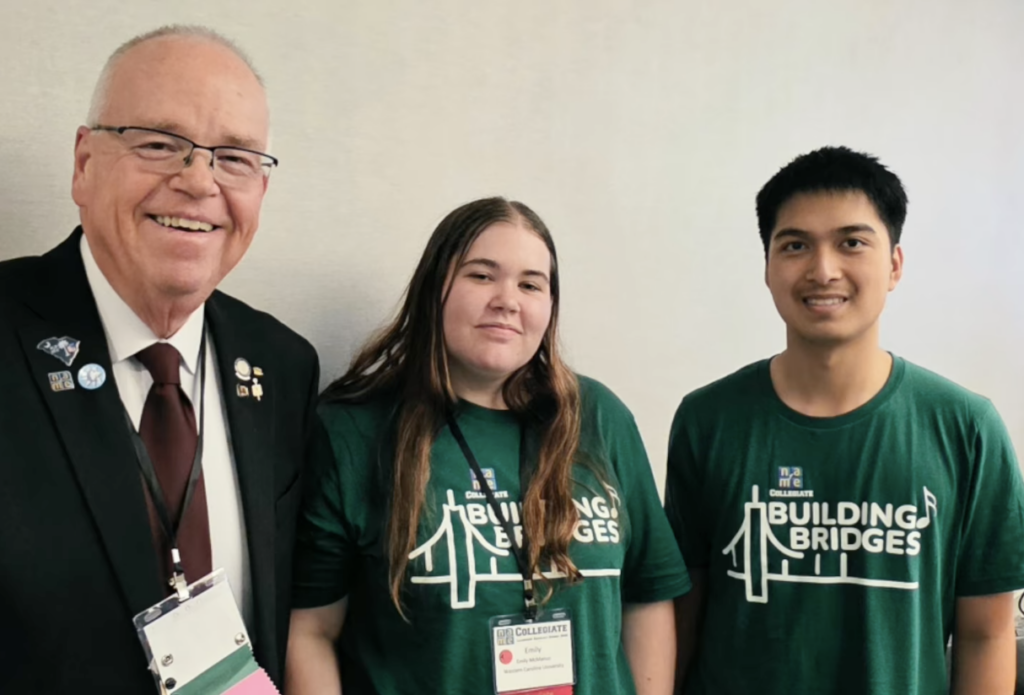
A group of nine North Carolina Music Educators Association (NCMEA) advocates, educators, and collegiate members recently traveled to Washington, D.C. to highlight the importance of music education with more than 300 advocates, according to a June 30 press release. The gathering was part of the annual Hill Day for Music Education, hosted by the National Association for Music Education (NAfME).
During the trip, the North Carolina coalition met with the following U.S. lawmakers who represent North Carolina: Rep. Chuck Edwards, R-District 11; Rep. Deborah Ross, D-District 2; Rep. Valerie Foushee, D-District 4; Rep. Alma Adams, D-District 12; Rep. Gregory Murphy, R-District 3; and Republican Sen. Ted Budd.
During the meetings, “advocates shared personal stories illustrating the profound impact music education has had on their own lives and on the students and communities they serve,” the press release says.
“Music keeps students in school, improves school climate, supports academic development, and teaches skills that will help students succeed no matter which path they choose,” said NCMEA Executive Director Susan Heiserman. “Every student should have the opportunity to experience music in school, and federal programs and legislation help make that possible. It was a privilege to join our outstanding group of current and future music educators in advocating on behalf of North Carolina’s students and music teachers.”
 Sign up for the EdDaily to start each weekday with the top education news.
According to the press release, the NCMEA had several “key policy priorities” that were discussed in their meetings, including the need for federal funding for art programs.
“Federal investments play a critical role in expanding access to music education by supporting underserved students, providing professional development opportunities for educators, and funding musical instruments, instructional materials, technology, facility improvements, and other essential program resources,” the press release says.
Educators also emphasized the need for legislation that expands access to music education for all students.
The NAfME posted a list of resources for the state advocates to rely on when meeting with members of Congress, including a guide to currently pending congressional legislation that could “expand access to music education for students, support teacher recruitment and retention, and preserve the federal role in education,” as well as logistical information to help advocates navigate the Capitol.
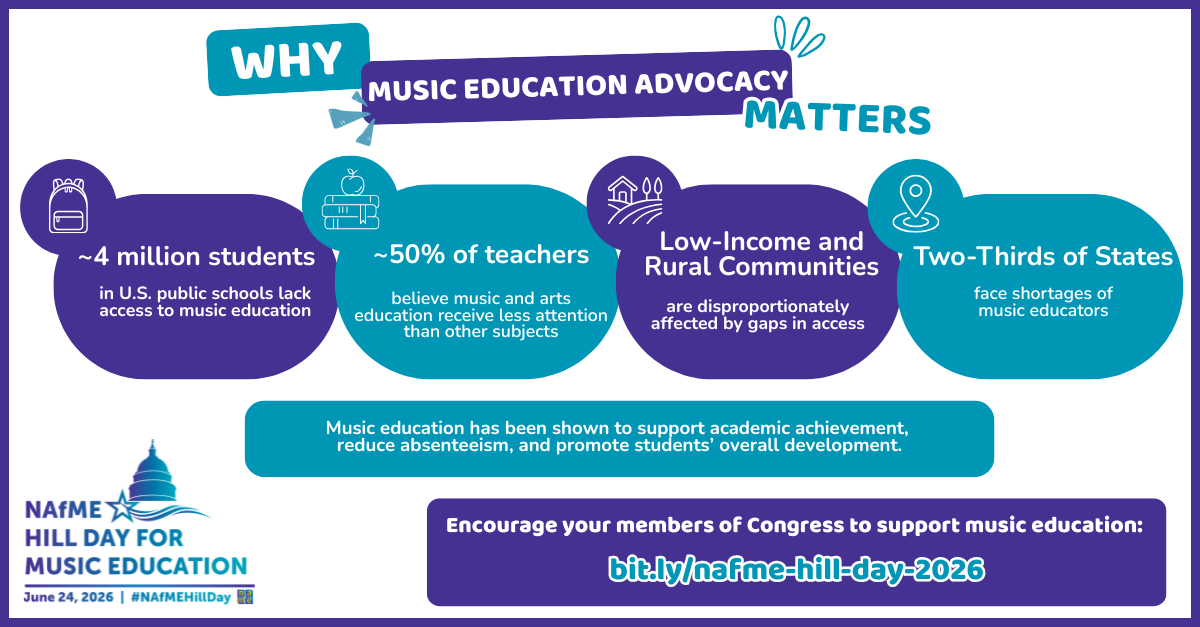
The mission of the NCMEA is “to advance music education by promoting the understanding and making of music by all.” According to data from the North Carolina Arts Education Leadership Coalition, only 53% of North Carolina students were enrolled in school music programs in 2022.
Additionally, in 2025, the second Trump administration proposed several budget cuts to the U.S. Department of Education, which would have totaled about $12 billion in lost funding. Following budget uncertainty — and “months of intense advocacy” — in February the NAfME said 2026 federal appropriations “deliver a significant victory for music and arts education programs nationwide.”
The annual Hill Day is a part of the group’s continued advocacy campaign, and the NAfME emphasized in February the need for arts advocates to “continue making your voices heard.”
“Music education has a transformative impact on students, schools, and communities, yet far too many young people across the country still lack access to these opportunities,” said NAfME President Cecil Adderley in the June press release. “Advocating for increased access to music education is essential, and we are proud to stand alongside dedicated educators, students, and supporters who are committed to ensuring every child can experience the benefits of music learning. We are deeply grateful to the advocates who joined us on Capitol Hill to elevate this important issue.”