
Partnership between NC State and WCPSS to help instructional assistants earn teaching license while working

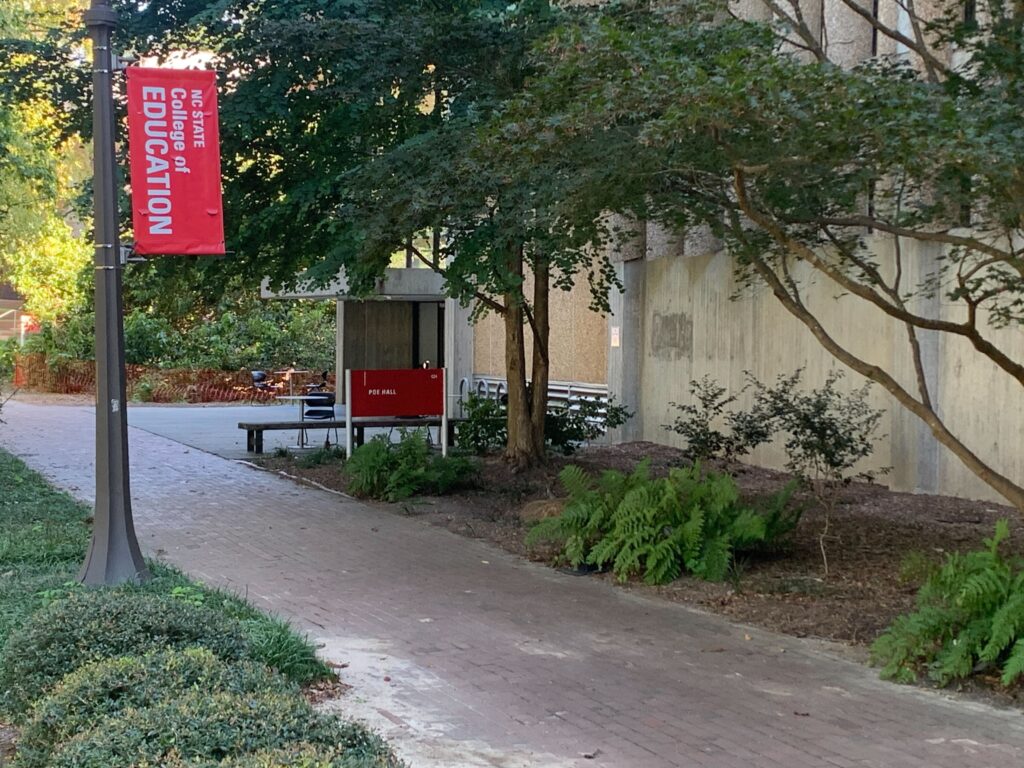
NC State University’s College of Education and the Wake County Public School System (WCPSS) recently announced the start of a new partnership between their institutions. The Wolfpack Teacher Registered Apprenticeship Career, or WolfTRAC, will allow instructional assistants in WCPSS to “earn a Master of Arts in Teaching (MAT) degree from the College of Education and a North Carolina teaching license through a cohort-based pathway in about 18 months while continuing to be employed full time with WCPSS,” according to a June 24 press release.
The first cohort began this summer and is made up of 11 instructional assistants, all from different WCPSS schools. According to the release, their instruction will focus on one of three content areas: elementary education, multilingual education, and special education. Seven members of the first cohort are also a part of the NC Teaching Fellows program, which includes $10,000 in forgivable loans to teach elementary, science, technology, engineering, mathematics or special education.
“By creating an apprenticeship pathway for aspiring educators to earn while they learn, we are expanding access to the profession and investing in the future workforce our students deserve,” Crystal Gregory, WCPSS’s director of talent acquisition, said in the release.
 Sign up for the EdDaily to start each weekday with the top education news.
The WolfTRAC program marks the latest statewide effort to help strengthen North Carolina’s pipeline for highly qualified teachers.
In March, 2024-25 data from the Department of Public Instruction (DPI) showed that the teacher attrition rate in 2024-25 rose slightly to 10.11%, up from 9.88% the previous year. At the same time, the teacher vacancy rate for 2024-25 was 7.4%, a decrease from 7.6% in 2023-24. According to DPI, most of these vacant roles are filled by educators with temporary licenses or by rehired retirees.
2025 data from the North Carolina School Superintendent’s Association showed similar teacher vacancy trends, citing the impact of efforts to increase the accessibility and sustainability of the teaching profession. Research from the Pathways Alliance — a coalition of education organizations dedicated to “supporting and implementing quality, sustainable, and diverse educator preparation pipelines” — further suggests that apprenticeship pathways may increase retention rates for educators while helping address teacher shortages.
According to Janaki Palaniappan, a member of the initial WolfTRAC cohort and an instructional assistant at Smith Magnet Elementary School, the program provides “the perfect opportunity” because it allows her to keep working with students all while she earned her teaching license. Earning her MAT will allow her to “take on a greater role in supporting students’ academic success and making a meaningful difference in their lives,” she said.
Read more about apprenticeships in NC



According to the release, the College of Education is the first university apprenticeship program sponsor in North Carolina to be registered as a teacher training program with ApprenticeshipNC, the state apprenticeship agency designated by the U.S. Department of Labor to register and oversee apprenticeship programs.
The College of Education has received provisional status as an apprenticeship training program sponsor, with permanent status contingent on satisfying all the criteria set by ApprenticeshipNC in their first year. All apprenticeship training program sponsors must satisfy the same criteria, regardless of industry, according to Director of ApprenticeshipNC Chris Harrington.
At the end of a 12-month provisional period, or until the end of the first training cycle, ApprenticeshipNC does an assessment to ensure each new program is operating correctly, Harrington said. Given the results of that assessment, the program may earn nonprovisional status and will then be subject to continuing assessments every five years, minimum.
“That’s part of the rigor and the value of a registered apprenticeship program,” Harrington told EdNC.
Apprenticeships across industries also provide positive outcomes for employees, producing positive returns on investments and decreasing workforce shortages. According to Harrington, between 70 and 80% of those that start a registered apprenticeship program complete it, and 90% of those that complete a program are with the same employer five years later.
For teaching apprenticeships specifically, Harrington said the value of the program is that participants are not “the teacher of record when they’re going through the training, and they have defined mentors to help them, frankly, learn to be a teacher.” He added that pathways like WolfTRAC help passionate people — “the exact type of people that we would want teaching our youth” — more easily become fully licensed teachers.
“Our College of Education is proud to lead the way in North Carolina in teacher education apprenticeships,” College of Education Dean Paola Sztajn said in the release. “Now that we are registered as an ApprenticeshipNC program, we will seek to expand teacher pathway opportunities to further address the state’s teacher shortage. We are grateful for our partnership with Wake County and look forward to collaborating with more school systems across North Carolina to scale this innovative model of teacher education.”