
These zero-interest, outcomes-based loans are making short-term workforce training a reality for NC students

Across North Carolina, employers often face shortages of skilled workers for high-wage job opportunities. According to the U.S. Chamber of Commerce, North Carolina’s worker shortage is severe, with only 76 available workers for every 100 open jobs.
Community colleges work to fill these gaps through short-term workforce training programs.
But even when programs are provided at little to no cost to students, they create an opportunity cost: Students may have to reduce their work hours or leave the workforce altogether to attend training, creating financial strain as they try to keep up with life expenses from child care to rent payments.
That’s where The Forward Fund comes in.
 Sign up for Awake58, our newsletter on all things community college.
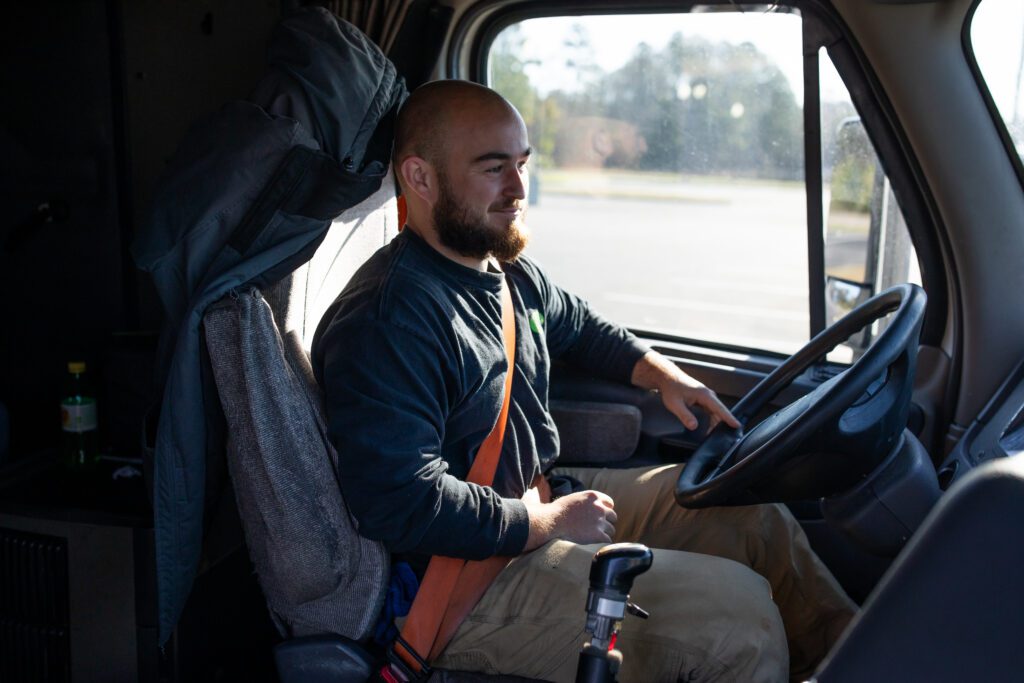
Theresa Reese, a recent student in Cape Fear Community College’s truck driver training program, said she started the program because she has four sons and wants to help them have a successful business one day.
Through a zero-interest loan from The Forward Fund, Reese was able to pay her recurring bills and make ends meet while participating in the eight-week program.
“This program is at 8 a.m. in the morning to 5 — you can’t go to work,” Reese said in a video testimonial. “That funding helps cover the things that you would normally cover with your paycheck.”
The Forward Fund, a philanthropic fund that launched in 2024, was created to fill a gap left by traditional scholarships and grants.
According to Meaghan Dennison, founder and CEO of The Forward Fund, there was very little student-friendly financing available to pay for life expenses so that students could take on short-term workforce training that would ultimately lead to higher wages.
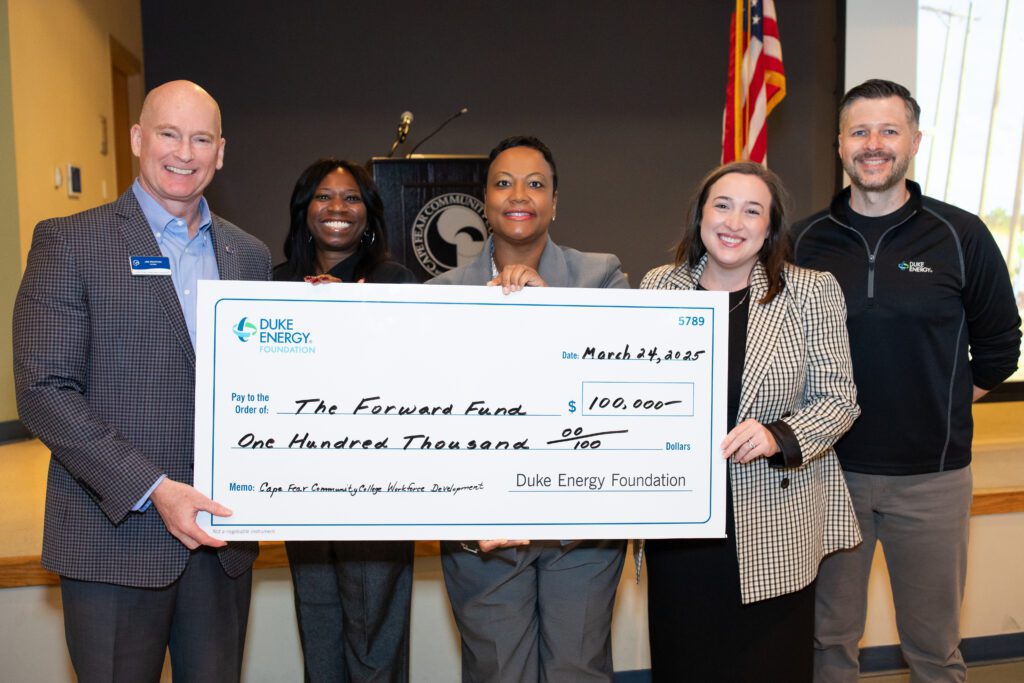
“We wanted to provide financing that will cover any enrollment fees, books, equipment, tools required for the program — but the majority of our funds, we know, are going to those life expenses: child care, housing, transportation,” Dennison said. “Keeping the lights on, quite literally, while someone goes to take advantage of these programs.”
Now, The Forward Fund is providing more than 200 students in North Carolina with zero-interest, outcomes-based loans for short-term workforce training programs, totaling over $1.8 million.
In February, The Forward Fund was selected as one of myFutureNC’s Champions for Attainment, recognizing the organization’s work to help the state meet its attainment goal: 2 million adults with a degree or credential by 2030.
“We do have some of the best workforce development infrastructure in the country … but people have financial barriers. Life will prevent them from accessing these programs,” Dennison said.
Read more
Identifying eligible workforce training programs
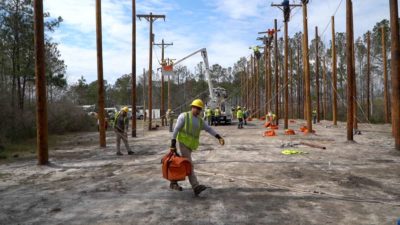
The electrical lineworker program at Cape Fear Community College (CFCC) was the first program eligible for financing from The Forward Fund, which targets short-term, low-cost, high-performing workforce training programs with proven pathways to economic mobility.
Electric linework was a natural place to start for Dennison, who previously worked for Duke Energy and was familiar with the Carolinas Energy Workforce Consortium, a group of electric utility providers that work to ensure a “sustainable, qualified workforce to support the energy needs of the Carolinas.”
“Knowing that employers were bought into the curriculum, that they had endorsed the program, that they had really clear hiring demand built out for the next 3-5 years — for us, that was a sure place to start,” she said of CFCC’s eclectic linework program.
In addition to workforce alignment, Dennison said CFCC’s electric lineworker program boasted strong performance metrics for graduates, including a nearly 100% job placement rate and average starting salaries above $45,000, plus overtime pay and benefits.
The Forward Fund’s next step was providing financing to Commercial Driver’s License (CDL) programs. Dennison said those programs had similar employer demand, graduate outcomes, and economic mobility pathways as electric linework, making it easy to provide the same loan option to truck driving students.
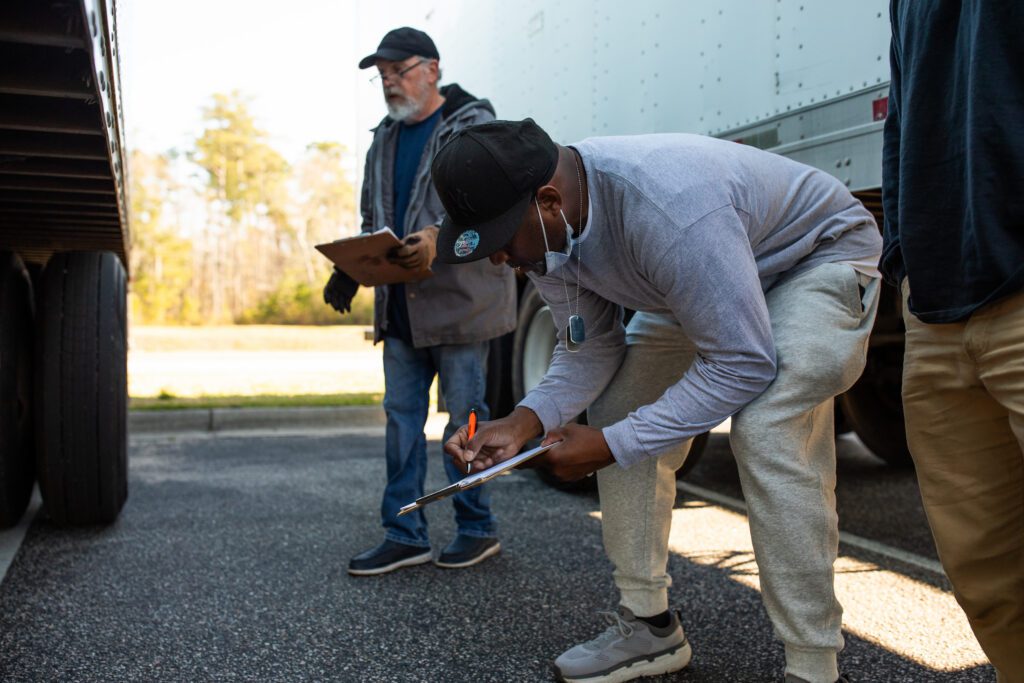
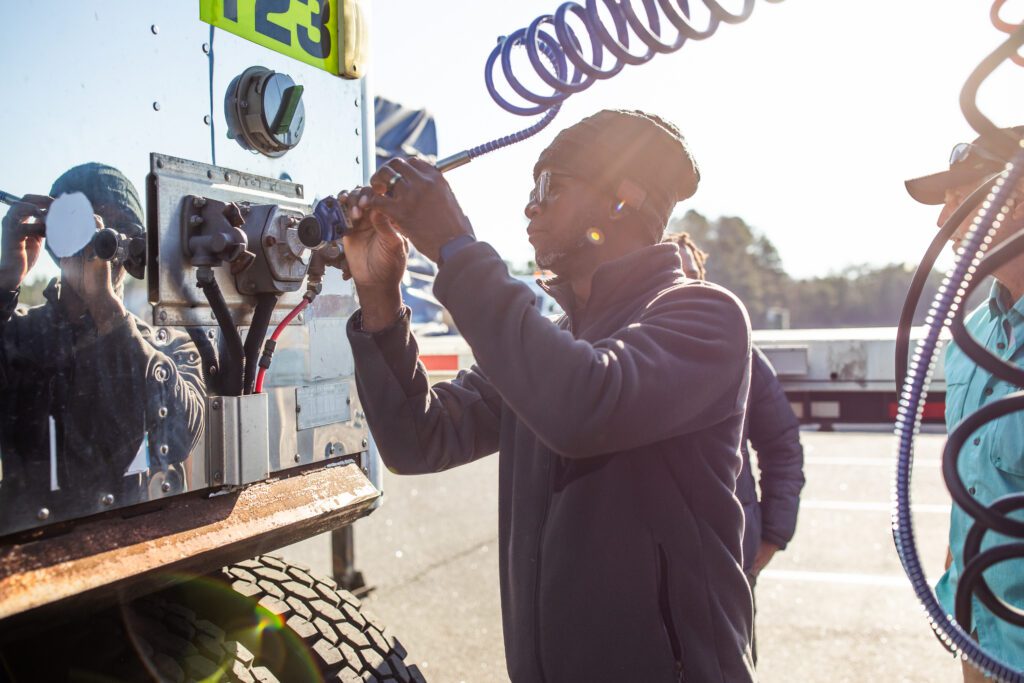
Now, The Forward Fund is expanding across the state, partnering with eight community colleges in 2026 to provide loans for programs including CDL, heavy equipment operator, eclectic linework, and basic law enforcement training (BLET). The Forward Fund is also partnering with the NC Area Health Education Centers to provide financing for students in the RN Refresher course.
To identify eligible programs at a given community college, Dennison said The Forward Fund works with college leadership to identify short-term workforce training programs that have high engagement with local employers and strong student outcomes, such as high job placement rates and salaries.
“We want to see those significant gains from a program that’s relatively short-term and low-cost, so that our financing can cover those life expenses during the program,” Dennison said.
The Forward Fund’s investments are largely aligned with sectors prioritized by Propel NC, the N.C. Community College System’s proposed funding model that would target investments in “high-demand, high-wage” sectors including health care, engineering, manufacturing, trades and transportation, information technology, and public safety.
One exception to Propel NC, Dennison said, is certified nursing assistants (CNAs) — although that position is in high-demand, and training programs generate skilled talent, salaries are too low to be conducive to loan repayment. According to data from the state’s Department of Commerce, the median salary for CNAs is roughly $37,000.
Dennison is also monitoring which programs will soon be eligible for Workforce Pell — a historic expansion of federal student aid that will provide grants to students in certain short-term workforce training programs. For example, if a program meets the rigorous eligibility requirements of Workforce Pell — which include strong completion and job placement rates — it may also be a good fit for financing from The Forward Fund.
“More is more,” Dennison said. “The more financing that is not burdensome, that is low or no interest, that gets someone from a pre-program salary of less than ideal wages … to a life-sustaining salary, the better.”
Read more


How the loans work
To receive a loan, students must first enroll in an eligible program at an education and training provider that is partnered with The Forward Fund.
Each college determines how they communicate the financing option to students — colleges often advertise it in program materials, share information during orientation sessions, and send out emails and text messages to students in eligible programs.
Students then submit no-cost applications through Ascent Funding, the loan originator and servicing partner for The Forward Fund. Loan specifications are customized to the specific needs of the workforce program they finance — for example, a 15-week program will have a larger maximum loan size than an 8-week program.
Unlike traditional forms of financing, once students graduate, loans are only repaid once they meet a minimum salary threshold, regardless of what field they work in.
“We see outcomes-based financing as a way to lower risk for the borrower — it shares accountability back to the education and training system,” said Dennison.
For example, if a CDL loan recipient does not make more than the $45,000 salary threshold required for repayment three months after they graduate, they remain in good standing deferment for 3-month increments up to the full term of the loan.
As of February 2026, the average pre-program salary for those receiving financing was just over $33,000, and 61% of students reported zero income.
Example loan specifications for programs like electric line and CDL, which commonly run for 10-12 weeks, include:
- 5-year loan term
- Zero-interest with no fees
- No minimum credit score required
- Minimum loan of $2,000
- Maximum loan of $10,000
- No payment due for three months after graduation
- Minimum salary threshold of $45,000 before repayment is owed
Beyond allowing students to pay life expenses, Dennison said the loans provide an opportunity for recipients to increase their credit score. As of February, the average pre-program credit score of borrowers was 520, falling in the lowest category of credit scores for FICO. Unlike many traditional lending programs, there is no minimum credit score required to apply.
Dennison estimates credit score increases of 75-100 points for loan recipients that remain in good standing, either through payment or deferment.
“To see your credit score increase, to see a salary you haven’t seen before with benefits and maybe even an education reimbursement plan attached — this can be a stepping stone,” said Dennison.
Expanding to meet statewide needs
Since establishing a strong foundation in eastern North Carolina, fueled by an initial $7 million in philanthropic commitments, Dennison said The Forward Fund is now working to build partnerships with organizations and funders in the Piedmont and western parts of the state.
So far, more than 20 colleges have responded to engagement from The Forward Fund and identified specific programs that could benefit from financing. However, without additional philanthropic funding, the organization is not yet able to serve all interested colleges, Dennison said.
As recovery efforts in western North Carolina continue in the wake of Hurricane Helene, Dennison said she feels increased urgency to connect students in the region to the type of flexible financing The Forward Fund provides.
“We really see our ability to meet students where they are … and allow them to focus specifically on their upskilling that’s going to lead to high wages,” she said.
One of the things that distinguishes philanthropic investments in The Forward Fund from traditional grants is the recyclable nature of the loans. As students make loan repayments, those dollars are redistributed to other students in future loans, creating a grant multiplier that Dennison estimates at $1.60 to $1.80 for each dollar invested.
For students considering upskilling through a short-term workforce training program, Dennison has a simple message.
“Bet on yourself, and take this on in a way that’s not only going to help you — it’s going to pay it forward for the future student that’s coming behind you,” she said.