
NC researchers and policymakers convene at DPI to close the research-to-policy gap
Jeni Corn, research director for social sciences at the NC Collaboratory, had a clear message for the university researchers gathered at the N.C. Department of Public Instruction’s (DPI) Education Building in Raleigh last week.
“Their job is not to do all the research. Their job is not to understand all the statistics,” Corn said of state policymakers, who are weighing dozens of competing priorities at any given moment. “That is your job. And your job is to get the results into their hands — in a way they can understand, and turn around and share with a board member or a superintendent, for everyone to make informed decisions.”
 Sign up for the EdDaily to start each weekday with the top education news.
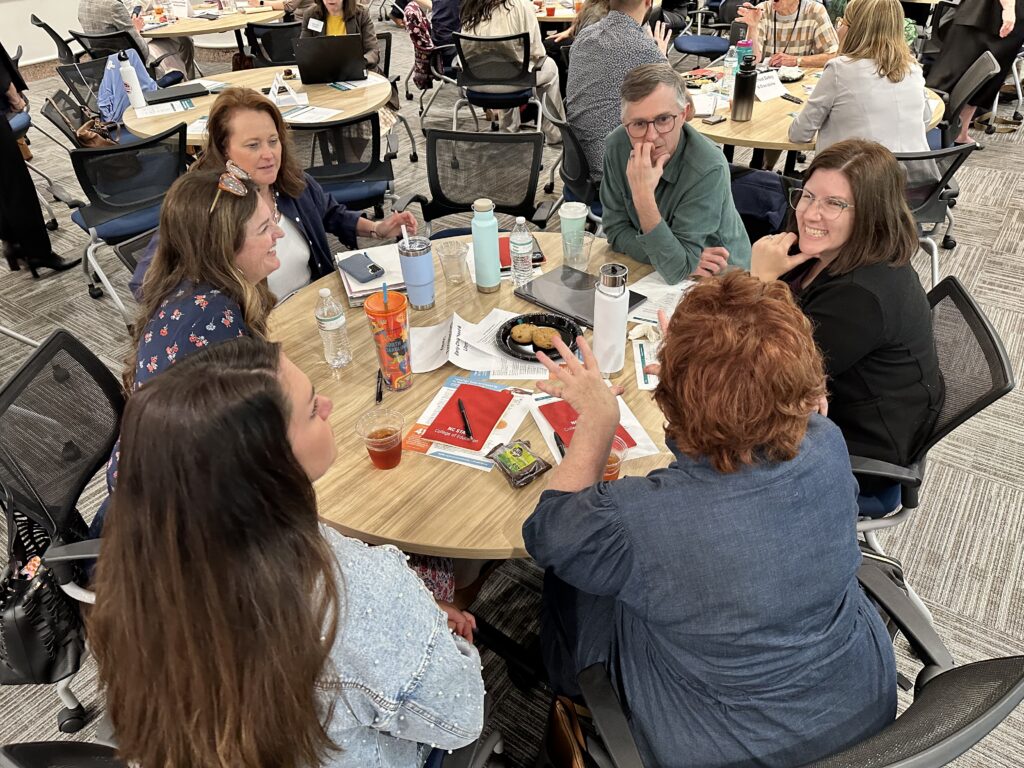
A lead organizer of the day, Corn was speaking to roughly 80 faculty researchers from NC State University, UNC-Chapel Hill, UNC-Greensboro, and other institutions across the state — gathered alongside DPI leaders, the Governor’s senior education adviser, State Board of Education representatives, and former legislators around a long-standing question: How can North Carolina’s education research more reliably reach the people writing the state’s laws and budgets?
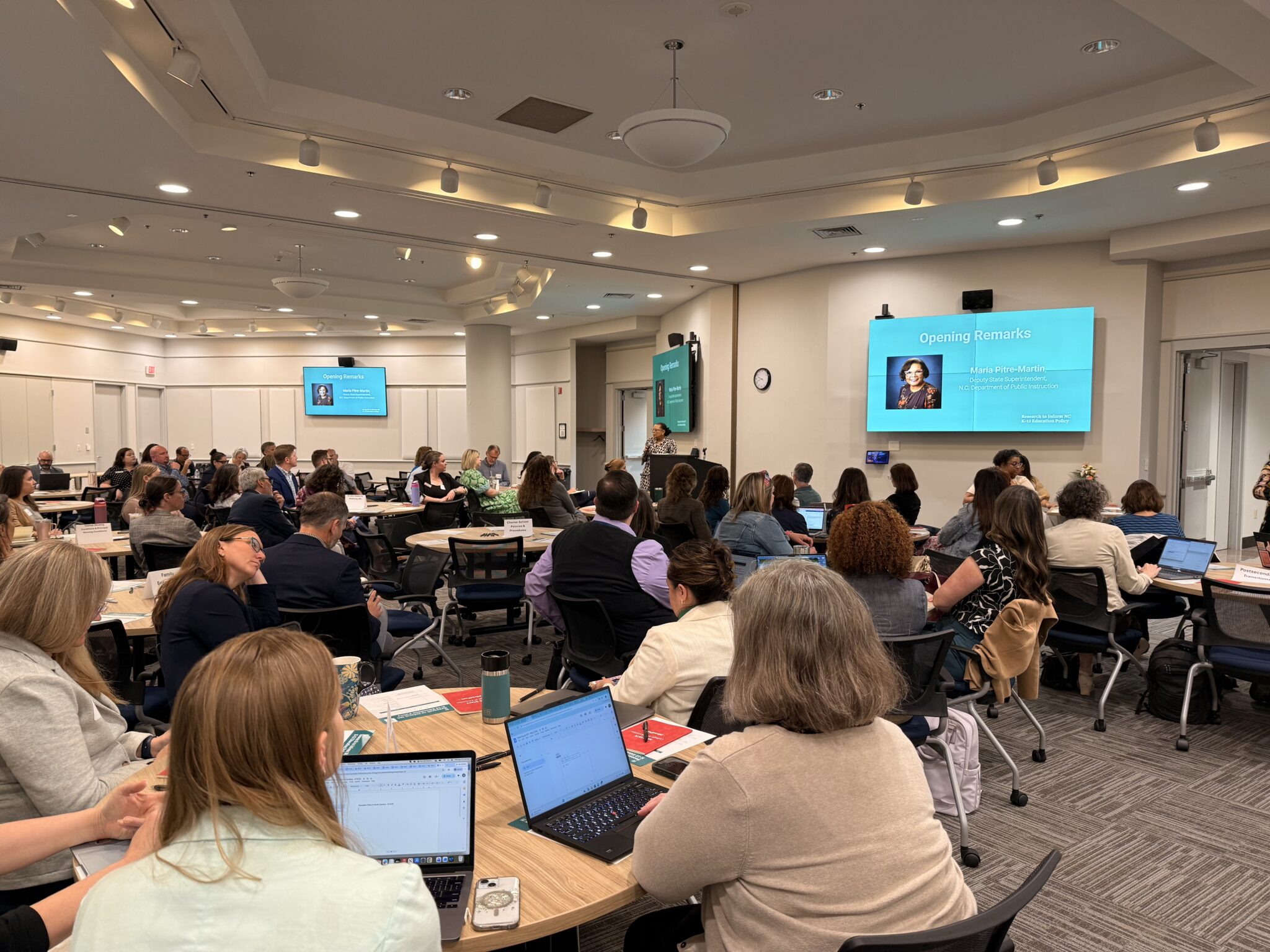
After opening remarks from DPI Deputy State Superintendent Dr. Maria Pitre-Martin, the morning offered a layered tour of how decisions get made. DPI’s Geoff Coltrane and Rupen Fofaria — the State Board of Education’s director of operations and policy — walked through legislative and budget priorities. Dr. Elena Ashburn, senior advisor for education policy in Gov. Josh Stein’s office, followed with the administration’s agenda.
One of the day’s most candid moments came in the Q&A that followed. Dr. Thad Domina, of UNC-Chapel Hill, asked how researchers could possibly intervene in a General Assembly that, he said, “feels pretty jammed up.”
Fofaria’s reply was pragmatic: Rather than wait for ideal funding, ask how the dollars already on the table can land better.
“Find points of mutual interest,” said Fofaria. “If we center on students’ learning outcomes, that’s the place to go — and then ask, what are the best investments we can make that actually drive those outcomes?”
The morning’s practical anchor came from Brenda Berg, founding president and CEO of BEST NC, which has spent more than a decade translating academic research into policy that moves.
“You don’t bury the lead. Make it about kids,” Berg told the room, walking through how her team’s annual data book — more than 270 infographics drawn from researchers’ work — lands on the desks of state Board members, UNC System and community college leaders, and members of the General Assembly.
Her framework was straightforward: define the problem, document it with data, show what works, deliver clear recommendations, and design for the follow-up. Above all, surface the right number.
For BEST NC’s teacher apprenticeship work, that number is 43% — the share of newly hired North Carolina teachers entering classrooms through emergency or permit-to-teach licensure in 2024, according to the organization’s TeachReadyNC brief, a rate that has nearly doubled from eight years ago. “Having that number on that document was severe,” Berg said. “I sat with policymakers who literally sat there with their pen on that number for the entire meeting.”
Equally important, she added, is who you bring into the room — including skeptics. “I’ve never learned anything from someone I always agreed with,” Berg said.
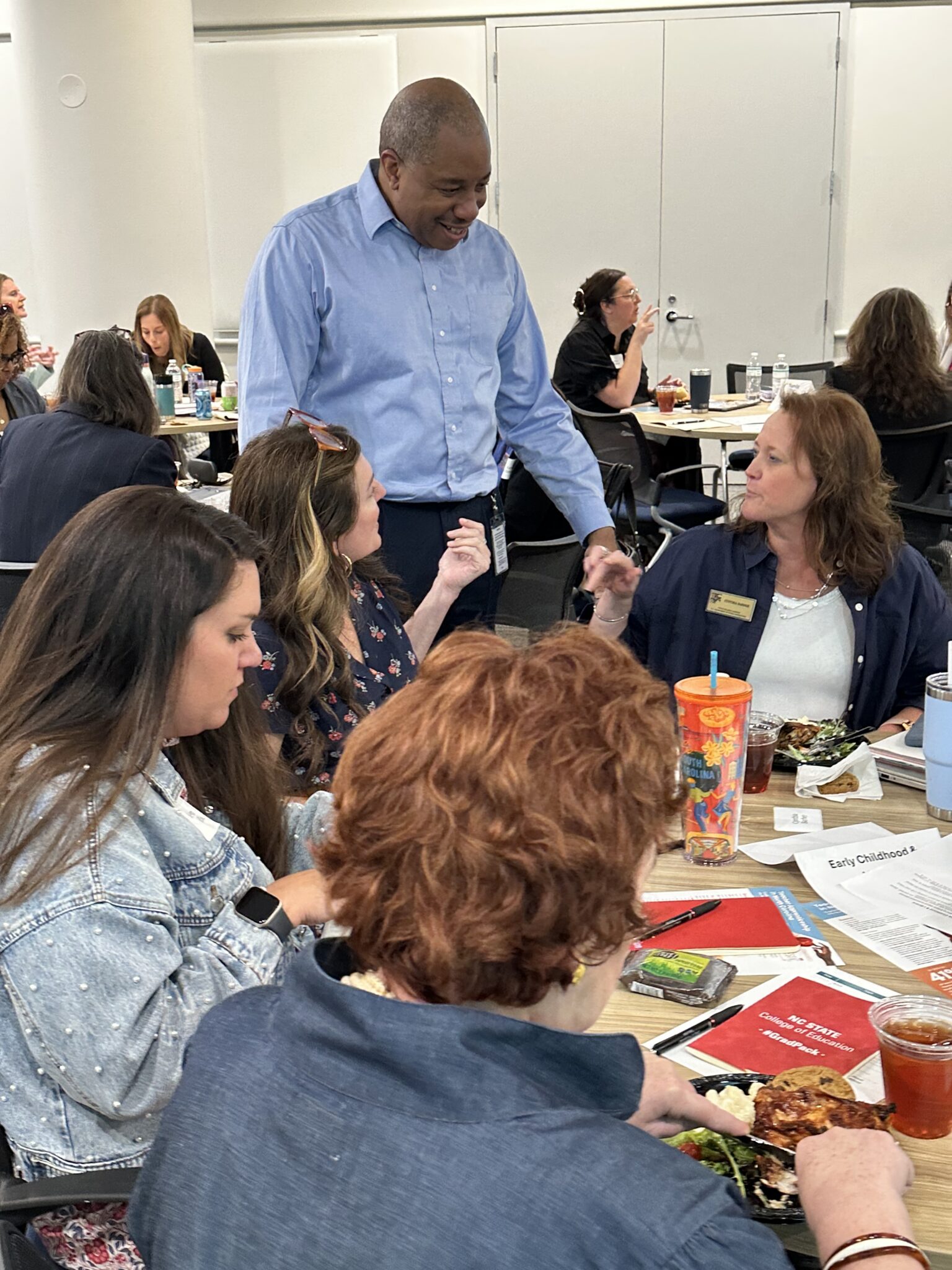
Over the working lunch that followed, State Superintendent Mo Green stopped in, moving table to table to talk with attendees informally.
In the afternoon, the message moved into practice. I participated in a legislative panel with another former lawmaker, Rep. Ashton Clemmons, and we fielded questions on how an education idea becomes a bill, what makes research land with legislators, and the do’s and don’ts of working with lawmakers.
A second afternoon session featured faculty whose long-running collaborations have done exactly that. In the research-practice partnerships panel, Dr. Lam Pham of NC State University, Domina and Dr. Megan Duff of UNC-Chapel Hill, and Dr. Holt Wilson of UNC-Greensboro shared what has kept their work alive.
Domina, whose partnership with Wake County Public Schools has tackled topics like desegregation, urged researchers to read political timing carefully, and resist surprising district partners with findings. Pham described the discipline of “no surprises, no redactions” as the baseline agreement of any partnership, and reframed impact itself: “Don’t think of impact as the final report,” he said. “Think of it as the monthly check-ins.” That, he argued, is where trust gets built — and where practitioners become more receptive to inconvenient findings.
The panelists were also realistic about what genuine partnership demands. A superintendent’s day, they noted, is mostly fires and a handful of “big rocks,” with only a thin slice open to new ideas. Rather than chase that slice, they recommended studying the district’s strategic plan and aligning research with the priorities already on the table — a discipline that helps partnerships survive turnover and political shifts. And throughout, match the pace of a practitioner’s life. “Buying out time” is an academic convention; for district partners, every ask is added to a full plate.
Wilson offered the day’s sharpest reframe of what impact looks like. “The paper I’m most proud of took five years to write and has been cited 73 times,” he said. “The resources we’ve produced together — just for math teachers — have been downloaded more than 215,000 times. That is the impact I’m looking for.”
The day closed with a tangible next step: a new request for proposals from the NC Collaboratory, inviting university researchers to compete for funding on policy-relevant work of exactly the kind the convening had modeled.
Details on the Collaboratory’s current and forthcoming funding opportunities are available at projects.collaboratory.unc.edu.