It’s College Application Week — apply this week to save on application fees

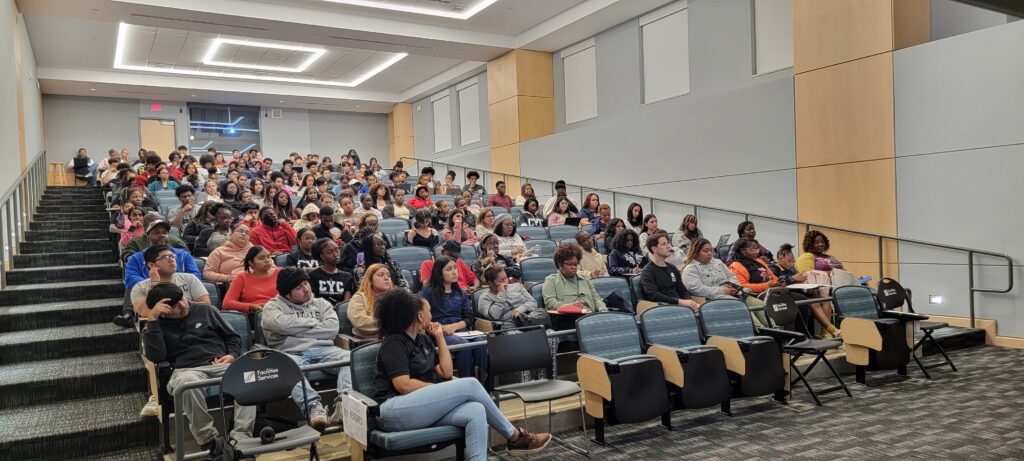
This week is College Application Week in North Carolina, which is a part of the state’s Countdown to College campaign.
From Monday, Oct. 19 to Sunday, Oct. 25, many colleges and universities across North Carolina are waiving application fees for students applying to college on College for North Carolina’s (CFNC) application hub. Click here to start your application and here to explore the list of schools waiving their fees this week.
And North Carolina public high school students may not even need to submit traditional college applications if they are eligible for NC College Connect, which provides automatic admission to certain colleges and universities.
Countdown to College is an annual yearlong campaign that kicks off each October, run by CFNC, which encourages students to compete three steps in the college application process: residency, financial aid, and college applications.
“The ability to submit college applications for free, coupled with an improved and easy-to-complete FAFSA makes this the perfect time for students to apply,” said Dan Harrison, executive director of the North Carolina State Education Assistance Authority (NCSEAA), the primary sponsor of CFNC, in a press release.
According to the release, during College Application Week last year, “more than 25,000 applicants submitted over 66,000 college applications through CFNC.”
For more resources from CFNC on College Application Week, click here.


Residency determination
Verifying North Carolina residency can qualify prospective students for in-state tuition and financial aid.
Whether you are able to claim North Carolina residency for the purposes of in-state tuition and financial aid depends on many factors — chiefly, you must have lived in North Carolina for 12 months. For more information, see the “RDS Eligibility Requirements” section of this FAQ page.
Some colleges will ask for a Residency Certification Number (RCN) in their applications, and it is also used in financial aid forms. Prospective students can receive their number through a process called residency determination, run by the Residency Determination Service (RDS).
After creating a CFNC account, a prospective student can use that account to log in to RDS and complete the residency determination process. Check out the short video below to learn more.
Financial aid, FAFSA, and the Next NC Scholarship
This year’s Free Application for Federal Student Aid (FAFSA) form is already open. In North Carolina, the priority date to submit a FAFSA for the Next NC Scholarship is June 1, 2027 for UNC System institutions and community colleges.
Completing the form makes current and prospective college students eligible for need-based financial aid including federal Pell Grants, work-study programs, and student loans. Pell Grants can help cover “tuition and fees, housing and meals, and other additional education-related expenses,” and do not have to be repaid, unlike a traditional loan.
In North Carolina, submitting the FAFSA is a prerequisite for receiving the Next NC Scholarship, which covers full tuition and fees for all North Carolina community colleges and more than half the cost for public universities for most families making $80,000 a year or less. The FASFA also makes students eligible for the NC Need-Based Scholarship for Private College Students.
On average, the form takes an estimated 15 minutes to complete, according to a press release from the U.S. Department of Education.
“The state makes it a priority to ensure that students are ready for the jobs that are coming through education beyond high school,” Harrison said in the press release. “Students sometimes count themselves out when it comes to college because they think they can’t afford it, but in North Carolina we’re dedicated to making sure students know help is available.”
Students should complete the FAFSA form every year they plan to receive aid. Explore EdNC’s article on how to submit the FAFSA.
Direct admission through NC College Connect
Through NC College Connect, North Carolina students who are on track to graduate, have a 2.8 GPA or higher, are enrolled in a fourth-level math, and meet program requirements at participating schools will be directly admitted to each institution they meet the requirements for. Depending on their qualifications, students may gain admittance to 11 UNC System universities, several participating independent colleges and universities, and the state’s 58 community colleges.
All current seniors enrolled in North Carolina public schools who are on track to graduate are eligible to participate. Unlike traditional college applications, NC College Connect doesn’t require essays, recommendation letters, a summary of extracurriculars, or the Common App.
The portal for students to claim their admittance is open now.
New this year, students who do not have a 2.8 GPR or higher but are on track to graduate will be directly admitted to their local community college, consistent with the N.C. Community College System’s (NCCCS) open admissions policy. This extension of NC College Connect was supported by a $70,000 investment from the State Board of Community Colleges, which covered the cost of mailing direct admission offers to 37,429 newly eligible students.
“Ask a North Carolinian what a community college credential did for them, and you’ll hear about a career. NC College Connect makes that path easier to find. This year, it’s open to all students. Less time lost to paperwork, more time in the classroom, and a straighter line to a job that pays,” said Dr. Monty Sullivan, acting president and CEO of the NCCCS, in a press release.
Last year, more than 62,000 North Carolina students were directly admitted to at least 34 participating colleges, according to previous reporting by EdNC. Current seniors can claim their spot now and are encouraged to respond to offers as soon as possible.
What to do after applying
CFNC has many resources for students after applying for college, including a platform that allow you to explore majors and programs at schools across the state.