Superintendent Maurice “Mo” Green announced on Wednesday the launch of an initiative raising awareness of the full range of educational opportunities and choices available to North Carolina public school students.
“With 229 magnet programs, 138 early college high schools, 211 charter schools and more than 500 career and technical education courses in 14 career pathways, North Carolina’s public school system offers families an unprecedented range of educational choices,” a press release from the Department of Public Instruction (DPI) said.
The six-week public awareness initiative, titled “Find Your Fit, Build Your Future,” will showcase the state’s educational offerings through school visits, data releases, and stories from parents, students, and educators across social media and DPI’s Celebrate the Good blog.
 Sign up for the EdDaily to start each weekday with the top education news.
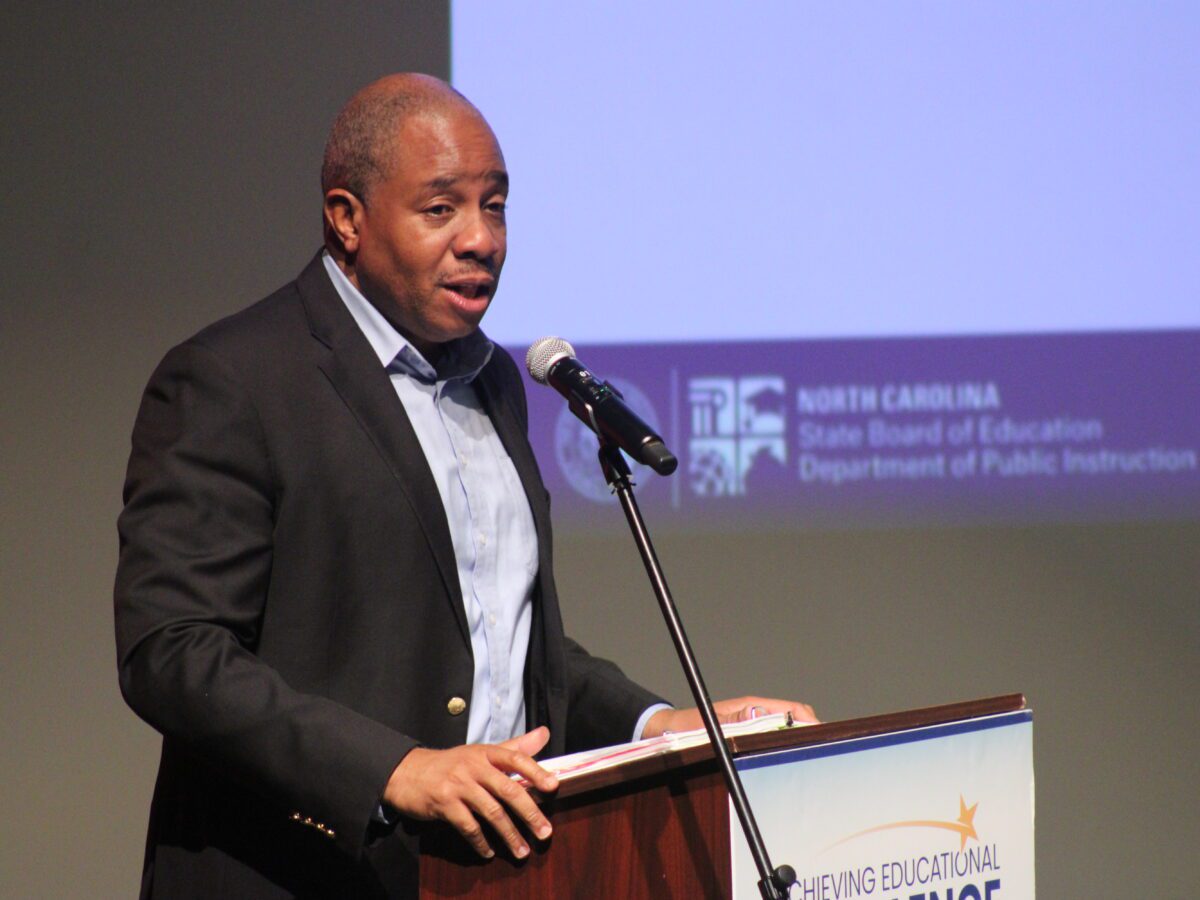
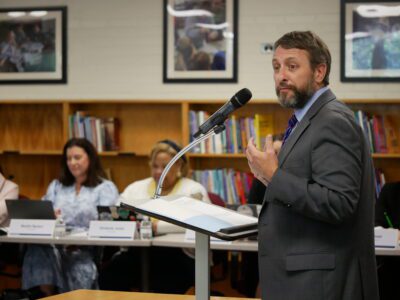
“When some families think about school choice, they often don’t realize just how good our schools are and how many choices are available that already exist in our public education system,” Green said during a Wednesday press conference.

DPI launched the initiative during National School Choice Week, which is held the last week of January to “raise equal awareness of traditional public, public charter, public magnet, private, online, home, and nontraditional learning environments,” according to the website.
“Every child learns differently and every family has different priorities,” Green said in the DPI release. “Our job is to make sure families know about what is available and help them find the right fit. This is what public education is all about.”
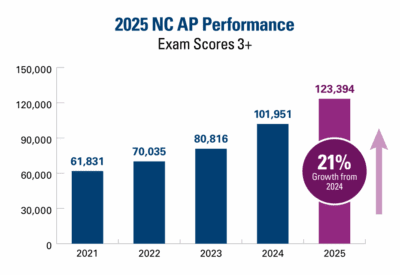
During Wednesday’s press conference, Green highlighted the state’s public schools’ recent successes — including the highest four-year cohort graduation rate at 87.7%, and the highest-ever Advanced Placement (AP) exam participation and performance rates during the 2024-25 school year.
Green also acknowledged that enrollment has declined in some traditional district schools as charter, private, and homeschool options have grown. He attributed that drop to the increasing amount of educational opportunities in the state, and said he ultimately believes more families will continue to choose the state’s public schools.
“That’s why you see the decrease over time,” he said. “It’s because most of our families could only choose public schools, but even now, as we are offering more opportunities, I think you will begin to see our families understanding that there are a wealth of wonderful opportunities, both in our traditional public schools and our charter schools.”
Read more
Green also said that public schools’ successes have been possible despite limited funding from the General Assembly.
“So what can we do if we have more and more funding? I believe we will do even better,” he said.
Ashley Logue, director of the DPI’s Office of Charter Schools, said the state’s more than 200 charter schools offer high levels of educational flexibility to over 158,000 enrolled students.
“What makes North Carolina charter schools an important part of the public school system is the incredible diversity of educational models available,” Logue said.
That flexibility translates into unique teaching approaches, programs that appeal to students’ specific interests, or educational opportunities built around regional strengths, she said, such as outdoor education programs in the mountains of western North Carolina.
“Not every child thrives in the same exact environment, and charter schools give families the ability to find the right match for their student, whether that’s a different teaching approach, a focus on their passion, or a program that prepares them for their specific future goals,” Logue said.
Traditional public schools are also offering advanced learning opportunities in growing numbers, said Sneha Shah-Coltrane, senior director for Advanced Learning and Gifted Education at DPI.
Last year, more than 16% of fourth graders were identified as needing accelerated instruction, while 31% of middle schoolers took high school math courses. At the high school level, more than half of graduating seniors completed college-level coursework, Shah-Coltrane said.
She also pointed to the new NC College Connect program, through which more than 62,000 public high school seniors received direct admission to select colleges and universities in the fall.
“Programs such as College Connect have really made it easier for me to be calm about going to college, because that was a really big thing that I was scared of,” said Victoria Higdon, a student at Tri-County Early College High School in Cherokee County graduating in May.
If she isn’t accepted into the school to which she applied, Higdon said she will attend one of the colleges to which she received direct admission through NC College Connect.
“All of these programs are here for our North Carolina public schools, whether we’re able to capture a child in kindergarten or later on, our advanced learning opportunities are clear here in North Carolina,” Shah-Coltrane said. “We are committed to ensuring that our students continue to thrive so that way they can pursue whatever postsecondary option they will like after graduation.”
Trey Michael, senior director of the Office of Career and Technical Education (CTE), said 98% of the state’s CTE concentrators — students who complete a sequence of CTE courses — graduate and have the opportunity to earn over 160 industry-recognized credentials while in high school in industries ranging from health care to construction.
Beyond that, students develop key skills to succeed in the workforce, including communication, teamwork, and adaptability.
“CTE courses help students appreciate and learn how fast business in the world changes and how quickly they must adapt,” Michael said. “We are all aware of the rapid advancements in AI, advanced manufacturing, biomedical, and clean energy. CTE students in North Carolina are learning about that in our classrooms today.”
Anaston Lassiter, a senior at Hertford County Early College High School, spoke about the benefits of attending one of the state’s 138 early college high schools, which allow students to earn an associate degree or two years of college credit before graduation.
An aspiring orthodontist, Lassiter will graduate in May with a high school diploma, a business certificate, and an Associate in Science and Arts, she said.
“I chose North Carolina public schools, and I’ve been college-ready since my freshman year,” she said.
Wednesday’s press conference also featured Jovonia Lewis, a Durham Public Schools parent, who explained why her family chose public schools for her three sons.
“We chose N.C. public schools because we wanted our three sons educated in a place that reflects our community and where they would be given the best chance to meet their full potential,” she said. “Through supportive teachers who got to know them, they found their voices. With our partnership with their schools, they developed the confidence to imagine a bigger future. I had a lot of choices over their academic lives and would choose public schools again.”
You can watch DPI’s press conference here.

Recommended reading