
WSSU alumna preserves and expands legacy of stomp and shake cheerleading
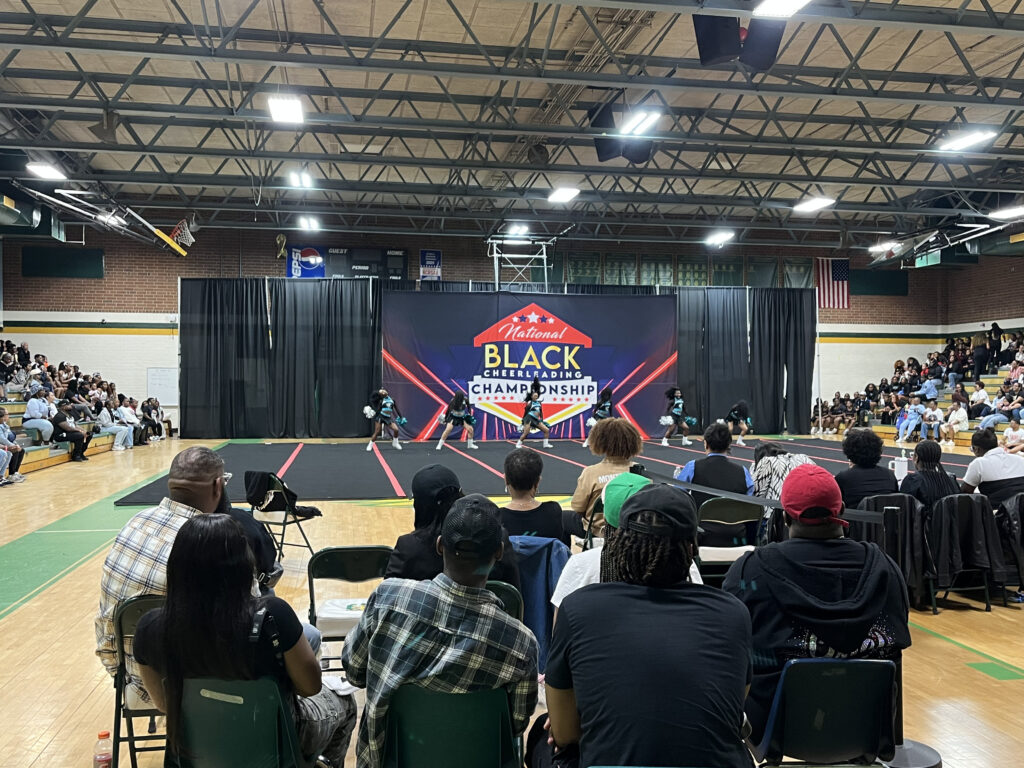
The National Black Cheerleading Championship, hosted by the National Stomp and Shake Cheerleading Federation (NSASCF), is a competition that is both preserving and expanding the culture and history of stomp and shake cheerleading.
In an interview with EdNC, NSASCF Co-founder Regan Hales expressed acknowledgement and appreciation for predecessors like Debra Rivers Johnson, who is revered as an influential individual in elevating the sport.
A former Winston-Salem State University (WSSU) cheerleading coach of over 20 years, Rivers Johnson is regarded as one of the pioneers in the history of stomp and shake. In 1969, while Rivers Johnson was still in high school, her older sister attended WSSU, which led to her first exposure to the college’s cheerleading program.
“From that point on, that was my one goal in life: to be a Winston-Salem State Cheerleader,” she said.
 Sign up for the EdDaily to start each weekday with the top education news.
Having succeeded in her pursuit, four years after graduating from WSSU, Rivers Johnson returned as coach for the team, where she remained for two decades.
When recalling the long history, she identified two areas of origin for stomp and shake: WSSU and Virginia State University. She described the North Carolina style to have featured more stomping and stunting, while the approach in Virginia included more shaking and dance. According to Rivers Johnson, while some groups today may favor one of the two, stomp and shake overall is a compilation of the two styles.
Rivers Johnson went on to identify one particular pivotal moment in the history of stomp and shake that helped it take off. Once her former cheerleader, DeMonte Cox, created the chant “Rock,” Rivers Johnson stated one could see every stomp and shake group doing it in some fashion.
“From that point on, stomp and shake just kind of exploded,” she said.
The Powerhouse of WSSU
Joevannè Estrada, co-founder of UFIT Cheer and Dance, Inc., is also a part of the WSSU cheerleading alumni and coaching lineage. Estrada’s exposure to stomp and shake was limited prior to engaging at the collegiate level. Despite feeling defeated on the initial day of tryouts, with a nudge from her godsister, Estrada ultimately made the junior varsity team.
Along the way, on her journey to becoming the team captain in the years following, Estrada’s path crossed with Rivers Johnson, who remained active with mentoring and providing program structure with the team.
Having pursued a career in higher education after graduating, Estrada eventually landed an opportunity with the WSSU athletic department in marketing and compliance. Shortly after, thanks to another gentle nudge from a mentor and colleague, Estrada was encouraged to take on a cheerleading coaching role.
“Then it bit me, and I fell in love with it,” she said, as she advanced in her effort to make a mark on the program and its members in the same fashion that Rivers Johnson and others had done before.
Estrada stated that she was able to immerse the aforementioned dance elements into the WSSU style of stomp and shake over her eight year coaching period. Notably, Estrada ushered in a new identity for the team, introducing the name “Powerhouse of Red and White.”

The continuation of the lineage
The slouch socks. The uniform shell tops and skirts. Hair being on point, despite inevitably sweating it out by the time the clock reaches zero. The preparation to pull from the diaphragm as their voices shift the atmosphere of a game while their synchronized steps make the ground beneath their feet tremble.
Those are among the elements of stomp and shake cheerleading that Regan Hales remembers from her days as a part of the WSSU Powerhouse of Red and White Cheerleaders.
Today, Hales is the co-CEO and president of strategic and organizational excellence with UFIT Cheer and Dance, Inc. Additionally, she is the founder and executive director of the NSASCF. The federation describes stomp and shake as a rhythmic cheer style that stems from culture.
A native Carolinian from Raleigh, Hales shared that her earlier exposure to the sport was the All-Star Cheer style of cheer associated with big hair bows and major competitions at Disney World. It wasn’t until her senior year at Southeast Raleigh High School that her perception of cheer was shaken up by two student volunteers from the nearby college, Saint Augustine’s University. Hales witnessed as they introduced the flare, power, and finesse while assisting with the junior varsity team at the high school.
“They looked like me. They were shaped like me. They talked like me. But I had never seen cheerleading look different like that,” she recalled. So she inquired, ultimately learning, it, too, was cheerleading.
The following year, in her matriculation to WSSU, Hales sought to join the Powerhouse. Having observed then captain, Lori Nicole Tyson, lead the team into the room and proceed to throw down, Hale thought to herself: “Who are they? What do they do? How do I sign up?”
Despite her ability to stunt, tumble, and overall athleticism, she recalls initially feeling lost in tryouts. However, she ultimately made the junior varsity team, laying the foundation for her journey into stomp and shake cheerleading.
Connection over competition
Hale’s most anticipated event, hosted by the NSASCF, is the National Black Cheerleading Championship, which took place earlier this spring at Smith High School in Greensboro. For Hales, the annual competition marked another step forward in what has quickly become a growing movement.
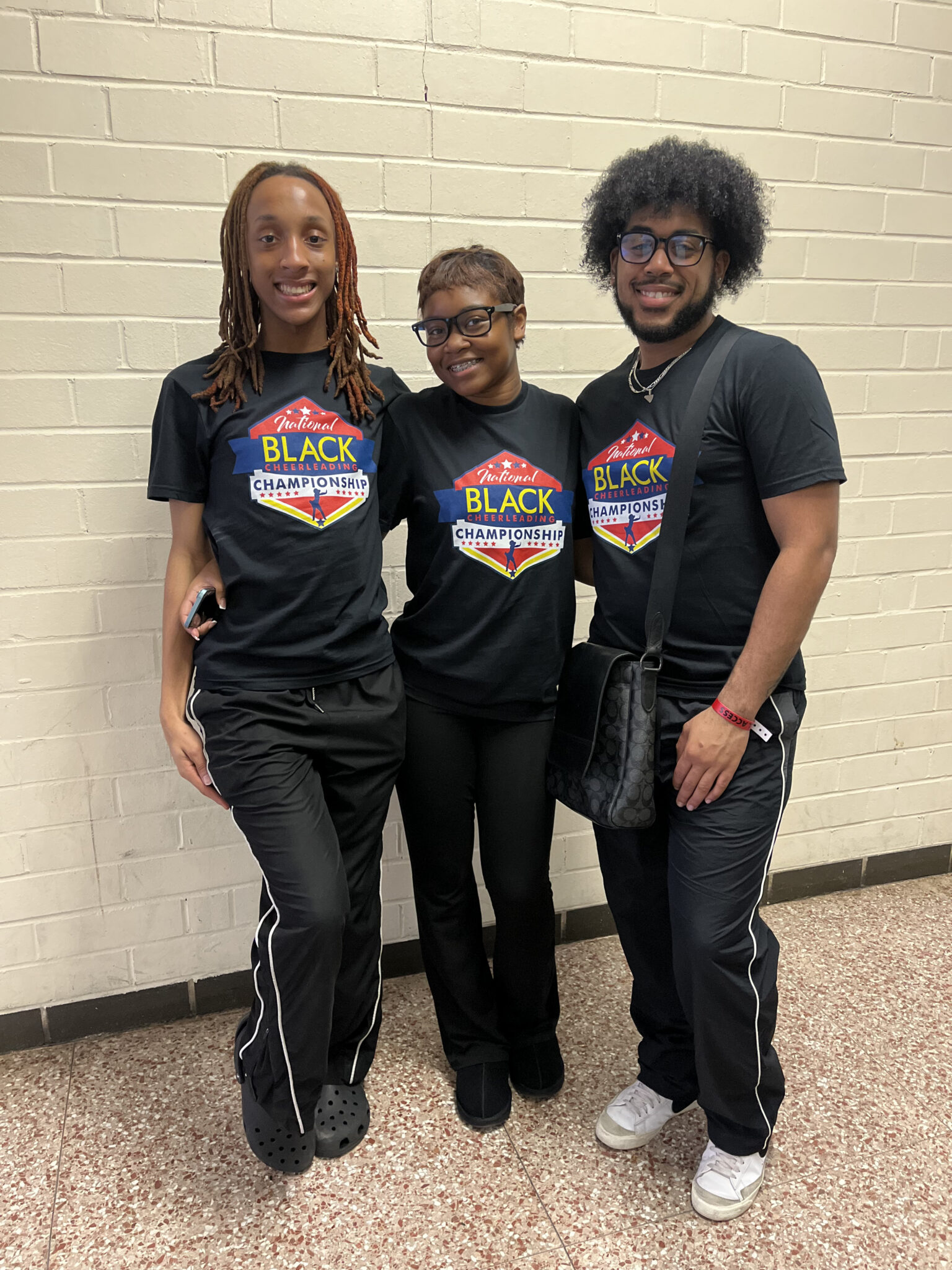
In just a few years, the event has expanded significantly, increasing from about 13 teams in its first year to nearly 50 in recent competitions. This growth reflects not only growing interest, but also the strength of the community behind stomp and shake cheerleading.
“I think we were on this trend of almost doubling every single year,” Hales said.
As the competition evolves, Hales remains focused on creating an experience that centers both athletes and audience members while also broadening the sport’s reach.
“It allowed us to explore in spaces that we had not currently expanded or previously expanded, like in a spectator experience,” she said.
Beyond the numbers, Hales emphasized that the journey is about more than just scaling the event. It is also about recognition and representation.
“It’s already hard enough being cheerleading as a sport,” she said. “And for people to take you seriously, but then to have the nerve to be a Black woman trying to push forward this sport and highlighting cheerleading and Black cheer athletes, or minority cheer athletes, or an underserved sport and performative style of the cheer.”
Still, what continues to ground her is not competition, but connection.
“I do not compete with anybody. I don’t have a competitor. I only connect,” Hales said. “I firmly believe that there is something that you can gain from building with someone else.”
That mindset is reflected in the culture surrounding stomp and shake cheerleading, where mentorship and collaboration play central roles. From former athletes returning as coaches to organizers uplifting one another behind the scenes, the competition operates as more than just an event. It is part of a larger movement.
Hales also pointed to the importance of telling the sport’s stories on their own terms.
“We’ve been defined by what everybody else wants us to be, based off how it fits into their story, or their mold, or whatever their narrative is,” she said. “So I think that’s one of the biggest things that drives me, is just our history and making sure that we write our own history.”
At the heart of that narrative are the athletes.
“So we take our athletes seriously,” she said. “These are your future leaders. These are your future coaches, your future principals, superintendents, so on and so forth.”
Even as the competition continues to grow, Hales made it clear that the community remains its foundation. Families travel from out-of-state to support their athletes, filling venues with energy, pride, and a sense of belonging that extends far beyond the performance floor.
“Our dads show up,” she said. “Our cheer moms, our granddads, our uncles, I mean, just Black men in general are showing up for our young Black athletes, girls and boys.”
Looking ahead, Hales sees opportunity not just in expanding the event, but in increasing visibility, ensuring that stomp and shake cheerleading continues to be recognized, celebrated, and understood.