This article is part of EdNC’s fall 2025 “mini-blitz” to visit community colleges with presidents who began their tenure in the last two years. You can read all of our coverage of community colleges here and all of our coverage of community college presidents here.
Zac Schnell, 36, is the youngest community college president in North Carolina, and as far as we know, the youngest sitting president of a public, two-year community college in the United States.1 Schnell has served as acting director of Pamlico Community College (PCC) since November 2024, and the State Board of Community Colleges approved Schnell’s appointment as president in January 2025.
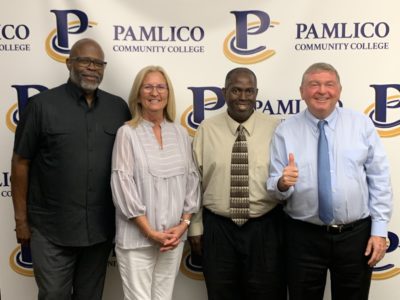
“He is young, energetic, and extremely smart,” said Bob Lyon, chair of the college’s Board of Trustees, in a press release. “He is going to lead the college in new directions and add to its program offerings. It’s an exciting time at Pamlico Community College.”
 Sign up for Awake58, our newsletter on all things community college.
“We’re only going to be small for so long,” said Brandon Hill, the director of the college’s Environmental Science Technology (EST) program. Pamlico Community College’s total headcount was 1,220 in 2024-25, according to the N.C. Community Colleges System, making it the state’s smallest community college.
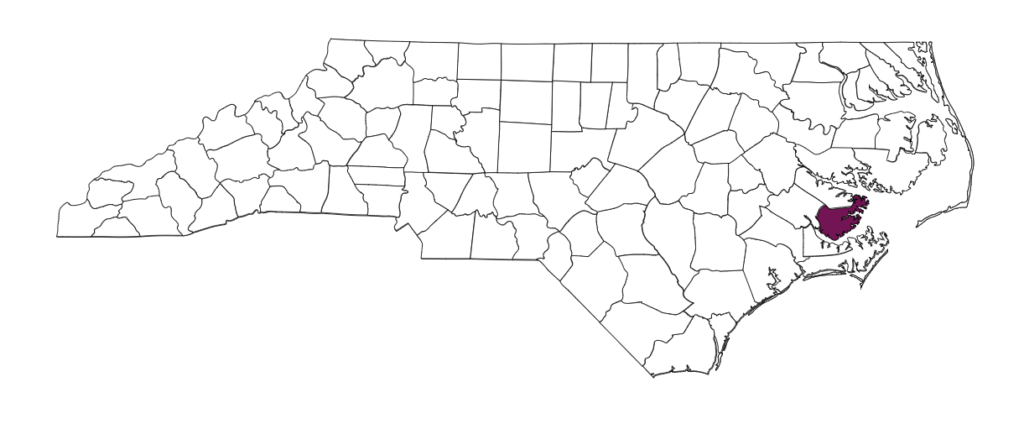
Prior to becoming president, Schnell led the EST program. The county is located on North Carolina’s intracoastal waterway, and PCC is the only community college to offer the program. Schnell, who lives in Arapahoe and grew up in Wilmington, has continued to teach since becoming president.
“I’m still on the ground,” Schnell said, which grounds his presidency. He has been an instructor at the college since January 2016, and he understands the student experience at the college, the faculty dynamics, and the community’s perception of PCC — all a strategic advantage when you compare the experience of other new community college presidents who may also be new to their college, their community, and sometimes even the state.
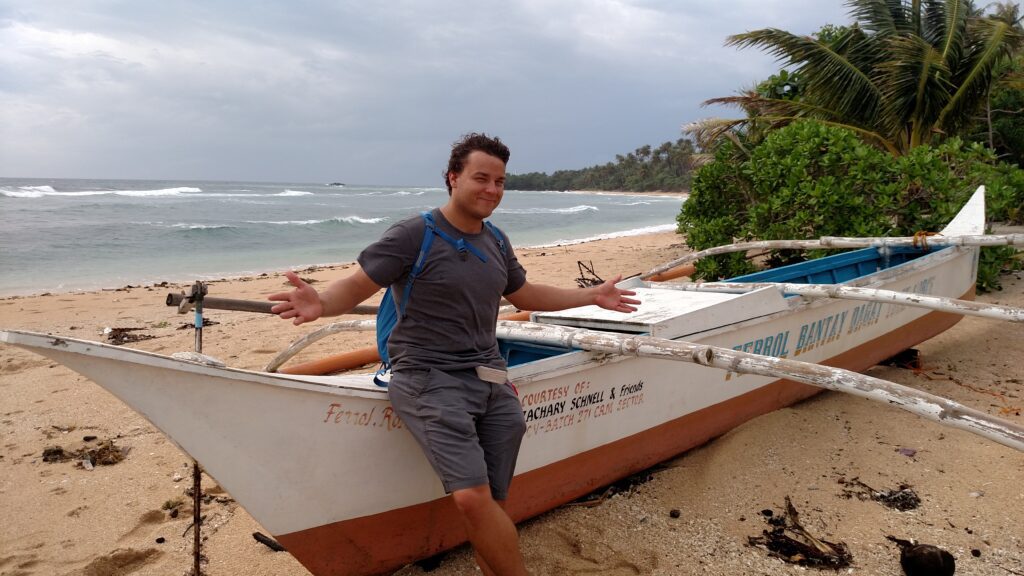
Schnell previously served in the Peace Corps in the Philippines, and he carries that community-based focus and commitment with him in his approach to leadership. “Putting the community back into community college,” is what he hopes will become the tagline of his presidency.
That’s especially important in a rural county where there isn’t industry and manufacturing. If you look up the largest employers in Pamlico County, you will see local businesses, the YMCA, the school district, the county, Walmart, and the correctional institute. No surprise, then, that a 2023 economic impact study of the community college’s programs focused on public safety, health assistants, education, construction technologies, and business and office technologies — the jobs that are available locally.
In addition to the community focus of his leadership, the spirit of his presidency is also important to Schnell. An amateur magician, he is known locally as “Magic Zac.”
“I want to bring that spirit and a touch of magic to this new role,” Schnell said in the press release announcing his presidency.
Learn more about Schnell and his journey to the classroom in our 2020 profile of him.
The model of education itself is changing
On Schnell’s desk in his office is a handbook on artificial intelligence (AI) guidance for community colleges in North Carolina.
Schnell knows from his time in the classroom that instruction and classroom design are changing as instructors compete for student’s attention with their phones. “It’s truly an amazing time to be alive,” he said, noting how AI, virtual reality, and other innovations will shapeshift education as we know it.
Schnell is on the leading edge of understanding those trends and has been asked to give multiple presentations locally and around the state on the topic this year. In his own classroom, he remains focused on student engagement; fostering connections among students, including opportunities for conversation; and the acquisition of skills, especially adaptability, which he believes will be key for workers in the age of AI.
Hill says PCC students don’t just graduate with content knowledge. “When it comes to how to train students, how to prepare them, we’re about students getting more skills so they have a portfolio when they graduate,” he said. Hill and Schnell want students to be able to go to prospective employers and say, “Let me show you what I have done.”
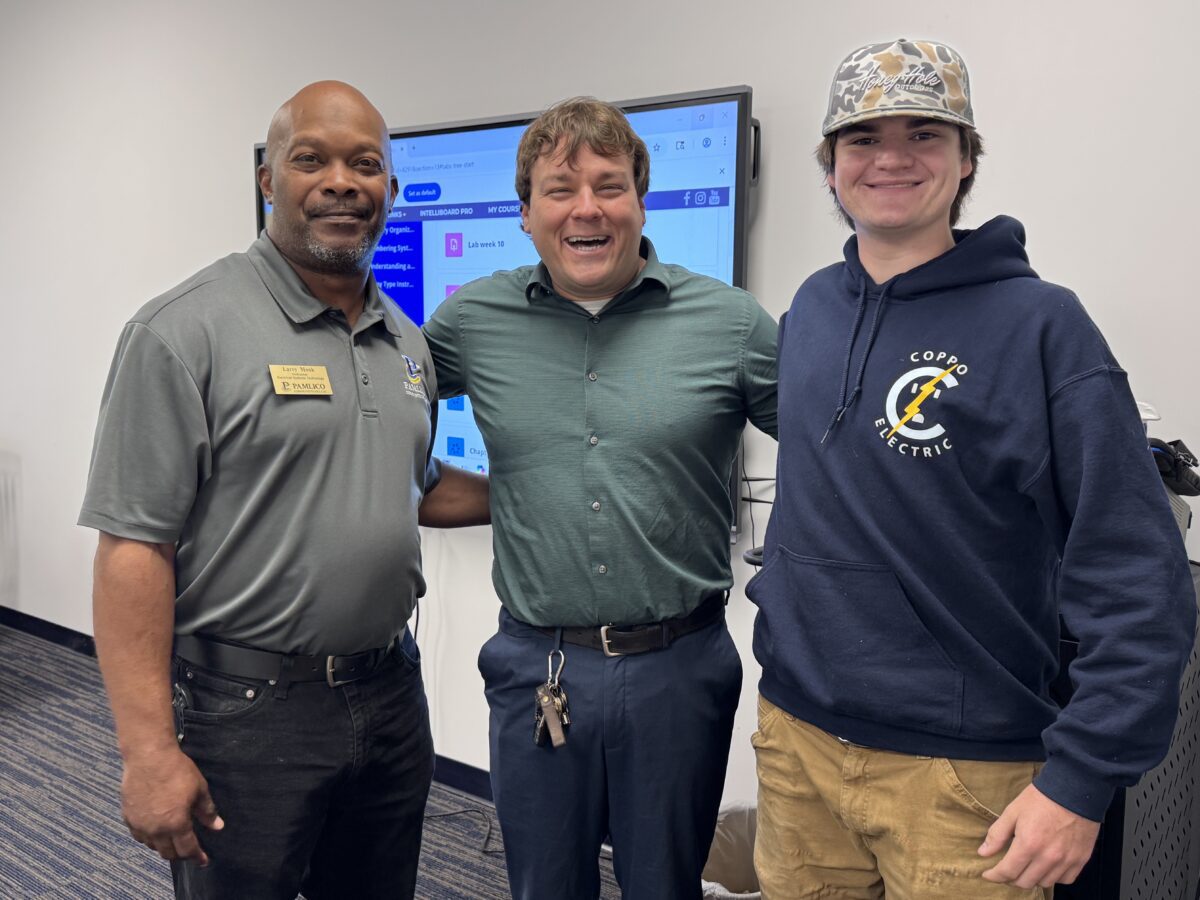
Hunter Martin, a student studying to be an electrician, has taken classes with Schnell. What makes a good teacher? “His personality,” said Martin. “Bubbly is good.” But Martin also cited his methods of teaching. “A lot of teamwork is involved, problem solving, critical thinking. You learn it yourself by putting your hands on it.”
Serving students at the Pamlico Correctional Institute
Pamlico Correctional Institution (PCI) is a medium custody facility for men located in Bayboro. Pamlico Community College works with PCI to provide educational opportunities for students, giving them a second chance that has been featured on PBS.
First Lady Anna Stein, among other statewide leaders including Sen. Norman Sanderson, R-Pamlico, has focused more attention recently on rehabilitation and reentry.
North Carolina’s most valuable resource is its people, including those reentering society after serving a jail or prison sentence. People leaving incarceration too often struggle to access employment, housing, and health care. First Lady Stein believes that bolstering programs available to currently and formerly incarcerated individuals can both reduce recidivism and build our North Carolina workforce and the stability of families. She also knows that ensuring improved rehabilitation outcomes necessitates supporting and strengthening our corrections workforce.
— First Lady Anna Stein’s website
PCC’s program, which is described as “life changing,” serves close to 200 students at PCI with about six hours of in-person instruction each day. The program includes a wide variety of offerings, from HiSET (the high school equivalency test) to the opportunity to earn an associate degree in Human Services Technology (HST), a curriculum designed to prepare students to foster the well-being of individuals.
“We have people who get their high school diplomas. We have people that get skills certificates. We have people who get associate degrees,” says PCC Chair of Correctional Education Ed King. Loved ones come from across the state to attend the graduation ceremonies.
Some students go through every class offered, King notes. Instructors say the program is so highly regarded that those incarcerated at other correctional facilities apply to transfer to PCI with up to a two-year waiting list.
Schell would like to expand the program. He and the instructors believe the more education they can provide, the more they can reduce recidivism.
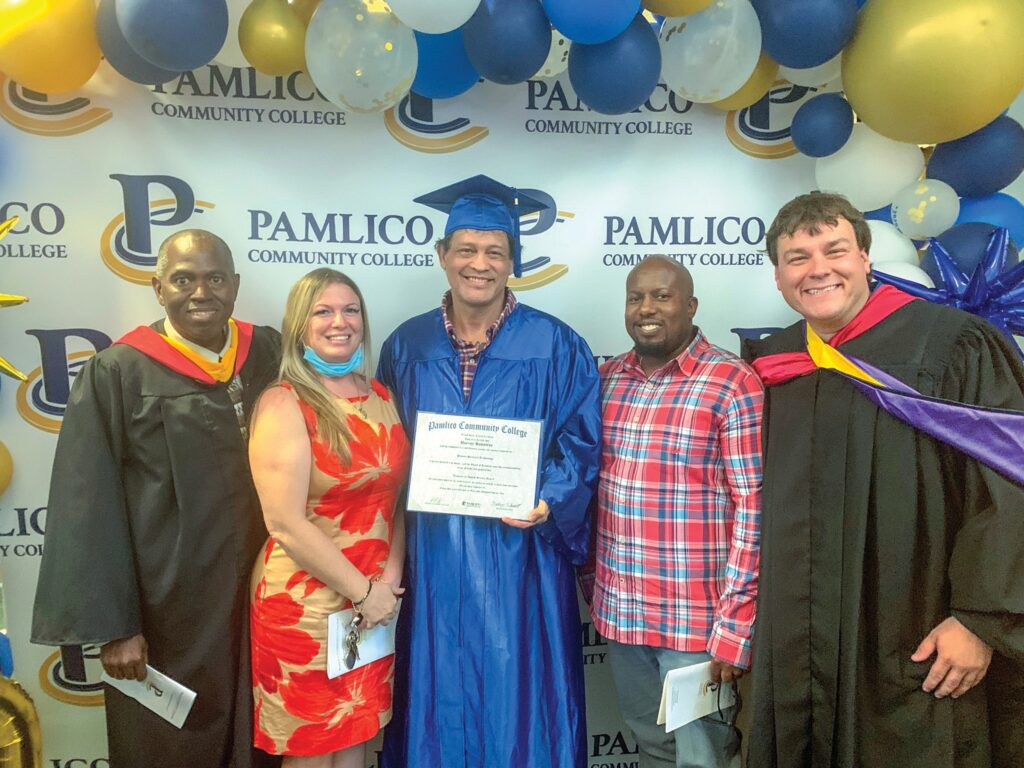
Harvey Rountree completed his associate degree in HST while he was incarcerated at PCI. Rountree was released from state custody on April 30, and he was the first PCI student to participate in an on-campus commencement.
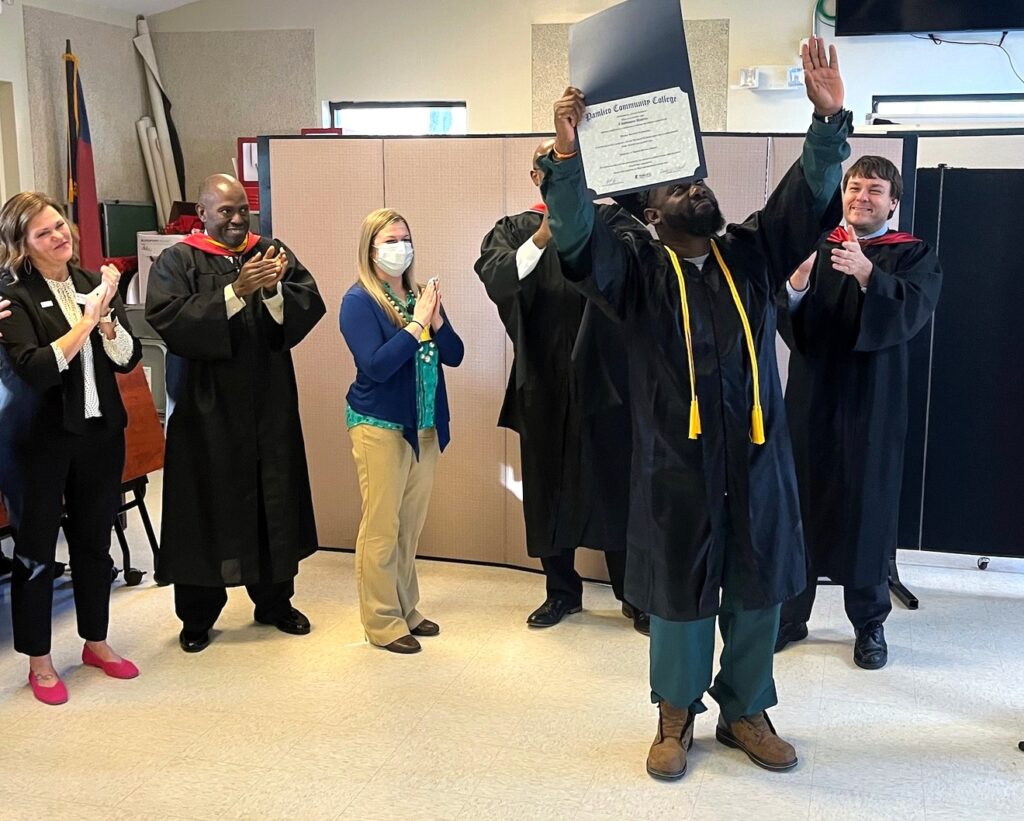
PCC sometimes serves students at other correctional facilities, such as if they are transferred close to graduation. In February, Davidson Correctional Center celebrated Chubasco Reaves, who earned his associate degree with honors in HST from PCC while serving his sentence. Schnell attended the ceremony to personally present Reaves his diploma.
These leaders believe in these students, seeing in them the capacity to be “rock stars.” King has been working in corrections for more than 17 years.
“The reason I have been doing this for so long is I feel like it is our responsibility to make sure they have the skills they need when they get out to be productive taxpayers, productive members of society. When people look at television, they think these are hardened criminals. A lot of these students look like the guy next door,” he said. “We are a proven commodity. When we provide them with a degree or a skill, they don’t come back.”
The goal, King said, is to provide a high-quality education so graduates have the ability to get a job, support their family, “and stay out.” Of the 87 graduates who have earned an HST degree, only one has returned, said the instructors. King cites a moment of pride when he ran into a former student at the local Walmart and the student was able to introduce King to his family. These instructors often also serve as mentors.
Joshua Evens’ story includes going from dropping out of college to being addicted to drugs to being convicted of a felony to now being a PCC graduate.
“Prison has accomplished its goal. It has corrected me,” he said.
PCC is serving students from all educational settings
Walking through the main building at PCC, you would notice classrooms with doorways identified with PCA, which stands for Pamlico Christian Academy. The private school’s campus for grades 6-12 is currently located at PCC as the academy breaks ground on a new 40-acre campus.
“The Career and College Promise (CCP) partnership with Pamlico Community College allows juniors and seniors to begin their occupational or college transfer pathway as dual-enrolled students by earning college credit and saving families thousands of dollars in higher education costs,” says a 2023 letter from the PCA board of directors.
CCP is a program known statewide more widely for serving public school students. A new $67 million public consolidated middle and high school that is under construction is within walking distance of PCC’s Bayboro campus.
Pamlico Community College serves students from all educational settings: the local public schools, a charter school, home schools, and PCA.
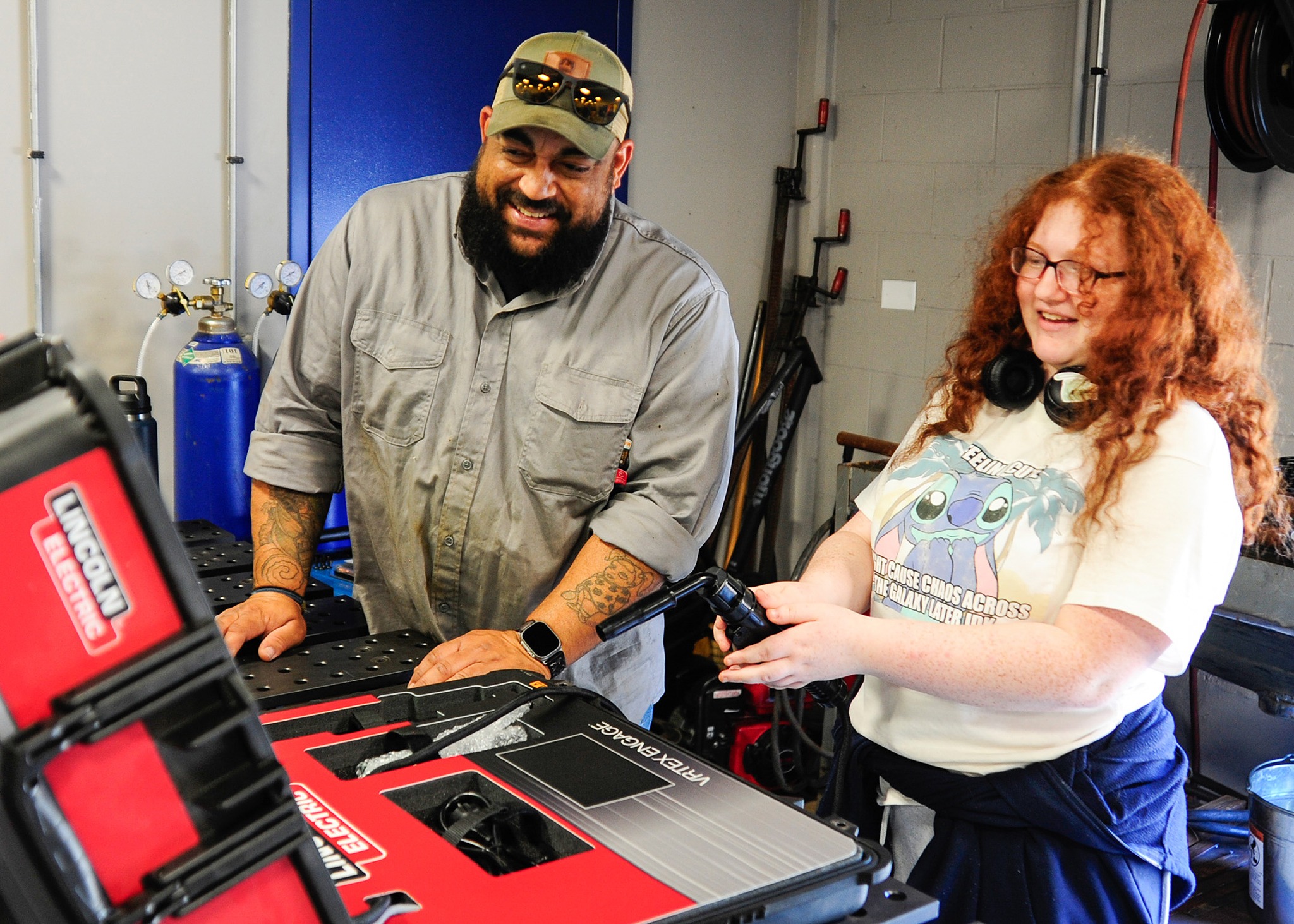
Recently, about 40 high school students got an inside look at many of the STEM-focused programs offered by the college.

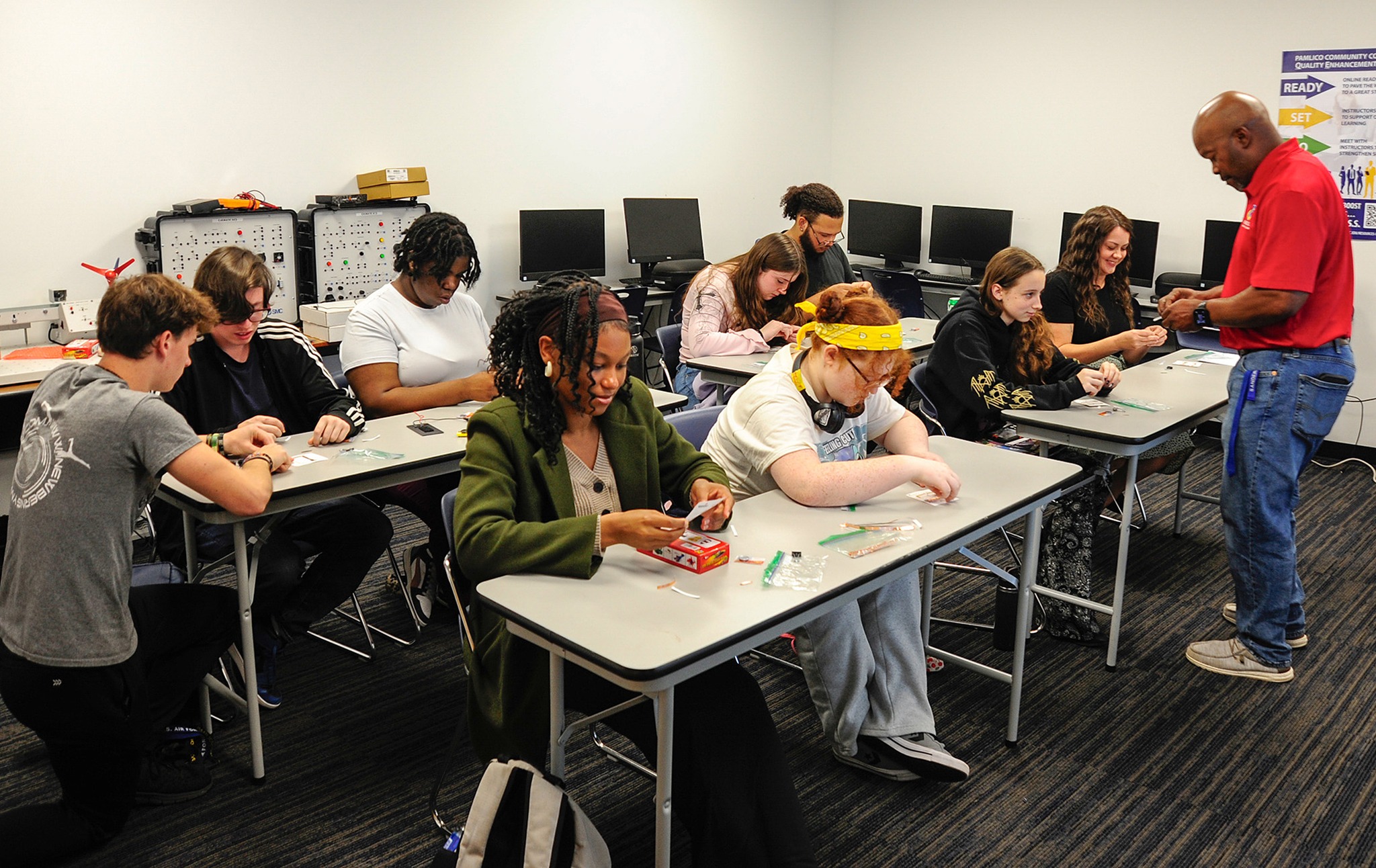
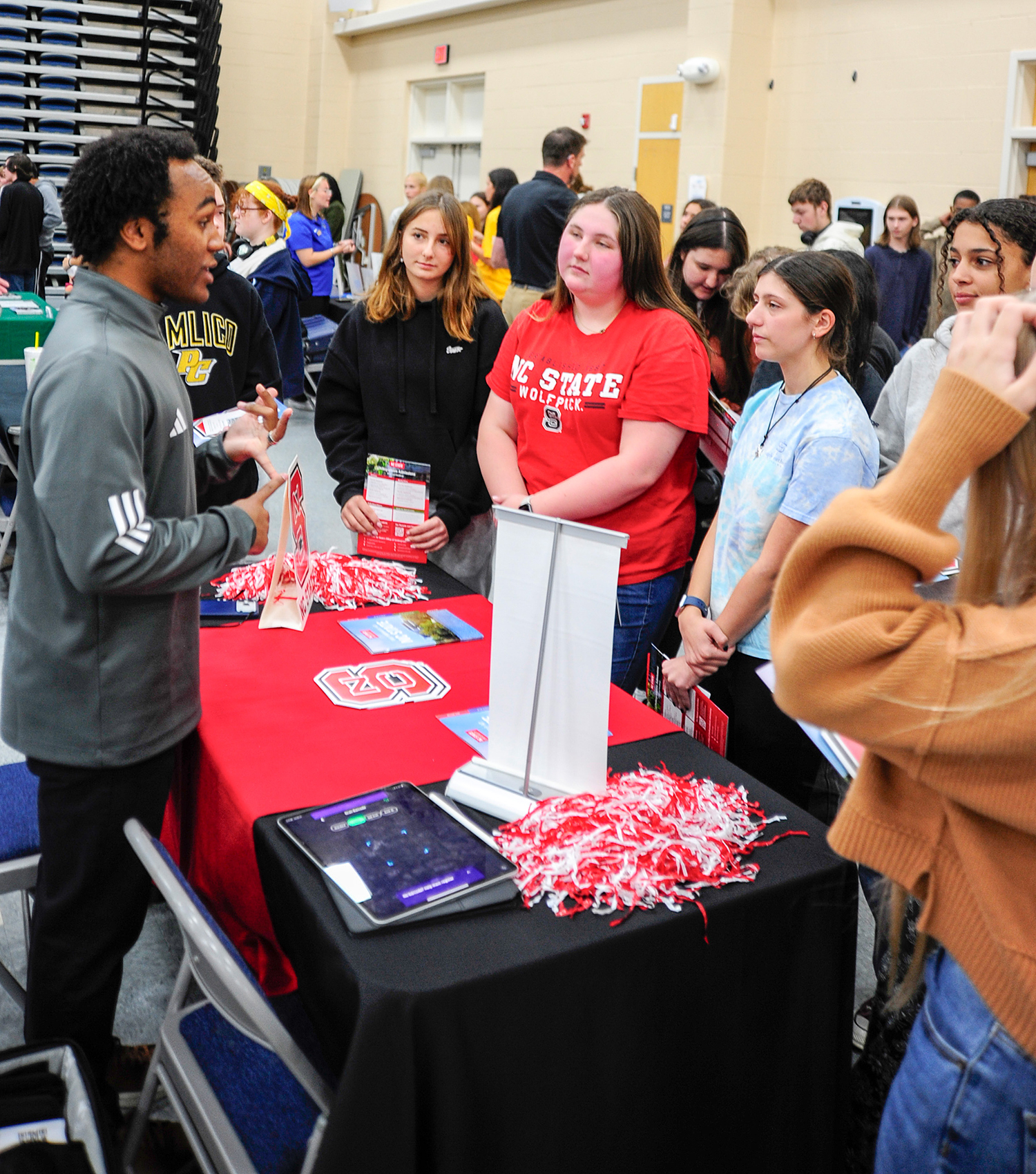
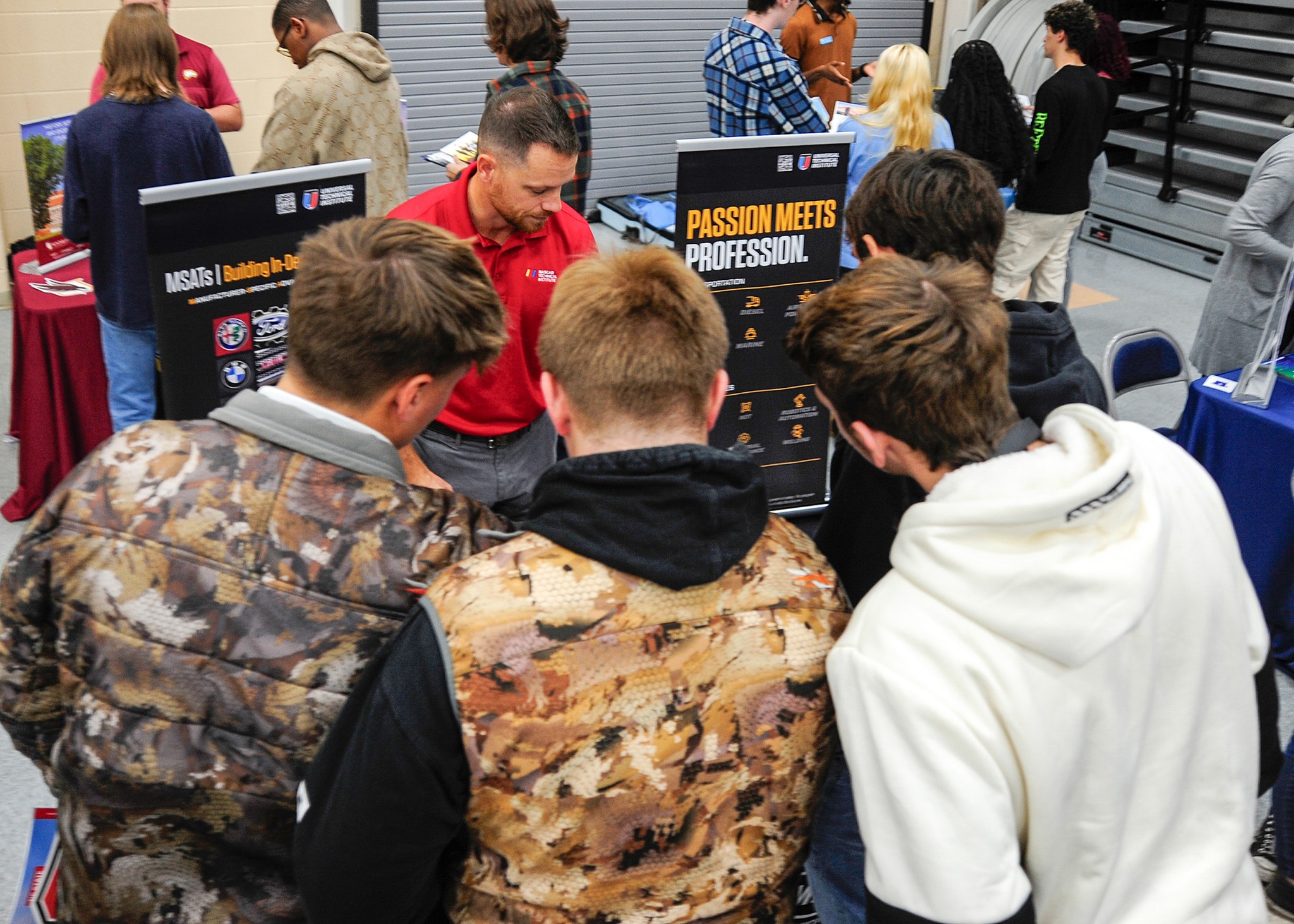
PCC recently brought students from Pamlico County High School, Arapahoe Charter School, and PCA together “to explore academic programs and opportunities offered by colleges and universities throughout North Carolina and beyond,” according to this Facebook post.
Forty-one institutions participated in the College and University Fair, according to PCC, and the students were able to meet “with counselors and recruiters to ask questions and gather information about admissions, financial aid, and campus life.”

The community college also offers a Fast Track to STEM summer camp.
Other ways PCC is serving the community
On any given day, you can find community members from Pamlico County on campus. Some are getting a haircut or massage from students studying cosmetology. Seniors are taking a class to learn basic computer skills. Others are taking a class in grant writing to learn how to raise funds for local nonprofits. PCC is also where community members learn CPR, how to operate a forklift in one day, or take the class needed to become a notary. PCC also offers cultural and life enrichment courses, like quilting, for community members. The community college’s library includes 5,000 comics and graphic novels from classics in the 1960s to modern anime and manga.
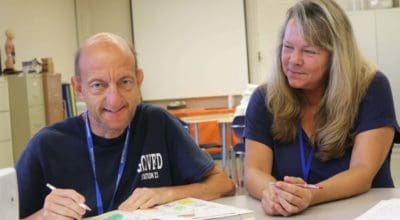
During EdNC’s visit to PCC, we met with students and faculty, checked out specific programs, participated in judging a competition for students in cosmetology, met with instructors who serve students at PCI, and learned more about the challenges and opportunities facing Schnell and this community college.
“The reason I wanted to introduce you to all these people, the reason I wanted you to see the different things going on, the reason I wanted you to see our community is because that is me,” said Schnell.
- While there have been community college presidents who were younger when they were installed, they are all older now. If you know of a sitting president of a public, two-year community college younger than Schnell, please let us know at mrash at ednc.org. ↩︎
Recommended reading