
Gov. Stein’s Council on Workforce and Apprenticeships releases strategies for workforce development

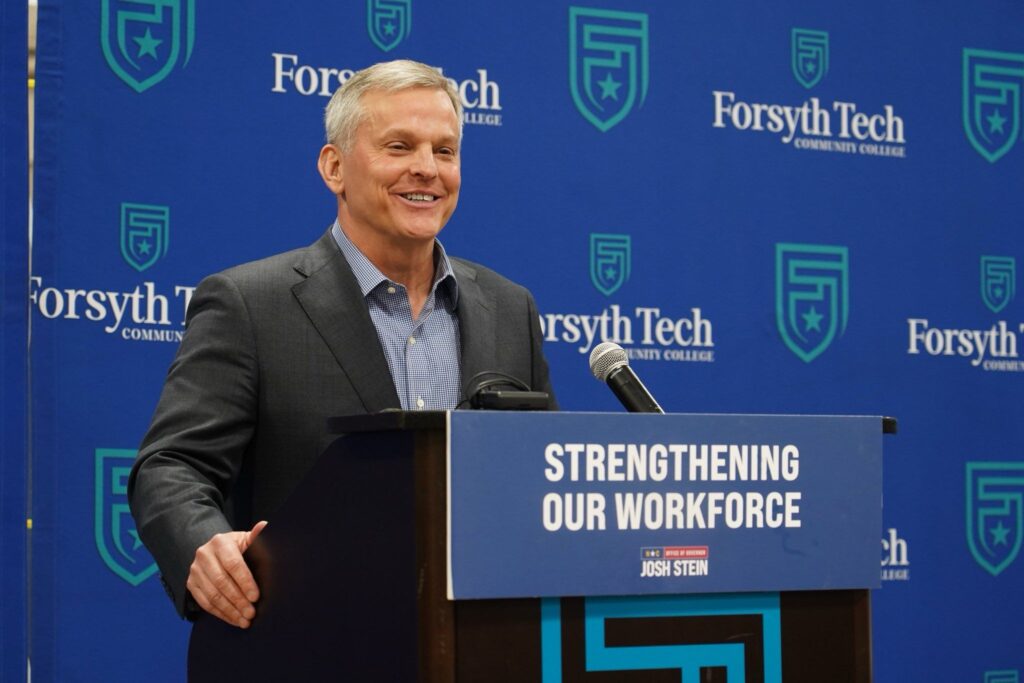
The Governor’s Council on Workforce and Apprenticeships has identified 30 strategies to advance North Carolina’s workforce development goals, published in a new report on Monday.
“North Carolina needs to build upon our strengths, create jobs, connect more people to opportunity, and empower students with the skills they need,” Gov. Josh Stein said in a press release. “I am grateful to the Council for developing these strategies and look forward to working with the General Assembly and other partners to focus our collective energy on them, as we demonstrate that no state will outwork North Carolina when it comes to developing our workforce.”
 Sign up for the EdDaily to start each weekday with the top education news.
The council presented these strategies in their second report, which comes after a June report outlining the state’s goals for workforce development. These goals are separated into four objectives: increasing attainment, expanding work-based education, focusing on key sectors, and highlighting workforce programs through a public outreach campaign.
Goals include myFutureNC’s statewide attainment goal — that 2 million North Carolinians ages 25-44 will have an industry-valued credential or postsecondary degree by 2030. The council also set a goal for every high school student to complete coursework for transferable credit or credentials ahead of their postsecondary education.
Other goals include increasing enrollment in postsecondary education, employment, or military enlistment in the first 12 months after high school graduation, and doubling the number of registered apprentices.
The workforce goals are all on a four-year timeline, and the council will submit annual progress reports every December for the next three years.
The council’s three co-chairs commented on the report in Monday’s press release. N.C. Department of Commerce Secretary Lee Lilley said these strategies will set the state up for success.
“North Carolina is America’s top state for business because of our workforce, and we must lead with innovation to keep it that way,” Lilley said.
Sen. Eddie Settle, R-Alexander, said he looks forward to working with the legislature to champion the report’s strategies.
“The Council’s strategies contain a number of practical solutions to some of our state’s biggest challenges, offering opportunities for even more North Carolinians to qualify for good jobs paying good wages,” Settle said.
Dr. Jeff Cox, president of the N.C. Community College System, highlighted the role community colleges will play in implementing these strategies.
“We look forward to working with our K-12 and university partners, among others, to use these strategies to align high-quality training and education with employer demand,” Cox said.
Increasing attainment is the report’s first objective. The strategies listed to achieve this include the development of an interoperable data system, aligning credentials with employer demand, coordinating programs to keep students on track, and clearly awarding credit for prior learning or work experience.
Under this strategy, the report also recommends increasing uptake of Workforce Pell, Next NC, and the NC Need-Based Scholarship, which provide financial aid, and NC College Connect, which provides direct admission to postsecondary institutions.
The second objective in the report in creating more pathways to good jobs. One strategy under this objective is creating a “unified, statewide, tiered employer engagement system” that incentivizes employer participation in workforce development efforts, and building strategic partnerships with local business councils and workforce development boards.
The third objective is to focus on key workforce sectors “to maximize existing and emerging opportunities.” Under this objective, the report says the state should also develop an AI curriculum to support fluency in this technology and help employers expand their skills for AI adoption.
Finally, the fourth objective calls for amplifying the impact of workforce programs through a public outreach campaign. Strategies include creating a single, user-friendly platform that incorporates resources like NCWorks.gov and NCcareers.org, and expanding “access to workforce opportunities that bring career services directly to residents.”
The 30 strategies herein identified by The Council are not intended to represent all possible strategies. They reflect the “best bets” for advancing The Council’s goals, based on current priorities and opportunities. Additional strategies may be needed, and other partners — including, but not limited to, the North Carolina General Assembly — will play a critical role in achieving The Council’s objectives.
— Council report
Read the council’s full report here.