
The business case for mental health: NC Chamber hosts summit highlighting importance of youth well-being

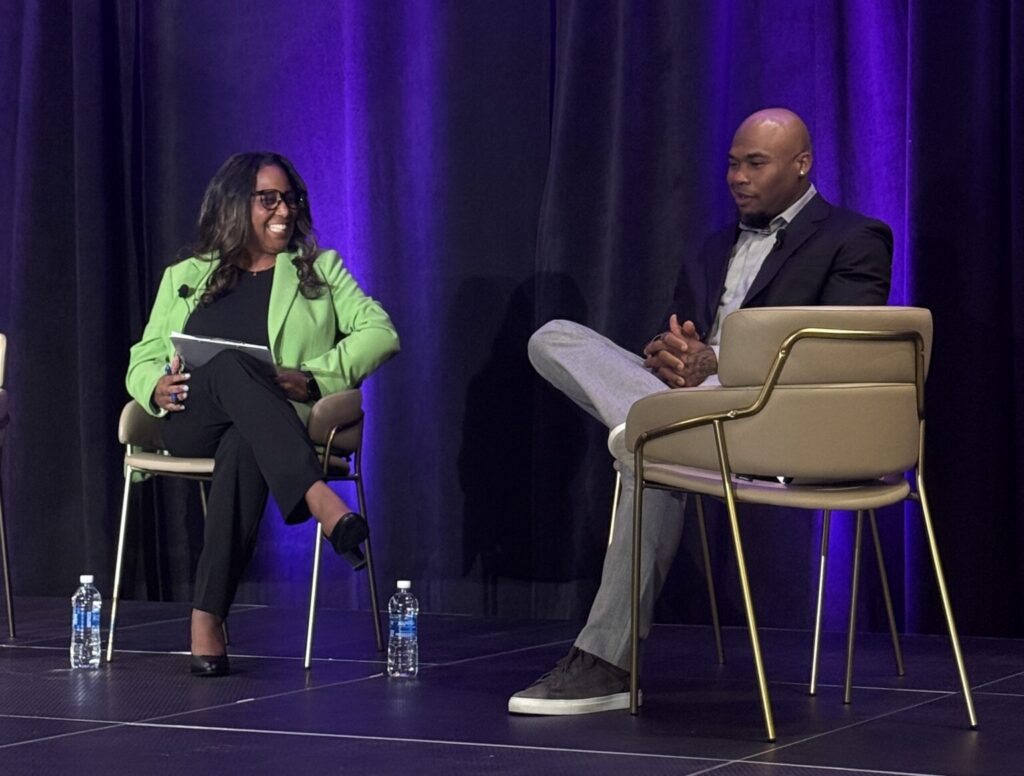
The NC Chamber gathered business and health care leaders on May 13 to discuss the impact of mental health needs on the state’s current and future workforce.
The second annual Business Summit on Mental Health, presented in partnership with Blue Cross and Blue Shield of North Carolina, continued conversations from last year’s meeting as leaders discussed the status of mental health in the state and best practices for improving workplace well-being.
Colleen Briggs, president of the Blue Cross and Blue Shield of North Carolina Foundation, summarized why mental health issues should concern business leaders.
“One of the biggest emerging risks to business leaders is the mental health of children and young adults, and implications that that will have on our workforce,” she said.
She said the two main factors contributing to this impact are that treatment for mental illness increases medical costs and negatively impacts labor force productivity by contributing to low productivity and absenteeism.
Kelly Calabria, chief communications, marketing and corporate social responsibility officer of Blue Cross and Blue Shield of North Carolina, told attendees that the health insurance company has seen demand for mental health care rise each year.
About 10% of Blue Cross NC’s commercial population, she said, reports behavioral health conditions.
“We believe that when people can access the right care at the right time, we can keep manageable challenges from becoming lifelong conditions, we can reduce cost, and most importantly, we can save lives,” said Calabria.
 Sign up for the EdDaily to start each weekday with the top education news.
First Lady Anna Stein on normalizing conversations about mental health
First Lady Anna Stein kicked off the summit by speaking about the societal stigma against people with substance use challenges.
This stigma, she said, makes people fear the judgement they might face if they seek help and contributes to a flawed conception of why people use drugs.
One of Stein’s three priorities is to work to end stigma for people with mental health and substance use disorders.
Stein also addressed the role that language plays in contributing to stigma and said phrases such as “addict” and “substance abuse” as descriptors for people who use substances should be avoided. While noting that people can choose to refer to themselves as they please, and that preferred terminology changes over time, Stein cited research that suggests these descriptions carry negative connotations that, over time, makes society view people who use substances as less deserving of help.
“To people who say it’s splitting hairs,” she said of terminology choices, “I also would argue that we aren’t even aware of the feelings and beliefs that language creates in our minds. There are really unconscious biases that we develop.”
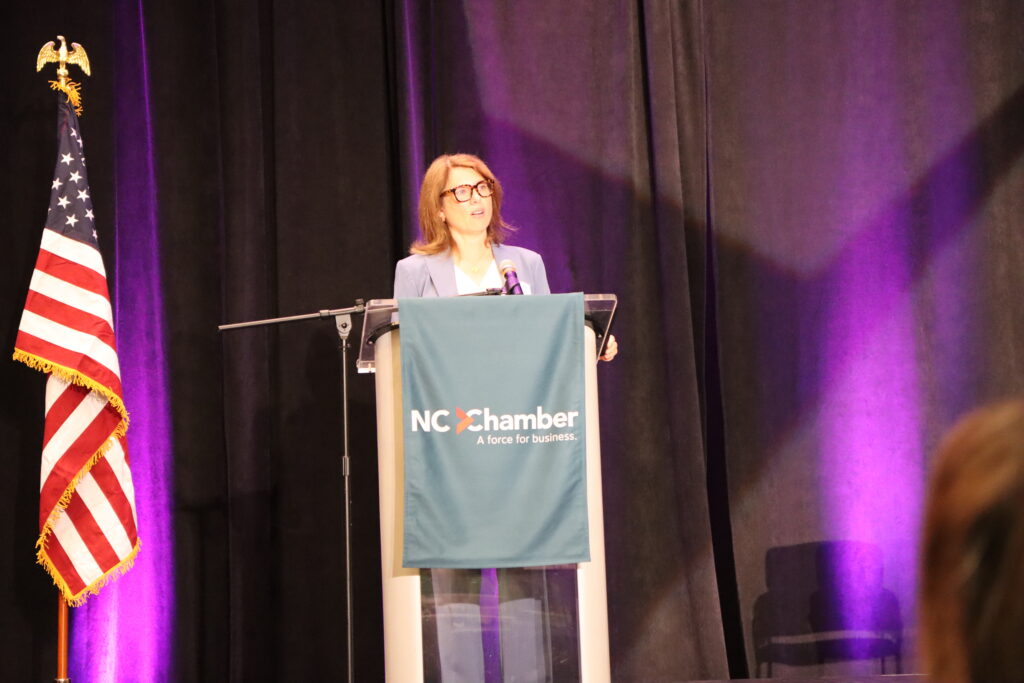
While Stein’s remarks focused specifically on people with substance use disorders, other summit speakers addressed broader aspects of mental health.
Dr. Sy Atezaz Saeed, chair of Eastern Carolina University’s Department of Psychiatry and Behavioral Medicine, said that mental health is simply how the human brain functions on a day-to-day basis.
“I think that the idea of ‘mental health’ being ‘health,’ and for people to be able to have their brain operating properly, as Dr. Saeed said, is really foundational,” added Dr. Gary Maslow, chief of the division of child and family mental health and community psychiatry at Duke University’s School of Medicine.
Kelly Crosbie, assistant secretary for mental health at the N.C. Department of Health and Human Services (NCDHHS), told attendees that the fact that anxiety, depression, and obsessive-compulsive disorder are common mental illnesses shouldn’t frighten people. Instead, that can serve to normalize mental illness.
“This is just a normal part of life,” she said of these common mental illnesses. “We need to treat it as such, we need to be fluent about it. We need to just talk about it comfortably, like we talk about if we have a cold or we have the flu.”
Workforce shortages and a strained public sector
Dr. Anthony Jackson, superintendent of Chatham County Schools and incoming CEO of the Public School Forum of NC, joined Crosbie from NCDHHS on a panel to discuss how the state’s public schools and public health system are addressing mental health needs.
Following the COVID-19 pandemic, Jackson said he’s observed a dramatic increase in mental health needs in his students. At the same time, he referenced the shortage of school health personnel in his district, saying that the ratio of personnel to students has historically been above nationally recommended standards.
Coupled with provider shortages in rural parts of the state and burnout among educators, he said addressing students’ mental health is an uphill battle.
“We just don’t have the resources to meet the needs,” Jackson said.
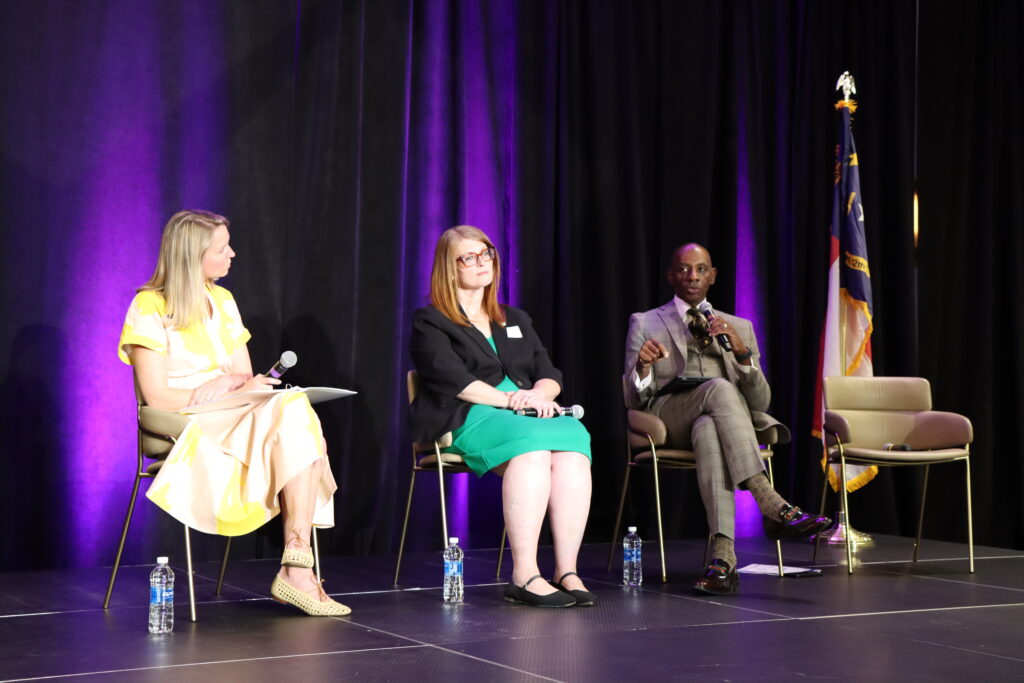
In light of the state’s behavioral health workforce shortages, Crosbie said that her approach to her position with NCDHHS has been to invest in community-based organizations already known by local communities. Mental health support must begin in a person’s family and the community long before someone needs a clinical treatment provider, she said.
Crosbie’s division received approximately $250 million of a $835 million behavioral health investment the legislature appropriated in 2023. While the targeted investments that funding has supported are necessary, she said, more support is still needed to bring about sustainable change and remediate an over-reliance on the public health system.
“We truly need businesses, families, insurances to step up and actually help be part of the solution,” Crosbie told attendees. “The public system just cannot continue to be the only payer that talks about mental health and really has comprehensive coverage.”
NCDHHS has started to fund community-based and faith-based organizations to help them offer mental health and wellness support for youth and families. This effort aims to extend the spaces where mental health support is provided and to listen to the community’s preference to receive resources from organizations they’re already familiar with.
“Mental health care is local, and it has to be done in a way that resonates in its spaces and places,” said Crosbie. “And we have to accept that we’ve got to utilize lay people, peer mentors, family mentors, mentors for youth — that is who can really make a tremendous impact when you don’t have enough clinicians.”
Crosbie and Jackson also highlighted bright spots across the state, including:
- The state’s 988 Lifeline is an anonymous and free call line that connects people to trained crisis counselors who can provide the caller with appropriate resources. According to Crosbie, the state’s call center receives over 13,000 calls per month, and the most common users are young people between 13 and 17 years old. Crosbie said the line has helped save lives, address stigma, and make pathways to services clearer for users.
- State-funded first episode psychosis programs, which have helped approximately 4,000 young people and their families over the past decade receive compassionate and effective treatment after experiencing their first hospitalization for a serious mental illness, such as schizophrenia or bipolar disorder. “The results we’re seeing are tremendous,” said Crosbie, describing the support young people have received. “They’re finishing high school, they’re going to college, they’re getting jobs.” Crosbie said the state is planning to expand these programs.
- Chatham County’s cellphone policy, which includes placing student devices in magnetically-sealed pouches during the school day. Since its implementation, student’s academic outcomes have improved, behavioral issues have declined, and students are more engaged with their peers, according to Jackson.
Read more on youth well-being

Providing mental health care in places people trust
The summit’s speakers also discussed efforts across the state to integrate mental health care into places where people already receive physical health care. This approach is known as the Collaborative Care Model.
In a panel on the model and how it supports young people, Maslow said most symptoms of a psychiatric disorder appear before a person turns 25 years old.
Instead of waiting for that person to be in crisis to receive a diagnosis and treatment, the Collaborative Care Model promotes early identification of mental illness by making it easier for a patient to receive support from a mental health professional.
For young people, that means getting the medical care and support they need to be able to lead the life they want, Maslow said.
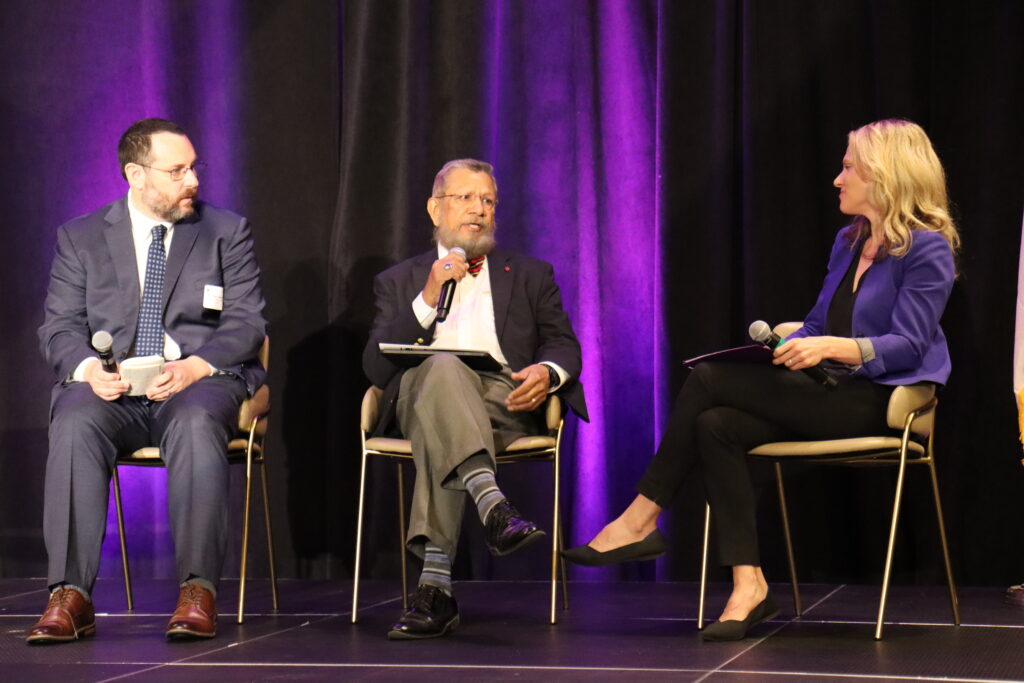
Dr. Christoph Diasio is the managing partner at Sandhills Pediatrics in Moore County. Their approach to the Collaborative Care model, he said, was to start by hiring a child psychiatrist. Today, Sandhills has two child psychiatrists, a psychologist, and four licensed professional counselors, according to Diasio.
With this comprehensive health team in place, Diasio said he’s able to facilitate “a warm handoff” to a mental health professional when he believes a patient’s health needs are beyond his scope of practice.
The result, he said, is witnessing patients receive mental health care from licensed professionals before their needs turn into a crisis.
“There are all these benefits that people just don’t see when we have (mental health care) integrated into our practice,” he said.
Sandhills Pediatrics began providing behavioral health services by heavily subsidizing them. However, as time has gone on, it has become clear that financial incentives would need to change to make this kind of model sustainable, Diasio said.
One approach Diasio is leading is the creation of a pediatric supergroup centered around integrated mental healthcare. This supergroup would bring other pediatric practices into one billing entity, led by Sandhills Pediatrics. Among other benefits, a pediatric supergroup helps practices negotiate rates with insurance payers.
“We can do better. We’re tired of being the unicorn. We want to expand and become a blessing,” Diasio said of bringing integrated care to other parts of the state.
While Sandhills Pediatrics offers one example, Maslow said there are many ways to integrate physical and behavioral health care.
As chief of the division of child and family mental health and community psychiatry at Duke University’s School of Medicine, Maslow helps lead work with the NC Psychiatric Access Hotline, or NC-PAL.
NC-PAL is a virtual way to integrate psychiatric care into primary practice settings, as it offers providers with direct access to a behavioral health professional. NC-PAL allows providers with a patient experiencing mental health needs to call the line and speak with a child psychologist or behavioral health consultant.
According to Maslow, more children are getting mental illness diagnoses and receiving care through NC- PAL than in previous years. Starting this summer, he said, NC-PAL plans to expand its services to family medicine and nurse practitioners offices in eastern North Carolina.
During the panel, Saeed said that while treatment options are better than they’ve ever been, “a lot of people do not have the benefit of what science has promised them” because of geographic provider deserts. Established in 2013, the NC Statewide Telepsychiatry Program (NC-STeP), led by Saeed at ECU, works to bring high-quality psychiatric care to people across the state.
With support from the Blue Cross and Blue Shield of North Carolina Foundation, NC-STeP plans to extend its services to students at the University of North Carolina at Pembroke next fall.
Both Maslow and Saeed also cited research that finds inefficient treatment of behavioral health as one of the most costly aspects within health care, and said that the National Academy of Medicine suggests preventative care as one solution.
“Treating youth mental health issues saves the system money, and that’s not even counting productivity,” said Maslow. “When youth receive treatment, they are able to thrive and contribute to society.”
Editor’s note: Blue Cross and Blue Shield of North Carolina Foundation supports the work of EdNC.