
Teaching fellows program proposal to target STEM and special education teachers
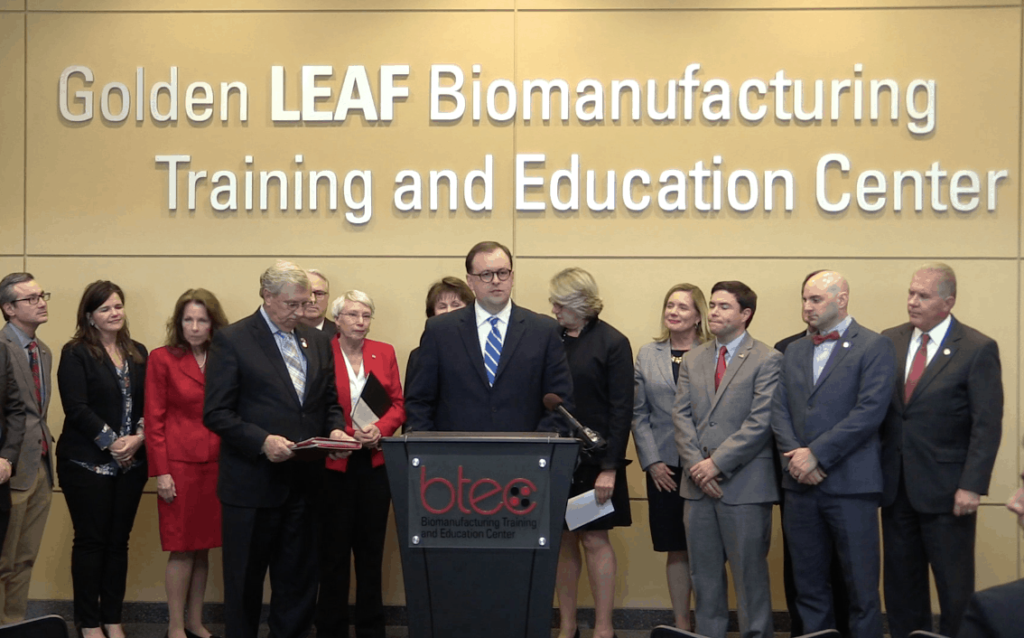

Sen. Chad Barefoot, R-Franklin, and Rep. Craig Horn, R-Union, announced a bill on Thursday that would create a teaching fellows program for future STEM and special education teachers (video below). The forgivable loan program would offer up to $8,250 to students who promise to teach within North Carolina’s public schools in science, technology, engineering, math, or special education.
“The purpose of this program is to recruit, prepare, and support students residing in or attending our institutions of higher education for preparation as highly-effective STEM or special education teachers,” Barefoot said.
Flanked by UNC System president Margaret Spellings, State Superintendent Mark Johnson, and university leaders from several institutions, Horn and Barefoot touted the program as a way to “reinvigorate the (teacher) pipeline.” As enrollment in education programs at the state’s universities has dropped, Horn said, a need for high-quality teachers in all classrooms remains.
The program is not only open to high school graduates, but college students and those seeking master’s degrees. A teacher has 10 years to pay back the loan, but can pay it back on a year-to-year basis if working in a low-performing school.
“For every year they use the loan, they get one year of loan forgiveness,” Barefoot said. In schools that are not low-performing, for every year the teacher uses the loan, he or she will have to serve two years a public school.
The program is meant to fill gaps in the licensure areas that need it the most as identified in a report from the Department of Public Instruction on the teaching profession and its challenges, Barefoot said.
The North Carolina Teaching Fellows Commission would also be established by the legislation, which is set to be filed on Monday, with members appointed by the UNC Board of Governors and the General Assembly. The commission would determine the selection criteria and choose recipients. It would also set criteria to select the state’s five top education programs to participate.
The legislation establishing the program requests $6 million for 160 teachers in 30-person cohorts at the five different schools.
“We know our education leaders need tools to attract the best and brightest to our classrooms, and our students deserve it,” Barefoot said.