
Students advocate for tuition fairness
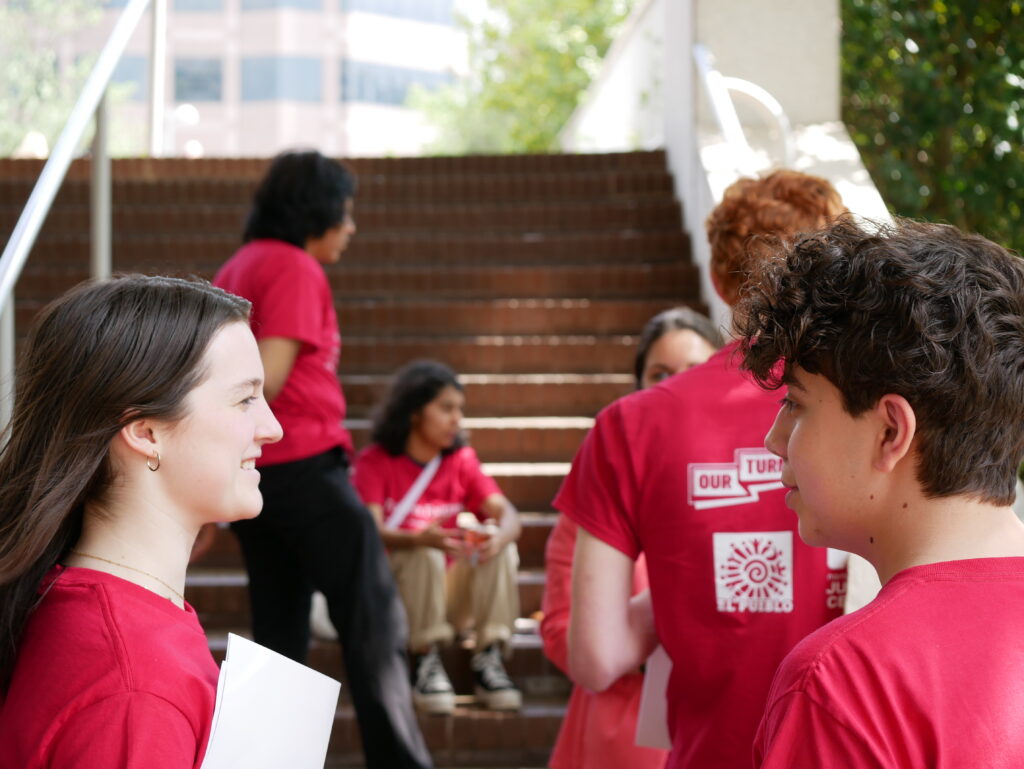
Last week, 50+ student activists and allies from across North Carolina gathered on Jones Street in Raleigh to advocate for tuition fairness for undocumented students.
Students met with more than 30 legislators.
Hear Giselle Quijada, a recent graduate from Meredith College:

“I went through the college process as a first-generation and an undocumented student. So it was very different from my peers. All of my classmates, even my teachers, they didn’t really know how to help me, and I had to navigate on my own.
I applied to a good amount of colleges, maybe 12, and I got into all of them. But realistically, I could only attend two because I can’t get any federal aid or anything. And at least in-state tuition would allow it to be more affordable. But we had no aid, plus out-of-state tuition. So it is very, very expensive, very hard, especially being non-DACA.”
“There are many students that are in the same position, … and they think that college isn’t attainable for them. And being able to get in-state tuition would make it so much better. And so many like doors would feel like they’re flying open for them. And I just know that when I was in that position, there were many tears, a lot of sweat, a lot of hours, and I’m hoping you know, there can be a change so they feel that there’s people supporting them and rooting for them.”
Senate Bill 706, titled “In-State Tuition Equity,” was filed on April 6. The primary sponsors are Sen. Mujtaba Mohammed, D-Mecklenburg; Senator Graig Meyer, D- Caswell; and Sen. Natalie Murdock, D-Chatham.
According to this bill summary, students at UNC institutions and community colleges would receive in-state tuition if:
(1) The person graduated and received a high school diploma from a school in North Carolina or received a high school equivalency diploma within North Carolina.
(2) The person attended NC schools for at least two consecutive years immediately prior to completing high school.
(3) The person does not have lawful immigration status, the person submits an affidavit to the State Education Assistance Authority through the coordinated and centralized residency determination process within 60 days of enrollment asserting that, to the extent permitted under federal law, he or she has filed an application to legalize his or her status or he or she intends to file an application to legalize his or her status upon becoming eligible to do so.
(4) The person is enrolled in a constituent institution or community college. Makes confidential and not a public record any information obtained as part of the process of applying for in-State tuition under these provisions.
“With 3,000 undocumented students graduating from North Carolina public schools each year, affordability is a major barrier to academic and economic prosperity in the state, and this bill would bridge that gap by offering in-state tuition to undocumented students,” said a press release. “This is a massive investment in North Carolina’s students and future.”
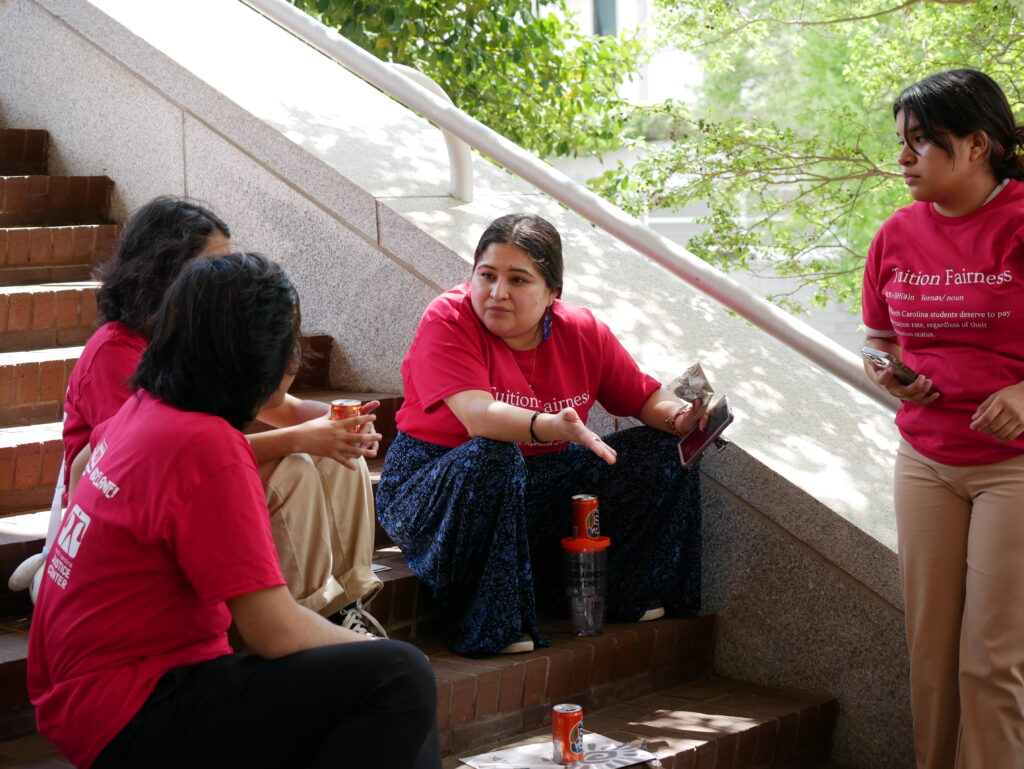
Our Turn North Carolina’s Manager of Organizing Iqra Tabassum spoke about the impact the presence that the coalition of advocates had on lawmakers.
“We really showed out in a strong front. We were seen. Our students and community were seen. It was a remarkable demonstration of diversity and support, with a spotlight on undocumented students and youth allies. This is a demand that is ringing true across the state, from Raleigh to Charlotte to Cary to High Point,” she said.

Meet Brenda Dimas, a sophomore at Wake Tech from Fayetteville:
“This story hits really close to home. I come from a mixed-status family. So I was lucky enough to be born here and be raised in North Carolina where I can receive in-state tuition. But my older sister, she came here at two years old, and she’s now documented. But because of her status, she has to pay out-of-state tuition. She got into her dream school, NC State, and she had to drop out. It was not by choice. She had to drop out because our family could not pay the tuition. We are a low-income family. And she was forced to go to a private institution where the tuition was a little bit cheaper than out-of-state but still more expensive than in-state. Her senior year, she actually dropped out because we could no longer continue funding her education. It’s such a shame that her story is very similar to many others.”
Our Turn is committed to ensuring comprehensive access to resources and decisionmaking power for all young people, according to the press release from the organization.
Follow Our Turn North Carolina on Instagram @OurTurnNC to track the progress of the tuition fairness bill.
Editor’s Note: Kayla Romero Morais is the chief growth officer for Our Turn. She serves on the board of EdNC. EdNC’s Liz Bell contributed to this story.