
Still here, still growing: Burke County Literacy Council bets on its community
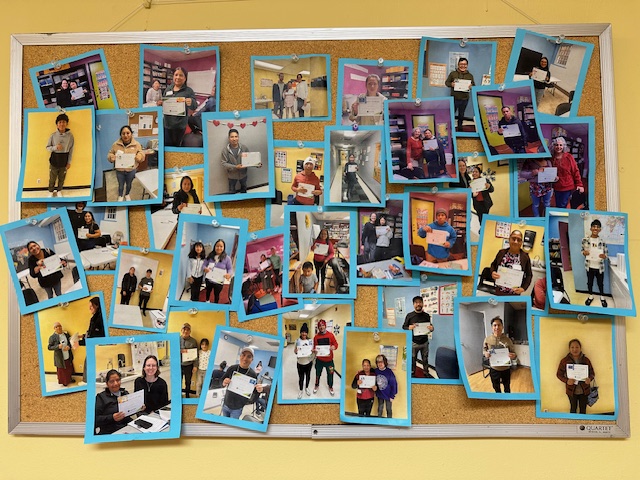
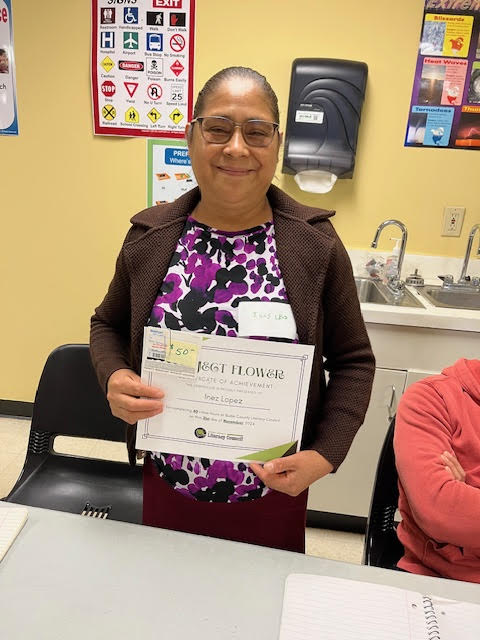
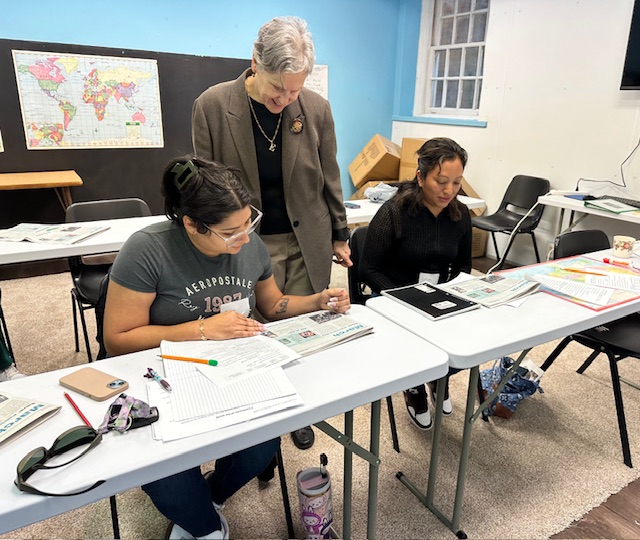
Ines Lopez doesn’t miss class. Not Tuesday. Not Thursday. Not ever, if she can help it. For a long time, her instructors wondered quietly: Was she improving? It can be hard to see growth when you’re standing close to it.
Then came the Christmas party. A conversation, and a revelation. Ines had left a job and found something better — a role requiring her to read and write in English. A door that once wasn’t open to her, now was.
“As her reading and writing in English improved, she was able to get a promotion to a role that required her to read and write in English,” said Mary McLachlan, executive director of the Burke County Literacy Council. “This is the power of literacy: it opens doors, builds confidence, and creates real opportunities.”
 Sign up for the EdWeekly, a Friday roundup of the most important education news of the week.
Then there is JM — not a newcomer learning English, but a Burke County native who needed a second chance at reading and writing. For years, he had quietly gotten by, relying on speech-to-text and other technologies to manage what he couldn’t do on the page. When he finally confided in his employer that he couldn’t read or write, she didn’t hesitate — she reached out to the Literacy Council on his behalf.
“My corporate boss asked me to join the Literacy Council so that I would be able to move up in the company when a supervisor’s position opens up,” said JM, who requested EdNC not use his full name. “Going to class has helped me with my reading and writing. I wish I had learned some of these things earlier. I think this will help me improve my situation and move up — and better my life.”
Stories like theirs are why the Burke County Literacy Council has shown up since 1988, first serving workers from the local mills, and today welcoming anyone in Burke County who needs a hand with literacy, from Latino and other immigrant neighbors finding their footing in a new place, to lifelong residents like JM who are ready to build on what they have.
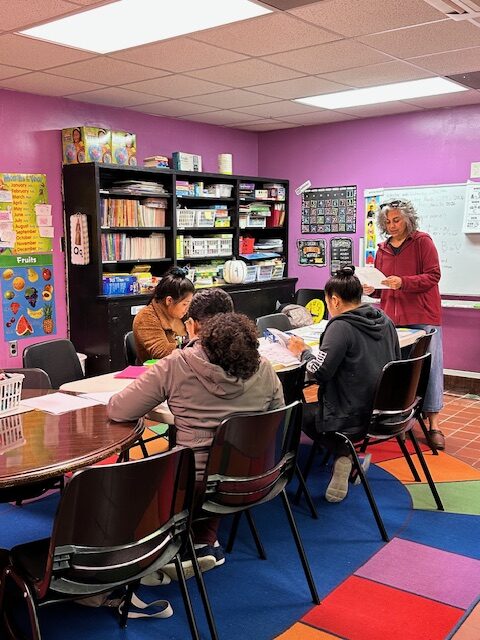
Free ESL (English as a second language) classes run morning and evening, with child care and transportation available so that a busy schedule is never a barrier. Roughly 6,000 children’s books make their way into families’ hands every year, and a summer program called Casa de Open Door gives newcomer youth a foothold in their new community.
And McLachlan is determined to make sure the council is around to keep opening those doors for decades to come.
The council has long relied on Smart Start and adult education dollars through the community college system. But like any good leader, McLachlan is thinking ahead. When Mother Read, a proven family literacy program, recently ceased operations, it prompted a fresh look at what the next chapter of Smart Start funding could look like — an opportunity to evolve that McLachlan is embracing head-on.
On the adult education side, the council recently secured a new five-year contract — a meaningful vote of confidence. That said, reimbursements from the community college system have run as much as six months behind, meaning the council has been doing the work and waiting on the funding to catch up.
McLachlan hasn’t let it slow her down and sees the contract as a foundation to build on.
“We want to grow and diversify our funding streams,” she said. “There is so much potential here — in this community, with these students — and we want to make sure we have the support to meet it.”

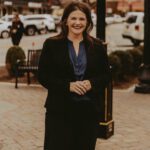
McLachlan arrived in Burke County by a winding road — six years teaching middle school in Raleigh, a master’s in Teaching English as a Second Language from NC State University, and a Ph.D. from the University of Arizona. She defended her dissertation in January, joined the council a year and a half ago, and stepped into the director role this past February.
In the past year, she secured a $20,000 grant from the Community Foundation of Western North Carolina to expand ESL classes and put new technology in students’ hands. She’s also building a digital literacy class where beginners learn email, word processing, and basic computer skills and take home a refurbished laptop when they finish. Her next goal: a real donor base in a community she believes has plenty of goodwill, if only people knew the council was here.
“They don’t know about us,” she said simply. “And I think that’s a way forward.”
Ten volunteer instructors — most of them former or current teachers — show up every week because they love what happens in those classrooms. Browning Rochefort, the council’s beloved longtime former executive director, built much of what exists today on a simple belief: that literacy is really about belonging.
“If you don’t know what’s out there,” she has said, “how can you ever reach for it?”
McLachlan carries that same torch. Her message to the community is plain: low literacy costs everyone. It costs employers. It costs families. It costs communities that never quite become whole.
“Literacy is something that everyone, when it comes down to it, they do support,” she said. “We can’t afford not to have it.”
Ines would agree. So would JM.
The Burke County Literacy Council has served Morganton and the surrounding region since 1988 and is a registered 501(c)(3) nonprofit. Classes are held Tuesday and Thursday mornings and evenings. The organization is actively seeking donors, volunteers, and community partners. To learn more or get involved, visit www.burkeliteracy.org or reach out directly to the council.