
Perspective | Spanish immersion program creates global community in Greensboro
Globalization is conceptualized differently by each individual and rooted in our own ways of thinking and living. It encompasses the existence of otherness, implying the value for what one is and has, and the respect, appreciation, and recognition for that otherness. This is how empathy, respect, and tolerance for difference are developed, and how the richness of diversity is valued.
The Spanish Immersion program at David D. Jones Elementary School in Greensboro serves as one example of the concept of globalization. It’s an excellent opportunity for development and growth for each one of the parts that constitute the educational trilogy — teaching staff, students, and parents — and its cultural context.
This immersion program utilizes almost 100% Spanish inside and outside of classes throughout the school day. This is how it attracts students and families who understand that bilingualism is an opportunity to develop thinking and communication skills, thereby expanding the connection with the rest of the world. The majority of subjects are taught by native Spanish-speaking teachers, making it a great opportunity for the community of Latin American countries to send highly qualified teachers to experience a cultural exchange by teaching their language and the content of their subject in a native English-speaking community.
The Spanish immersion program is made up of teachers and teacher assistants from Argentina, Colombia, Costa Rica, Chile, Honduras, Mexico, Panama, Peru, and Puerto Rico, which bonds educators through their mutual experience of adaptation and cultural exchange. The richness occurs in the academic and social interactions where Spanish flows, while the faculty grows in interdisciplinary meetings with the “lingua franca,” or common language (English), to agree on teaching and learning strategies in order to meet the individual needs of students and comply with the curricular guidelines and state standards. Each elementary grade level has more than half of the total classrooms in Spanish Immersion and one or two traditional English classes.
While the average number of traditional students is 15-18 children per group, each immersion group is larger, with an average of 20-25 students. This participating population and the way the immersion program is consolidated makes this school a significant leader not only in Guilford County, but across the state of North Carolina.
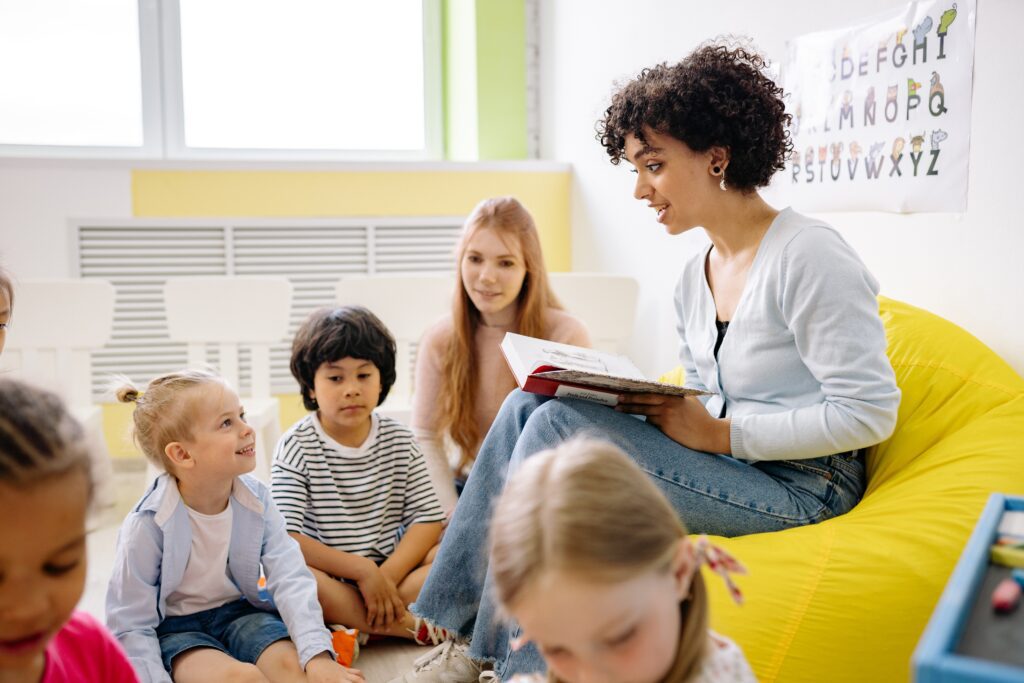
For children, speaking two or more languages is not only culturally and academically rich, but it is also a great opportunity for cognitive development. It expands the possibilities of understanding the world, developing national identity, and valuing the richness of diversity and cultural exchange in their daily lives. Their thinking processes advance significantly, as do their levels of reading comprehension and their verbal and written fluency in Spanish, because they are exposed not only to the language but to the diversity of accents and dialects of the native-speaking professors. These characteristics enrich the lexical and cultural range of the students.
For families and the community, the benefits include broadening their cultural range through new family traditions and customs their children learn at school. Academic activities, such as Open House, Curriculum Nights, Portfolio Nights, evaluations, and conferences with parents, allow families to interact with native Spanish teachers and accommodate each other in a space where various cultures, traditions, and ways of thinking flow in the content and method of communicating.
It is the union of individual worlds for the construction of a global world, where empathy is the forerunner of diversity. Dialects, vocabulary, cultural and academic training, and a high level of performance come together to achieve construction of meaning, comprehension, and both oral and written production.
The program creates a melting pot of diverse styles with a single objective: to fully develop people for a changing and empathetic society, the future citizens of the world.