
Perspective | State leaders highlight the need for classroom investment during Legislators in Schools Week

April 13-17 marked Legislators in Schools Week across North Carolina. This statewide initiative is designed to connect policymakers with what’s currently happening inside our public schools. Throughout the week, members of the General Assembly are invited to visit schools in their districts to observe instruction, talk with educators and students, and better understand the challenges and success shaping our classrooms.
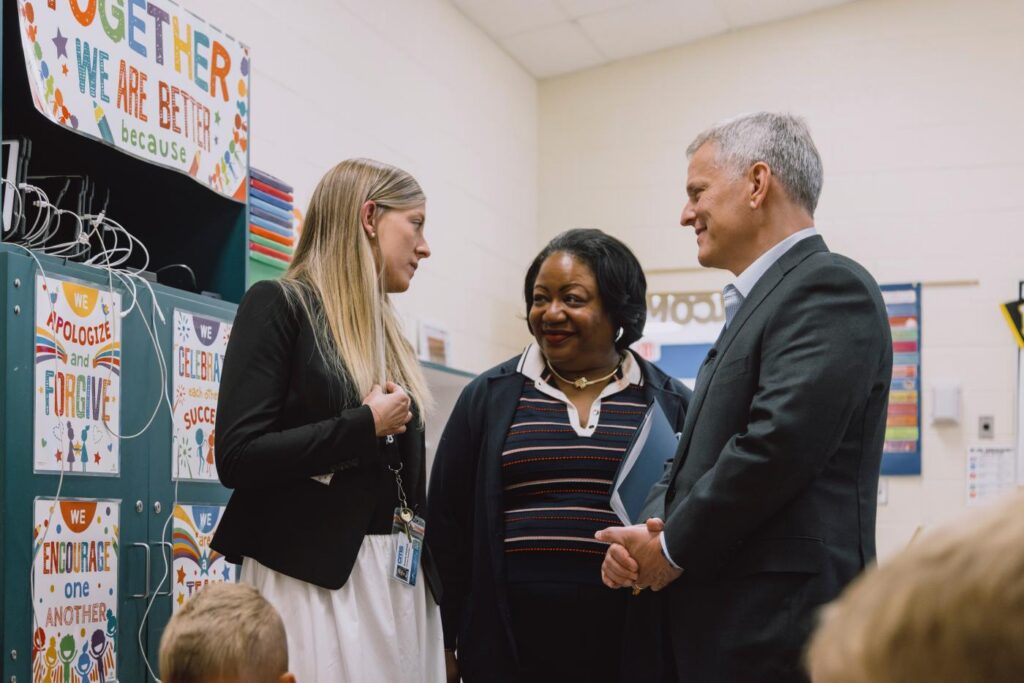
This year, I had the opportunity to join Gov. Josh Stein and Rep. Beth Helfrich, D-Mecklenburg, at Davidson Elementary School for a morning of classroom visits, educator conversations, and reflection on the current state of our public schools.
For Helfrich, this visit was personal: She is an alum of Davidson Elementary, their former PTA president, and a current parent there. For me, this visit came at a critical time, as educators gear up for the end of the school year and are anticipating the outcomes of the General Assembly convening for the short session this week.
 Sign up for the EdWeekly, a Friday roundup of the most important education news of the week.
The Science of Reading in action
Walking through Davidson Elementary with Principal Amanda Childress, we visited two classrooms with teachers on opposite ends of the teaching experience. Our first visit to a second grade classroom was led by a teacher with 20-plus years of experience whose students were actively engaged in the Science of Reading. While most students rotated through self-paced literacy stations, a small group worked closely with the teacher on a specific skill — identifying and applying middle vowel sounds.
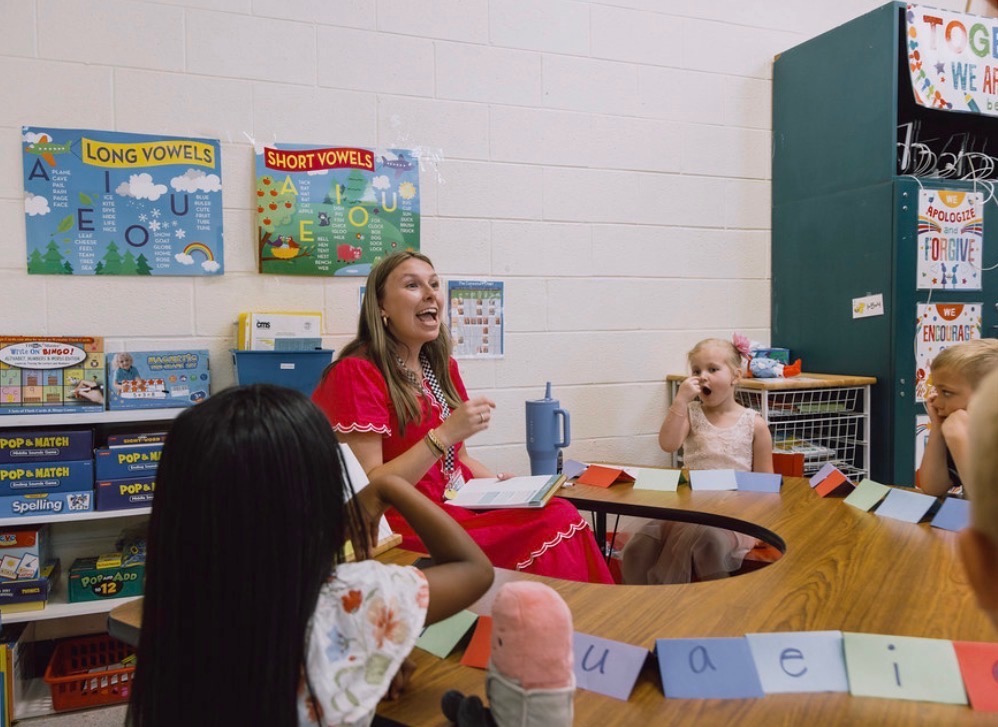
Moments later, we visited a first-year teacher who began her role in January after student teaching at the school. She was already implementing small-group instruction, guiding students through hand signals to match vowel patterns they were practicing. While her kindergarteners were anxiously awaiting lunchtime, she kept students engaged with intentionality and care.
These classrooms reflect what effective instruction looks like in practice: differentiated, data-informed, and responsive to student needs.
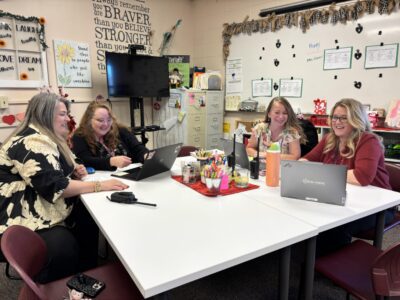
Davidson Elementary has been implementing the Science of Reading for about six years, and the results are evident in both structure and student engagement. At our educator roundtable with Stein, educator Anita Walker described how her first grade class has a clear progression of balanced literacy from phonics to comprehension — a system built on strong foundations.
Educator Betsy Young emphasized that growth happens when instruction is aligned: when classroom teachers and reading specialists work from the same data and use consistent strategies across the whole group, small group, and during individualized instruction.
For multilingual learners, Rhonda Hasse highlighted how intentional grouping supports both language acquisition and literacy development, ensuring that students can keep pace as expectations increase.
Related reads
The realities behind the work
During the roundtable, educators were candid about the challenges they are facing this year.
Walker shared that she moved to North Carolina from South Carolina in 2000 because teacher pay was higher here than in neighboring states. Today, that reality has shifted. As a single mother with a child preparing to graduate high school, she spoke openly about the difficulty of maintaining financial stability on her current salary. She wondered if she should think about moving back home.
Teachers also spoke about the increasing financial burden they carry. Young explained that rising health insurance premiums have tightened personal budgets, leaving educators with less to invest back into their classrooms.
Stein noted that North Carolina ranks near the bottom nationally in per-pupil spending, contributing to a system where teachers often fill the gap themselves. A 2025 CouponBirds report showed that North Carolina educators spent over $1,600 on average.
For educators like Mike Jones, that cost is even higher when transitioning grade levels, as materials must be rebuilt from the ground up. Beginning teachers, as Young added, often face the greatest financial strain in their first years.
Student needs beyond academics
Another consistent theme was student mental health, as Stein acknowledged that North Carolina ranks near the bottom nationally in access to school psychologists, nurses, counselors, and social workers.
“Students bring a lot with them into our classrooms,” Stein shared. “We want teachers focused on teaching, while support staff help meet the emotional and social needs students carry.”
At Davidson, the school-wide implementation of a social-emotional learning (SEL) program falls on the shoulders of teachers like Walker to administer that programming.
Stein’s Teacher Advisory Committee has identified the prevalence of this need statewide.
In my own home county of Martin, for the 2,500 students we have, there are only 9 school counselors, 4 social workers, and zero school psychologists to service these students.
Budget priorities and the path forward
Without an approved state budget, North Carolina has continued to operate under 2023 funds, meaning teachers have not received raises this year. Combined with rising costs, such as insurance premiums, teacher compensation has effectively decreased.
At the visit, Stein made clear that investing in students means investing in the state’s future. He highlighted his budget priorities, including:
- Raising average pay for all teachers and instructional staff, including raising starting teacher pay to the highest in the Southeast.
- A $300 classroom supply stipend for teachers.
- Increased investment in support staff.
- Expansion of Advanced Teaching Roles and the Science of Reading.
In a press release about the visit, Stein outlined these priorities and reiterated his call for the General Assembly to pass a comprehensive budget.
“Teachers across our state are working hard to prepare our students to succeed, and we must join them in investing in student success,” Stein said in the release. “I’m eager to partner with my colleagues at the General Assembly to invest in our children’s future and give North Carolina teachers a real pay raise.”
Rep. Helfrich emphasized that budget decisions ultimately reflect the state’s respect for the teaching profession. As a daughter of a career public school teacher, she spoke to the professionalism and lifelong commitment educators bring to their work. She pointed to the momentum in the House’s proposed budget, which includes many similarities to the governor’s.
Since the House budget passed with bipartisan support, she noted, the work now continues with the Senate to reach a final agreement.
Why this week matters
Legislators in Schools Week is about more than visits — it is about alignment.
It is about ensuring that decisions made in Raleigh are informed by the realities inside classrooms across North Carolina.
At Davidson Elementary, we saw what is possible when strong instruction, dedicated educators, and collaborative systems come together. And we heard from educators what is needed to sustain that work.
North Carolina’s students are our future. From Davidson to Williamston, we must ensure our investment in public education reflects a vision of growth and opportunity for our state.
Because when policymakers step into classrooms, the conversation shifts from abstract policy to lived experiences. And, that is where meaningful change begins.