In the Belk Center’s work with adult learners across North Carolina, we’ve developed a framework grounded in what we call the “5 Ps” — public messaging, partnerships, processes, pathways, and proximity. These five areas consistently show up as powerful forces shaping the student experience. We think of them as threads, woven together to create a strong support system for adults returning to college and working toward completion. And while each one matters, I’ve come to believe that proximity may be the most relevant.
Why? Because proximity is about more than just time and physical location. It’s about connection, access and, more importantly, being seen and supported.
 Sign up for Awake58, our newsletter on all things community college.
A broader definition of proximity
This framing builds on Gregory Haile’s vision from his 2021 Dallas Herring Lecture: Proximity is not just nearness in space, but alignment of relationships, expectations, and affordability that allows learners to see themselves reflected within the community of higher education.
In its simplest form, proximity means nearness — whether in space, in time, or in relationship. In student success work, that nearness is about how close our students are — not just physically, but also relationally — to the people and resources that can make a difference in their academic journey.
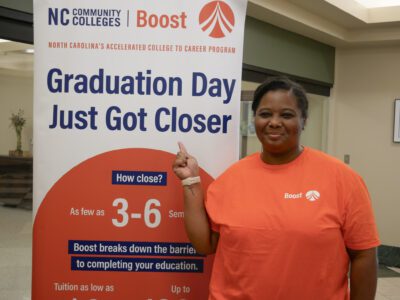
At the Belk Center, our commitment is to be: “On the Ground. In the Conversation.” That proximity — to students, to community college leaders, to our partners, and colleagues — allows us to create solutions that are both innovative and achievable. We live out this commitment through our work with the North Carolina Community College System’s new Boost program, by bringing together perspectives from across the college community. By listening to and synthesizing ideas from all stakeholders, we help colleges identify opportunities for growth and chart actionable paths forward.
Read more about Boost
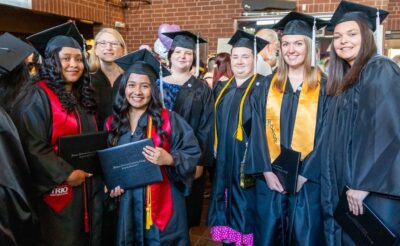
Proximity in practice: Space, time, and connection
Let’s start with physical proximity: Where are advising offices located? Are they in the same building where students attend class? Where do students naturally congregate, and do support services live there too? Then there’s temporal proximity: Are appointments available when students need them? How quickly can they get a response when they ask for help?
For adult learners, our NC Reconnect work found a direct correlation between timely advising and reenrollment. In fact, one in five returning students were already halfway to a degree when they left school. For these students, time away from school isn’t just a gap, it’s an opportunity cost. By connecting students with program navigators, success coaches, and faculty who can provide timely guidance, we can help ensure they stay engaged and continue their path toward completion.
Proximity is also about connection — the closeness of relationships, and the sense of being seen and understood. And perhaps this is the most important dimension of all.
When a student has easy access to a faculty advisor who takes time to know them and learn their story, that student is more likely to persist. I’ve known this with my own engagement with students. That moment when a student realizes that someone truly sees them and cares about their success, that’s a powerful moment.
One of my advisees once told me that he had never seen himself in education — no one in those spaces looked like him, and some even told him he wouldn’t make much of himself. Yet he persisted all the way to his doctoral degree, still not fully feeling like he belonged. Then one day, a guest lecturer came to class — someone who reflected his identity and journey. That moment changed everything. My advisee told me: “I belong. I am heard. I am seen.”
That is proximity — in this case, proximity to people who reflect our aspirations and affirm our place in spaces we weren’t sure were meant for us.
From closing gaps to shortening distance
As educators and leaders, we often talk about “closing gaps.” But proximity challenges us to think differently. Instead of simply identifying the gap, we can shorten the distance — bringing support, relationships, and opportunities closer to the student.
Ultimately, proximity is about designing a fabric of support so dense and so interconnected that students don’t slip through the seams. A fabric woven from people, from resources, and from promising practices that meet our students exactly where they are.
When we collectively and intentionally build proximity into our systems, we build something more powerful than access — we build connection. And we create the conditions for each and every student to succeed, so that more students can say with confidence, “I belong. I am heard. I am seen.”

Recommended reading