
Perspective | North Carolina child care is in crisis — and it’s a business issue

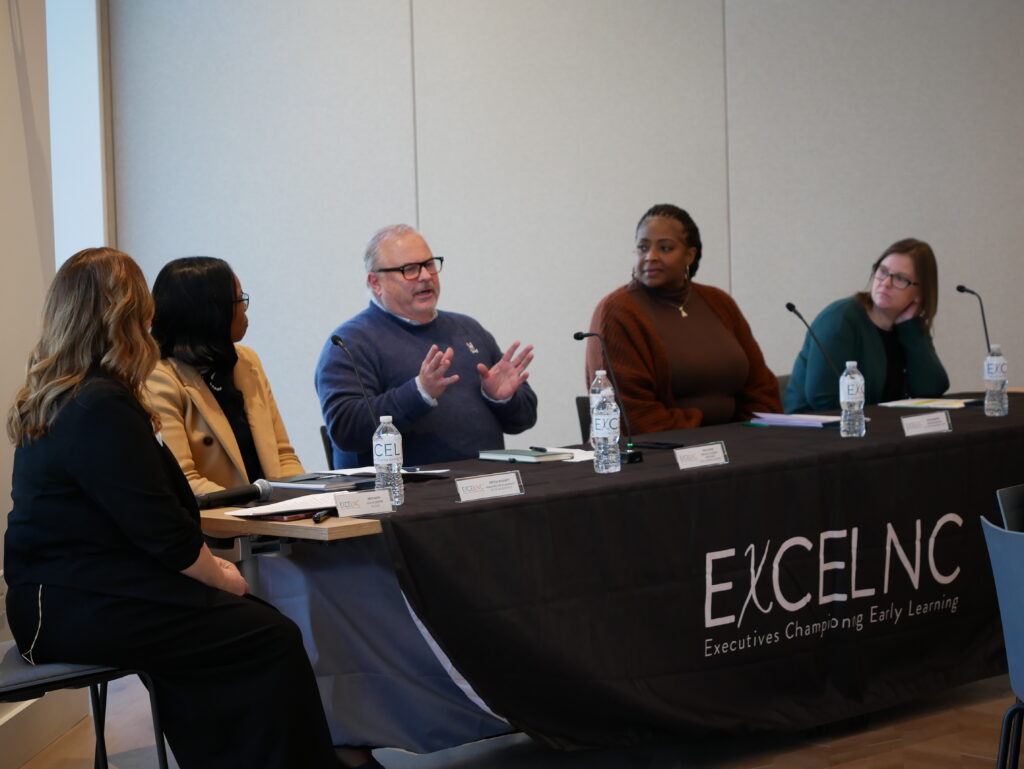
A full-blown child care crisis in North Carolina has the attention of business leaders.
It has to. The crisis is costing our state an estimated $5.65 billion every year. That’s $4.29 billion in lost business activity from absenteeism and turnover, and another $1.36 billion in lost state revenue.
Since 2019, roughly 100,000 fewer parents of young children are participating in the labor force. More than a third of parents who experienced job disruptions say childcare was the reason they left work altogether.
For working families, this is a painful conundrum. For employers, the pain and concern is also real.
 Sign up for Early Bird, our newsletter on all things early childhood.
As an N.C. business leader and chair of the Economic Development Partnership of North Carolina (EDPNC), I cannot emphasize enough the importance of a strong reliable workforce. That’s why I signed on as an Executive Champion with ExCEL NC, a nonpartisan coalition of business leaders and entrepreneurs working with policy makers to address the crisis.
In April, the coalition joined the Southwestern Commission Council of Governments to co-host the Child Care Economic Summit in Sylva. There, they shared research revealing that turnover and absenteeism costs the region — consisting of Cherokee, Clay, Graham, Haywood, Jackson, Macon, and Swain Counties — more than $46.5 million per year.
The child care crisis hits rural areas where I live particularly painfully, turning a family struggle into a major economic barrier. At an Ashe County summit, a health care HR director noted that the lack of reliable care “routinely” forces talented recruits to cut hours or abandon the workforce entirely. In smaller communities, such losses create an immediate domino effect — stalling patient care and destabilizing the local economy. Without adequate child care, sustaining a dependable rural workforce has become nearly impossible.
And here’s the double whammy — at the same time demand is rising, supply is shrinking. North Carolina has lost hundreds of licensed child care programs since 2020. Infant and toddler care — the most expensive and least available form of care — remains the biggest bottleneck. Early educators are leaving the field because wages are low and benefits are limited, further reducing capacity.
All of this is why business leaders across North Carolina are stepping forward.
Through the ExCEL NC coalition and its partners, executives are taking part in listening sessions in communities across the state; meeting with employers, child care providers, parents and local officials to understand the challenges firsthand.
The message from the business community is clear: child care is not a side issue. It is essential economic infrastructure. We are engaging directly with Gov. Josh Stein’s administration and state lawmakers from both parties, all of whom are keenly interested in durable, fiscally responsible solutions.
Much of the discussion focuses on establishing a statewide subsidy reimbursement floor. Currently, state payments to child care centers are below actual child care costs. In 95 of our 100 counties, those payments fall short of what you might consider a basic “survival line.” By raising that floor to cover the true cost of care, we can stop local centers from closing and help more parents get back to work. It’s a massive win for the state, too: experts say this move alone could pump nearly $190 million into North Carolina’s economy and support over 3,000 new jobs.
Business leaders understand return on investment. Few public investments offer this level of economic impact while also strengthening families and communities.
North Carolina has long prided itself on being a state where businesses can grow and families can thrive. Ensuring access to affordable, reliable child care is central to both goals. And business leaders, alongside policymakers who recognize the urgency, want and need to find solutions that match the scale of the challenge.
Editor’s note: This piece was originally published by Business NC. It is being republished with permission.