
Perspective | Nature and culture and knowledge and feelings

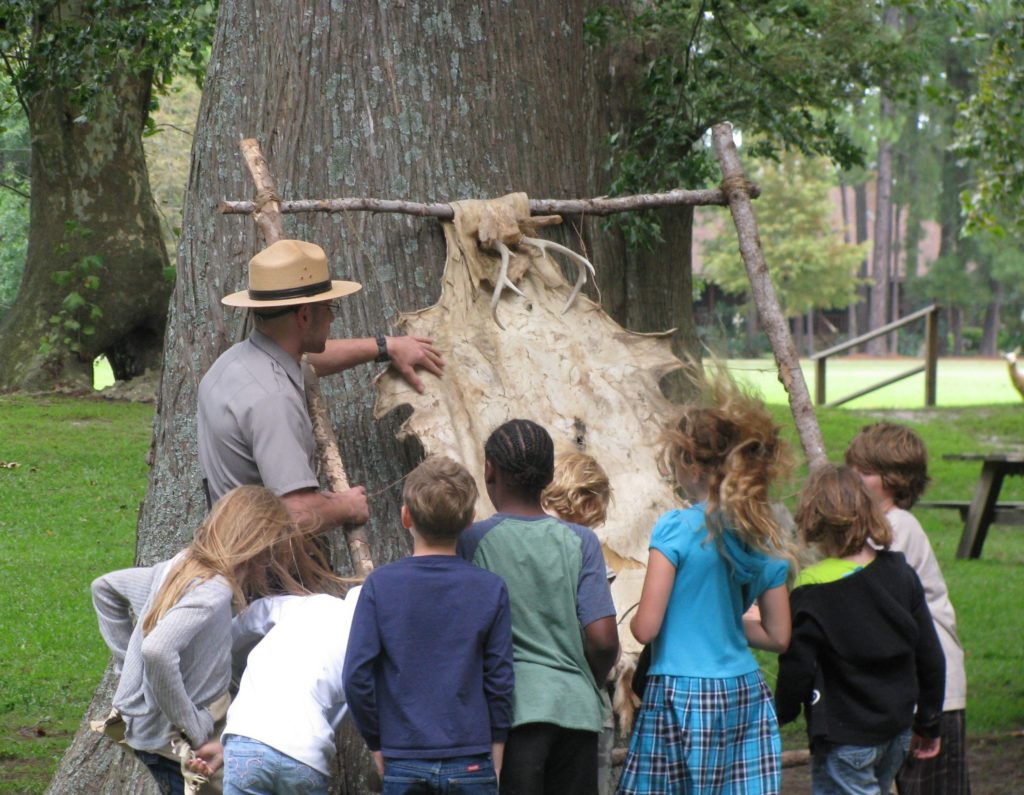
Working in the arts, history, nature, and library fields is unique, and the career staff at each of our museums, sites, and parks are determined and driven. Like you, the thousands of dedicated teachers across North Carolina, we are balancing our personal and professional lives to live and share our passion with others.
We also miss teachers and their students. Without field trips to our many sites, we have been innovating to stay connected and continue to support teachers and students’ learning virtually.
Like all things this school year, this is challenging and stressful. We sadly cannot fix all the challenges that face us. But we can connect you to our vast resources to support you and your students both intellectually and emotionally.
How can we help?
We conducted a teacher survey late last school year to help guide our plans. Some of our locations are actively promoting virtual programs. Many have virtual field trips. We enhanced our NCLearn resources page making it easier to navigate including a searchable NCLearn database. We are also collaborating and adding to free standards-aligned, teacher-focused resources, like the GoOpenNC platform, from the N.C. Department of Public Instruction.
Another resource is The Navigator, a first-of-its-kind tool designed to connect classroom learning to career learning. Review this article from one of our museum educators on virtual, experiential, backyard professional learning for teachers. These are all great, free resources for you.
We also partnered with Streamable Learning to sponsor free access to their live streaming education content for all public schools in Tier 1 counties in North Carolina. This provides much-needed virtual resources for teachers and students in our traditionally rural and underserved areas. Streamable Learning links subject matter experts to thousands of K-12 classrooms and homeschools across the country. North Carolina teachers can connect with the educators at the N.C. Museum of Natural Sciences, N.C. Zoo, N.C. Aquarium on Roanoke Island, N.C. Maritime Museum at Southport and the N.C. Museum of Art.
Field trip alternatives
While you might not be able to physically visit with your students, you can visit a site virtually – maybe even one you’ve never considered. Would you like your students to explore the N.C. Museum of Art to investigate global contemporary artists’ works that express diverse cultural and interpersonal perspectives to practice ways of understanding and to relate to others? (This experience targets social awareness skills in a year when social-emotional learning is critical.)
Or perhaps you want to “go” to the beach and visit one of our aquariums to learn about sea turtles? Or celebrate our state’s diverse indigenous people and join the American Indian Heritage Celebration, one of several live events N.C. Museum of History hosts.
There are multimedia resources that you probably never knew existed. Tour the State Archives vault in our headquarters’ basement and see the original 1600s charter of the “Carolinas.” Enjoy music from the North Carolina Symphony in your classroom (password 1932). And if you’re not sure where to start on a research project, connect with a librarian from our Government and Heritage Library.
Who are we?
We are the North Carolina Department of Natural and Cultural Resources (DNCR). We oversee the state’s resources for the arts, history, libraries, and nature. We are the state’s storytellers, conservationists, researchers, librarians, scientists, artists, educators, and more. As a previous colleague described it to me, we are the “fun” department in state government that is unknown to most residents.
But many of you do know us: 27 historic sites, seven history museums, two art museums, two science museums, three aquariums and Jennette’s Pier, 39 state parks and recreation areas, the N.C. Zoo, N.C. Symphony, State Library, State Archives, N.C. Arts Council, State Preservation Office, Office of State Archaeology, African American Heritage Commission, and the Office of Land and Water Stewardship. We are the caretakers of a very diverse collection of North Carolina treasures available to our state’s residents. Collectively, we usually welcome about 25 million visitors each year, including many school groups. However, there is nothing usual about this school year.
Our education and interpretation staff are creative and passionate. They not only focus on the facts but also on the emotions that our great state’s resources evoke in all of us. We want to create emotional and intellectual connections between audiences (i.e., people) and the meanings inherent in the resources (i.e., things, places).
Simply put, we want to engage with you and your students holistically and help as best we can — and look forward to the day when we can welcome you back to visit us.