
Perspective | More than a summit: Color of Ed approaches 10 years of building community, leadership, and change

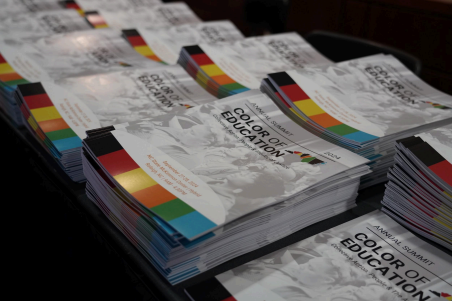
More than an annual summit, Color of Education brings together hundreds of educators, students, policymakers, community leaders, and change makers to ignite bold conversations, inspire collective action, and shape a more just and equitable future for education.
As the summit approaches a decade of service, it is enlightening to look back on where the summit began and how it has evolved over the past eight years.
Evolution does not occur overnight. It is a gradual process requiring much growth, adaptability, and change throughout. So, what does a space of change look like?
 Sign up for the EdDaily to start each weekday with the top education news.
A similar question plagued Dr. Dudley Flood’s mind as he longed for a space that once again brought together the community to delve into the issues surrounding education.
Dr. Flood, lifelong educator and leader in desegregating North Carolina schools, explained: “I really felt that there needed to be a place where professional people and people interested in education were to come together and share their experiences, share their successes, share their failures.”
That is exactly what the Color of Education Summit offers.
With over 100 in-person and virtual sessions having been held and an array of vendors and inspiring keynote speakers — such as Nikole Hannah-Jones, Ta-Nehisi Coates, Jelani Cobb, Vanessa Siddle Walker, Eddie Glaude, Eve Ewing, and Tara Roberts, among others — Color of Education is a gathering that has worked to bring together over 5,000 people from across 45 states to reflect on the educational system, understand the impact they can have, and strategize action plans for advocacy.
While this impact is admirable, the summit had to start somewhere.
“The first year, we only had just one session in person, the rest were virtual,” Dr. Flood recalled. “We didn’t have the opportunity to interact that much because we were seated in an auditorium, as it were, and you may have gotten the chance to just shake a hand or two, but not to have the kind of interaction that we’ve come to know now.”
Yet it was still successful in bringing together those who sought to engage in conversations pertaining to education and move towards a more equitable future.
Prior to the formation of Color of Education in 2018, “there had been no avenue through which to focus as a mass on these issues … you had no Harambee. You had no coming together of people for a long while,” said Dr. Flood.
Now, the summit has been able to grow, bringing together a large number of people to collaborate and analyze educational issues that resonate with what is needed at the time.
Dr. Flood emphasized this unique quality of Color of Education, stating, “I’m in a lot of organizations, but they don’t allow that kind of opportunity that I have at the Color of Ed to really dialogue on an interpersonal basis with you without there having to be some reference to where I work or where you work.”
While sessions and scale have evolved over the years, the goal has always been the same. As Dr. Flood stated:
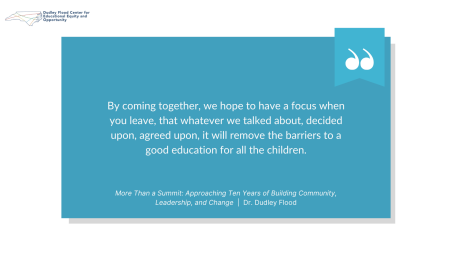
“By coming together, we hope to have a focus when you leave, that whatever we talked about, decided upon, agreed upon, it will remove the barriers to a good education for all the children.”
Color of Education continues to achieve this goal year after year, motivating participants to return and continue reaping the benefits of partaking in a summit focused on removing barriers to educational opportunity and improving outcomes for all students.
As he prepares to attend his fourth Color of Education Summit in October 2026, high school social studies teacher Xavier Adams said, “I’ve appreciated how the Flood Center continued to keep the focus of supporting all students at the forefront of their work. And so, being able to return to a space where folks share that same goal of helping education improve across our state has felt very important.”
In supporting students, Color of Education has also become a place of shared learning and meaningful dialogue, offering community leaders, educators, and students alike an inclusive space to discuss the issues they find pressing.
“An opportunity to (be) present with students,” Adams said, is the biggest impact the summit has offered him. “There’s a practical application of learning that comes with presenting at a conference that doesn’t always come out in traditional classroom settings, and so I’ve been grateful for the ways it’s allowed my students to dig deeper into ideas that we’ve talked about in the classroom. It’s also allowed them to develop public speaking skills. And most importantly, it’s just given them a sense of belonging and confidence in the work that they find to be important.”
More on the Color of Education Summit


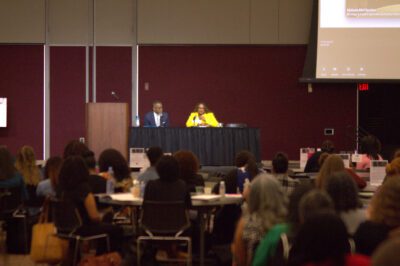
As the Color of Education Summit approaches its 10th year, its impact extends far beyond the number of attendees or sessions offered. Its greatest success lies in the community it has built, where educators, students, policymakers, and other attendees come together to learn from one another and recognize the meaningful change they can each individually make.
That sense of belonging and shared purpose is what Dr. Flood believes defines the summit.
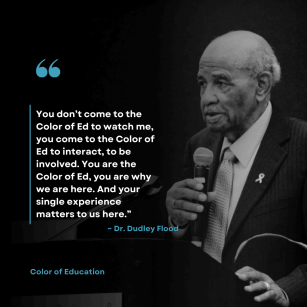
“You are the Color of Ed. You are why we are here,” said Flood. “And your single experience matters to us here.”
Nearly a decade after its founding, Color of Education continues to fulfill the need Flood pointed to, creating a space where people gather not only to discuss educational challenges, but to shape solutions together.
The ninth Color of Education summit will be held on Oct. 2-3, 2026, at the McKimmon Center in Raleigh. If you are passionate about removing barriers in education, join us in making a change.