
Perspective | Let history speak: How 1868, 1901, and 1956 help us find our voice today

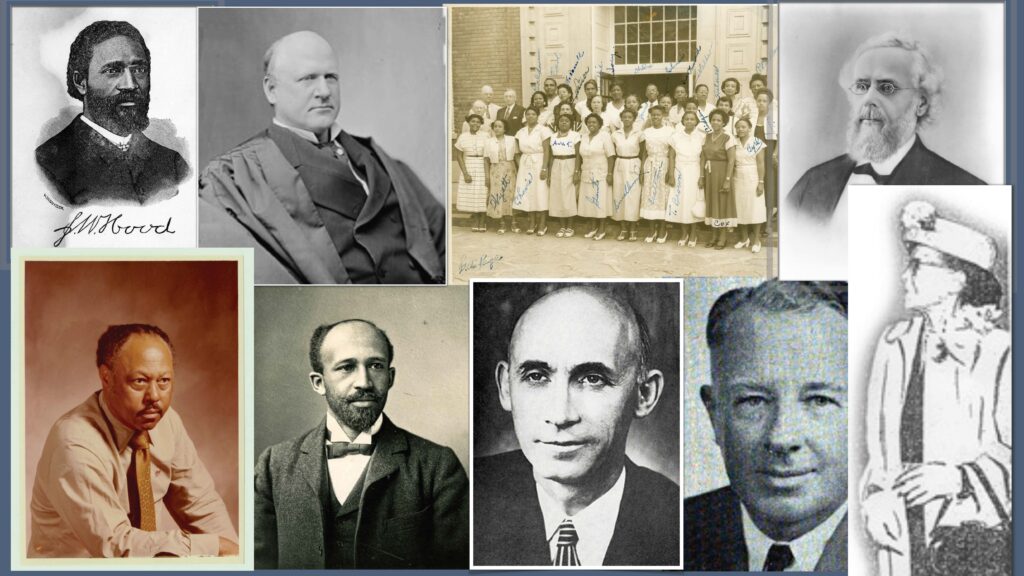
When history speaks, it draws us back to our fundamental principles.
When history speaks, it reminds us of community.
When history speaks, we will hear an invitation to join.
An invitation to join authentic leaders who have the courage of their convictions. To consider what is possible in the times in which we live.
As June 19, 1865, marked the end of enslavement, Sept. 29, 1865, marked the beginning of North Carolina freedmen collectively asserting their rights.
A journalist, Sidney Andrews, who covered the 1865 North Carolina Freedmen’s Convention, said: “This was their first political act; and I do not see how they could have presented their claims with more dignity, with a more just appreciation of the state of affairs, or in a manner which should appeal more forcibly either to the reason or the sentiment of those whom they address.”
The following 1868 North Carolina Constitutional Convention, held in Raleigh from Jan. 13 to March 17, resulted in a new state constitution ratified in April 1868.
At the convention, an extraordinary coalition of delegates across race and geography made possible a constitutional right to public education — a right that persists to this day.
This Juneteenth, please watch this video, ask yourself the following questions, and hear the invitation.
Here is the script of the video. Here you can find what happened each day of the 1868 convention.
1868 | Freedom and Possibility: Creating the North Carolina 1868 Constitution
How does having a sense of freedom and possibility for a better future affect what you say and do?
Does it lead you to being more creative and bolder? Does one success lead to another success?
If instead, you feel the weight of the world on your shoulders — if you feel more oppression than freedom — are there things you can do to tap into that energy of possibility?
1901 | Finding a Way Out of No Way: Disenfranchisement and Intentional Inequities
How do you support public education — or any other feature of our democracy — in a time when those in power are taking away rights and intentionally creating inequities? When you feel your back is up against the wall?
What additional strategies do you consider? How do you build community?
How do you maintain your resolve?
1956 | Hope Meets Resistance: North Carolina’s Response to Brown v. Board of Ed.
What would it be like to be a voice for public education in a time when you have a hopeful vision and those who are in control are resistant to change?
Or more simply, what would it be like to have a hopeful vision when those who are in control are resistant to change?
Now
How would you characterize the time we are living in now? What does it mean to be a courageous leader now?
What would it look like to be an engaged resident now?
Thank you for exploring the experiences of those who cared about democracy and education in challenging times so that we can better speak and act now.