
Perspective | Just how much were young children undercounted in the 2020 census?


North Carolina receives $16 billion annually in federal funding that is allocated based on the decennial census. This funding supports health, human services, education, and housing programs throughout the state. An accurate census count ensures that North Carolina receives its fair share of federal funding.
The goal of the U.S. Census is an accurate count of the U.S. population. And the good news for 2020, despite the challenges in implementing the census due to COVID-19, is that the total count of the population was accurate. However, this total population count was reached by undercounting some populations and overcounting others. In other words, while the 2020 net census count is considered accurate, it is not fair in its representation.
Historical undercounts
The under- and overcounting of specific populations is not new. The census historically undercounts our most under-resourced populations, including Black, American Indian or Alaska Native, and Hispanic or Latino populations. These same groups are under-represented in 2020.
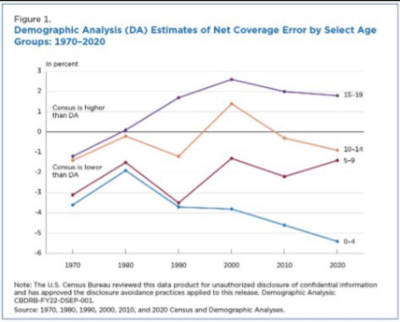
The most significant undercount, however, is for children under five. Analysis by the Census Bureau revealed the net undercount error for children under five in 2020 was -7.0%, the largest of any age group. Further, the undercount of young children has also been getting worse with every census since 1980. Figure 1 shows the accuracy of the last six census counts by age group, with children under five diverging from improving trends seen for other ages nationwide.
At the intersection of kids, race, and ethnicity
When you take race and ethnicity into account along with age, you find an even more dramatic misrepresentation in historical census counts. For example, in the 2010 census, Black children under five had an undercount rate 50% higher than all children under five. Populations that fall into multiple undercounted groups face even greater misrepresentation in the decennial census.
What can we do about it?
So how do we best help North Carolina’s children, now that the 2020 census is complete and the 2030 census is years away? Talking about the results and impact of the 2020 census helps people in your community realize the importance of the once-a-decade project. A greater understanding of who was misrepresented in 2020 is the first step in creating a more equitable census in 2030. And believe it or not, planning for the 2030 census is already underway locally and nationally. It’s not too early to voice the need for an accurate and fair census count of North Carolina’s children in 2030.
The 2020 undercounts will impact our children for the next decade. Right now, you can help your local government direct federal resources to the children and families who really need them today. Find out how to advocate for American Rescue Plan funds in your community with our ARPA toolkit.