
Perspective | How instructional coaching can drive school improvement

Across educational settings, instructional coaching has become pivotal in fostering school improvement and enhancing teacher effectiveness.
While this responsibility was once seen solely as an administrative function, it is now employed by various roles within schools because it can directly impact student outcomes and overall health of the educational setting. Strong leadership partnered with instructional coaching can drive significant improvements in schools.
Effective leadership is important because it directly impacts four key areas of school improvement: vision and mission, school culture, resource management, and professional development.
Effective school leaders (teacher leaders, instructional coaches, counselors, assistant principals, principals, etc..) set a clear vision and mission that align with the educational goals and values of the stakeholders within the school. A positive school culture is cultivated by the school’s leaders when safety, inclusiveness, and collaboration are prioritized. When leaders model these values it automatically fosters an environment where students and teachers thrive. Leaders practice good resource management by being strategic about the allocation of resources so that financial, human, and material resources can be used effectively to support teaching and learning. This also includes professional development. Leaders have to collaborate with each other to determine the professional development needs of their teaching staff.
When effective leadership is partnered with instructional coaching, instructional coaching becomes more of an act than a role. Effective leaders understand that every leader that can play a role in instructional coaching should play a role in instructional coaching.
Instructional coaching provides opportunities for individualized support, collaboration and reflection, modeling, and data analysis. The personalized support allows for teachers to refine their instructional practices. The leaders provide feedback based on low-stakes observations and assist with implementing relevant research-based practices.
Collaboration and reflection happens when the leaders assist the teachers with goal setting, analyzing student data, and developing action plans for instructional improvement. This collaborative process often calls for the teacher to reflect and improve their practices. Leaders model the effective teaching practices through a hands-on approach to help teachers see the practical application of the feedback being given.
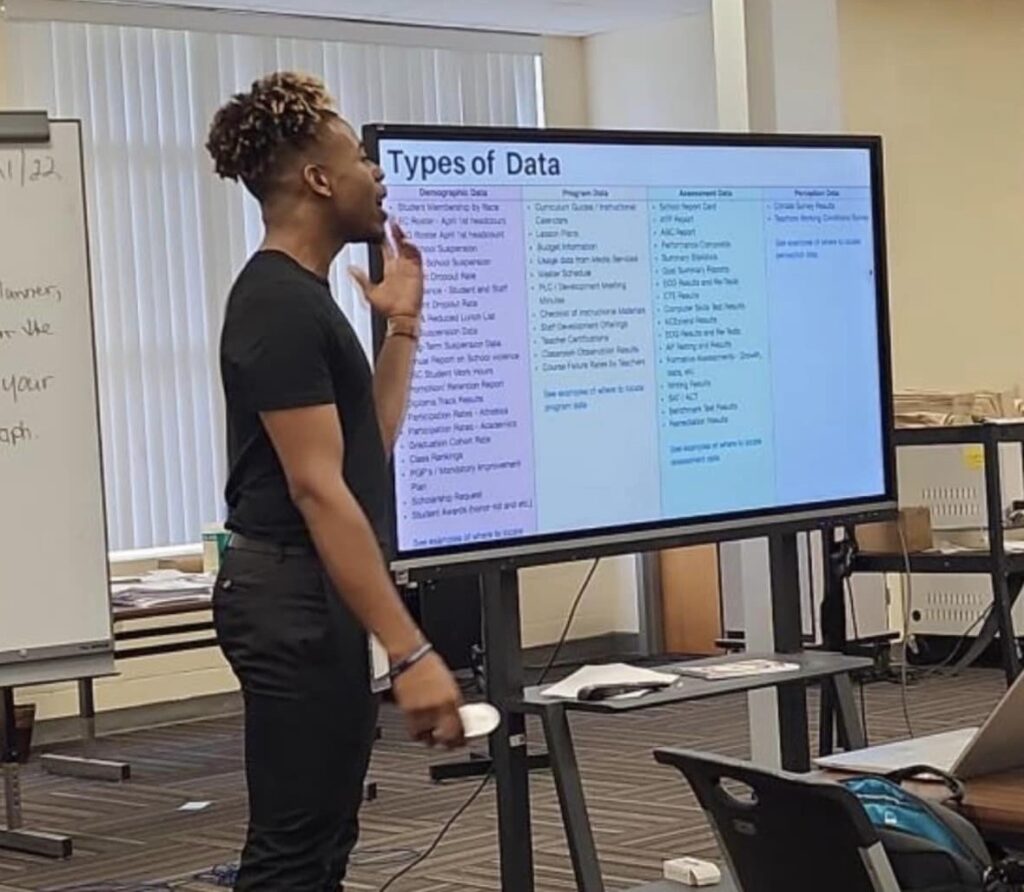
Data utilization requires the leaders to help teachers make sense of the data they collect. This often looks like interpreting the assessment data, identifying trends, and making data-driven decisions that will significantly impact student learning.
When effective leaders practice instructional coaching, the teacher effectiveness is increased due to enhanced instructional practices, increased confidence in self, and professional growth. All of these factors ultimately contribute positively toward school improvement.
Instructional coaching ensures that teachers’ practices align with the school’s goals and priorities. This ensures that the entire school has a cohesive and focused approach to education. Since instructional coaching is a continuous process, schools will begin to see sustained improvement because instructional challenges are consistently being addressed with effective practices.
Effective leaders use the act of instructional coaching to create an environment where teachers can thrive and students reach their full potential. When all leaders who can support through instructional coaching do, schools make significant improvements in instructional quality and overall school performance.