
Perspective | Teachers — and schools — need teacher leadership opportunities

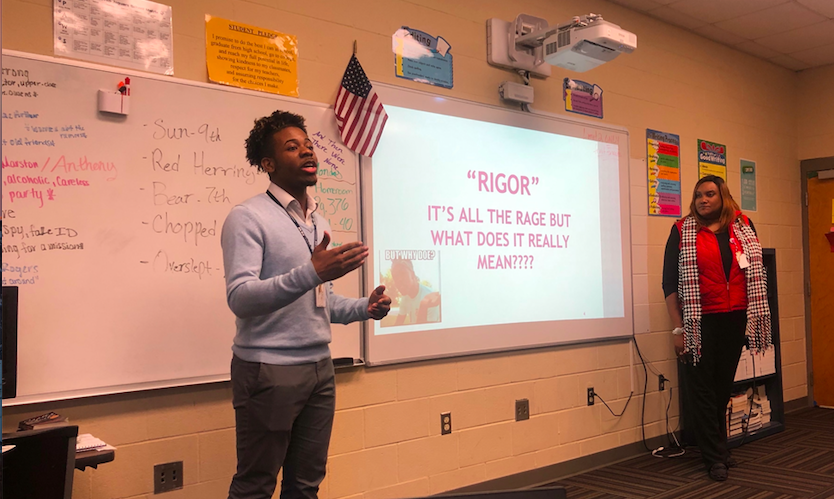
By the time I was wrapping up my fourth year of teaching, I felt like I finally “got it.” My classroom was well-managed, I had a great relationship with my students’ families and the community, and I had a semi-decent work-life balance. After numerous trials and errors, I finally felt confident in who I was in the classroom. Shortly after, I was presented with a new passion: how to support other beginning teachers as they were also trying to make it to the “got it” point of their careers.
By nature, the traditional hierarchy of K-12 schools allow for administrative supervision but not administrative support. I say this recognizing the fact that there are exceptions to this rule. On any given day an administrator performs a range of tasks, from handling discipline issues to leading school initiatives, and these tasks often leave little time to support their teachers.
Recognizing the reality of this situation, I was torn. I really wanted to stay in the classroom and continue my full-time teaching career, but I also wanted to support other teachers who were just beginning their career. I knew there had to be a way to remedy this situation while still being able to achieve both of my desires. This is how the concept of teacher leadership was introduced in my life.
In its simplest form, you can think of teacher leaders as individuals who take on responsibilities outside of the classroom (and also outside of their role responsibilities) in order to help support the overall growth of students and teachers within an educational setting. The concept of teacher leadership has been around since the early 1980s and has always focused on teachers working in some capacity outside of the classroom to support school improvement. The roles of teacher leaders vary by areas of expertise and the needs of the educational setting, but often include responsibilities such as leading grade-level or content departments, supporting teachers through coaching, program/software experts, administrative support, and many other roles.
Before fully transitioning out of the classroom, teacher leadership provided me with the opportunity to tap into my other passion (supporting teachers through coaching) while maintaining my full-time teaching position.
These positions are an essential part of today’s educational settings because they allow teachers to develop leadership skills and be fulfilled within their purpose without having to transition out of the classroom. Additionally, teacher leadership positions allow for more leadership opportunities for educators outside of administrative and counseling roles. The administrator and counselor roles are critical, but schools must adapt every part of their system to meet the ever-changing needs of our society. This includes the leadership systems that may be in place.
As a former teacher who had no desire to become an administrator, I am grateful for the educational settings that were innovative enough to see the importance of the teacher leadership role but also conventional enough to understand that passion work deserved to be compensated.
In a world where school reform and curriculum reform should drive conversations around educational policies, it is important to note that true school improvement cannot happen without the support of teachers and teacher leaders. With an increase in the labor pool, the teaching profession is currently competing with other professions that will allow teachers to utilize their skills, interests, and passions in creative ways.
It is up to educational leaders and policymakers to create a system where teachers are able to serve in leadership capacities and fulfill other passions without having to leave the classroom.
Here are some recommendations for North Carolina legislators, district administrators, and building administrators:
- Reallocate funds to provide more compensated opportunities for teacher leadership throughout school districts.
- Develop formal teacher leadership programs within your district to cultivate teacher leadership and retain teachers.
- Provide specialty resources (surveys, activities, etc.) to your teaching staff to gauge which teachers might be interested in teacher leadership and to determine what type of opportunities could eventually be provided throughout the school.