When local businesses and community colleges join forces, everyone wins. Partnerships just make sense, as they create a shared purpose between public and private organizations: building a dynamic and sustainable workforce pipeline. It’s a perfect match, because businesses need skilled workers, and community colleges need students to gain hands-on experiences.
Here at Blue Ridge Community College in western North Carolina, we partner with over 600 businesses and organizations across the region. Maintaining these relationships year-round is a top priority, creating transformative opportunities for students and graduates while strengthening the workforce and supporting regional economic growth.
 Sign up for Awake58, our newsletter on all things community college.
Industry-aligned immersive learning
A shining example of strategic public-private partnership is found in apprenticeship programs, which allow students to develop essential skills and knowledge both in the classroom and on the job with local employers.
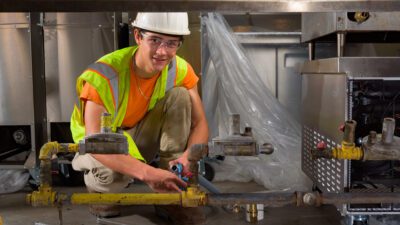
Locally, electrical apprentices in the Apprenticeship Blue Ridge program attend one class a week and spend the rest of their time on-site at two partner businesses in the area: Jackson Electrical Contractors and A-American Electric. Working side by side, these local employers are just as committed to our students’ progress as the Blue Ridge instructors, having invested in the equipment and classroom resources that make this hands-on training possible.
By providing real-world environments where electrical apprentices can apply their knowledge, their mentorship and practical instruction play an instrumental role in delivering a well-rounded education. The combination of classroom learning and on-the-job training is invaluable for students while allowing Jackson and A-American to help shape their future workforce.
Partnerships like these show that businesses don’t have to react to workforce shortages; they can be proactive by collaborating with higher education leaders like Blue Ridge.
For students, apprenticeships open the door to high-quality careers without forcing a choice between education and financial burden. Many programs allow students to earn while they learn, helping them build savings and, in some cases, generational wealth.
The broader community wins as well. These collaborations keep talented workers in local jobs, strengthen the regional economy, and create an environment where families thrive and businesses prosper.
Related readings
Intentional learning spaces
Preparing for successful partnerships doesn’t happen overnight; it requires intentional planning and investment — sometimes over many years. At Blue Ridge Community College, we have made significant upgrades to our facilities and infrastructure to ensure effective collaboration with our partners.
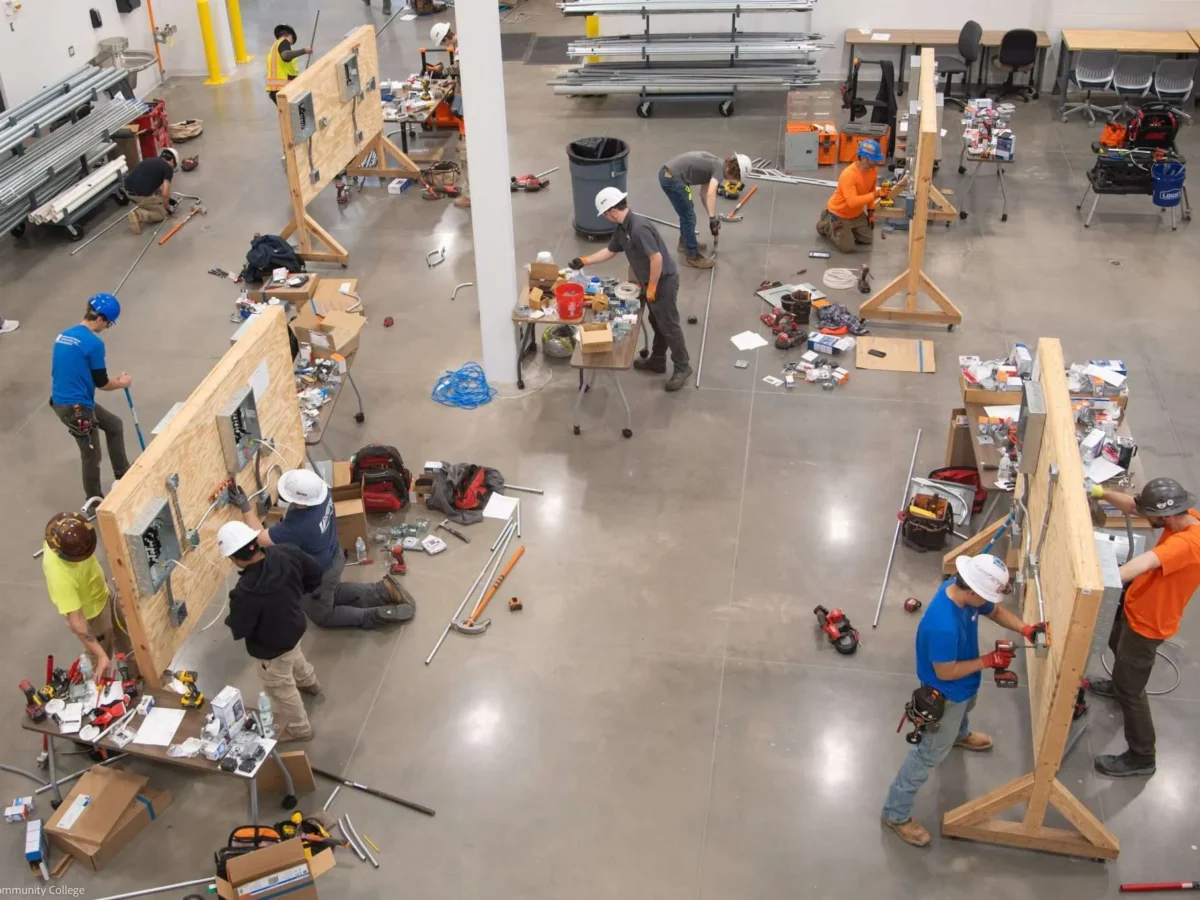
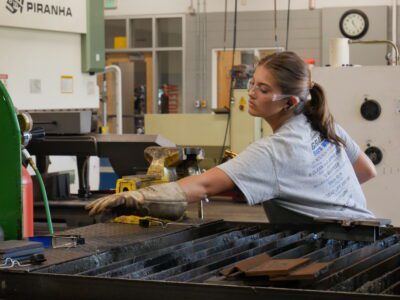
On campus, the “classroom” for our electrical apprentices is far more immersive than a traditional room with rows of chairs — it has to be in order to be effective. Instruction takes place in our Flex Lab: a 6,200-square-foot industrial space intended for hands-on training. Upfitted with air, water, electricity, and gas, the Flex Lab is just that: flexible and ready to be used by businesses and apprentices in a variety of specialties, from electrical to automotive, HVAC, construction, and mechatronics. In the Flex Lab, our apprentices train with interactive state-of-the-art learning stations that reflect the conditions, problems, and environments that they’ll find on the job.
The lab is located in a $23.4 million facility constructed in 2022 that also contains offices, a traditional classroom, and an auditorium. Blue Ridge built this facility not only to provide experiential education for apprentices, but also to serve as a resource for private companies in need of a well-equipped space for training, incubation, and start-up operations.
Made possible by forward thinking investments by Henderson County, the Flex Lab is a physical example of a commitment to cultivating public-private collaboration. It took years of listening, planning, and commitment to make it a reality.
Building strong partnerships
Other institutions ask us, “How can our college find partnerships that will be fruitful in the long run?”
It is all about alignment. Identify your area’s industry leaders in the sectors that match your program goals, and then intentionally build relationships. Sometimes, it takes only one or two leaders who are committed to collaboration to launch successful public-private partnerships.
Once those relationships are formed, listening is vital. Employers know more about their staffing needs and struggles than anyone, and they can be your most valuable resource. When colleges pay attention and respond with agility, partnerships can be transformative.
In our region, employers see Blue Ridge as a trusted source of training because our instructors are from the industries in which they specialize. Our instructors also build trust by taking an active role in these partnerships outside the classroom. They share insights and industry trends with business owners, visit employer sites, collaborate on curriculum and equipment needs, and complete summer externships with industry partners for continuing education.
This leads to a mutual respect that is vital for maintaining current partnerships and building new ones. Currently, over 70 employers participate in the Apprenticeship Blue Ridge program, and that number keeps growing.
Student focus
While partnerships benefit both employers and colleges, their greatest impact is on students.
Consider again our electrical apprentices: Roughly 60 students are on clear pathways to becoming fully licensed electricians. With a Blue Ridge education and credential in hand, they graduate prepared to enter a profession with a median salary over $62,000 per year, according to the Bureau of Labor Statistics, starting around $50,000 for early-career electricians and exceeding $100,000 in high-demand markets.
By collaborating with local electrical companies, we align industry expertise with Blue Ridge’s training capacity, ensuring students gain the full value of their apprenticeships. This example is just one of hundreds showing how our partnerships fuel the regional workforce.
Through these well-planned and resourced public-private partnerships, students build the skills and experience they need to move forward with confidence, while employers gain a workforce ready for the future.

Recommended reading