
Perspective | Across the state, we come together for students

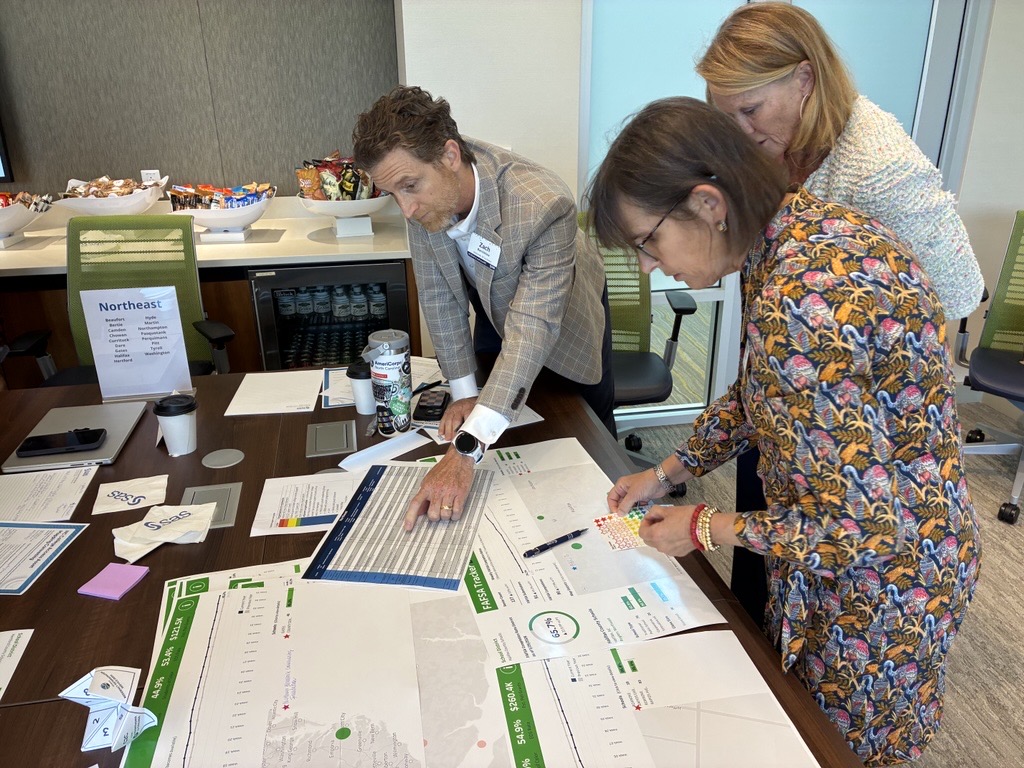
As an associate director for TRIO at the University of North Carolina at Chapel Hill, Terry Baxter is already embedded in the state’s college access and outreach world. But even he was surprised to see how many other people in North Carolina are doing similar work.
“It’s hard when you get in your own little space to know where everything is at,” he said. “It’s been very eye opening to see all the different programs that are just available for students out there.”
Baxter was one of the attendees for an asset mapping event held in June at the SAS Institute’s campus in Cary. The event was put on as a collaboration of the North Carolina State Education Assistance Authority (NCSEEA) — the primary sponsor of College for North Carolina (CFNC) — the John M. Belk Endowment (JMBE), myFutureNC, and Advise NC. It brought together college access professionals from across the state including district leaders, state agency staff, nonprofit employees, educators, advisors, and others.
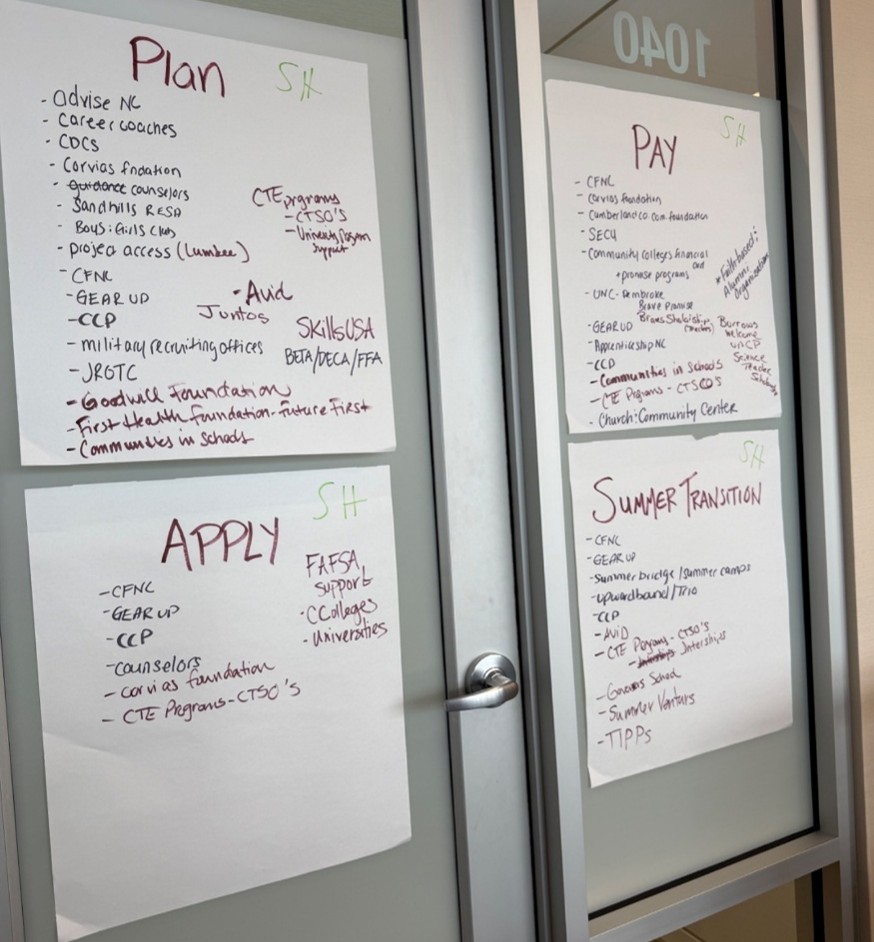
The attendees were grouped by region and spent the day identifying organizations and individuals that do college access or similar work in their areas. By mapping these resources, they hope to increase partnerships so they can coordinate and amplify their impact rather than duplicating efforts.
Baxter said the event will have some immediate impacts for him.
“I didn’t know that Advise NC is in all of our schools that I serve with my program,” he said. “We’ve just been in different silos where we weren’t talking to each other. I know they’re there now, so I can go talk to them or we can coordinate.”
 Sign up for the EdWeekly, a Friday roundup of the most important education news of the week.
Partner strong
Cross-collaboration between organizations is a hallmark of North Carolina’s education landscape and a model for how college access and other education professionals can work together to align for greater impact on their students.
The state’s education sectors already partner together on CFNC, the state’s free service for students interested in college, which has existed for more than 25 years.
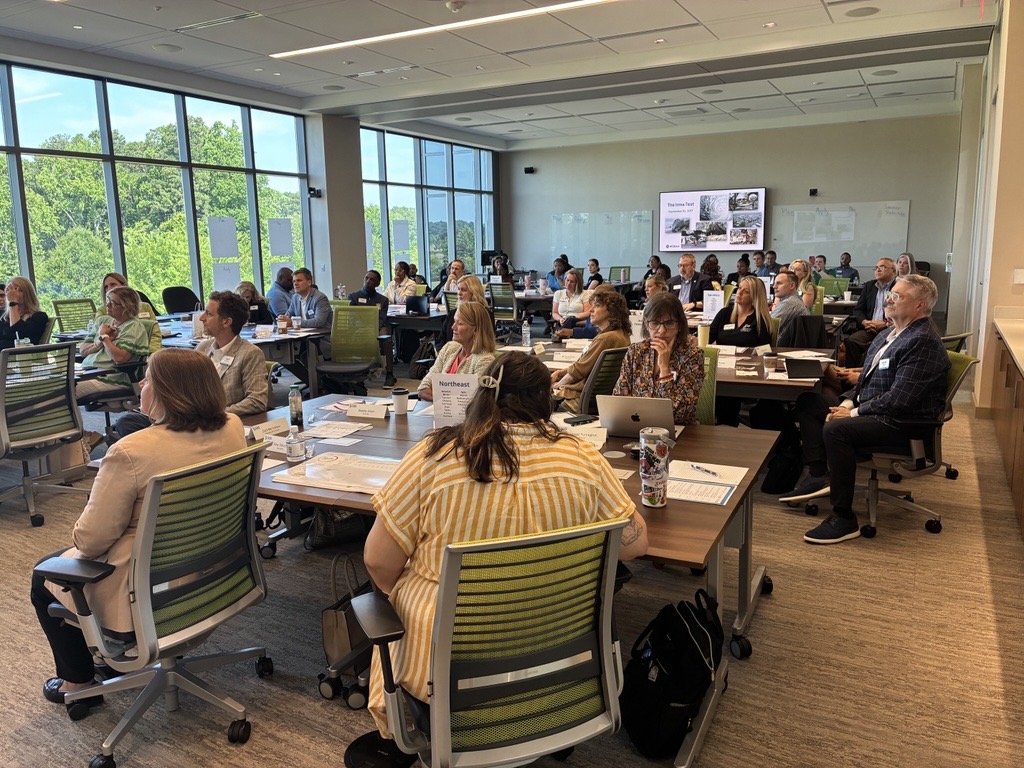
They also came together to create the state’s first direct admission’s program for students, NC College Connect, which is entering its third year this fall. At the asset mapping, members of the state Department of Public Instruction (DPI), NCSEAA and CFNC, multiple school districts, the state community college system and individual community colleges, both public and private universities, and members of multiple other groups worked together to make the event possible.
“One of the things that makes North Carolina truly remarkable among states is the spirit of collaboration that is part of who we are,” said NCSEAA Executive Director Mary Shuping. “We see this firsthand with the extraordinary success of CFNC’s Countdown to College and College Application Week each year, and that is only possible because all partners contribute to making it a success. Even after more than 25 years, collaboration is what makes our impact possible.”
Read more on NC College Connect

Let the mapping begin
Almost 60 people filled a room overlooking the serene fields and trees dotting the SAS campus on June 8. They huddled over maps created from CFNC’s FAFSA Tracker, compiling lists and placing stickers to capture the organizations, agencies, and community partners who do the work of college outreach.
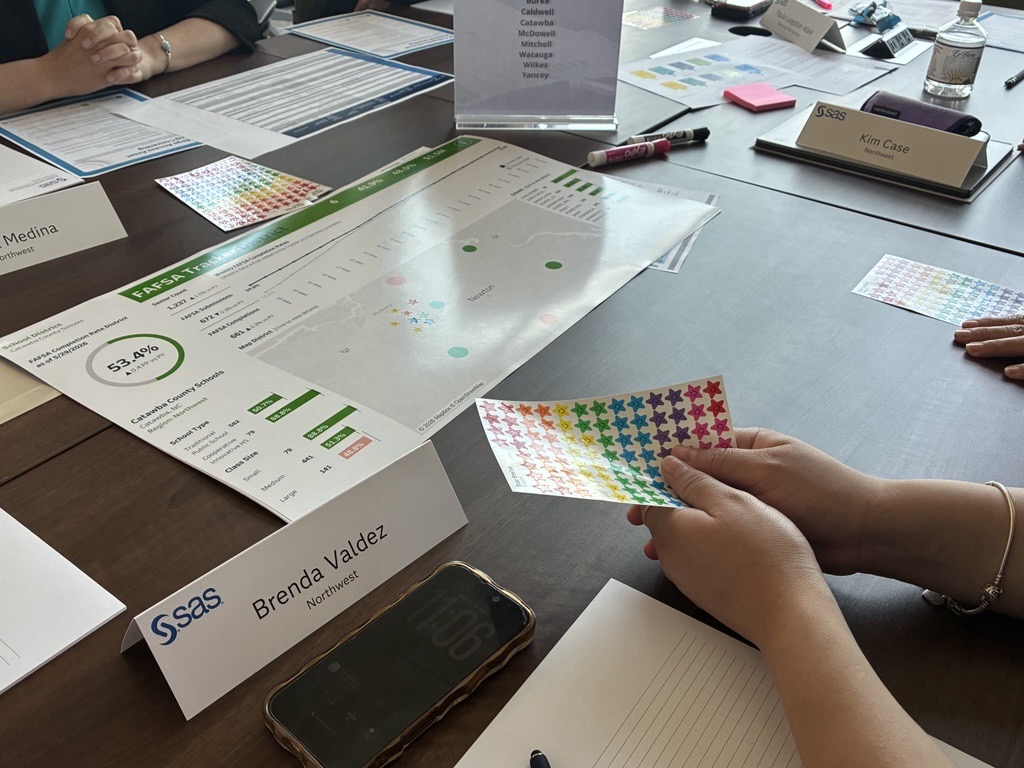
In the morning, the groups collaborated before doing a gallery walk of the room in the afternoon to see how efforts were shaping up and borrowing ideas to incorporate in their region.
“We know that access to a good counselor, a good advisor is a game changer for a student’s future,” said CEO and President of myFutureNC Cecilia Holden. “We have the assets we need. What we really need to do is align these resources.”
Aligning these resources is critical to North Carolina’s goal of ensuring 2 million residents hold a high-quality credential or postsecondary degree by 2030. By connecting students to the advising, outreach, and support services available in their communities, partners can help more learners successfully transition to education and training opportunities after high school.
Laura Hunter, the chief academic officer for Columbus County Schools in the Sandhills, said this work is important, particularly in rural areas of the state, which are often under-resourced when compared to their more urban neighbors.
“North Carolina has the second largest rural population in the country, so pulling rural districts into conversations like this really aligns and creates opportunities for kids to get out of their backyard,” said Hunter.
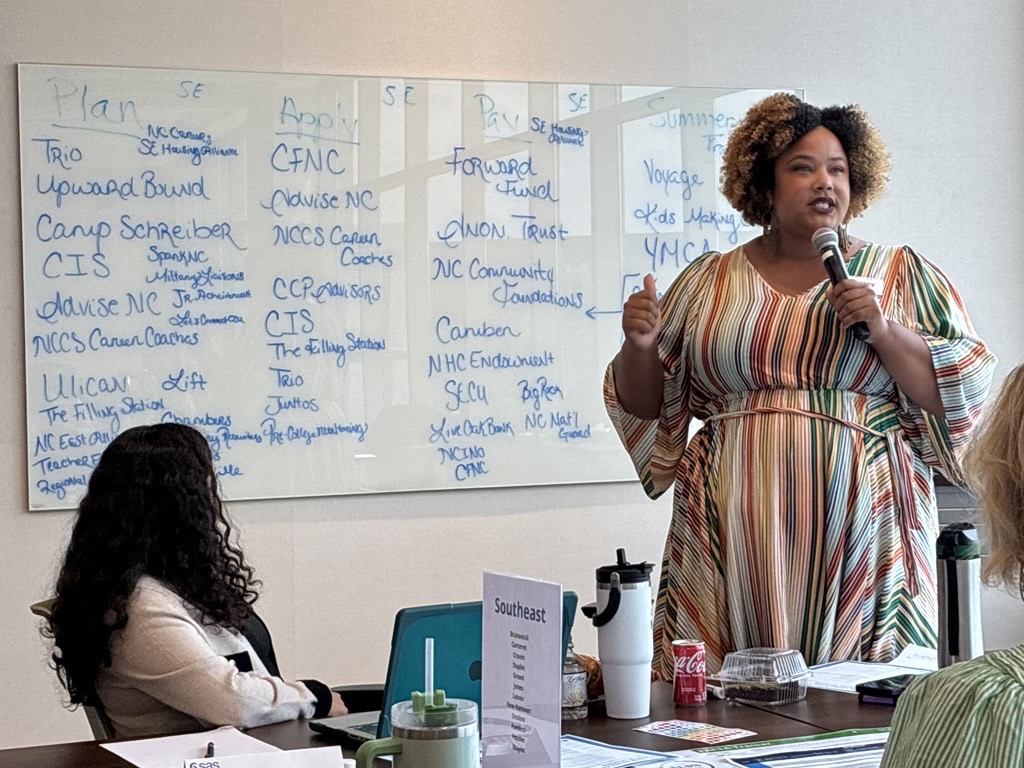
Senemeht Olatunji, a regional impact manager for myFutureNC, said it’s easy for people in the North Carolina education world to operate in silos, but this work breaks down the barriers between them.
“I think most times, folks just put their heads down, roll up their sleeves, and get the work done,” she said. “There’s nothing wrong with that, but if you can find a more effective way to do it, you should.”
Takeaways for the future
At the end of the day, staff working with JMBE recorded the information shared during the event and are going to compile the information into a database that can be shared among participants and, ultimately, with education professionals across the state. The resource will help organizations identify partnership opportunities, better coordinate services, and connect students and families to support available in their communities.
It’s a robust list that encompasses hundreds and perhaps even thousands of people, including Advise NC advisors, TRIO programs, YMCAs, banks, staff in every education sector, nonprofit organizations and many, many more.
Because no matter where in the state a student goes, resources exist and professionals are ready to help them. And not just in the schools or the colleges, but all throughout their communities.
Chuck Kaylor, senior vice president and chief of staff at JMBE, said work like this is what makes North Carolina special.
“There is something that MC (Belk Pilon) and our team talk about a lot, and it’s this idea of being bold,” Kaylor said. “We have an opportunity now as a group to think what is it that we can do that sets North Carolina even farther apart from other states.”
Think about working with your area partners to map out the assets available in your region. And stay tuned to our website for more information about our asset mapping efforts and how you can get access to the data we’re compiling.
Editors note: The John M. Belk Endowment supports the work of EdNC.