
Perspective | A new UNC System framework for preparing elementary math teachers

A few weeks ago, as I was driving my fifth grade son and his friends to school, I overheard a familiar complaint being shared in the backseat: Math class is boring.
If North Carolina’s End-of-Grade assessments are anything to go by, that sensibility is widely shared among our students. In 2024-25, nearly 57% of third through eighth grade students scored as proficient in math. Far too few students are mastering the core math skills they need to be successful in college, in work, and in life.
Our state’s public universities are tackling that problem with renewed energy. The UNC System prepares the majority of K-12 teachers in the state, and it’s crucial that those future educators have a strong grounding in quality math instruction.
 Sign up for the EdWeekly, a Friday roundup of the most important education news of the week.
Last summer, with the backing of system leadership and the Board of Governors, we launched an ambitious project to overhaul the way we train future math teachers. Math Fellows were selected from schools of education across the state, partnering with education deans and national math experts to develop a rigorous instructional framework for mathematics. The faculty fellows collected data from our institutions, reviewed research, debated, questioned, received feedback, adjusted, and ultimately created our new UNC System Framework for Preparing Elementary Mathematics Teachers.
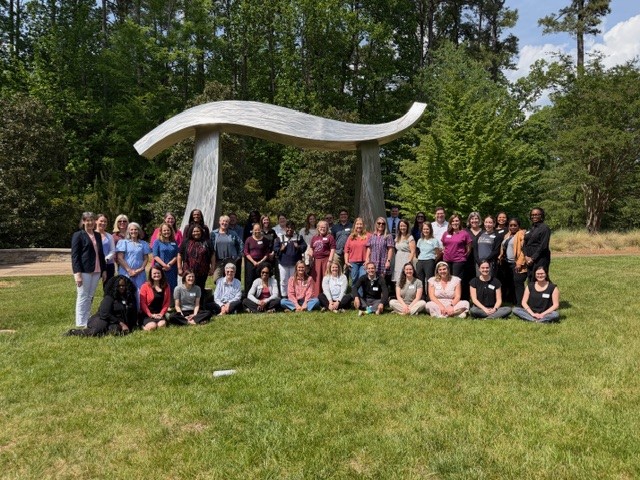
On the same day I heard my son’s classmates groaning about math class, I got to join education faculty from across the UNC System for our first-ever Math Summit. The goal was to reimagine what math instruction could be for students across North Carolina, and how we could get more students excited about the prospect of tackling such a critical subject for understanding the world.
Pretty soon, the windows in our meeting room were covered with flip charts and sticky notes about the kind of students we want to create — confident problem solvers, door openers, and world changers, young people with a comfortable command of the math they’ll need to navigate life.
The Math Fellows then led deep dives into our new framework, which aims to ensure that teacher candidates get a deep grounding in mathematical knowledge; that they’re exposed to evidence-based teaching practices for mathematics; that they get a good sense of how to sequence math concepts and courses to support students in building foundational knowledge; and that teacher candidates get field experience where they can learn from effective math instructors.
After learning together about the frameworks, faculty from each education school worked in teams to assess their programs, identifying strengths and areas that need work. The fellows built a bank of resources to support implementation of the new math framework, and faculty teams committed to putting new practices in place as early as this fall.
This new framework sets a high bar for teacher preparation, but that’s what our students need and what our state expects.
The process of upping our game in math instruction has already led to stronger coordination between our Schools of Education and our partners at the North Carolina Department of Public Instruction (DPI), and those relationships will matter as we work to refine these standards and assess their impact in classrooms across the state.
We also benefited from the strong support of the Goodnight Education Foundation, the C.D. Spangler Foundation, and the national nonprofit Deans for Impact. They all recognize math proficiency as vital if students are going to thrive in a demanding economy. They see the benefit of building a systemwide approach to big challenges like math instruction, which can ensure that effective, research-backed teaching practices make their way into schools in every part of the state. We’re fortunate to have partners who are committed to supporting teachers from their earliest days in the profession.
This is not easy work. Shifting classroom practice is a notoriously slow process, given how decentralized our K-12 education system is. But by building a unified approach across our public university schools of education, we can bring best practices to scale much more quickly.
It was exciting to see this effort taking shape at the Math Summit — to see those whiteboard dreams of more engaged, more confident math students coming closer to reality.