
North Carolina’s local reentry councils help people leaving prison. Advocates say more could be done.

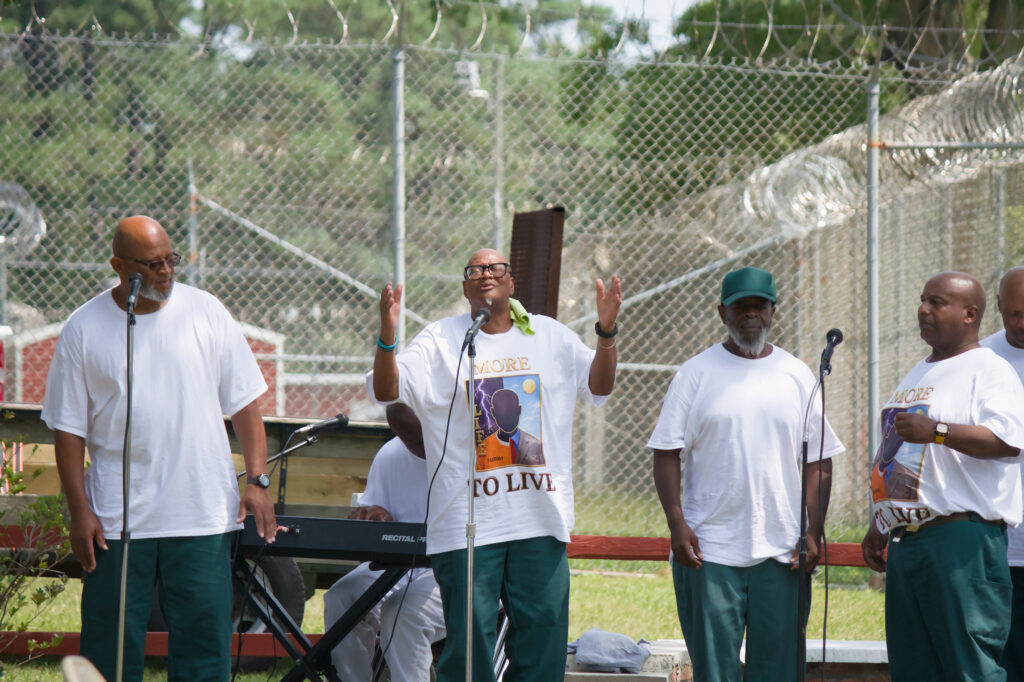
Editor’s note: This article mentions suicide and mental health. If you or someone you know is experiencing a mental health crisis, call or text 988 or chat with the 988 Suicide & Crisis Lifeline at 988lifeline.org.
Imagine you suddenly need to do all of the following at once: find a place to live; get a driver’s license; get a good-paying job; enroll in health insurance, collect prescriptions, and attend doctor’s appointments; buy new clothes, furniture, and a car. Find time for your family — your children, if you have them. And don’t forget to feed yourself three meals a day.
Now imagine doing that after spending months, years, or decades behind bars. Such a task — or mountain of tasks — is daunting. Every year, 20,000 people released from North Carolina state prisons are faced with it.
Being released from prison is a pivotal event, and one that should be joyous. In reality, reentry can be uncertain and even improbable, with potentially life-threatening consequences. In the three years after release, about twice as many formerly incarcerated people died by suicide than the general population, a study of North Carolina found.
Returning to life on the outside is almost never smooth or easy. No matter the supports in place, people coming out of incarceration have reported mental paralysis. One man at a North Carolina Department of Adult Correction (NCDAC) event recently described being overwhelmed by choice in the aisles of a Walmart.
“It goes to show what the system has done to me mentally, to be able to manage my own choices — or not,” he said.
And many people leaving prison and reentering society don’t have strong supports. That’s a problem for reentrants, as they’re called, but also for the wider community: markers of successful reentry such as stable housing, employment, and education are linked to lower recidivism rates.
Recidivism, the term for returning to criminal behavior after being released from custody, is both a public safety issue and an economic one. North Carolina taxpayers spent about $55,000 per person housed in the state’s prisons last year; plus, incarcerating so many people wastes economic potential, not to mention the state’s demand for a skilled workforce.
 Sign up for the EdWeekly, a Friday roundup of the most important education news of the week.
Decades ago, when the prison system was weighing heavy on the state budget, lawmakers began to act. Dennis Gaddy, an advocate who helped shape North Carolina’s present-day reentry strategy, recalls the old system:
“When I came in, there wasn’t a word called ‘reentry,’” said Gaddy, executive director of the Community Success Initiative. “The key word was, ‘lock them up and throw away the key.’ There was no hooray when you came home.”
That only changed, he said, “because the state ran out of money and they couldn’t afford to build more prisons.”
Today, as part of a shift to a more rehabilitative corrections philosophy, North Carolina engages a network of local reentry councils (LRCs) to coordinate many services for formerly incarcerated people, and, it is hoped, increase post-release success and reduce recidivism. It’s a noble, and practical, goal — after all, 95% of those in state custody will eventually be released.
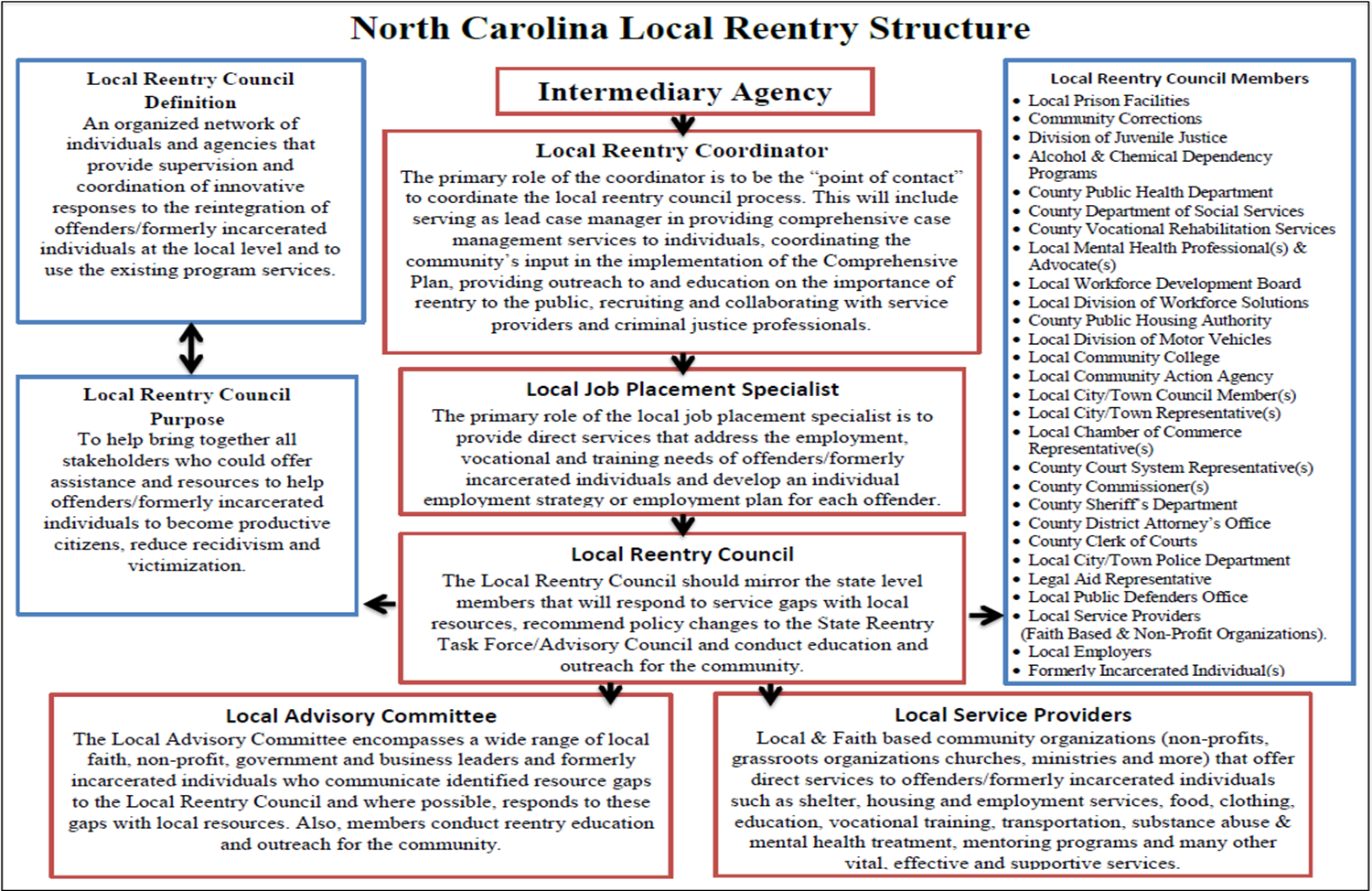
LRCs are themselves networks of nonprofits, educational institutions, companies, faith organizations, local governments, public agencies, and individuals that provide programs and services to support justice-involved people. “Justice-involved” is an umbrella term for those who have interfaced somehow with the criminal justice system, whether they were arrested, charged with a crime, convicted, placed on probation, jailed, or incarcerated.
A little history
Before about 2010, prison programming, probation, and reentry services in North Carolina were almost totally siloed. Out of that environment and a desire to involve communities in reentry, local reentry councils were born.
In 2011, the now-disbanded Joint Select Committee on Ex-Offender Reintegration Into Society published a report recommending the government establish “offender reentry” as a funding priority. The report recommended forming a minimum of 10 LRCs “to supervise and coordinate innovative responses to reintegration at the local level and to use the existing services of programs.”
The LRC mission, according to NCDAC’s website, is to “reduce recidivism and victimization, enhance public safety, create a network of individuals and organizations assisting justice-involved individuals, maximize the use of existing resources and services, and develop innovative responses to address gaps in resources and services.”
Those in the reentry space unanimously laud North Carolina’s LRCs, and the state has made a goal of expanding them to cover all 100 counties. (In July 2024, around the time that goal was set, LRCs served 19 counties.) Yet LRCs face challenges — chiefly, meager state funding. So meager, in fact, that at least one recently-created LRC has already shuttered, and others have dramatically scaled back operations.
The most fortunate LRCs each operate on just $150,000 per year in state funding (or $225,000 for LRCs that span multiple counties). At the core of some LRCs is a small staff — one or two employees. More are composed solely of passionate volunteers.
“The state has not truly, truly invested,” said Nicole Sullivan, an architect of North Carolina’s first LRCs. “It can’t be a little investment, it has to be a significant investment … You really need to be doing this everywhere.”
How a local reentry council works
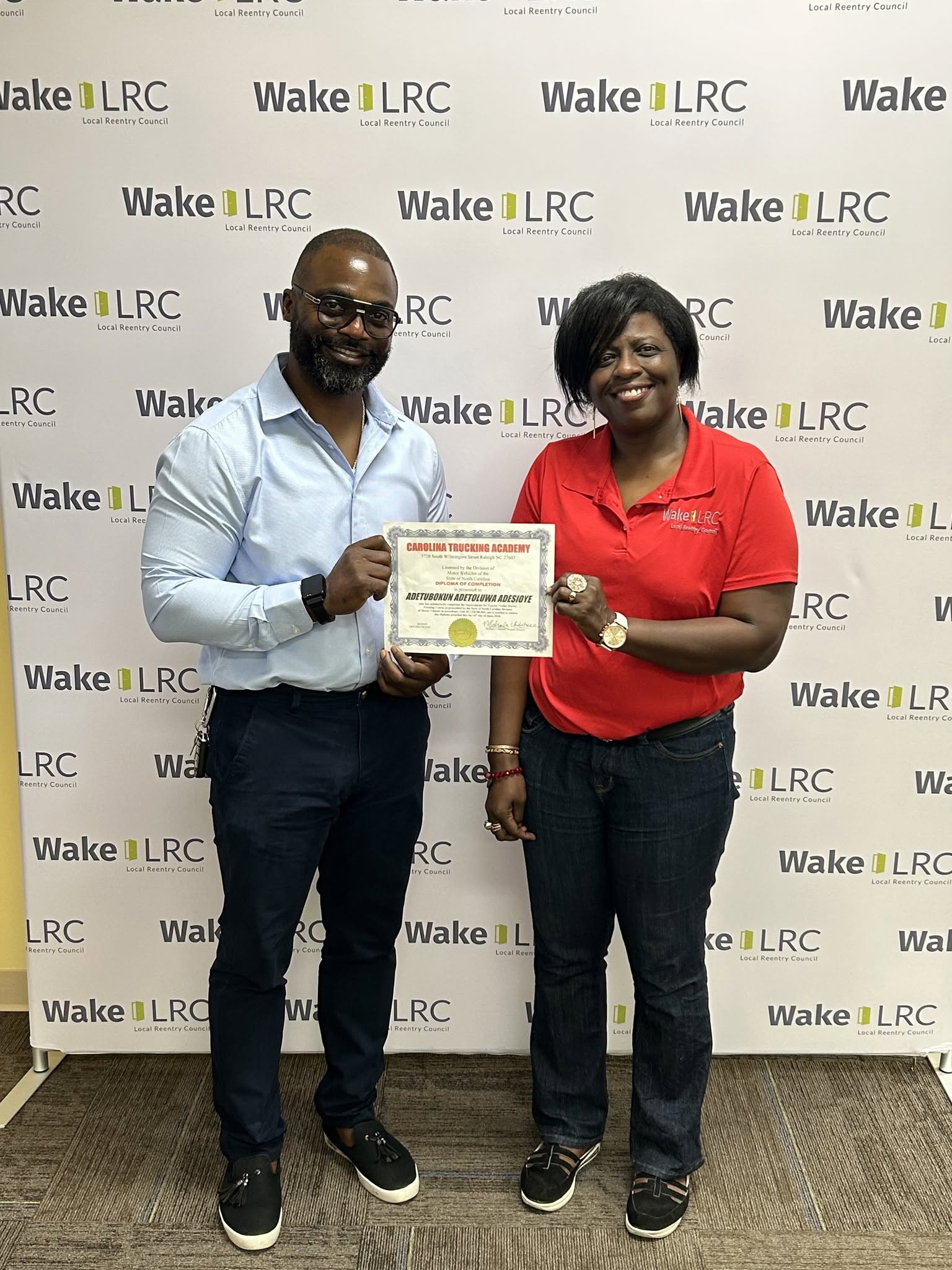
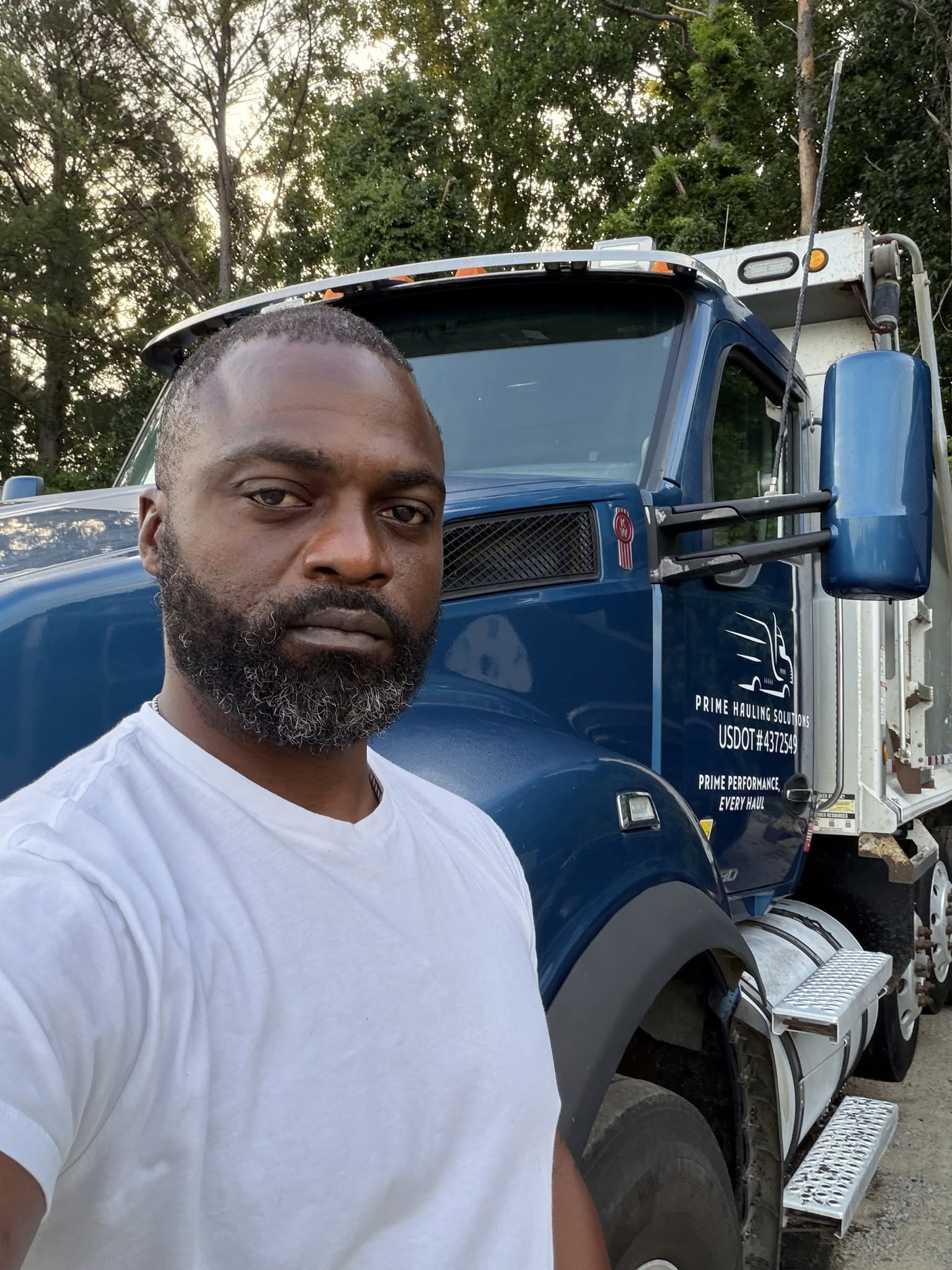
“Being able to cook on a stove,” said Adetubokun Adesioye, a 51-year-old truck driver.
He had just been asked what he’s enjoyed most since getting out of prison. Adesioye cherishes sleeping on a real bed, using the microwave, watching TV. Having his own space. Taking walks in the park. “I enjoy freedom. I love it. I love it, and I want to keep it this way,” he said.
Adesioye was incarcerated for seven years in federal prison before being released in North Carolina, where his daughter and grandchildren live. When he learned about Wake Local Reentry Council, he drove his daughter’s car to Wake LRC’s Raleigh office and asked to be assigned a case manager.
Some LRCs are well-established, well-oiled, and well-funded — not just with state dollars, but with local money. Wake LRC, serving Wake County, is one example.
Wake LRC staff help clients on a case-by-case basis, but usually guide them toward meeting their basic needs and then working toward employment by enrolling in training programs through Wake Technical Community College or private providers.
“The very first thing we’re thinking about is, ‘What are your immediate needs?’ And believe it or not, it might be a toothbrush and a face towel, or a bar of soap, or a pair of underwear, because you walked out of prison with what they gave you,” said Natalie Mabon, regional reentry manager at Wake LRC. “It’s something that seems small, but we try to keep snacks around our desks because we know people come in hungry and we want to be able to give them something to eat.”
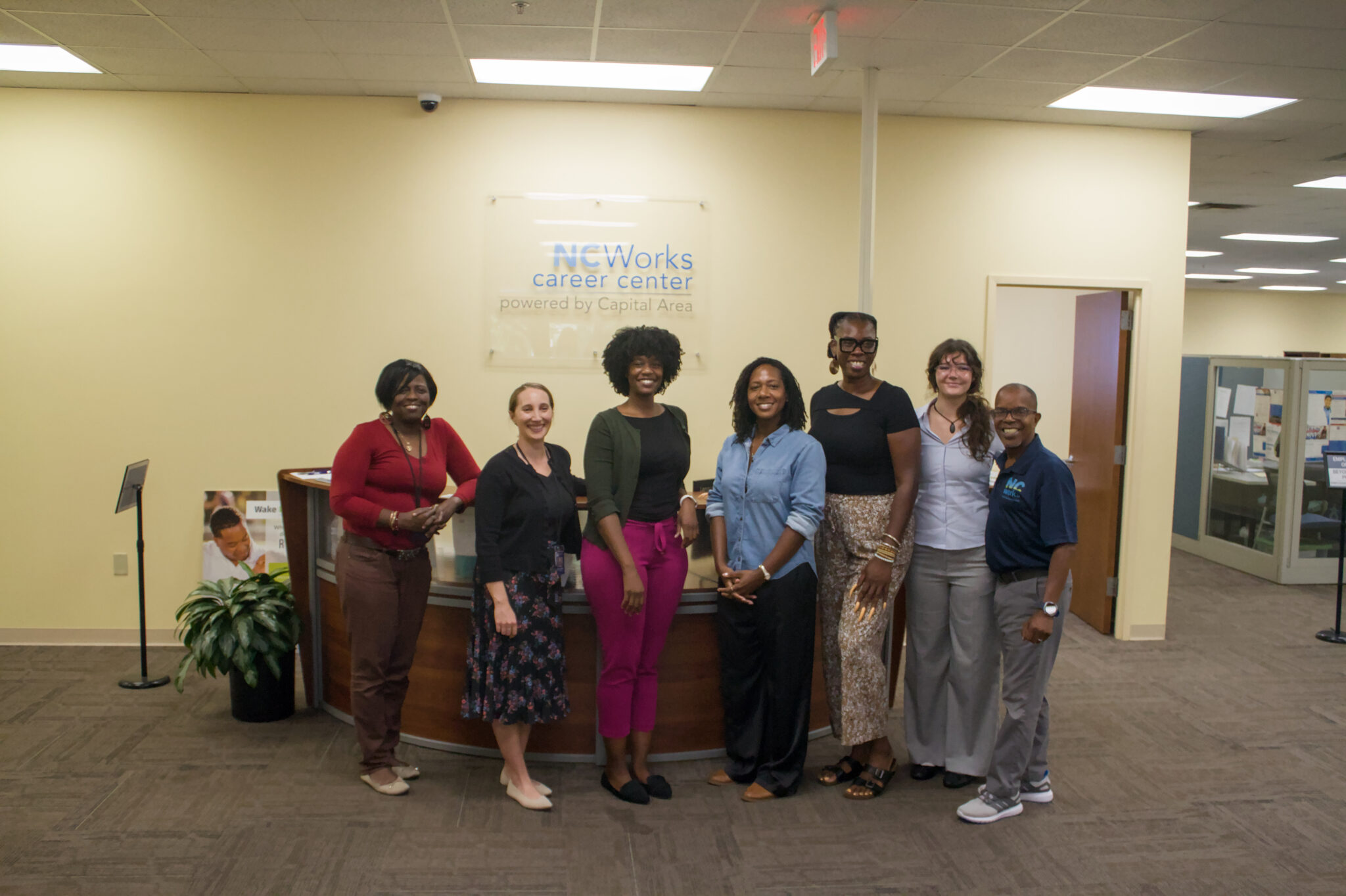
Clients might also receive help setting up an email address, filling out paperwork, or getting a cellphone. The Wake LRC office building, shared with an NCWorks Career Center, has a free computer lab in the lobby that’s always bustling with jobseekers.
Short-term education programs are ideal to get people working and supporting themselves quickly. (More ideal is when reentrants leave prison already having earned a certification or degree.) LRC staff know which types of criminal convictions may disqualify clients from certain industries and point them in the right direction. Staff also have well-established relationships with local employers.
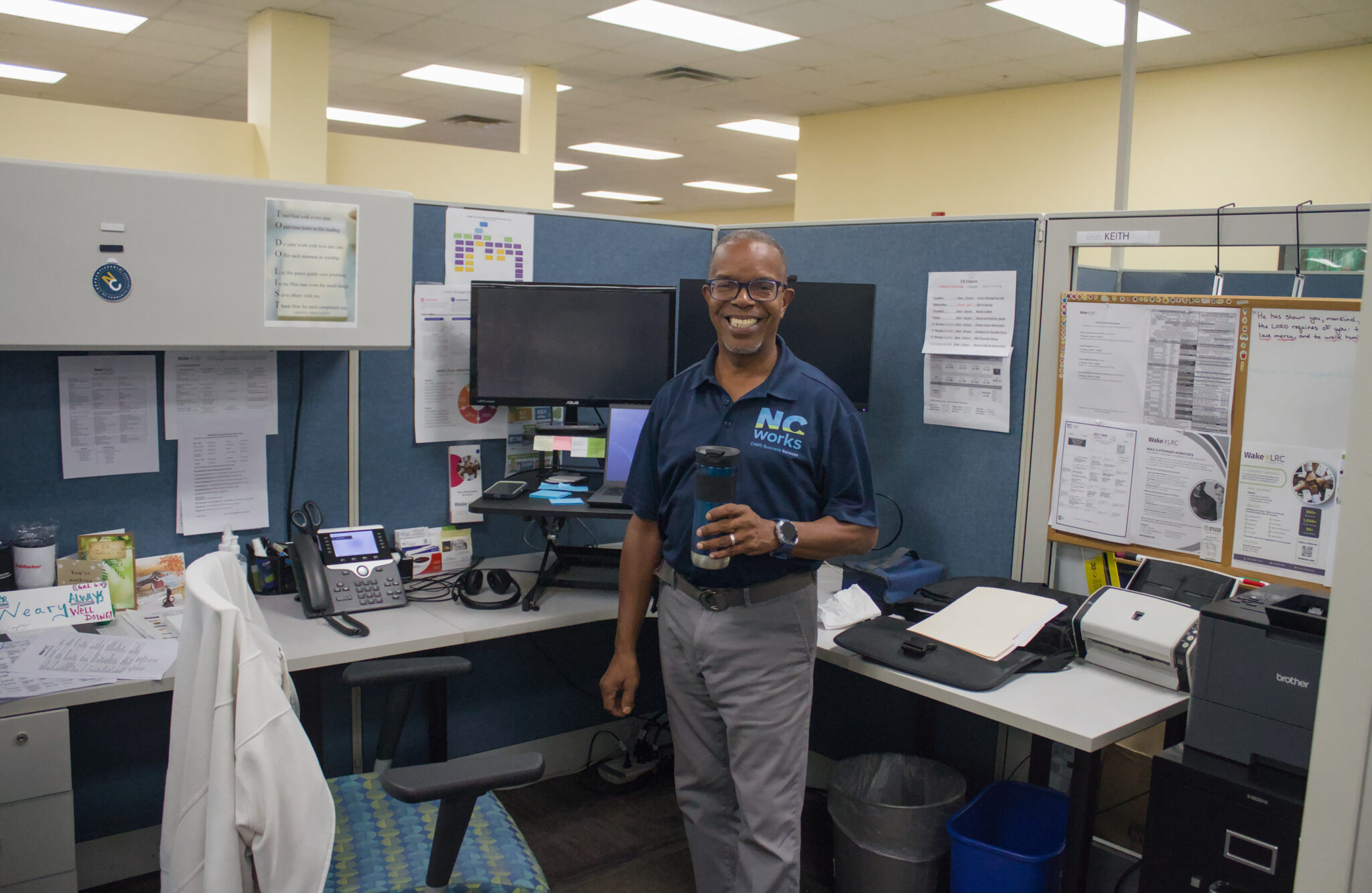
“I never knew that they had something this beautiful here, the Wake LRC or NCWorks. I never knew that they had stuff like this,” Adesioye said.
After his first day, Adesioye met regularly with his case manager as he applied for a grant to pay for a commercial driver’s license (CDL) training program. He was eager enough that he mistakenly showed up at the CDL school while his application was still pending.
“I just felt that I wanted to be productive. I wanted to contribute to the community,” he said. “I don’t want to be looked at as a prisoner or looked at as a criminal, you know what I mean? I wanted that.”
Soon, he was awarded $3,700 for his CDL training. During the nine-week program he worked part-time at the Durham Bulls’ stadium as a warehouse supervisor, and now he drives a dump truck for a company called Prime Hauling Solutions.
Simultaneously, he secured his own one-bedroom apartment and furnished it through a nonprofit called The Green Chair Project, to which Wake LRC connected him.
“I believe that they are doing great things,” he said of Wake LRC. “I’m so happy. I’m so happy that I came here.”
Wake County and the state may soon see a return on their investment. If things go the way he hopes and he starts his own business, “I’ll have to hire somebody,” Adesioye said. “So, indirectly, I’m already contributing back. I’m giving back already into society, the community at large. Which is a great thing. Like, that’s my dream.”
Despite the happy outcome, the reentry process wasn’t without hardship. Adesioye said he submitted 136 job applications, a number he “would never forget.”
“Not all businesses in North Carolina do second chances. Once they find out that you have (a criminal history), they kick you to the curb. Even if you have experience, even if you have the know-how, they’ll kick you off,” he said. “The community needs to embrace that second chance. The community needs to embrace the fact that people want to change.”
A model for LRCs across the state
The staff at Wake LRC consider themselves a model for what other LRCs could be if they too had substantial resources. As a team scales, so do the community connections and institutional knowledge that are the fuel of the operation: Wake LRC staff members are social work experts, substance abuse counselors, business liaisons; many are themselves justice-involved; they have relationships with police officers, homeless shelters, and City of Raleigh agencies; and they can reach into prisons and jails to connect with potential clients before they are released.
“I think the argument you can make is that if government gets behind the desire for safe communities, families, a stronger economy, a larger workforce, this is how you do it. It can happen,” Mabon said.
Wake LRC receives about $1 million per year from Wake County, Mabon said, versus $150,000 from the state. With that money, and with help from other county- and federally-funded agencies like Capital Area Workforce Development, the LRC can provide extensive direct services, employing three case managers and additional staff that interface with local employers. It even distributes “mini-grants” of $25,000 to community organizations working on reentry, such as Arise Collective, Fathers Forever, and The Great Raleigh Cleanup.
Wake LRC serves about 300 clients directly per year and refers many more to external services through its 150 community partners. According to James Johnson, program manager at Wake LRC, the two-year recidivism rate among those who receive Wake LRC services is 17.5%, compared with a rate of 41% statewide.
And the Wake LRC staff don’t lose sight of their permanent goal: further reducing that number.
“I say to our team that recidivism is always an option on the plate,” Mabon said. “It’s our responsibility to overload the plate with other options.”
LRCs by the numbers
Every LRC is different — a strength in the eyes of reentry workers. (“Every county has its own personality,” one said.) But, generally, they do similar work, taking in justice-involved clients and connecting them to the services they need to get on their feet and stay there. Some LRCs, like Wake, provide services directly. A client might have their first month’s rent covered, or be connected to addiction counseling, or just be given a pair of work boots.
LRC clients, like the prison population, are disproportionately Black, male, and ages 30 and above. At intake, 87% are unemployed. In fiscal year 2024-25, the most recent year for which there is data, LRCs served 3,538 clients at a total state expense of about $4 million. But not all of those who receive help may be tracked; LRCs don’t always open a file when providing one-time services or referring someone elsewhere.
And those numbers do not include LRCs that aren’t officially recognized by NCDAC. An online map distinguishes between state-funded local reentry councils (17), NCDAC-affiliated local reentry councils (10) which have met all requirements and criteria for funding but are not state-funded, and emerging local reentry councils (12) which are “under development.”
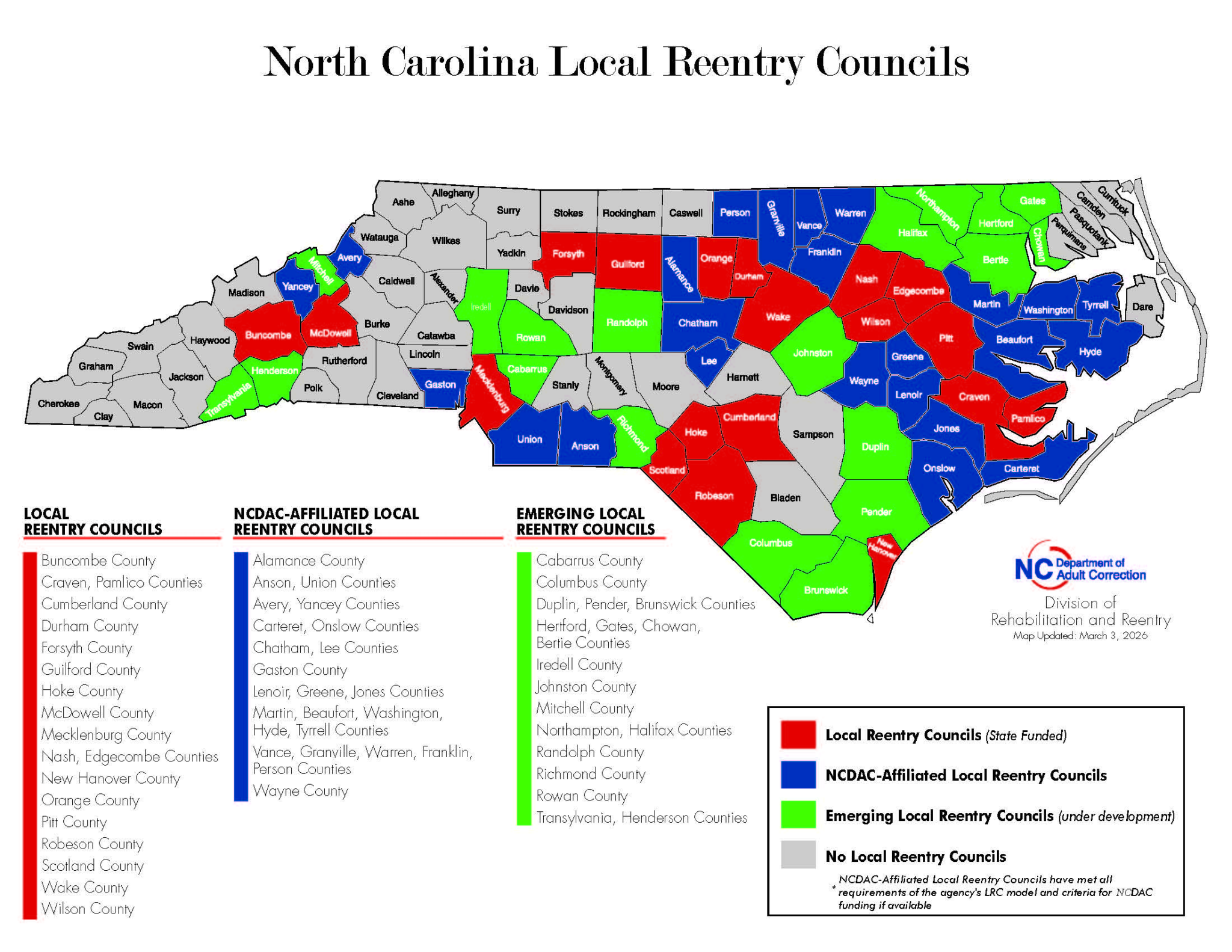
Most “NCDAC-affiliated” LRCs once received funding that has since dried up. Last year, the agency redirected unused lapsed salary dollars to allow 14 LRCs to expand services and hire staff. The Carteret/Onslow Local Reentry Council, a merger of two previously unfunded LRCs in the respective counties, was one of the 14.
Terrell Henry, the reentry coordinator at Carteret Community College and a member of the Carteret/Onslow LRC, described a rapid expansion of services — followed by a rapid reduction. He said the LRC was able to hire case managers to work in both Carteret and Onslow counties before the funding ended — positions which have since been removed.
“We were able to help with funding the first month’s rent while (clients) were looking for work, transportation … childcare needs,” Henry said. “(Now), we don’t have the funding to pay for those directly.”
Despite the short time those services were offered — just about six months, because of the administrative setup of receiving the funding and hiring the case managers — the LRC made an impact, and quickly.
“I would call it a success, because between housing, transportation, and childcare, we were able to serve over 100 people,” Henry said.
Lateisha Thrash, the director of reentry for NCDAC, oversees the operation of all LRCs. She said the 14 LRCs whose funding expired have had to scale back operations, contrary to the agency’s hope and the state’s goal.
“The plan was for it to be recurring,” Thrash said. “We were hoping to get additional funds through the (state) budget.”
Grassroots reentry workers face challenges
Many other local reentry councils are, and always have been, working with no state financial resources at all (although NCDAC’s small reentry team consults with most LRCs and provides advice). Prospects are especially bleak for fledgling LRCs trying to get up and running.
A new LRC, not yet recognized by NCDAC, is swimming against the tide in Surry County.
“I think we’ve all kind of gone into this not expecting any money. So what can we do with the resources that we have currently?” said Lisa Lamb, the manager of an NCWorks Career Center in Mount Airy. “We see there’s a (community) interest there, so we’re going to do what we can with what we got.”
Despite not having a prison, Surry County is home to a “tremendous” probation and post-release population, said Toby Bunton, who works with Lamb and others to help local reentrants. Bunton is employed by the county government as a drug and alcohol counselor.
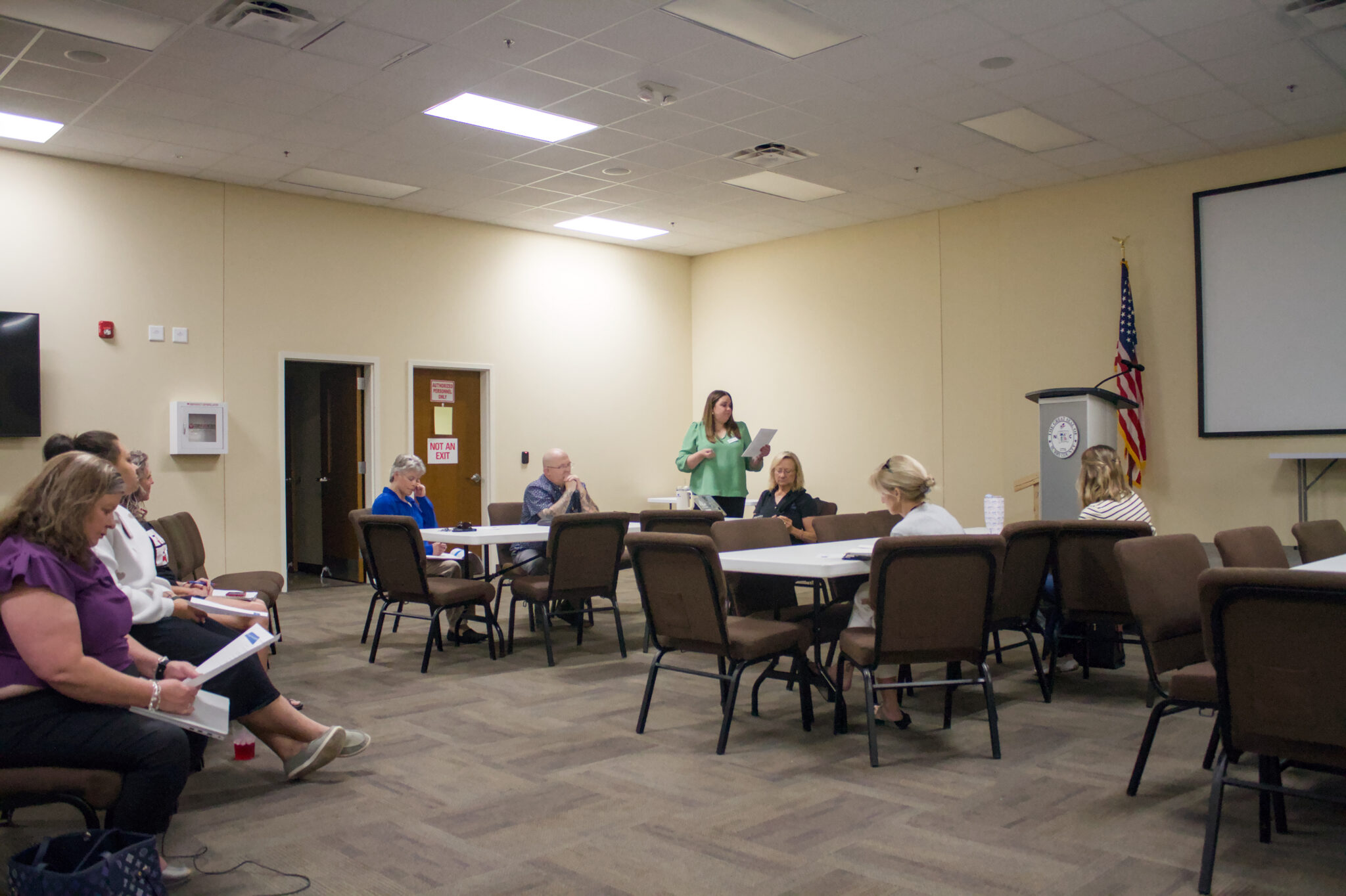
In May, in a meeting room adjacent to the Surry County tax office, 15 community members including Lamb and Bunton gathered to talk LRC business. The growing group had been meeting monthly since October 2025. Their agenda included new introductions, determining who could handle which kinds of client needs, and outlining the steps to be taken to become an official LRC recognized by the state. That recognition would lay the groundwork to eventually receive state funds and NCDAC support.
“These people are not always rubbing elbows, but being part of the Venn diagram is really important, and I see it kind of coming together,” Bunton said before the meeting. “I think that’s the big thing: (our) goal’s the same, but no one knew what anybody else was doing.”
Becoming recognized isn’t a sure thing; receiving state financial support is even less of one. For the time being, the volunteer group is mostly at work using email blasts and word of mouth. One anecdote: Bunton got a call from a reentry worker in Ashe County who asked him to coordinate transport to Surry County for someone being released from prison on Mother’s Day. He arranged for a volunteer driver to make the trip.
Rebecca Sauter, a reentry program lead for the Piedmont Triad Regional Council, and an adviser guiding the Surry team, recalled another: A client had a hernia at work, but didn’t have health insurance. Sauter, “not knowing anything” about the medical field, fired off an email to a long list of LRC members, and the client was connected to a doctor the same day.
“Somebody knew somebody who knew somebody, (that) kind of thing,” she said. “It just shows the value of having a controlled entity that is helping disseminate information.”
Uncertainty among advocates
Sullivan, the director of reentry for the North Carolina Department of Public Safety (DPS) from 2012 to 2020, thinks there is still much more work to be done. (NCDAC has since separated from DPS.)
“I mean, it’s a drop in the bucket,” she said about current reentry services. “There’s a bunch of people who get out, never make it to a council, never make it anywhere — until you just see them, unfortunately, back in the system.”
Others echoed Sullivan. Martrice Askew, Adesioye’s case manager at Wake LRC, said she sees some of her clients wind up back in prison due to their circumstances.
“I have clients that are living in tents and living in the woods,” Askew said. “What tends to happen if you don’t have anywhere to go? You go back, sometimes, to what you know, which is committing crimes.”
Whether the state’s goal to expand local reentry councils to all 100 counties by 2030 will be achieved is yet to be seen. The same goes for other Reentry 2030 goals, like increasing prison education programming and sending home every reentrant with a state identification card. (See the full strategic plan here.)
Some markers suggest North Carolina could be on the right track: the Reentry 2030 dashboard shows partial progress toward most economic mobility objectives; the state has been recognized by the nonprofit Jobs for the Future for its efforts to expand economic mobility for reentrants; and NCDAC has been tapped by other states to demonstrate reentry simulations.
But some are cautious in their confidence.
“They’re very lofty goals, and I know that they’re in the process of adjusting some of the goals,” Sauter said. “It’s just been my experience that what goes on in Raleigh — what they decide and what they put in place — doesn’t always trickle down to us.”
Signals across the reentry landscape indicate uncertainty. Senate Bill 355, signed into law this July, reduced the meeting requirement of the State Reentry Council Collaborative (SRCC) from quarterly to annually. The SRCC is charged with “studying the needs of individuals who were released from a correctional institution and (increasing) the effectiveness of local reentry councils.”
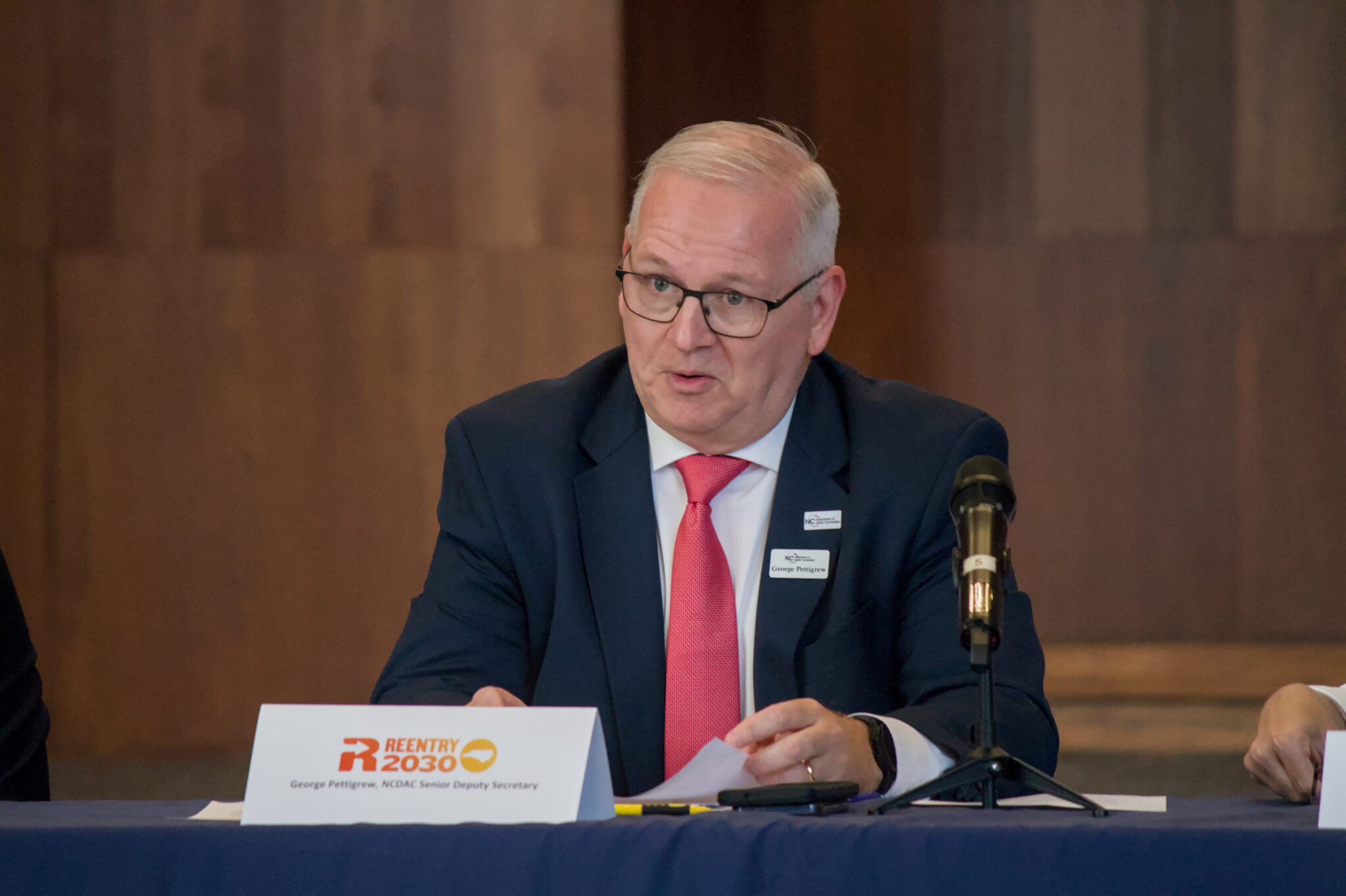
And at the July 14 meeting of the North Carolina Joint Reentry Council, George Pettigrew, senior deputy secretary at NCDAC, said that council has “whittled down” the number of strategies it is prioritizing, focusing on those that can be accomplished in the next two fiscal years.
Perhaps the strongest signal is this year’s state budget, which didn’t include additional recurring funding to LRCs. Gov. Josh Stein’s proposed budget would have allocated $3.1 million annually to LRCs, but the final state budget included only a one-time infusion of $1.5 million.
Thrash said the $1.5 million will be distributed to the same now-unfunded LRCs that last year received one-time funding (although one, Rowan Local Reentry Council, has since shuttered). That money could do good, but it may also result in another interruption of services and churn when staff salaries dry up after a year.
While Thrash said she thinks reentry work will continue to grow despite a lack of strong state funding, she highlighted the “paramount need” for support services for justice-involved people.
“Supporting the local reentry councils will help reduce recidivism,” she said. “It will help promote public safety, which is one of our priorities (at NCDAC), and it will also help make the justice-involved person a more productive citizen and stop the cycle of returning back to incarceration.”

Where’s the funding?
In an interview with EdNC in April, NCDAC Secretary Leslie Dismukes said that last year’s one-time lapsed salary funding was meant to be “seed funding” for LRCs, and that LRCs need to be sustainable on their own.
“(NCDAC) cannot fund all the LRCs. That’s not our mission. You know, they’re our partners, and we want to transition to that,” she said.
Dismukes added that philanthropic donations could help sustain LRCs, and said she has had conversations with private funders. Thrash and Pettigrew have also floated the idea of philanthropic support.
Yet if the legislature decided to appropriate additional funding, it could be NCDAC’s role to fund all existing LRCs, and even new ones. Thrash said the current level of philanthropic funding LRCs receive — on a one-by-one, fragmented basis — doesn’t match state funding.
“The thing is, it is difficult to be able to maintain staffing positions at any local reentry council without state funds,” Thrash said.
So, if the state’s goal is to expand LRCs, why aren’t they better funded? Lawmakers who spoke to EdNC indicated there may not be any particular reason except that during the frenzy of budgeting season, things that don’t stand out are left behind. But they also said having hard data could help.
“We need to go back to the table again and really look at (reentry), get all the statistics, and just see what we have accomplished, and then that would help dictate funding,” said Rep. Garland Pierce, D-Scotland. “But, you know, the General Assembly is a place you got to have proof, you got to have facts.”
Part of the funds Stein proposed sending to LRCs would have been used “to evaluate the impact of local reentry councils on recidivism and reentry outcomes.” The final state budget had no such instruction.
Pierce’s colleague on the House Appropriations, Justice and Public Safety Committee echoed his sentiment about data.
“I think the more data that we can get as to what impact (LRCs) have actually had in terms of numbers, how it’s affected recidivism. … I think that could help make the case,” said Rep. Dudley Greene, R-Avery. “Although I don’t necessarily need convincing. But you know what I’m saying — I’m one of 170 people down there.”
Greene, a former sheriff, has worked with Freedom Life Ministries, the nonprofit at the core of Avery/Yancey Reentry Council and McDowell Reentry Council. Because of that, he was able to get $250,000 for Freedom Life Ministries to expand transportation services in a special provision of the state budget. But other LRCs haven’t received that kind of individual support.
“Here it is: Desperate people will do desperate things to survive,” Pierce said. “I think my colleagues, it would be worth their time to have a conversation about that.”
The LRC model “makes perfect sense,” said Gaddy, the longtime reentry advocate. Gaddy has spent over two decades providing services to reentrants and justice-involved people.
“It takes about $5,000 per person to do this thing right,” Gaddy said. He acknowledged the high cost — but incarcerating someone for decades costs much more, he said. “You tell that to your legislature.”
Asked what he would say to members of the legislature, Adesioye reiterated the need for additional funding for LRCs.
“I think there should be more of this. I think there should be, because everybody is looking for a second chance,” he said. “Majority of the people that come home from prison do want a second chance. Majority of them want to rebuild their life, and if they could get that opportunity, it would be great.”
Meanwhile, in communities across North Carolina, reentry work continues. Sullivan lamented the lack of state investment in LRCs, given the passion of reentry workers and bipartisan support from legislators.
“Lots of people are doing incredible work, trying to think outside the box,” Sullivan said. “Except the box they’re in is concrete.”
This story was produced with support from the Education Writers Association Reporting Fellowship program.