
Catawba Valley Furniture Academy’s incarcerated students have ‘no doubt’ they will find work

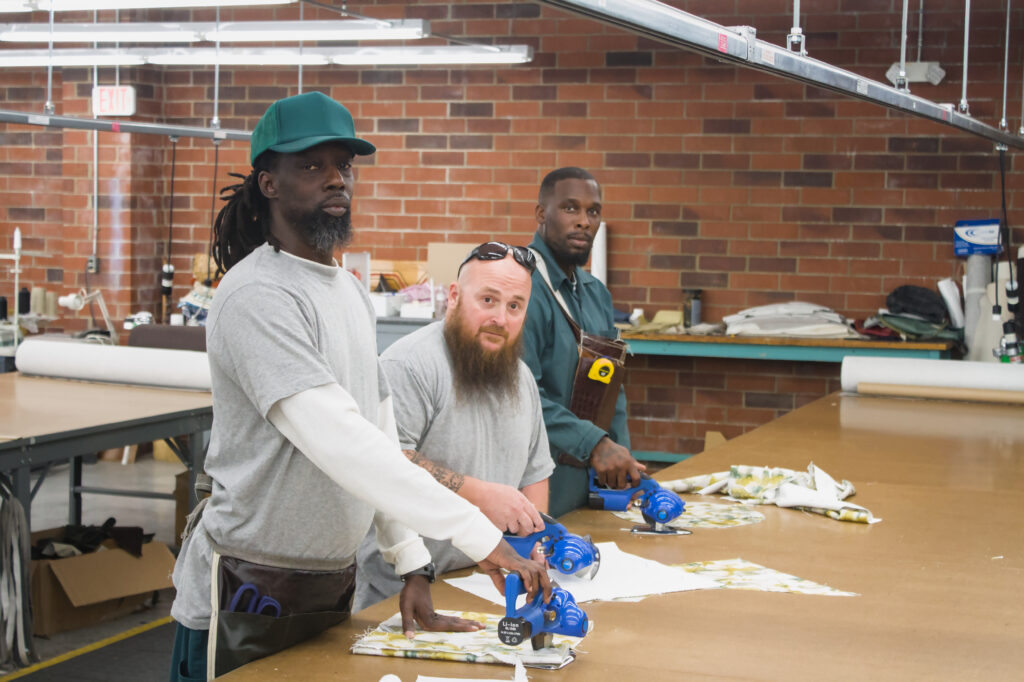
Many college students spend their senior year worried about finding a job. That is not the case for students of Catawba Valley Furniture Academy’s (CVFA) Furniture Tradesman Program.
“A skill is something that can’t nobody take from you,” said Eli Cobb, a student of the program. “You can always find a job.”
Finding a job can be hard for anyone, but it can be especially difficult for people like Cobb, who will be released from prison soon. Employers may not be open to applicants with criminal records, and other aspects of reentry — finding housing, accessing health care, reuniting with family, adjusting to a new context — can get in the way.
But Cobb and his classmates have “no doubt” that there is work waiting for them. And, by all accounts, they are correct.
A new program serves students who are incarcerated
Hickory, North Carolina is known for its furniture. Furniture-making is a historic craft in the area and one that is at risk. The craft, like others such as plumbing, electrical work, and HVAC, is under threat due to an aging workforce.
Furniture-making is difficult to automate, one CVFA instructor said. The problem isn’t robots — it’s retirees. That creates an opportunity for community college programs like CVFA to help by training the next generation of workers.
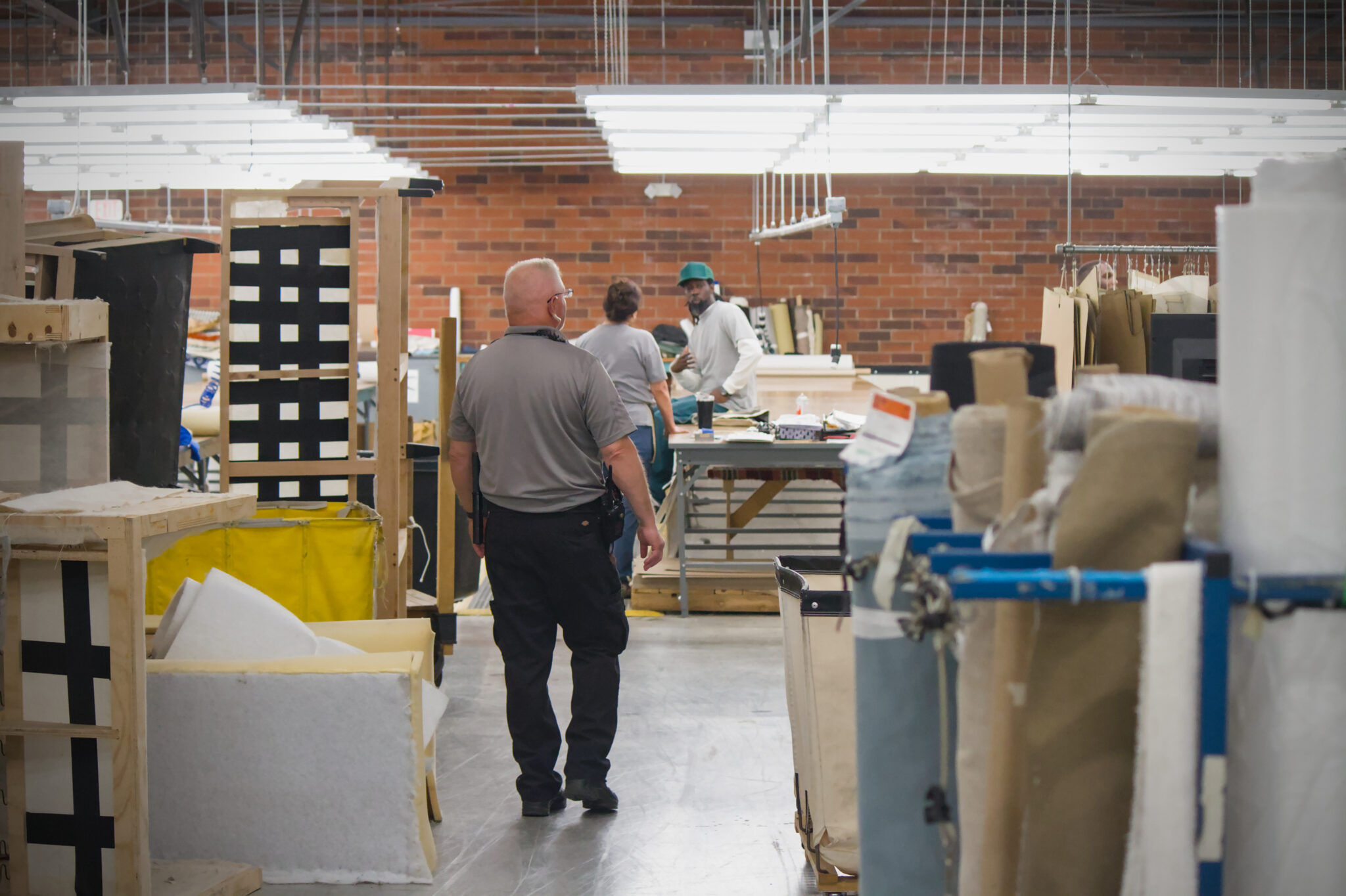
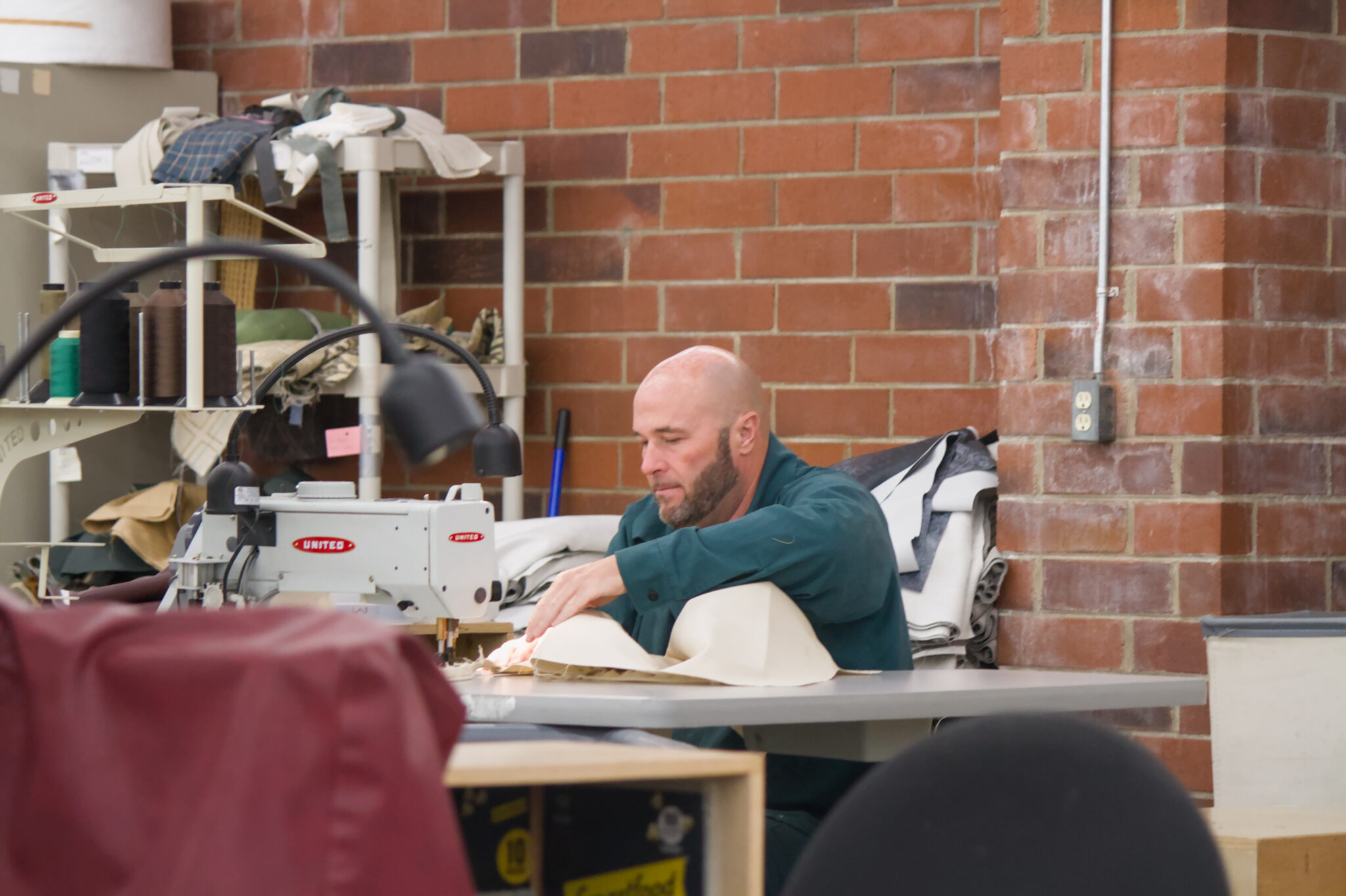
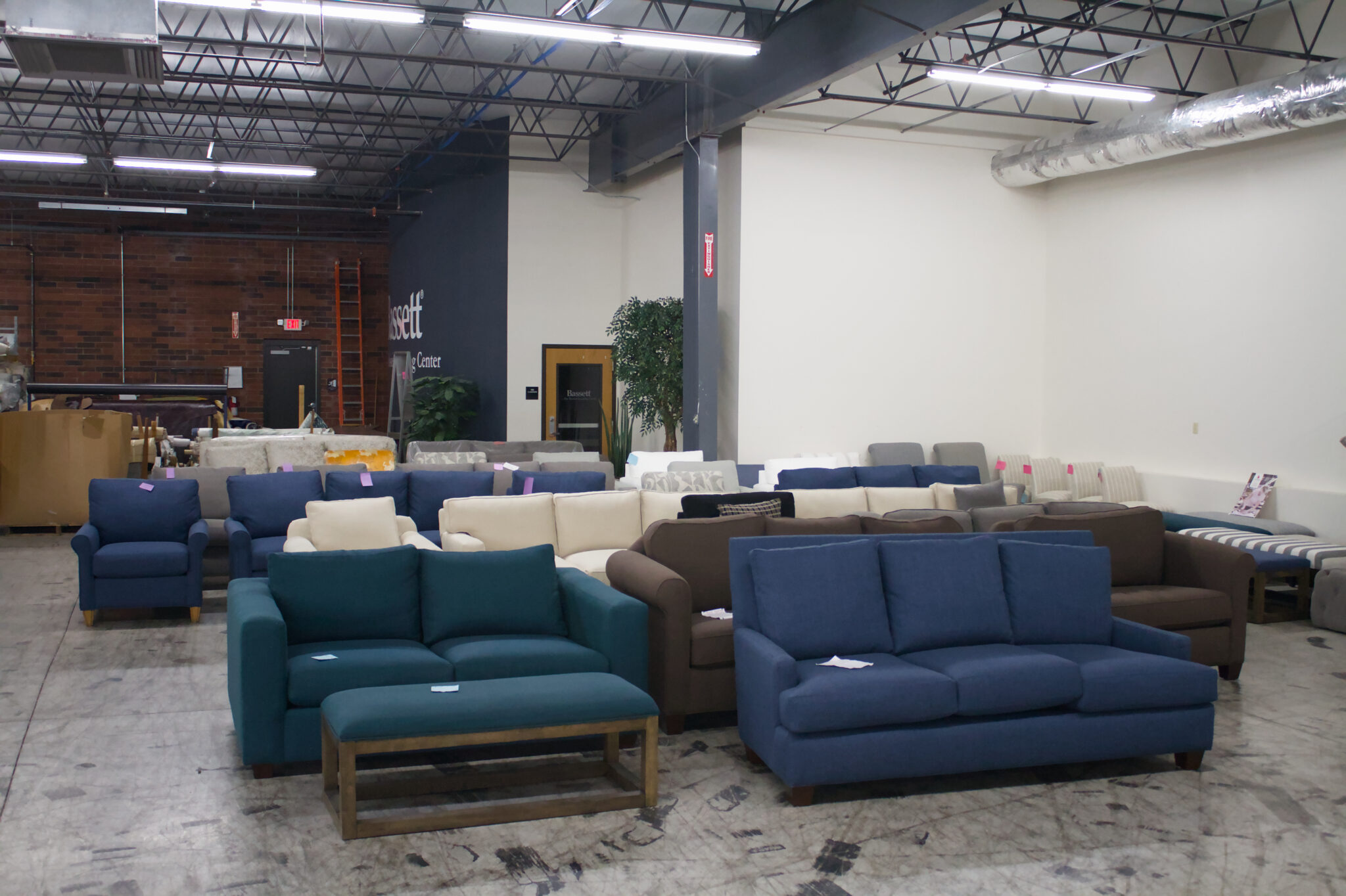
EdNC has previously reported on CVFA, a venture of Catawba Valley Community College (CVCC) that prepares students for careers in furniture-making, including cutting, pattern making, sewing, upholstery. All of this happens in a 38,000-square-foot warehouse, funded through partnerships with local industry, behind a Kubota tractor dealership off of U.S. Route 70.
A year and a half ago, through a partnership between CVCC and the North Carolina Department of Adult Correction (NCDAC), the inaugural cohort of students who were incarcerated enrolled in the academy. They traveled to the CFVA building — which houses a factory floor and a showroom — from local prisons, 30 hours a week for a year, to learn every step in the production of furniture.
Read more about prison education
Robin Ross, CVCC vice president for K-64 and talent development, said the factories students will work in after graduating have similar, if not identical, equipment to the CVFA building. Many of the materials students use are donated by industry partners.
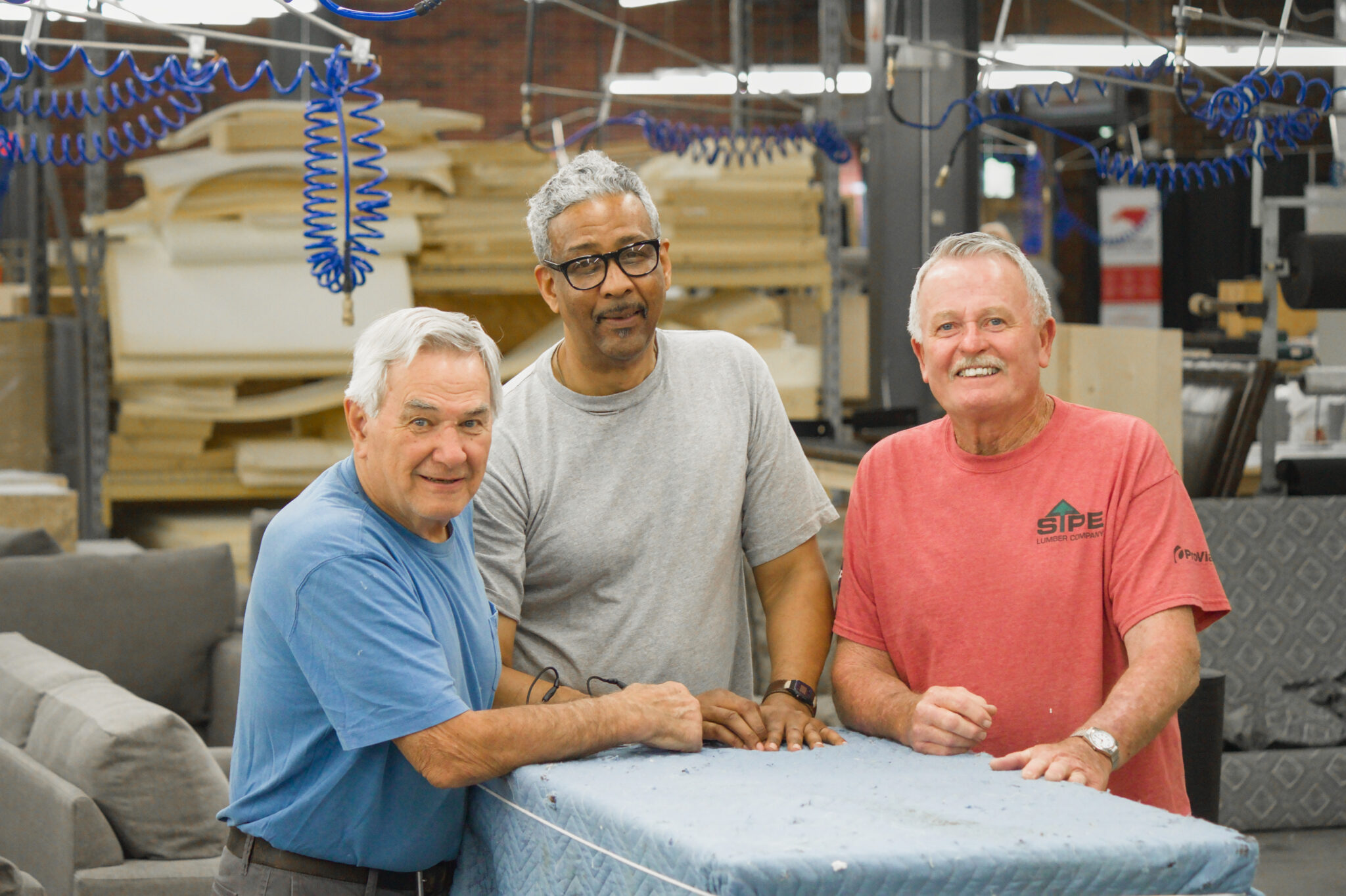
The close relationship between industry and the academy extends to its instructors, who are often current or former employees of local furniture manufacturers. These links form an employment pipeline for students that has helped them find work for nearly a decade.
“We’re proud to say that everybody that completes one of our courses gets a job,” said Gary Muller, executive dean of economic development and corporate education at CVCC.
More on the logistics of the program for incarcerated students
The partnership between NCDAC and CVCC is unique, Muller said, and grew from a casual conversation at a reentry conference. Students must meet strict behavioral standards and apply to join the program — there’s now enough demand for a waitlist.
NCDAC pays the cost of tuition, transportation, and correctional officer time — the department even purchased toolkits for students, Ross said. NCDAC is currently experiencing a “dire” correctional officer shortage, and lacks funding for basic needs in some places, but Ross thinks the CVFA program is stable for now.
“While I think it’s going to impact a lot of programs down the road, I don’t think it’s going to have a whole lot (of impact) on us right now,” she said.
 Sign up for Awake58, our newsletter on all things community college.
After students complete over 1,600 hours of instruction, they can be hired, whether or not completion of the program coincides with their release. Those who have more time on their sentence can participate in work release.
At first, CVCC instructors were concerned about the perception of industry partners and employers, but they said employers have been eager to hire people who are reentering society or even who remain in prison.
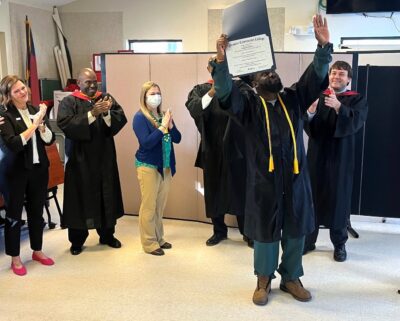
Eight students who were or are incarcerated have graduated from the program, and all of them are employed. The inaugural program graduation was attended by Gov. Josh Stein and First Lady Anna Stein, who has made supporting rehabilitation and reentry programs one of her priority issues.
Now, the 28 students participating in the program are confident they will be employed too. Israel Lynch, a student, said he feels secure in his future because he has seen all his peers who graduated get jobs.
“It’s awesome,” Lynch said. “Because I know I’m next.”
Both students and instructors are confident in employment outcomes
Wayne McDaniel, another student, is about halfway through his coursework. After graduation in August, he hopes to go on work release and work somewhere with a Z1 cutter. He had no previous experience in the industry, but finds furniture-making fun.
“(The cutter) tests your skills to a certain extent,” McDaniel said. “I want something that I could actually test myself with — to make myself better at, or actually try to find a plateau and then step up from there.”
McDaniel chose the furniture program because of the opportunity it offers: stable employment in a secure industry.
David Steele, Cobb’s instructor, is a now-retired 50-year veteran of the furniture industry with as much enthusiasm for constructing furniture as explaining the process.
“When you build it, it gives you a whole new meaning and aspect of what furniture really is,” he said.
Steele said Cobb and the other students are doing a great job learning, and reiterated what seemed like the CFVA’s mantra: “Once they go out of here, they’ll be able to find a job.”
Eli Cobb on the philosophy of education for people who are incarcerated
Cobb said he has been to prison three times. For him, learning doesn’t just represent personal fulfillment, but an opportunity for independence.
“Why have me sit on a bunk all day?” he said. “I could be learning me a skill, and then going and getting a job and having some money — where I don’t have to look for the government or anyone else to help me.”
He thinks time in prison spent sitting around instead of learning or working is wasteful. He said his sentence is for 40 months — “and I sit on my butt for over half of it.”
Cobb said working and being productive could also be a chance to repay debts — both social and monetary — for the people affected by his mistakes.
“It really gives me peace of mind to be able to know that I can come (here),” he said. “It’s really good that I know that, as long as I just do the right thing, good things are going to come my way. It makes my transition a little less stressful.”
Appetite for expansion
Students and program administrators both agree that there should be more opportunities like CVFA’s program for people who are incarcerated in other places.
Buy-in from the appropriate industry partners is crucial if other programs want to see the same kind of success CVFA has, Ross and Muller noted. They said local businesses supplying instructors, funds, and materials is what has allowed the academy to operate.
There is interest in replicating something like CVFA. Ross said Western Piedmont Community College toured the CVFA building because they were thinking about trying a similar model.
CVFA students said others deserve the same opportunities they are afforded.
“Open more programs. Open more doors for other individuals, other camps, to get the same opportunities — whatever industry is in that area,” said Jeremy Garey, a student. “If they can open up the windows and doors for everybody that’s frustrated, we get opportunities to be productive members of society.”