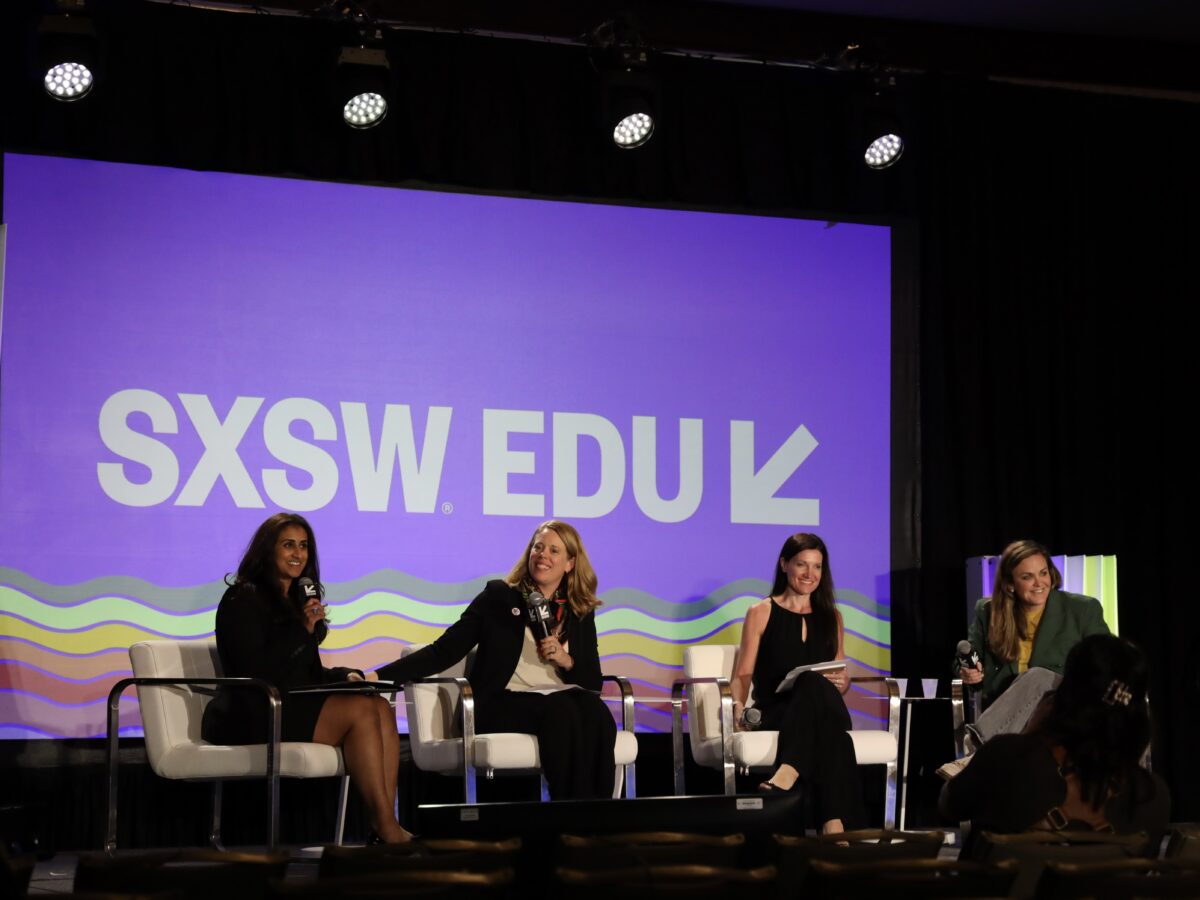
South by Southwest (SXSW) is an annual gathering in Austin, Texas that combines leaders and fans of music, film, tech, and education each spring.
The festival has morphed over its 38-year history and added an education component in 2011. This four-day focused event is known better as SXSW EDU and kicks off the Austin-based convergence of creativity.
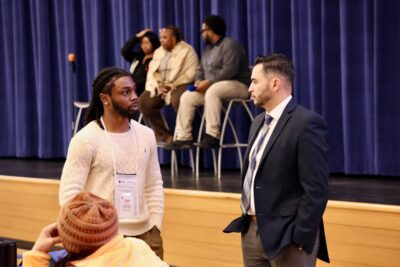
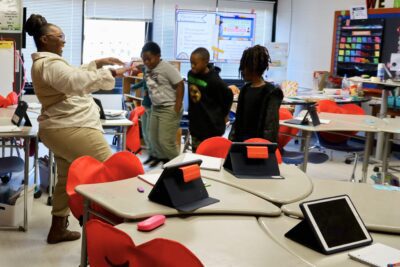
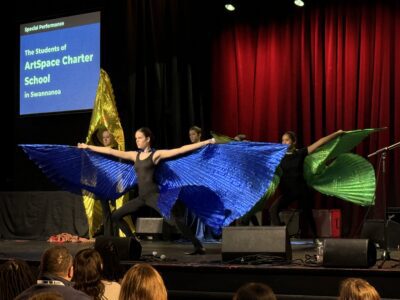
From March 9-12, EdNC attended SXSW EDU to listen as North Carolina students, teachers, leaders, policy advisors, and more represented our state by presenting to an engaged education audience from around the nation.
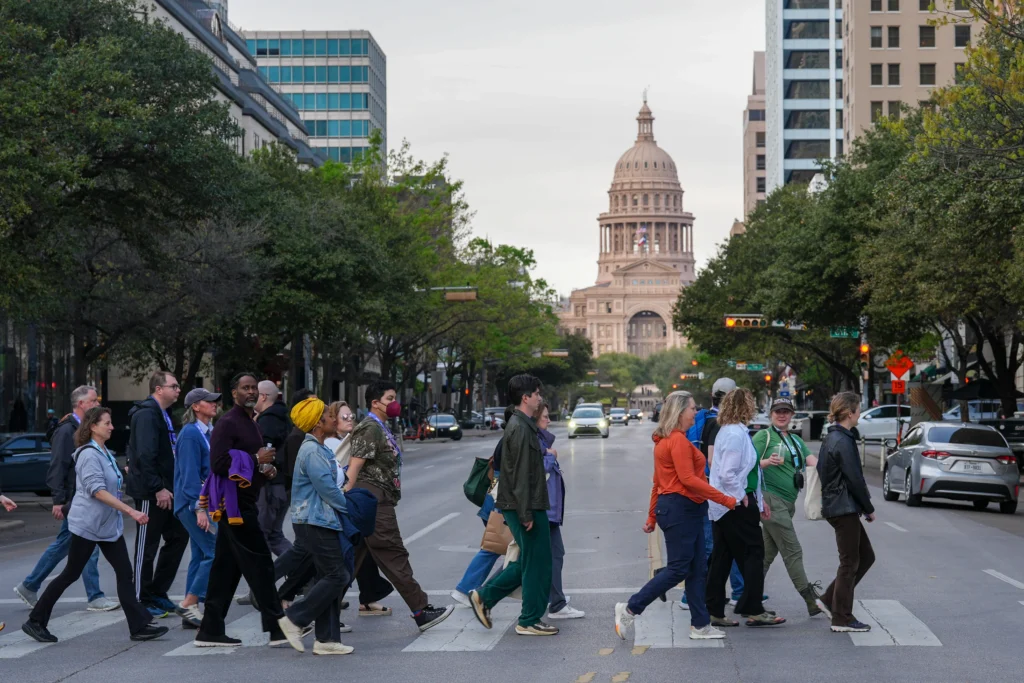
Topics ranged from EdTech and using AI in the classroom to digital fasting for students. Conversations were presented via panel, workshops, mentor sessions, round table discussions, and more. It was a choose-your-own-adventure conference, as options to engage ran the gamut.
North Carolinians participated in a variety of ways by bringing expertise, examples of success, and current projects that showcase the offerings of the Tar Heel state to the gathering.
NC representation in policy, practice, podcasting, and film production
Dr. Andrew Smith served as the deputy state superintendent for innovation at the North Carolina Department of Public Instruction (DPI) under Catherine Truitt. “Where the work happens is with the kids,” Smith said. “We knew we needed to equip our local leaders with information.”
He shared North Carolina’s method of data collection to drive student outcomes at a SXSW workshop on research and development. North Carolina’s methods were used as a positive example in evidence-driven systems change.
Moriah Dollarhite is the director of human resources for Rockingham County Schools and participated in a panel about hybrid teaching models that boost student outcomes. She spoke about structuring support around beginning teachers with the help of Public Impact.
Roundtable discussions offered a sit-down, notebooks out, ask-and-answer type of exchange with topic experts and conference goers who wanted to learn more. Two of these experts hailed from North Carolina — Keegan Storrs and Leah Carper.
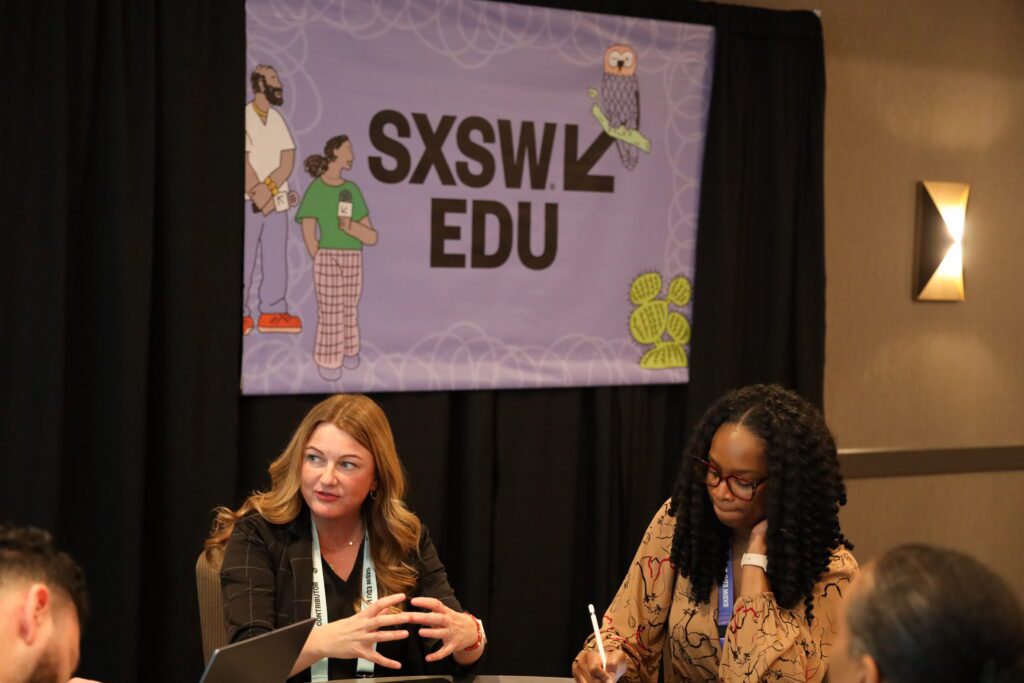
Storrs is the chair of humanities and a Spanish instructor at the North Carolina School of Science & Mathematics. He talked about linguistics and answered questions about designing language curricula that make students want to engage.
Leah Carper was the 2022 North Carolina Teacher of the Year and is the current director of stakeholder engagement for Guilford County Schools. She spoke to a packed room about navigating education advocacy in a time of polarization.
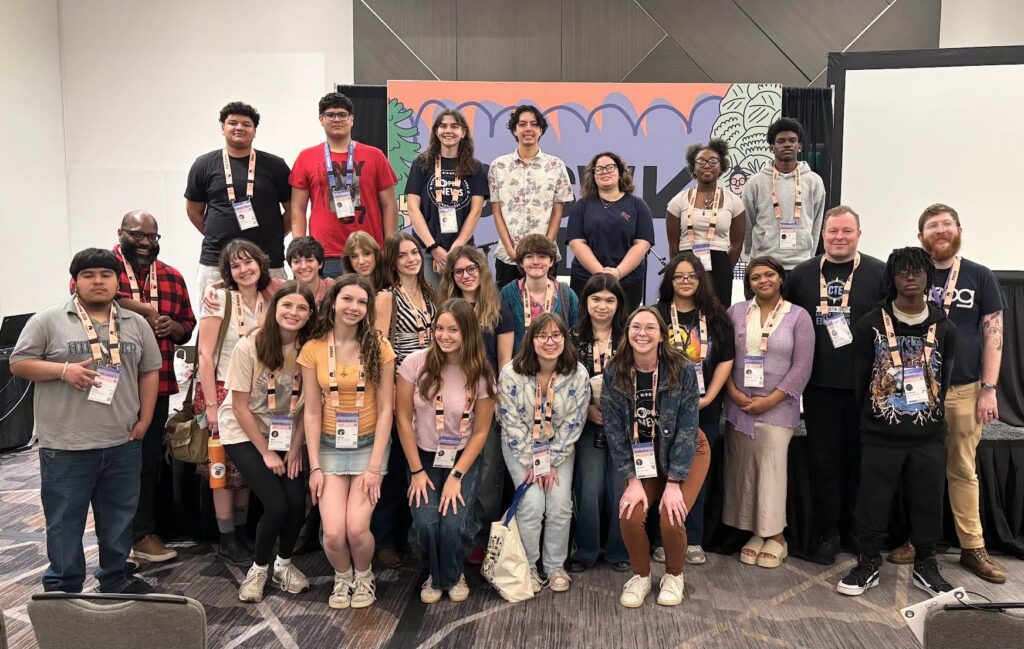
A sophomore from Rockingham Early College High School, Helena Ortiz, is working with PBS News Student Reporting Labs and sat on a panel with fellow student reporters. She is cohosting the upcoming sixth season of the On Our Minds podcast which talks about teen life in all corners of the nation.
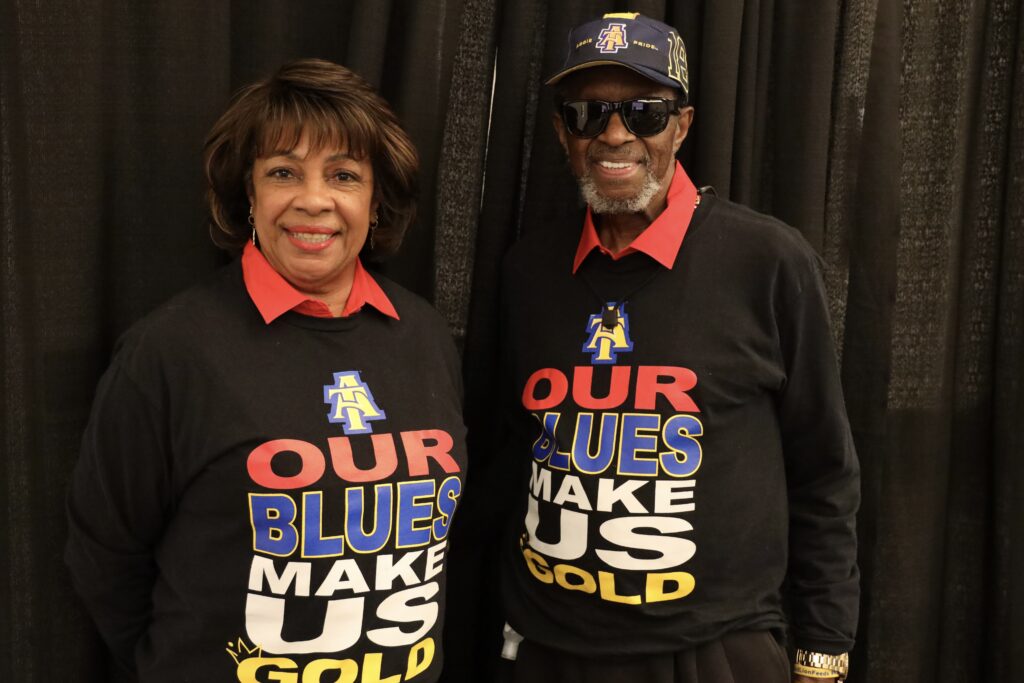
Closing out the Wednesday evening sessions of SXSW EDU was a screening of the Emmy-nominated documentary from Ashley Shanté and Brandon Gerard, “Our Blues Make Us Gold.” The film looks at the roots and legacy of North Carolina A&T State University, the largest HBCU in the nation.
In the opening of the film, Gerard said, “Can you show the world that an HBCU is more than the band, more than athletics, more than homecoming? That was our goal.”

In conversation with the school’s famous alumni and historians, the film delves into the importance of place, the school’s impact on civil rights, and more. Representation was on the silver screen and in the room for this North Carolina institution.
Doing hard things in Civics class
Dr. Emma Humphries is the chief education officer at iCivics, a nonpartisan organization dedicated to advancing civic learning. She began a panel conversation at SXSW by delivering the results of a survey.
Polling nearly 2,200 K-12 educators she said, 21% of respondents are considering leaving the profession due to a divisive environment, 35% have changed lessons because of the climate in their community, and 59% fear backlash for teaching already established lesson plans.
She moderated the panel, which included three civics educators from around the country who teach in districts politically diverse from one another. Karalee Wong Nakatsuka is a middle school U.S. history teacher in Southern California, Andrew Swan is a middle school social studies teacher in Massachusetts, and Valencia Abbott is a veteran social studies educator at Rockingham Early College High School in Wentworth, North Carolina.
Abbott was recently named the 2025 National History Teacher of the Year.
Humphries said after delivering the survey results, “Teaching civics is hard. The good news is it’s kind of always been hard. We can teach hard things. Civics teachers can teach hard things. We always have.”
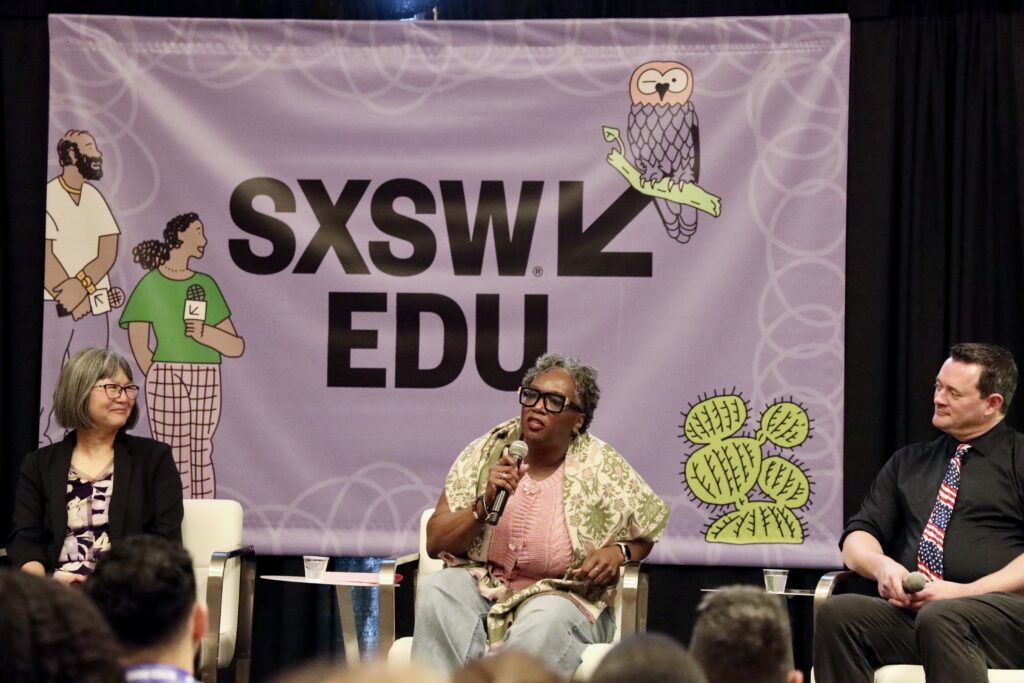
The panel talked openly with the audience about topics students are bringing to class due to current political events. Right now students are asking about citizenship, birthright, and tariffs. They are curious about who gets to declare war and due process.
Abbott said, “I’ve always taught these principles, these strategies, these topics in my classroom. I’ve never shied away from anything in the classroom. What is different is my preparation for my lessons.” She is checking her own biases and researching her sources more. She is coming to class extra prepared for whatever questions her students may have.
Abbott’s philosophy around teaching hard things is to enable and encourage her students to find themselves in history. If she is presented with a historical event she hasn’t taught, but it is part of her student’s community, she adds to the curriculum.
“If the kids trust that you’re giving them the best information that you have, then you can go forward with your work,” said Abbott.
Teacher recruitment, teacher retainment
What strategies surround recruiting and retaining beginning teachers from Generation Z? “Lead with purpose, not with vacancy” said Robyn Fehrman, executive director of Teach for America North Carolina. She and fellow North Carolinian principal Christianne May were on a panel discussing the new generation of potential educators and ways to attract them to the profession.
“Gen Z isn’t coming to fill a slot. They are joining a mission,” stated Fehrman.
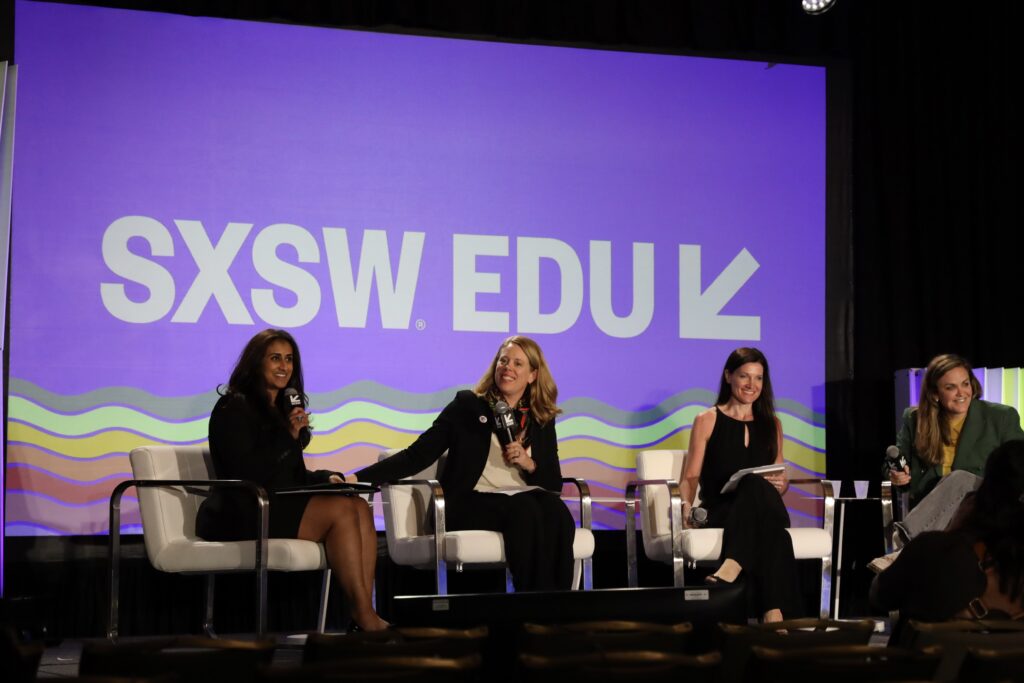
One way TFA North Carolina began strategizing around this generation was with the introduction of Ignite, a high-impact tutors program. Reaching college sophomores and juniors, the program creates curiosity and a casual on-ramp to enter the education career pathway.
The outcomes have been threefold. First, the program is boosting student outcomes. Second, it is filling crucial workforce gaps in those districts that need it. Third, it is exposing college students to the education profession.
“We are seeing a robust tutor-to-teacher pipeline that is creating new ideas around how do we introduce folks to education,” said Fehrman.
Fehrman pointed to a TFA and Stanford study that revealed Ignite tutors are three times more likely to apply to TFA. “They’re seeing this as a real career plan, because they got introduced to it very early on, and they weren’t forced to commit to a two-year program, [or] commit to an entire career before they had a chance to really experiment with it and learn a little bit,” said Fehrman.
Christianne May is the principal of Castle Hayne Elementary School in New Hanover County. For her, the key to teacher retention and combating burnout is school culture.
“I probably spend 90% of my time focusing on the culture of my building because I think through the culture of the school we impact the achievement of our students,” May said.
The principal also prioritizes creating the right teaming structures. Who teaches what grade levels and what combination of personalities work best together is critically important to educator retainment.
“How do we ground our Gen Z teachers in their ‘why,’ and build culture around that ‘why’ at the whole school level?” pondered May when asked about retaining her best beginning educators.
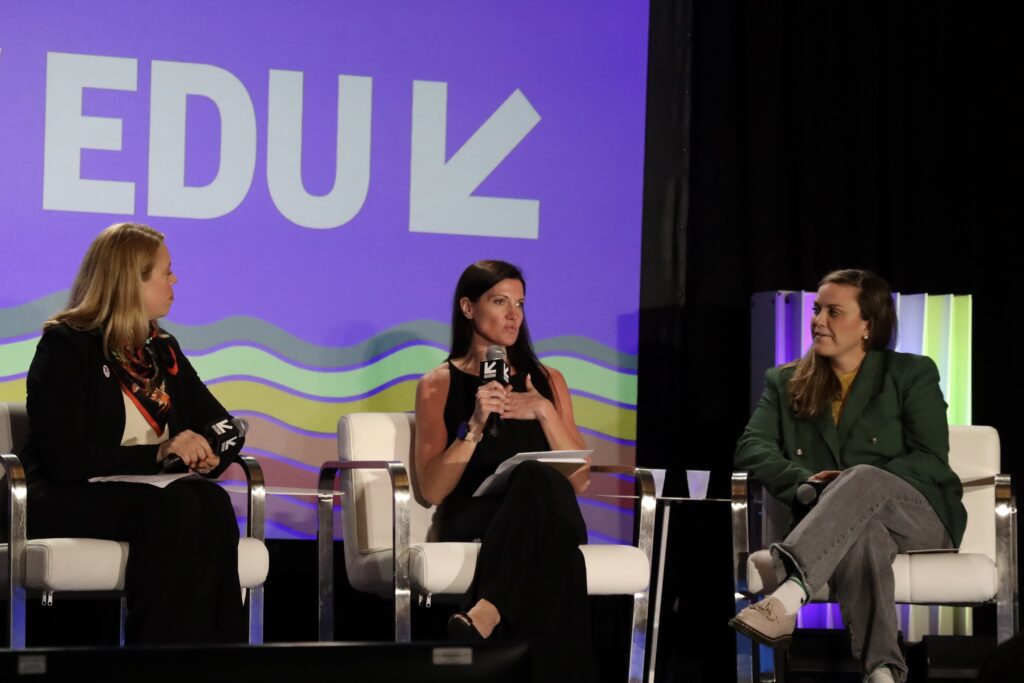
“I think the way to do that is through culture, through understanding, through acceptance. In meeting them where they are and making it okay, and then helping them through when things get hard — because we know — it’s going to get hard. So having the supports in place to help teachers through those hard times is critically important.”
May points out the generational divide in her staff. She has veteran educators who have been teaching longer than her beginning teachers have been alive. She looks at ways to connect that chasm constantly. She pairs every beginning teacher with a master teacher. The veterans take first-year educators under their wing, support them, and are their mentors. “Giving beginning teachers space and time, and normalizing that this is hard, and we’re here to support you — I think that’s really critical,” she said.
May described the school year as a roller coaster. And beginning teachers haven’t ever been on that ride. That’s where the relationships matter. “I think when we coach and uplift our beginning teachers that benefits everybody,” May said.
Recommended reading