
NCCU publishes research on education as a career choice for men
According to the North Carolina Public Schools Statistical Profile, of the 90,260 full-time traditional public schools classroom teachers in the 2025-26 academic year, just 21% were male. Meanwhile, males made up roughly 51% of the K-12 public school student population in North Carolina.
North Carolina’s data resembles nationwide trends from the National Center for Education Statistics which reports that males make up about 23% of teachers in public elementary and secondary schools throughout the United States. Strikingly, Black and Hispanic males combined account for less than 4% of K-12 public school teachers nationally, in comparison to Black and Hispanic males making up over 20% of K-12 students across the country.
The disproportionate representation of men across the field of education spurred a new North Carolina study to explore men’s pathways into education.
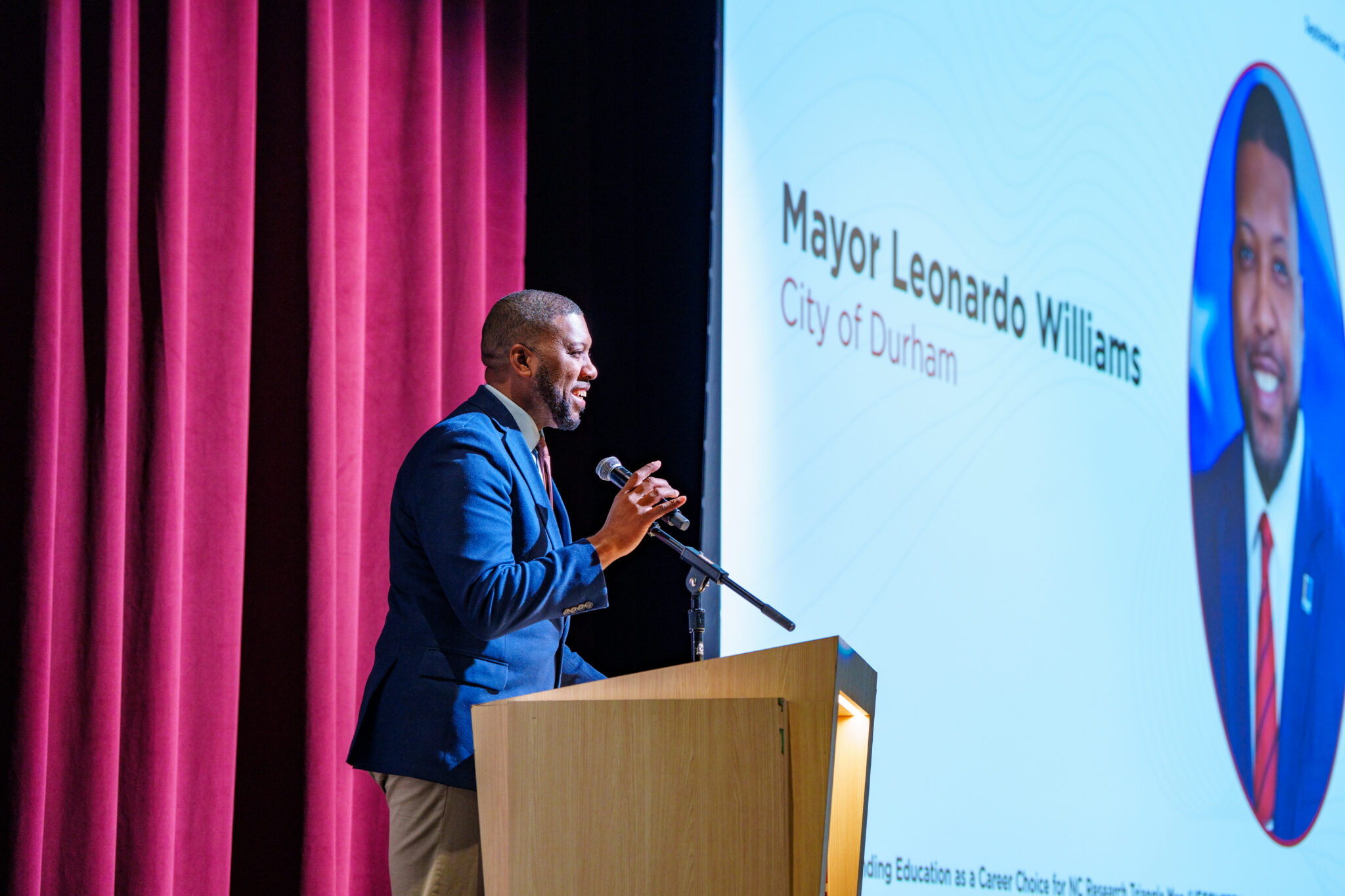
Before being sworn in as Durham’s mayor in 2023, Leonardo Williams’ career history included experience as an educator.
On Sept. 28, the two-time Durham Public Schools Teacher of the Year detailed his path to teaching during his welcoming remarks at the Understanding Education as a Career Choice for NC Research Triangle Men conference.
The two-day conference was held following the release of a book titled, “Understanding Education as a Career Choice for Men: Critical Insights from a Study of North Carolina Research Triangle Youth,” published by Routledge and co-authored by the following scholars:
- Dr. Tryan L. McMickens, professor of higher education and interim associate dean of the School of Education at North Carolina Central University (NCCU)
- Dr. Jim C. Harper II, professor of history and interim associate provost and dean of the School of Graduate Studies at NCCU
- Dr. Regina Gavin Williams, licensed clinical mental health counselor, qualified supervisor and counselor educator
- Dr. Jayla Moody Marshall, assistant professor of higher education at NCCU
The research also included contributions from the following NCCU graduate students from the higher education administration and history graduate programs: Zaida Walker, Michael Terrell, Jamie Barnett, Kaitlyn Turner, Titilayo Somorin, Summer Brown, Jardearia McLean, and Kamaiya Scott.
Funded by a $500,000 grant from the Walton Family Foundation, with additional support from the American College Personnel Association Foundation, the research project led to the conference, which convened students, education professionals, and community leaders to share findings, along with several keynote presentations and panel discussions.
The study featured in the book took a qualitative approach, examining interviewing responses from 15 participants — four high school juniors and seniors, five undergraduates, and six pre-K-12 educators — in the North Carolina Research Triangle.
The goal of the study was to understand factors that influence men’s decisions to pursue careers in education while identifying barriers and stigmas that impact their career choice.
The study identified the following three primary factors influencing career decisions for participants:
- Precollegiate involvement: participation in community/religious groups, youth groups, and men’s groups
- Parental influence
- The impact and investments of former educators
Williams traced his journey to being a teacher back to his time as a fourth grader in Halifax County at Thomas Shields Elementary.
During the time period that his teachers taught every subject, he recalled the unpleasant squeal as his teacher attempted to play the recorder, an instrument many children learn in school.
“Man, I can do it better than her,” Williams recounted, to which his snarky remark was met with the challenge to perform the instrument in front of his peers impromptu. “I sucked, too,” he admitted.
Despite demonstrating his inability to play the instrument better, Williams was presented with the opportunity to take it home which allowed him to become more familiarized with it, specifically learning about the required breathing technique.
The following day, Williams shared his newfound understanding of the recorder with his classmates — a moment of redemption from which a music educator emerged.
An eventual collegiate percussion major, Williams attended North Carolina Central University (NCCU) in pursuit of a bachelor’s in music education; later followed by a master’s in educational leadership at the same school.
“I intentionally chose education as a career track,” Williams said, describing teaching as a method of enabling students to express themselves while opening doors to opportunities such as scholarships.
While his experience in education — particularly losing many students to gun violence — drove him toward holding elected office, Williams stated:
“I will always be an educator because of the experiences that I went through and the intentionality that came out of it.”
Concluding his remarks, Williams described the conference as “timely,” aligned with a hope for others to intentionally make the decision to “get in the classroom and actually shape the environment in which people are teaching and learning.”
Perspectives from study participants
For one high school participant, after witnessing his mother’s financial hardships, the perceived economic stability associated with joining the military significantly influenced his pursuit of the Marine Corps instead of attending college. For another high school student, exposure to adults who each possessed at least a bachelor’s degree normalized postsecondary education, establishing it as “not an aspiration but as a continuation,” the book stated.
One undergraduate participant’s path to education was inspired by the presence of two parents working in elementary education and the familiarity he had with the environment. Similarly, although not in a traditional academic setting, another undergraduate’s exposure to his father’s teaching, guidance, and leadership as a rabbi ultimately laid the foundation for his understanding of the importance of education. Coupled with his mother’s “gentle nudge” and recognition of his skill, he unveiled his love for teaching.
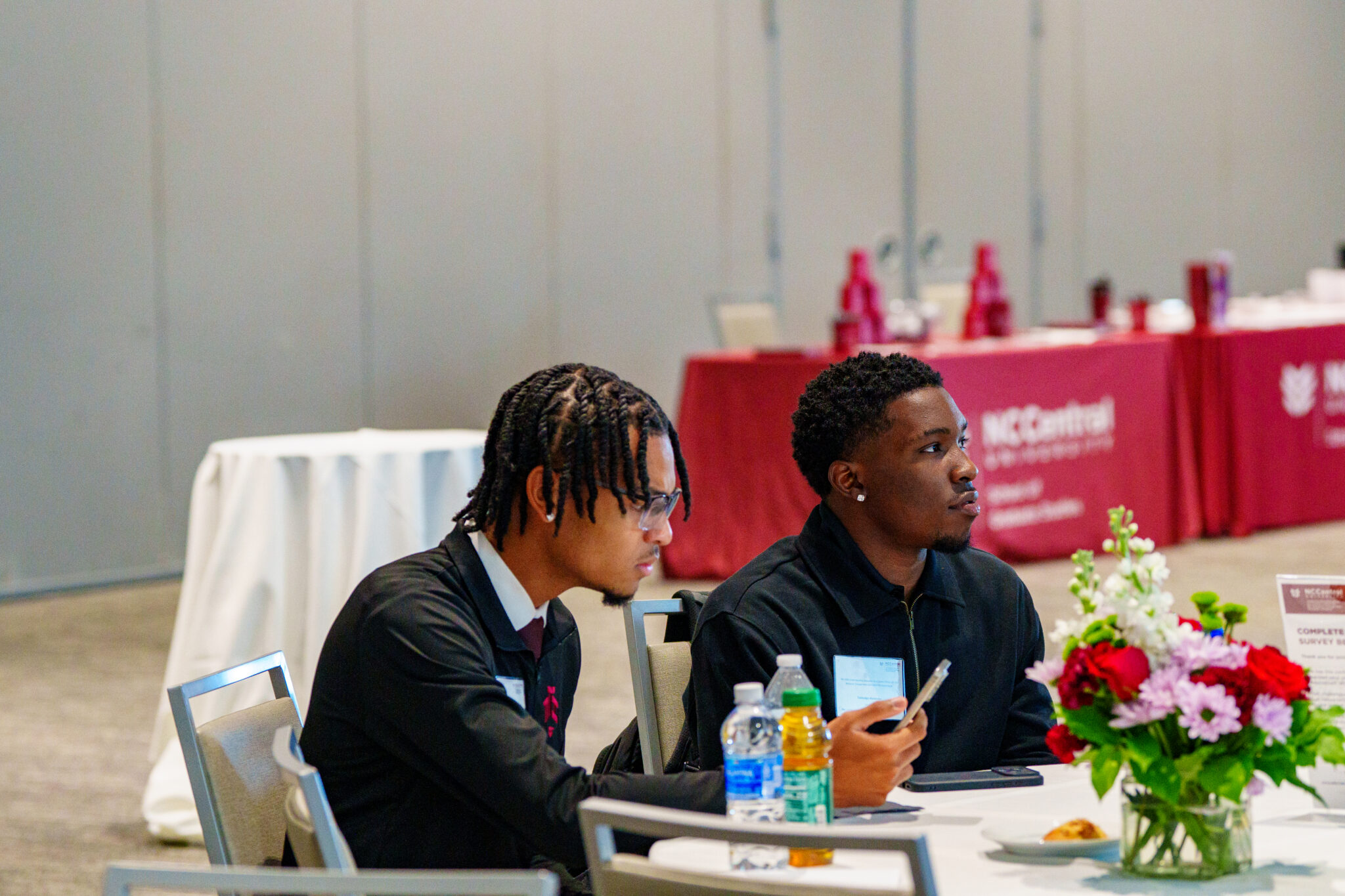
An educator participant indicated that he maintains communication with influential teachers from his childhood. One of those former teachers previously observed how the participant used to support his elementary classmates, and ultimately encouraged him to consider teaching as he grew older.
Whether following the footsteps of a parent, or having an educator or mentor that highlights the skills and qualities in a student, the study says early exposure can be a critical part for young men to perceive education as a career option.
While aforementioned data and examples primarily allude to pathways to education as a classroom teacher, Moody Marshall expressed that, beyond teaching K-12, there are other career opportunities categorized under education such as counseling, psychology, being a professor, research, journalism, and more.
“There’s so many things that you can do under the umbrella of education, but it’s not always presented,” she stated. “People cannot even begin to consider what it is that they want to become if they do not see it or if they do not believe that it is a possibility for them.”
Moody Marshall said that representation is everything, adding that “if we have that representation, we can encourage students to pursue it.”
The book lists media, programs, and organizations that promote representation of men and education and strengthening the awareness of education as a career.
A few examples of the resources include the following North Carolina-specific organizations:
- NCCU’s own Marathon Teaching Institute, whose mission is “to recruit, retain and prepare male students of color for excellence in the field of education,” by providing academic support, professional development, and mentoring to program participants.
- Profound Gentlemen, a nationwide organization based in Charlotte designed to “empower men of color in the education field through a peer support network, skills and professional development opportunities, and educator career coaching.”
- The “Presence and Purpose” retreat for male educators of young children hosted by the Institute for Teaching and Learning at Carolina Friends School.
Shepherded into education
When explaining his own journey into education, Mickens said he didn’t grow up with a road map that demonstrated how to become a professor or higher education leader.
Raised in Canton, Georgia, Mickens knew that he wanted to see a world beyond his small rural hometown.
He credits Frankie Shepherd, a mentor from his church and retired educator, with taking him under her wing as she personally drove him to her alma mater, Tuskegee University.
“I fell in love with it,” he recalled, having embraced the opportunity to walk the same grounds as prominent figures in history such as Booker T. Washington, George Washington Carver, the Tuskegee Airmen, Lionel Richie, and so many more.
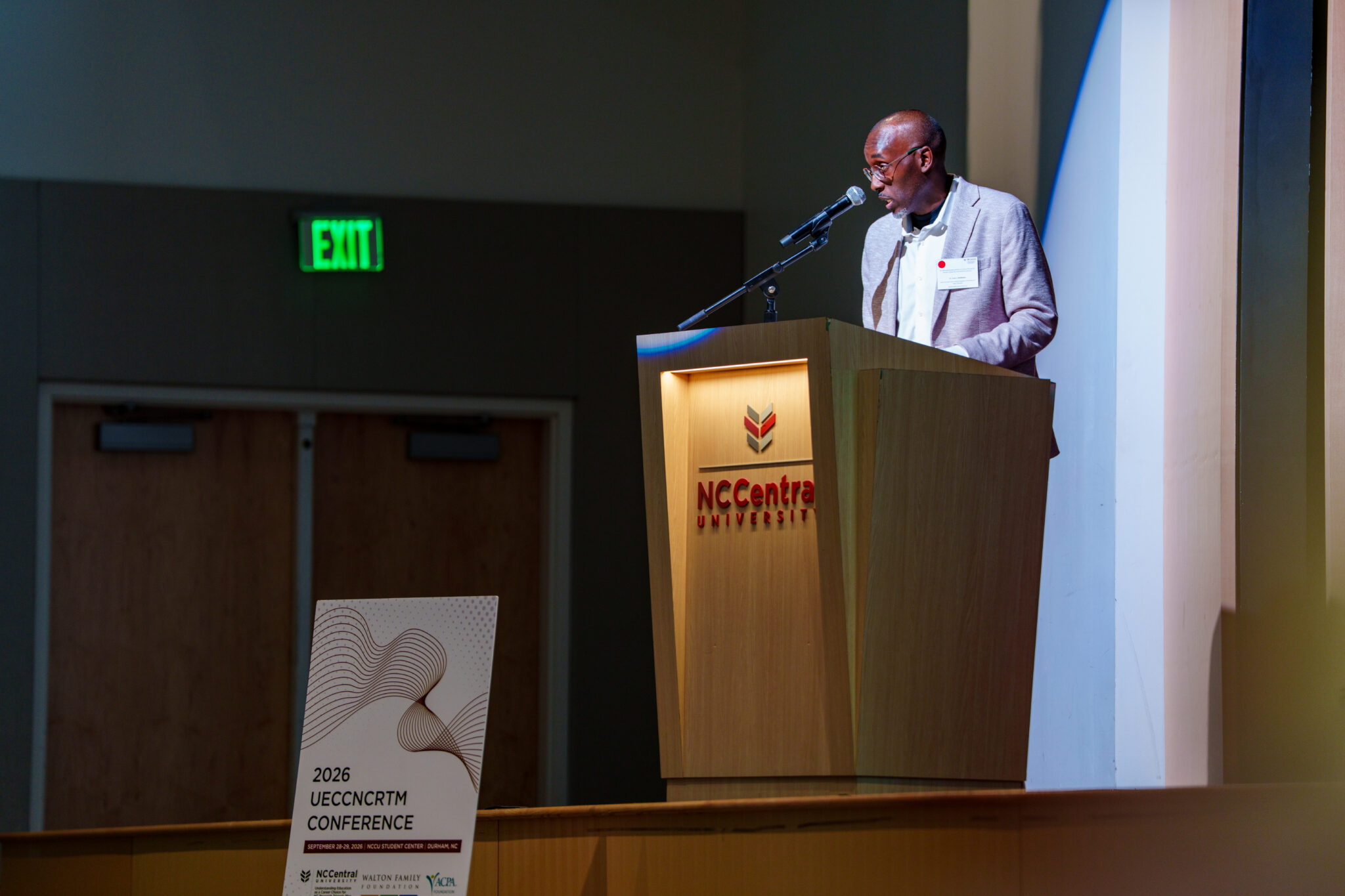
That same institution would be the place where Mickens encountered the mentorship of Dr. Sulayman Clark, who at the time served as the university’s senior vice president for institutional advancement.
According to Mickens, Clark saw something in him that he had not seen in himself, specifically teaching him to leverage his business degree to pursue a career in higher education. “I felt this sort of seed in me; it was planted to reach higher in my own higher education journey.”
Wanting to have people be intentional about a career in education and making the pathway visible, Mickens said, were motivating factors behind his contributions to the research and conference — and the overall push to strengthen the pipeline men in education.
Mickens believes that hearing the words “I see something in you” can change a life.
“I know because someone said them to me, and now as a professor and a higher education leader, I have the privilege and the responsibility of saying them to someone else,” he stated.
Click here to access the full research study and findings.