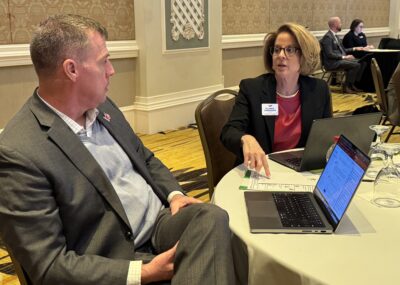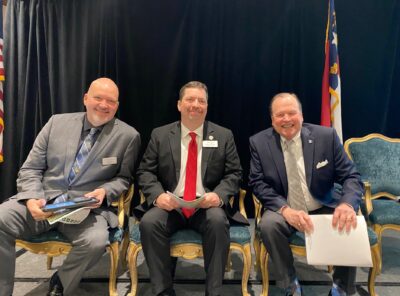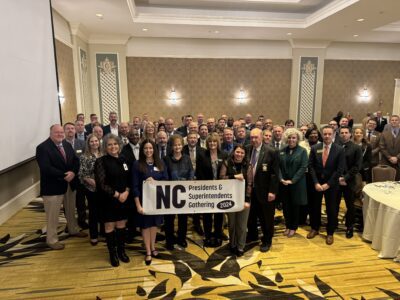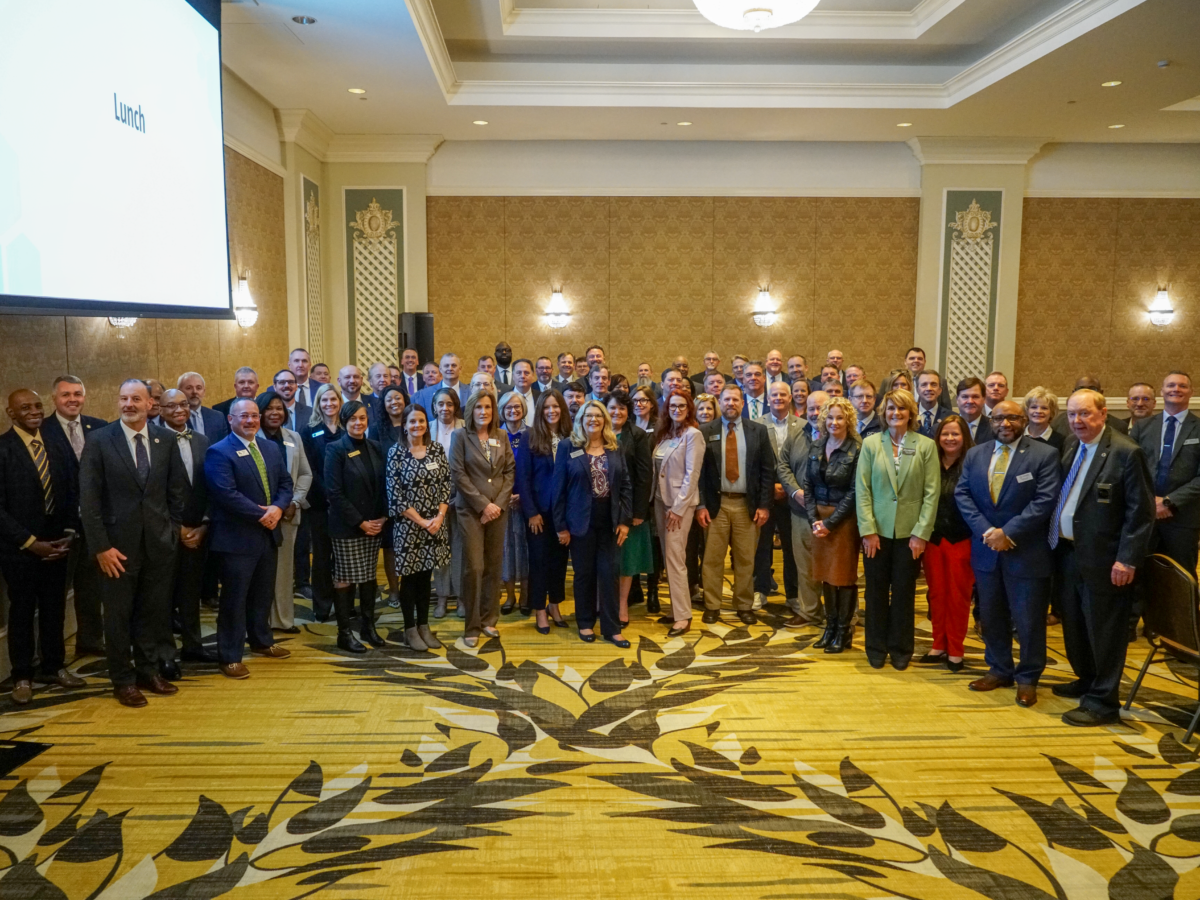
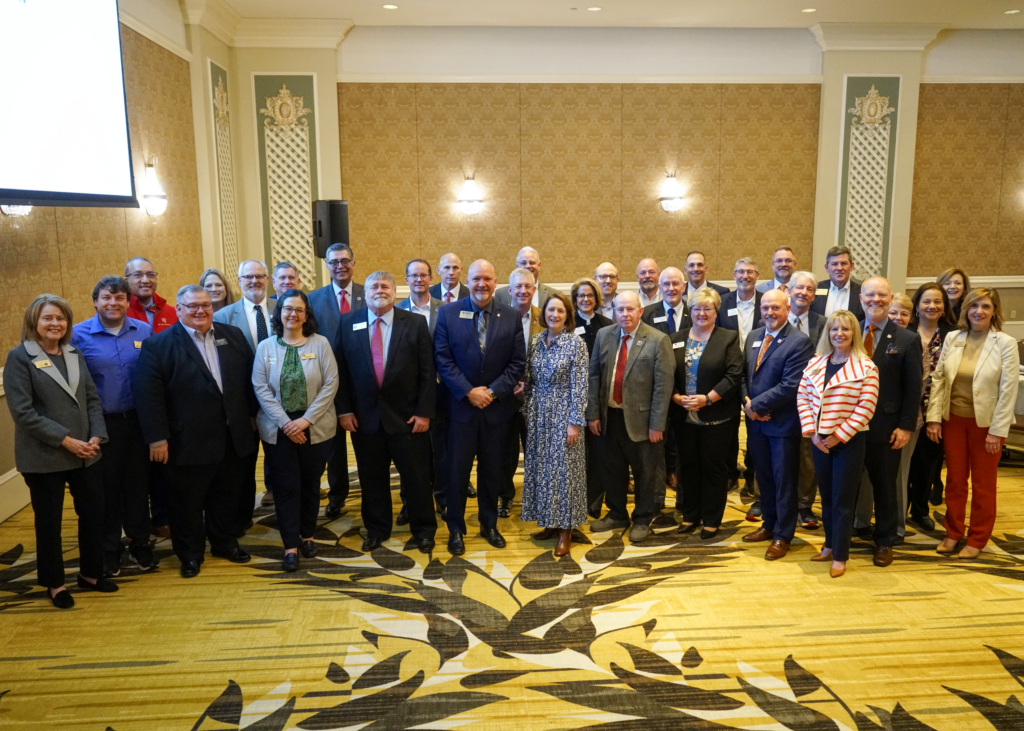
Over 150 community college presidents and school superintendents traveled to Greensboro in late February to address North Carolina’s most pressing education and workforce opportunities.
This annual joint convening brings both key education systems together to discuss promising practices and shared goals, including but not limited to: improving student outcomes, increasing economic mobility, and producing a diverse talent pipeline to meet North Carolina’s growing workforce needs.
The convening was hosted by the North Carolina Association of Community College Presidents (NCACCP) and the North Carolina School Superintendents’ Association (NCSSA). Made possible by the John M. Belk Endowment (JMBE), this was the sixth year of the annual joint convening.
 Sign up for Awake58, our newsletter on all things community college.
“I hope that you see that there’s a theme here this time, about really focusing on our young people that cross over with the superintendents in the upper-level classes, the high school classes, and then also those who are in our dual enrollment students, and then, of course, the graduates,” said Amanda Lee, president of the NCACCP and Bladen Community College.
This year’s convening had a particular focus on dual enrollment, opportunity youth, and understanding the different generations that make up the students and staff of our K-12 schools and community colleges.
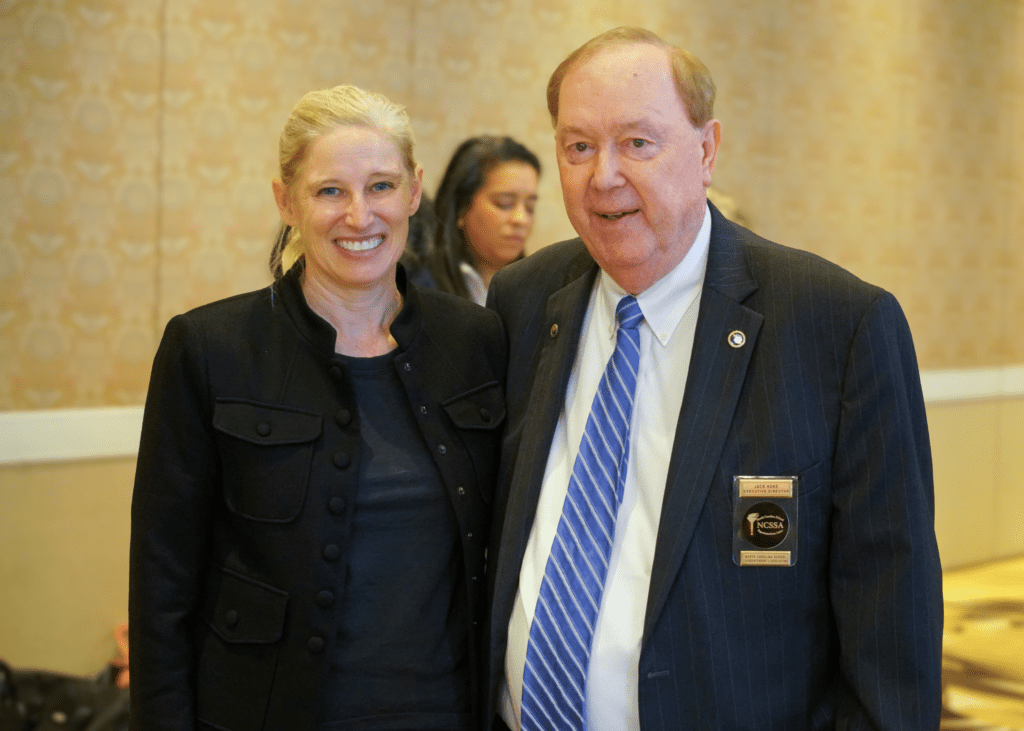
“What gives us hope, and I mean this sincerely, is that the conversations happening in this room are not just theoretical. It is about collaboration,” said MC Belk Pilon, president and board chair of the JMBE. “Superintendents and community college presidents: you’re listening, you’re asking the hard questions, you’re challenging each other, you’re imagining better alignment, and you’re creating it.”
You can view the presentations from the convening below.
Leading AI with purpose
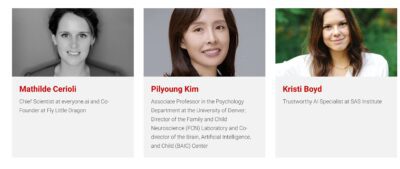
One of the tools that schools are using to maximize their efforts in the classroom and beyond is artificial intelligence (AI). Catawba County Schools leaders gave a presentation on how to navigate the challenges that come with integrating AI and how to use the technology with purpose.
The district was one of 10 districts in North Carolina that received the N.C. Digital Learning Grant to build AI literacy for students, staff, and the community in alignment with rapidly evolving workforce demands.
“Any time I present in front of a group of people or an audience, I always make sure that I have a full disclosure of anything, anytime I ever use a generative AI product, I always put a disclosure in front of everyone,” said Marty Sharpe, chief technology officer for Catawba County Schools. “I feel it’s important that I have to model what we ask our teachers to model and we ask everyone within our district to model that. I think that is extremely important in this new age of AI.”
During his presentation, Sharpe shared that AI use in organizations grew from 20% in 2017 to 88% in 2025, according to the World Economic Forum. From the same report, Sharpe shared that workforce demand for AI-literate talent has surged, with 70% of employers now prioritizing those skills.
To wrap up his presentation, Sharpe shared his belief that educational institutions must embrace AI in order to teach AI readiness, and that AI readiness has major implications for students’ future economic opportunity. He encouraged his colleagues to incorporate AI and reminded them that engagement and efficacy require intentional modeling and ongoing evaluation for all students and staff.
Read more about AI


Bridging generational divides
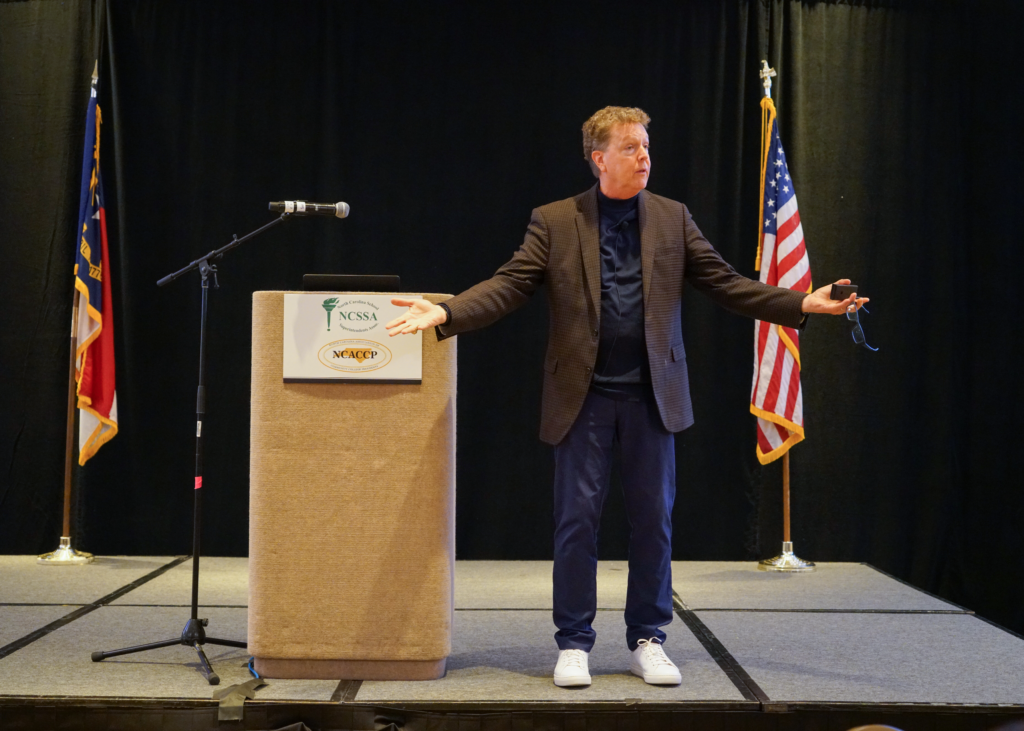
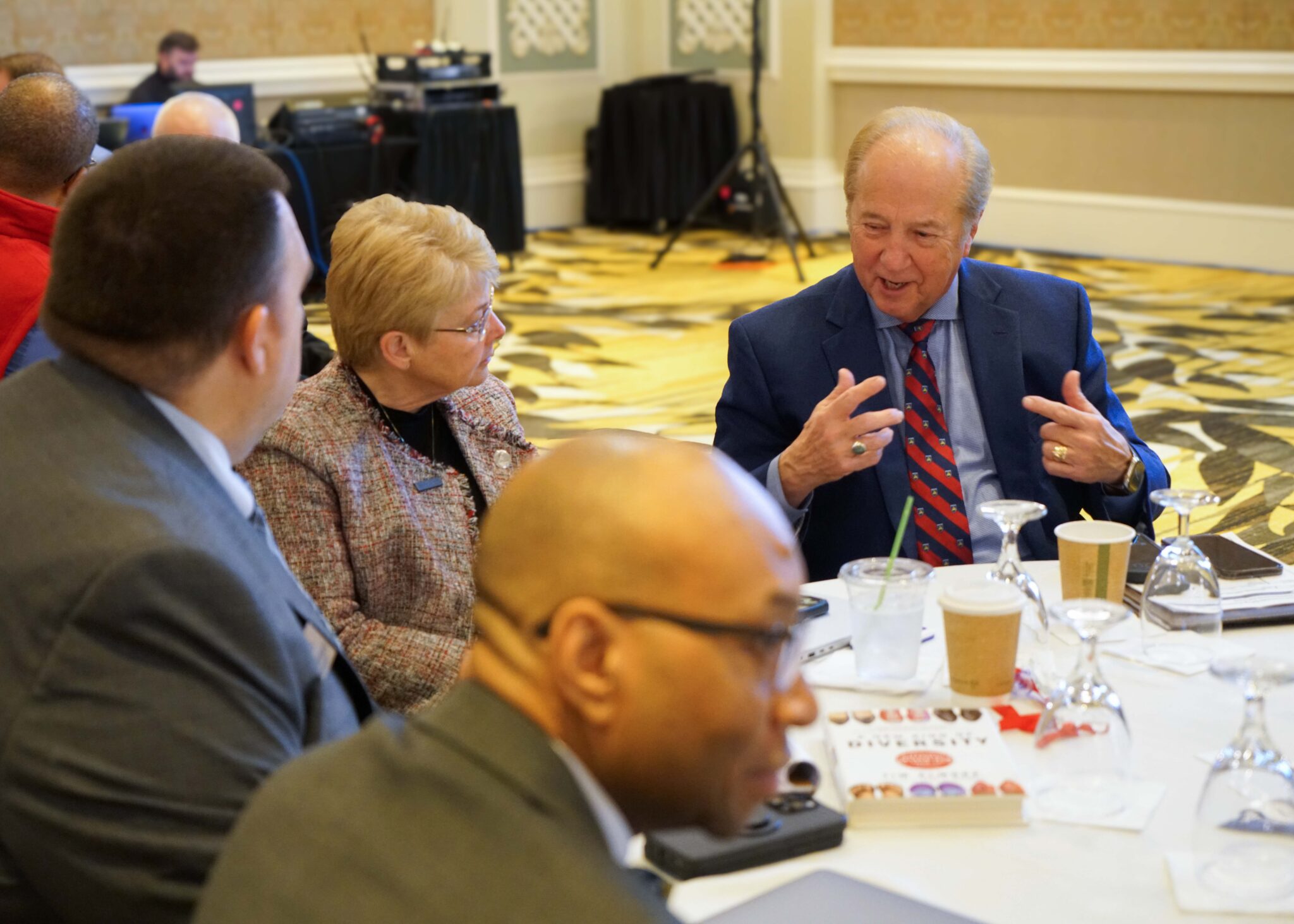
Tim Elmore, an author, speaker, and leadership consultant, was the keynote speaker at the convening. Elmore has authored several books including, “A New Kind of Diversity: Making the Different Generations on Your Team a Competitive Advantage,” which was gifted to all attendees. His presentation focused on the challenges and opportunities leaders are facing due to generational gaps within their institutions.
Elmore conducted quantitative and qualitative research on Gen Z that became the foundation for some of his most recent writing. Gen Z is the generation of people born between 1997 and 2012, according to the Pew Research Center. Elmore surveyed over 2,000 individuals and did 21 focus groups with Gen Zers from California in his research.
With Gen Z making up approximately 20% of the U.S. population, most of our community college and K-12 leaders have either taught them, or are currently working with them, he said.
“Those 20 somethings to 30 somethings are the natives. They have intuition where culture is going. They see tomorrow better than I do… So here’s my idea. Let’s discover how to go from merely tolerating people from other generations to leveraging their strengths on our campuses,” said Elmore.
Attendees participated in several discussions throughout the presentation facilitated by Elmore. Several of the ideas that they were prompted to discuss included:
- The challenges generational gaps present to leaders.
- Generational differences not as character flaws, but as points of strength to leverage.
- The value of multigenerational teams.
- How strong leaders can lean into generational differences.
- Learning to move from tolerating generational differences to strategically leveraging them in order to build stronger schools and more adaptive organizations.
Connecting with opportunity youth
Opportunity youth are a unifying thread across N.C. districts and community colleges, despite differing regional contexts and local challenges. Opportunity youth are defined as 16-24 year olds who are not enrolled in school, not sustainably employed, and not actively seeking employment. These youth are often navigating disrupted pathways to postsecondary access due to financial instability, criminal justice involvement, mental health challenges, or incomplete education.
“When we’re talking about the rupture of the social contract, it leads to opportunity youth. We’re talking about an alienation that’s occurring because they don’t feel like they belong, and that is dangerous,” said Mike Krause, managing director at JMBE.
The current percentage of opportunity youth, people aged 16-24 who were not working or employed, across North Carolina is around 10.3%, according to 2024 data from myfutureNC.
“The good news is North Carolina is actually doing really well compared to our regional peers. I want to give myfutureNC a lot of credit for this. I think they have been relentlessly beating the drum on the opportunity youth issue,” said Krause.
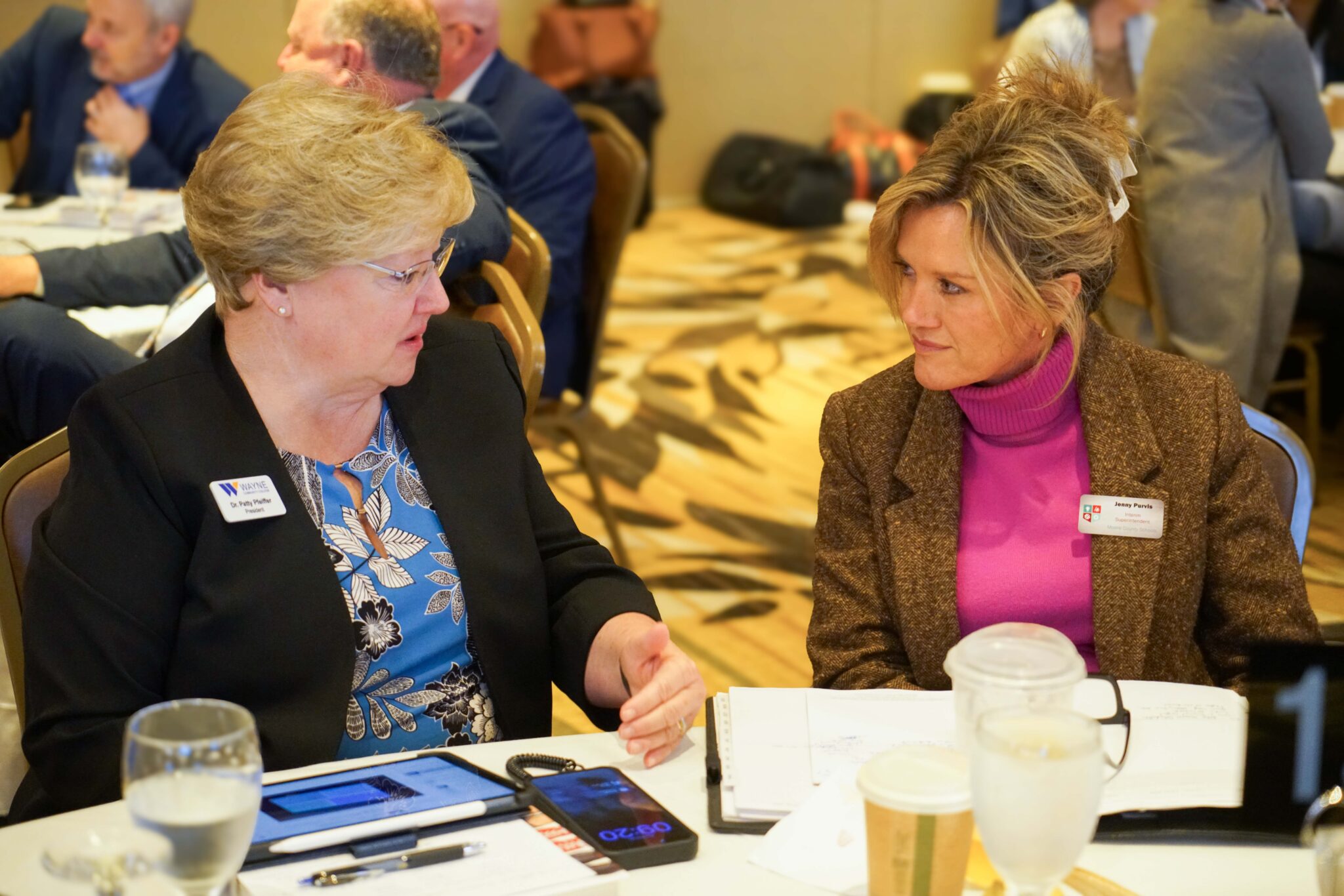
Several colleges have created initiatives or programs to address opportunity youth in their communities. For example, Durham Tech’s BULLS Academy is a cross-sector partnership between education leaders, local government, industry, and philanthropic donors to connect local careers in the pharmaceutical industry.
Students in BULLS Academy are provided with technical coursework for industry credential preparation, as well as soft skills development and success coaching by Durham Tech. Outcomes of the program are showing graduation rates exceeding 95%, with a significant portion of graduates securing employment shortly after completion.
Several other colleges shared programs during the convening, including Central Carolina’s YouthBuild program and Wayne Community College and Wayne County Public School’s Pathfinders Program.
Alli Lindenberg Semon/EdNC
Editor’s note: The John M. Belk Endowment supports the work of EdNC.

Recommended reading