More than a summer program: Inside Mooresville Grade School District’s approach to helping young readers thrive

The hallway is a little quieter than it is during the traditional school year, but it isn’t silent.
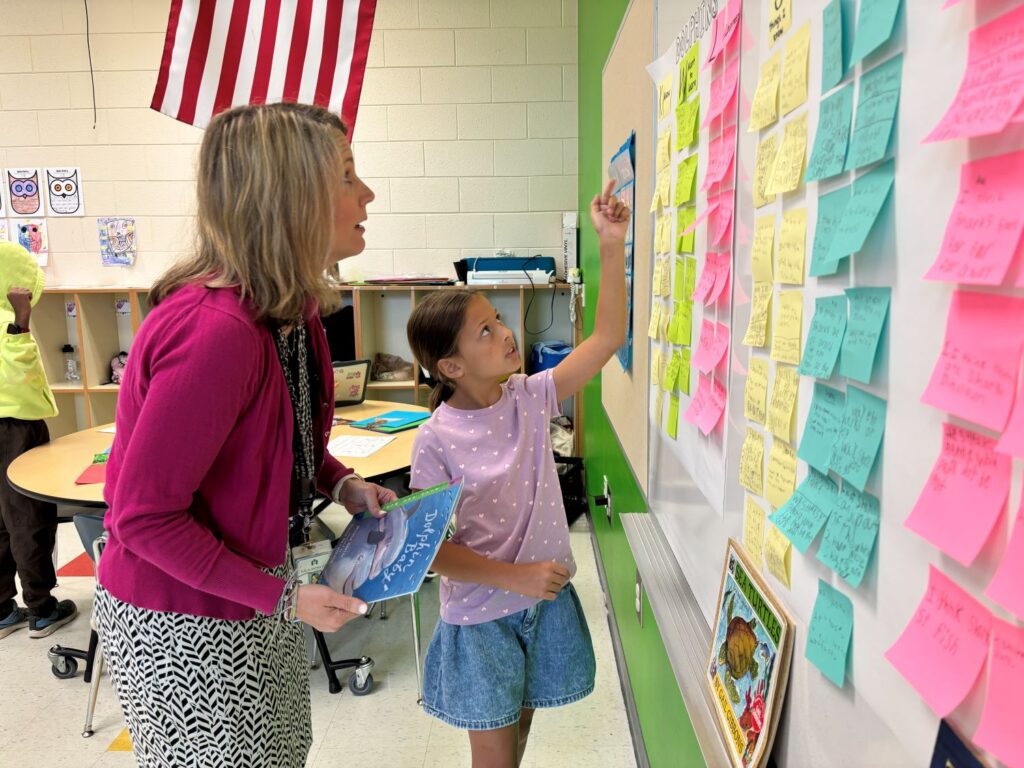
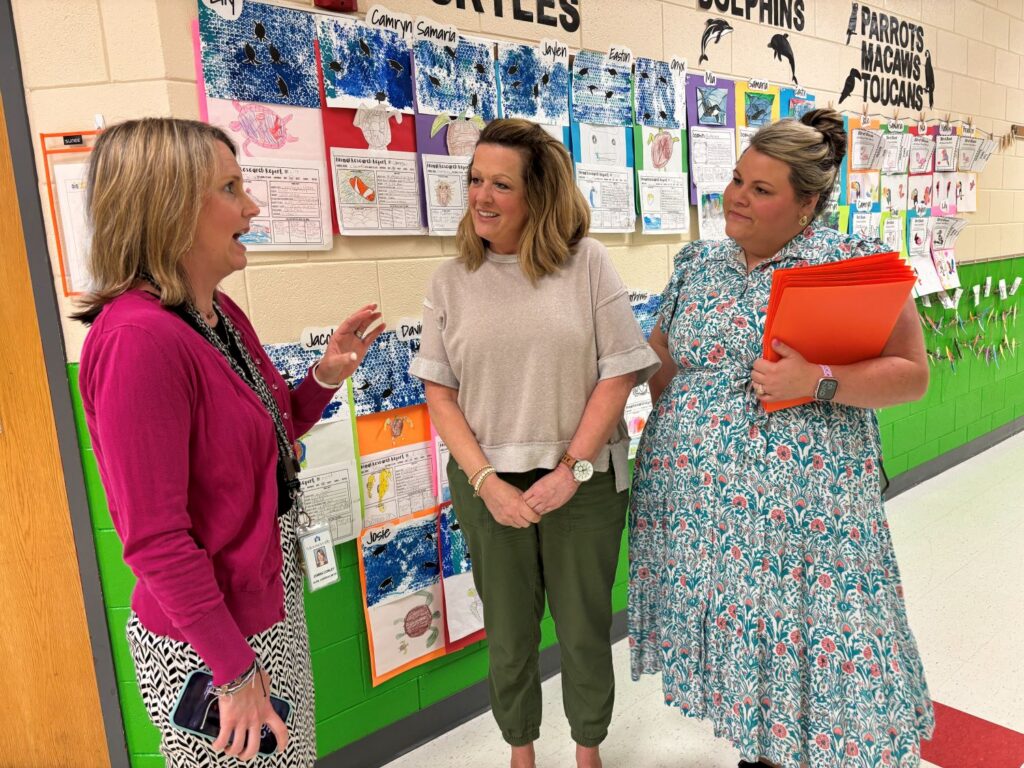
In one classroom, second grader Nora eagerly shares what she has learned about baby dolphins with Jemma Conley, the director of elementary instruction at Mooresville Grade School District. “Baby dolphins follow their moms all over the place,” Nora says.
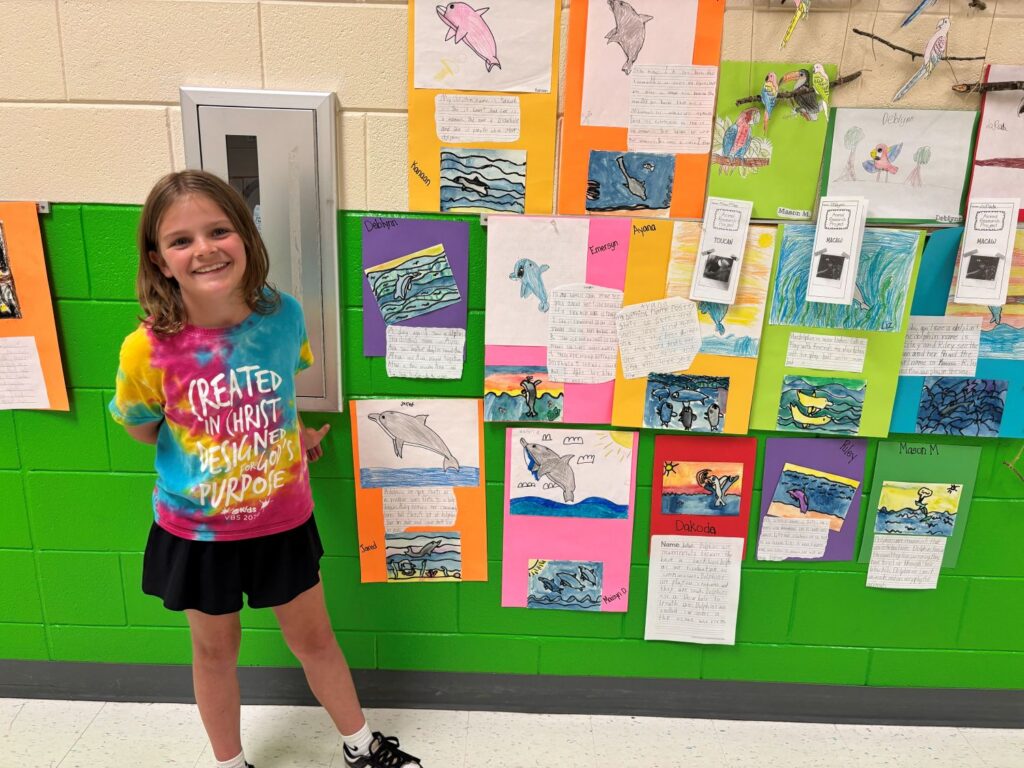
Farther down the hall, Emersyn adds another fact she discovered during her research. “Dolphins swim in pods and can’t hold their breath very long,” she explains.
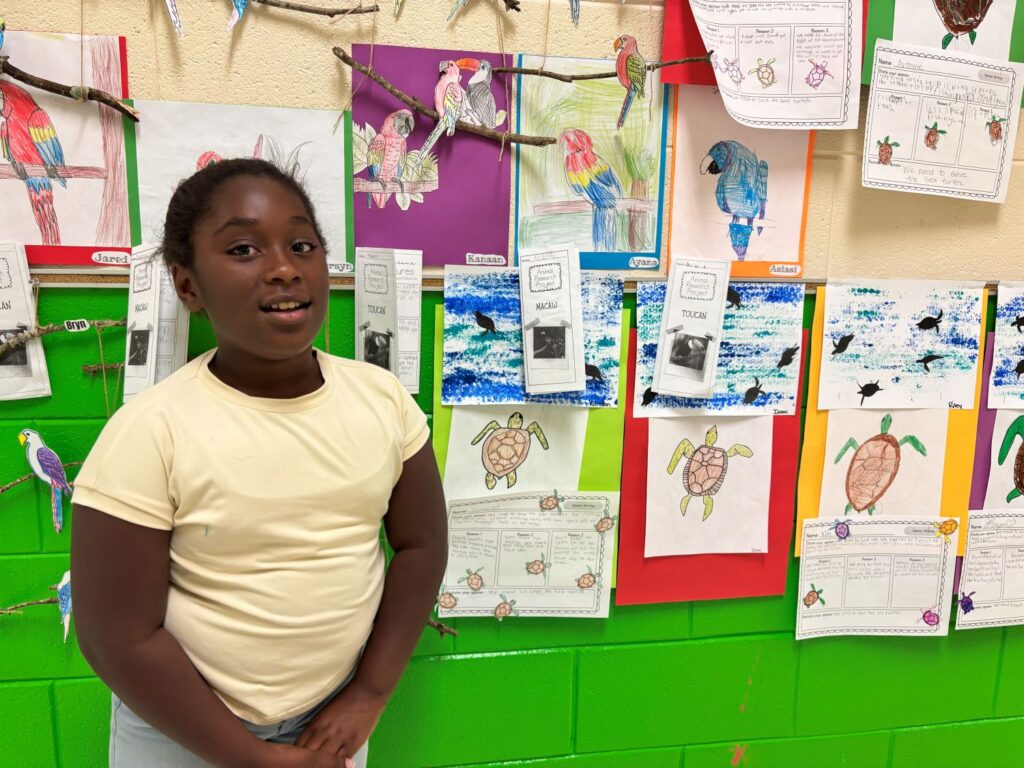
Third grade classmates, Dakota and Kanaan, are just as eager to talk about their summer learning. Dakota proudly explains that once sea turtles hatch, “they immediately go to the ocean by looking for the sun to help.” Kanaan has become an expert on macaws. “Macaws live 80 years and prefer to live in humid rainforests,” she says.
Nearby, their teacher, Stephanie Adkins, who is teaching at Mooresville Intermediate’s reading camp for the first time this summer, watches the conversations unfold with a smile, clearly proud of how confidently her students are sharing what they have learned.
It feels more like summer camp than summer school. This is because of intentional planning and collaboration on the part of district leaders and teacher collaboration.
For five weeks each summer, Mooresville Graded School District welcomes students who would benefit from additional literacy support. The focus is literacy, but the atmosphere is intentionally different from a typical school day.
“While it is an extension of the school year, we want it to be engaging and exciting for students,” Conley shares.
Across North Carolina, districts continue strengthening literacy instruction aligned to science of reading research and the Excellent Public Schools Act of 2021 (EPSA). Summer reading camps provide additional instructional time while giving students opportunities to continue building literacy skills during the summer months.
Summer starts long before June
Planning begins months before the first day of camp.
District and school leaders work alongside second grade teachers to identify students who could benefit from additional reading support as they review academic data, including proficiency, growth and behavior data. Third grade invitations are prioritized for students who have not met good cause exemption according to North Carolina’s EPSA requirements.
“We look at multiple data points but also consider kids who’ve been working hard and are motivated to continue learning,” Dr. Hayley Johnson, an early learning specialist with the Department of Public Instruction’s Office of Early Learning. “We want to keep that momentum going.”
Teachers don’t simply send invitation letters home. They also make personal phone calls to families. “We really encourage teachers to personally reach out to families,” Conley said. “Those conversations matter. We want to make sure parents understand this is an opportunity to support their child’s success.”
The outreach doesn’t end once camp begins. If a student misses a day, Katie Calloway, reading camp coordinator, who also serves as the school’s assistant principal during the traditional school year, calls home. “We want to let students know that we miss them,” Calloway said.
That personal connection is one of the strategies district leaders say has helped maintain strong attendance throughout the five-week program.
It doesn’t feel like intervention
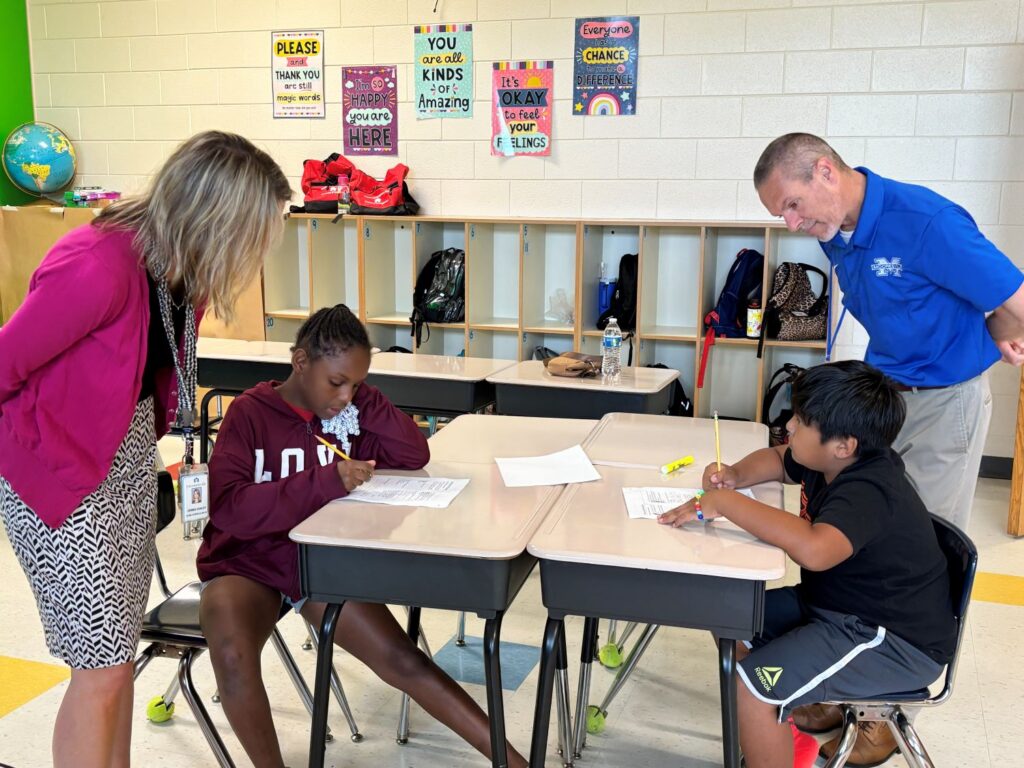
Mornings begin with explicit literacy instruction. Students receive daily lessons in phonics, fluency, vocabulary, and comprehension using the same curriculum implemented during the regular school year. By the afternoon, the classrooms look different.
Students research animals, write informational pieces, create artwork, and eagerly share what they have learned. Dakota smiled as he described the day.
“We have a lot of fun work,” he said.
Nearby, Emersyn nodded in agreement. “We do a ton of fun writing and read a lot.”
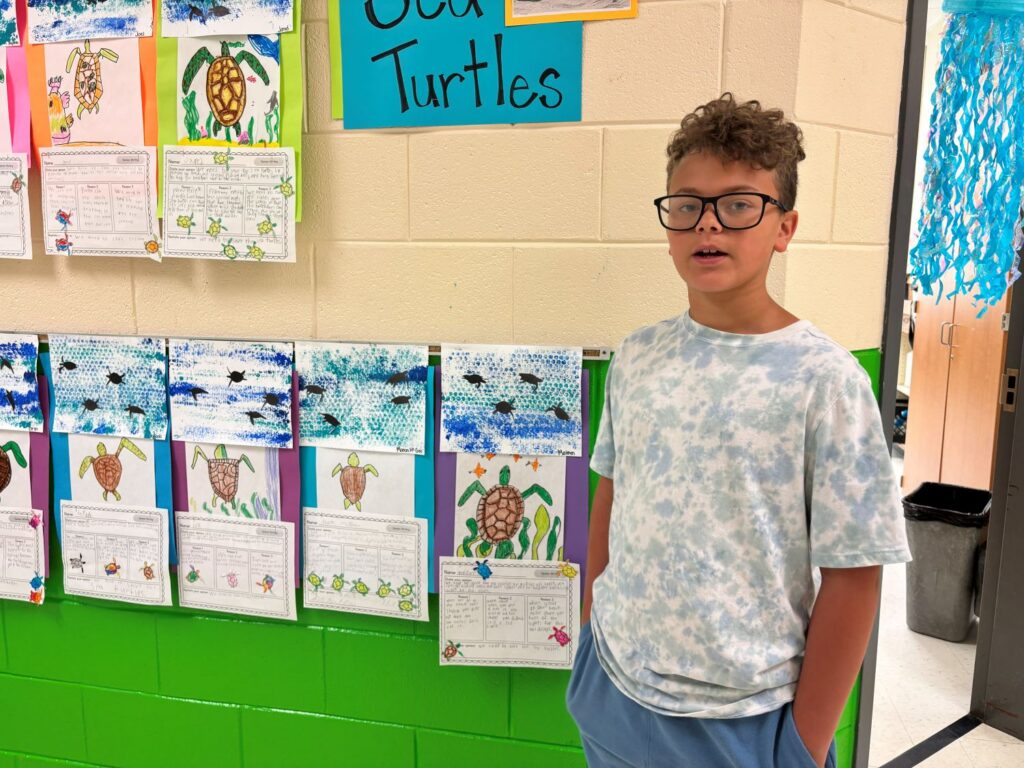
Each classroom uses an animal theme, weaving literacy, science, and writing together. Teachers adjust lessons and materials to meet students’ needs while keeping the overall structure familiar from year to year.
“We want students to have the same excitement they’d have going to any other summer camp,” Conley said. “They are doing research, whether it’s with scaffolding support from an adult or working with a partner in a selected text or article. They’re grappling with new grade-level texts, and they LOVE it!”
Conley said one of her favorite moments is watching students become so engaged in their projects that they forget they are practicing literacy skills. “They’re really invested in what they’re learning,” she said. “It’s crazy because they don’t think they’re reading.”
Second grade teacher Aracelis Perez said one of the most rewarding parts of the program is seeing students recognize their own progress. “I love seeing their reactions when they realize how much growth they are making,” she said.
Investing in great teachers
Mooresville consistently receives more teacher applications than available reading camp positions, according to leadership.
Applicants are selected using multiple measures, including instructional performance, classroom observations, student growth, recommendations, experience, and additional certifications.
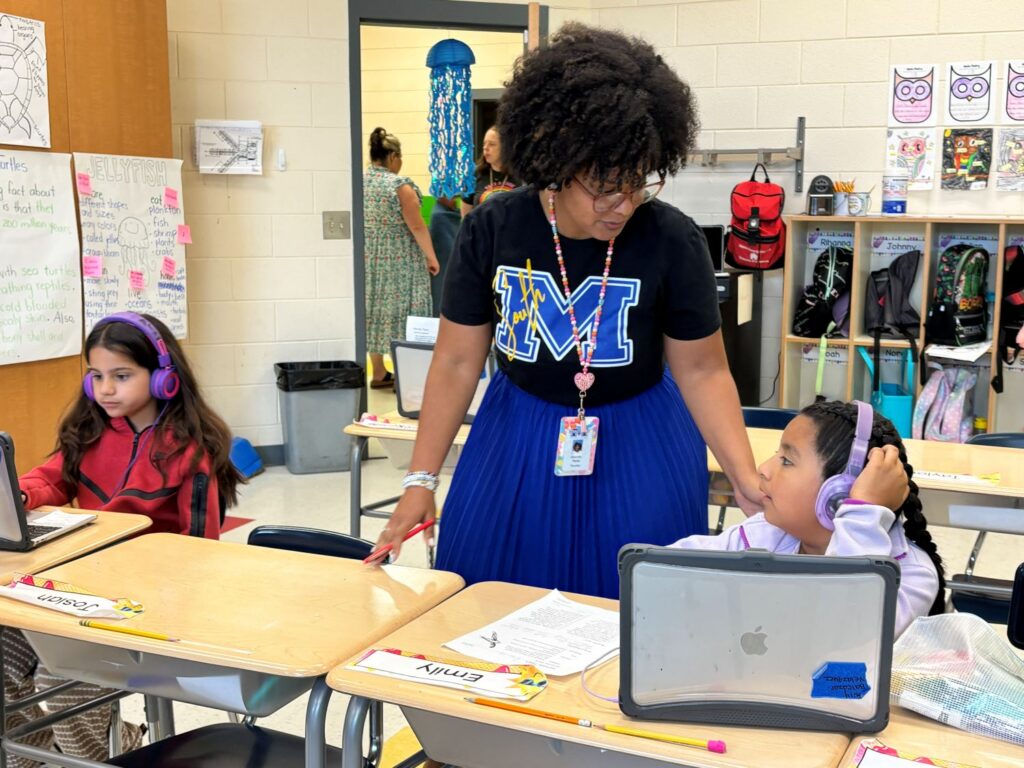
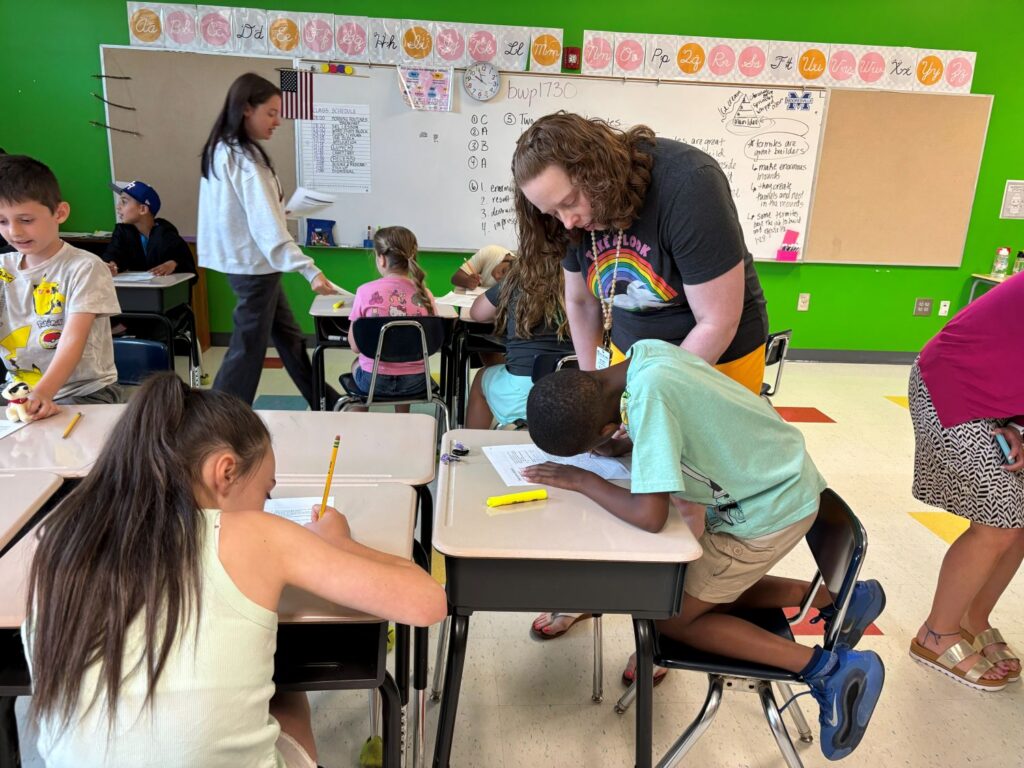
Every classroom includes both a certified teacher and a full-time teaching assistant, creating more opportunities for small-group instruction throughout the day.
“It’s one of the few opportunities where many of our strongest teachers get to work side by side every day,” Conley said. “They’re learning from one another in what feels like a natural professional learning community.”
Teachers from schools across the district have the opportunity to collaborate throughout the summer, sharing instructional strategies and classroom ideas they later bring back to their own buildings.
Reading is about more than decoding
District leaders say their understanding of literacy instruction has continued to evolve.
“Returning to explicit instruction in word recognition aligned to LETRS has absolutely been the right move,” Johnson said. “But we couldn’t lose sight of language comprehension.”
She describes the district’s philosophy simply. “It’s the genius of ‘and,'” she said. “Students need strong foundational skills, and they need authentic books, vocabulary, discussion, writing … all of it.”
Teachers intentionally read complex texts aloud, exposing students to vocabulary and ideas beyond what many could read independently. Students later use those ideas in research projects, discussions, and writing connected to their classroom themes.
Some students leave camp carrying home the first chapter book they’ve ever finished.
“They’re so proud,” Johnson said. “They want to show everybody they can read a chapter book.”
Ending with celebration
The final day of reading camp gives families a chance to step inside the classrooms and see the growth their children have made over the past five weeks.
Students proudly share their research projects, writing folders, and favorite books while explaining what they have learned throughout the summer.
The celebration also includes a few surprises. Bounce houses are set up for the “campers,” and an ice cream truck gives parents and children a chance to celebrate together before heading home.
“We want them to leave camp more confident about themselves as readers,” Johnson said.
That confidence is exactly what district leaders hope students will carry with them as they return to school this fall.
For second grader Nora, the experience has been about more than just reading. “I learned a lot,” she said with a smile. “And I made new friends.”
It’s a simple reflection, but one that captures the goal of reading camp: helping students strengthen their literacy skills while building the confidence, curiosity, and connections that will support them long after summer ends.