
‘Community’ isn’t a buzzword in Lenoir and Pitt counties

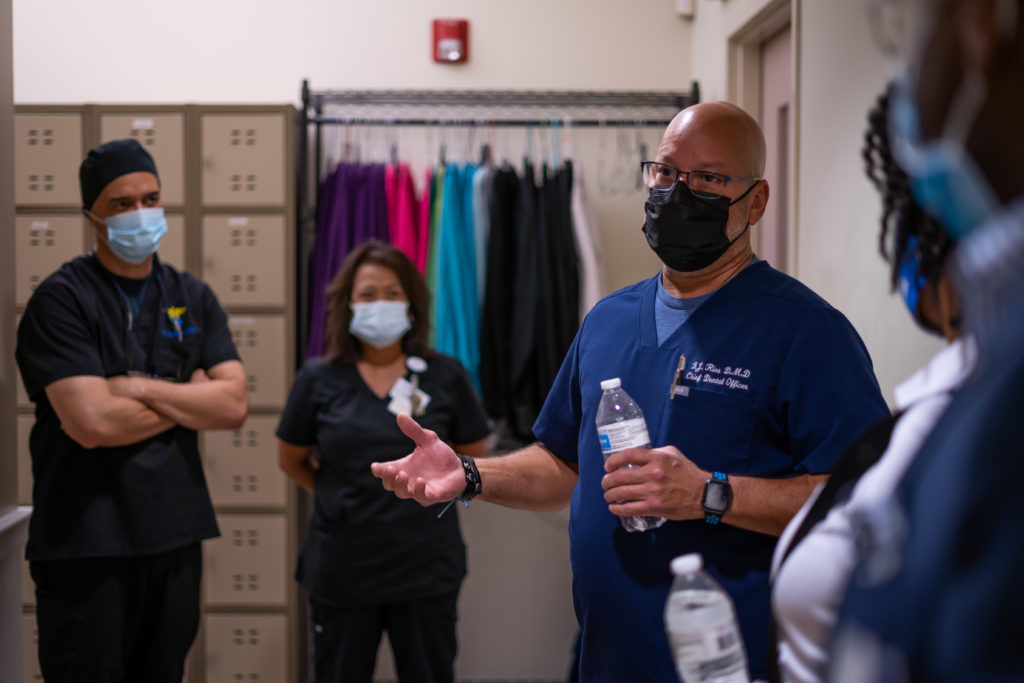
EdNC joined Blue Cross and Blue Shield of North Carolina on their “Extra Miles” listening tour in Lenoir and Pitt counties. Blue Cross NC is traveling to visit education and health care systems along with other anchor institutions across the state to better understand the barriers to better health communities are facing and meet the people working to address them.
From health care to education, the theme of “community” guides the mission and effort at colleges and health centers in Lenoir and Pitt counties.
“Community” isn’t only a group of people living in the same town or having a shared interest. Community is the lifeline that connects resources, education, health care, and opportunity.
It’s not a coincidence that the word is in the names of the two counties’ most influential organizations, including Lenoir Community College, Kinston Community Health Center, and Pitt Community College.
While fulfilling different needs and goals, these organizations hold a similar mission – to create a more accessible and equitable system. And they reflect the culture of their community by adapting and changing to its needs.
 Sign up for the EdDaily to start each weekday with the top education news.
Kinston Community Health Center began in 1993 in a renovated department store downtown to address a gap in Lenoir County’s health care system. Few options existed then for the underinsured and uninsured, leaving the local emergency department overcrowded and the community’s health underserved.
The center’s founder, the Rev. Melvin Tate, proposed the idea of a community health center to address health needs specific to the Kinston area. And that is how it has continued to evolve.
Kinston Community Health Center accepts all patients, providing primary care services to the community while allowing patients to pay on a sliding scale.
It cultivates deep local partnerships, exemplified in its portable, school-based dental program led by Chief Dental Officer Francisco Rios, DMD.
Rios and his team provide dental care to all children and siblings of children attending school in Lenoir County Public Schools from pre-K through eighth grade. It focuses on children who are enrolled in Medicaid or are low-income and uninsured and have not seen a dentist in the past year.
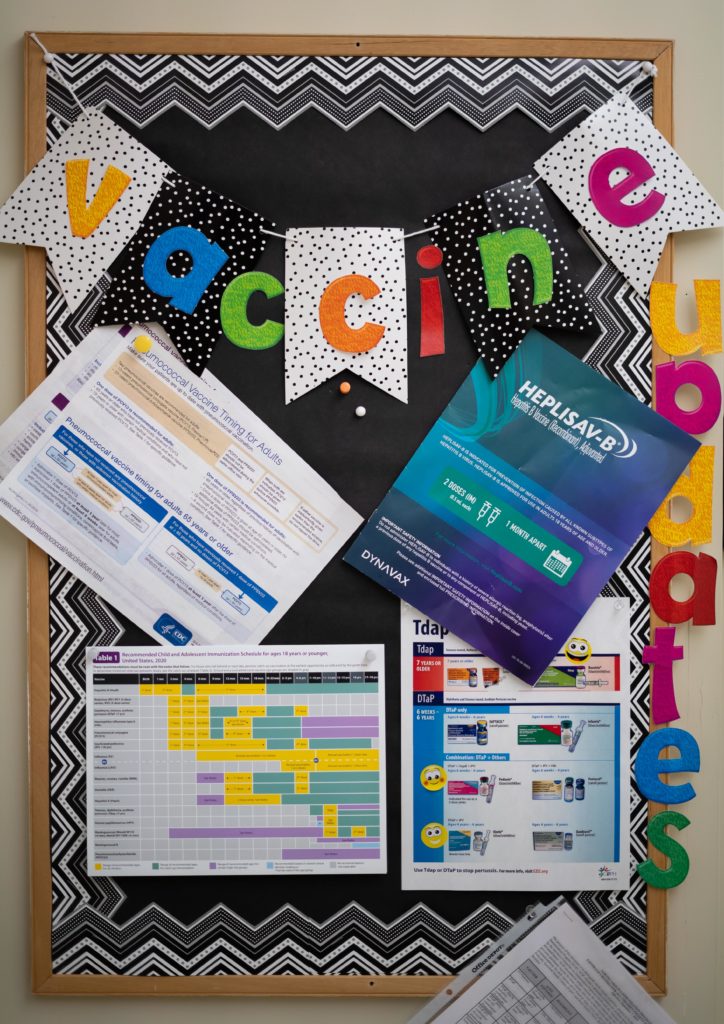
From health to education, the interconnected nature of community is evident in these programs.
Only a few miles away is Lenoir Community College, offering degree programs in health care and nursing as well as business and information technology, commercial services, and education, among others.
What’s unique to Lenoir is the state-of-the-art Aerospace and Advanced Manufacturing Center (AAMC) at North Carolina Global TransPark, designed to meet the needs of local industries for skilled workers.
“It is more important than ever to offer short-term training and education opportunities as a pathway to employment,” said Dr. Rusty Hunt, president of Lenoir Community College. “People who are looking to improve their job situation or their lifestyle are in search of training to meet the needs of employers who are expanding their workforce.”
The program offers degrees in such disciplines as aviation management and includes cutting-edge technology such as the Redbird FMX Full Motion flight simulation and 3-D printing. It capitalizes on its ability to offer pathways to direct employment in the community.
“One of the biggest obstacles for businesses and industries is finding a skilled workforce, and that is what Lenoir Community College does best,” Hunt said. “We are preparing the workforce not only for the job market of today, but also for the job market of the future through customized training opportunities, short-term training, and pre-hire screening programs.”
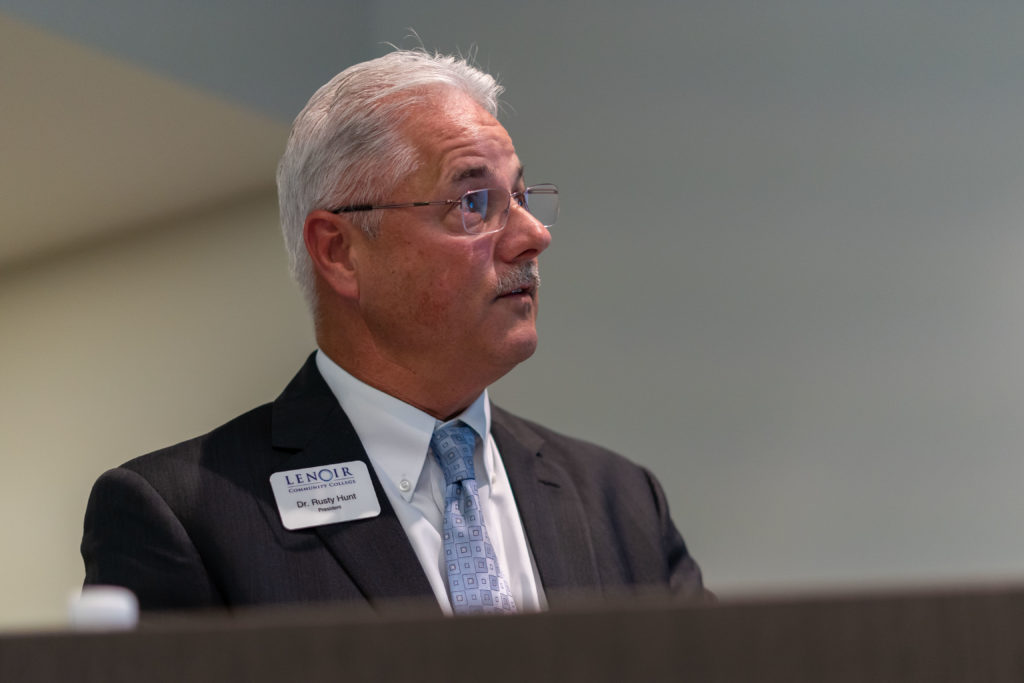
Since 2017, N.C. Global TransPark has added six major corporations, producing 784 jobs and an overall investment of $169 million.
A classroom at Lenoir Community College typically represents the demographics of the county reflecting more diverse experiences beyond college — including family, jobs, personal businesses, and life situations.
Less than 30 miles away at Pitt Community College, Dr. Johnny M. Smith, vice president of strategic initiatives, says that is what he appreciates most about the classroom.
“Our main goal is to educate and empower people for success,” Smith said. “We do this through engaging, inclusive, quality instruction by providing equitable support services that enable students to realize their academic and career goals. That’s what we’re here for, to make sure all students cross that finish line.”
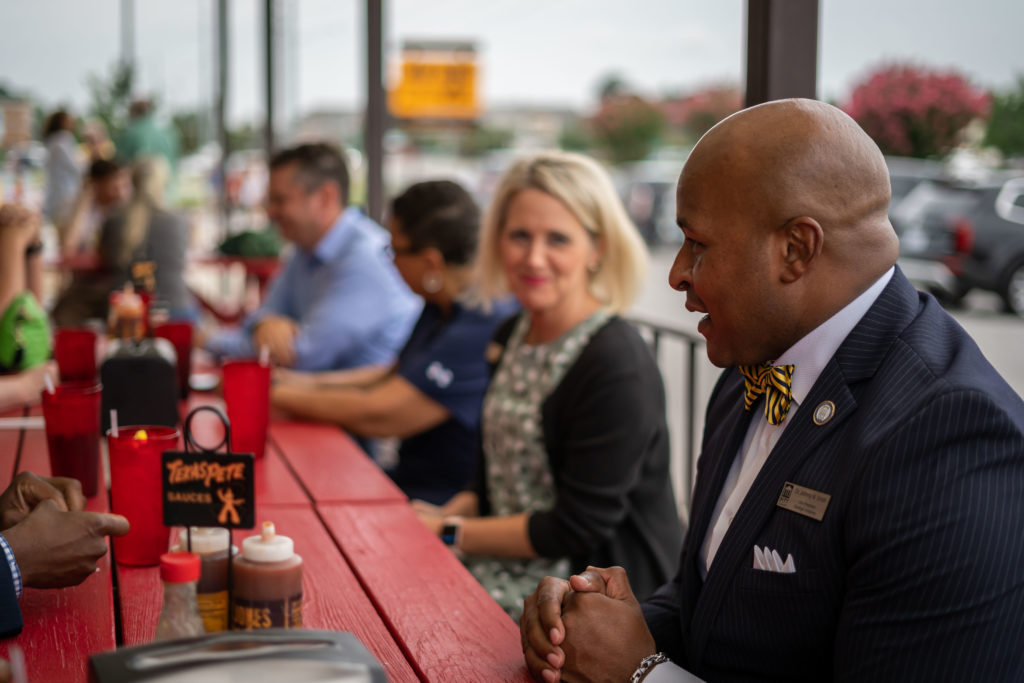
Pitt Community College has a number of programs to address these goals, including an adult learning center and hotline for students ages 24 and up, a minority male mentoring program, financial aid and scholarships, the Office of Accessibility, tutoring labs, and success programs for first-generation students.
Additionally, Pitt is part of the ‘Achieving the Dream’ network, a nonprofit partnership focused on achieving sustainable institutional transformation through sharing knowledge, innovative solutions, and effective practices and policies leading to improved outcomes for all students.
 Sign up for Awake58, our newsletter on all things community college.
With many students who commute long distances, Pitt Community College demonstrates the value of integrated community partnerships with programs such as PCC Mobile Classrooms, established to take innovative equipment and demonstration labs to communities.
“When I think about the mobile classroom, it is about accessibility,” Smith said, “but another major component is to take high-skilled learning opportunities and skills out to the community because we realize distance and transportation can be a challenge for some of our students. We want to prepare all learners for high-paying, sustainable wages, and increased economic mobility.”
Creating more equitable access to education and increasing workforce development locally, these community colleges in eastern North Carolina aspire to truly serve the community.