
iPads, sheep, and solar farms: Students learn about sustainable agriculture and energy
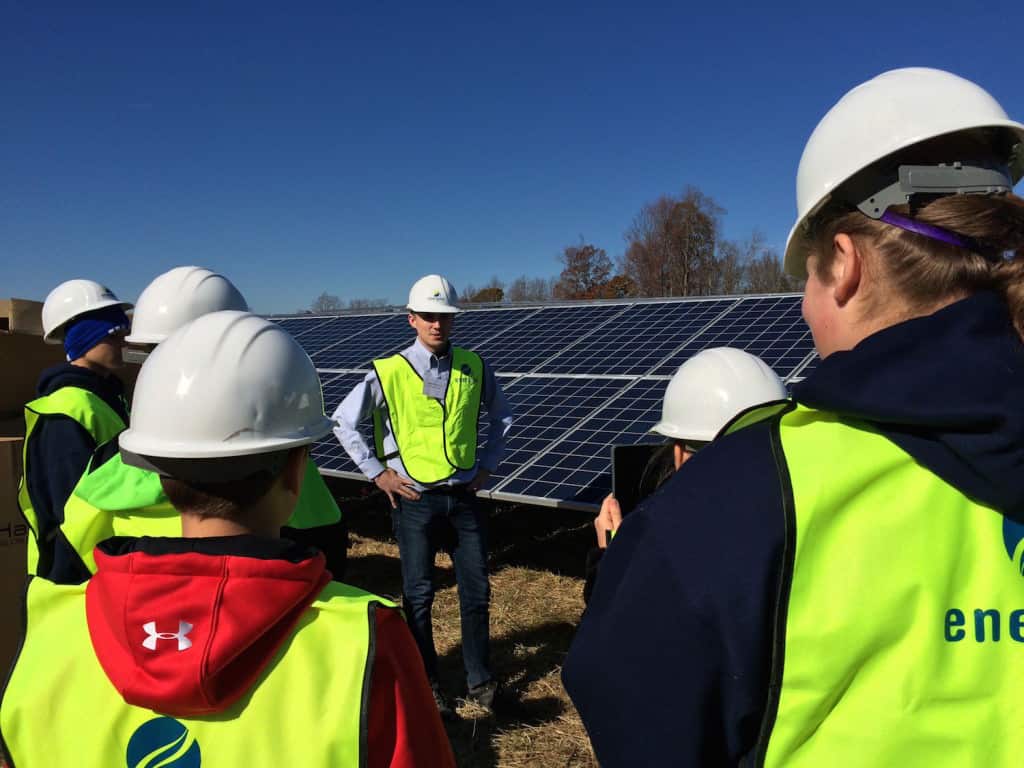
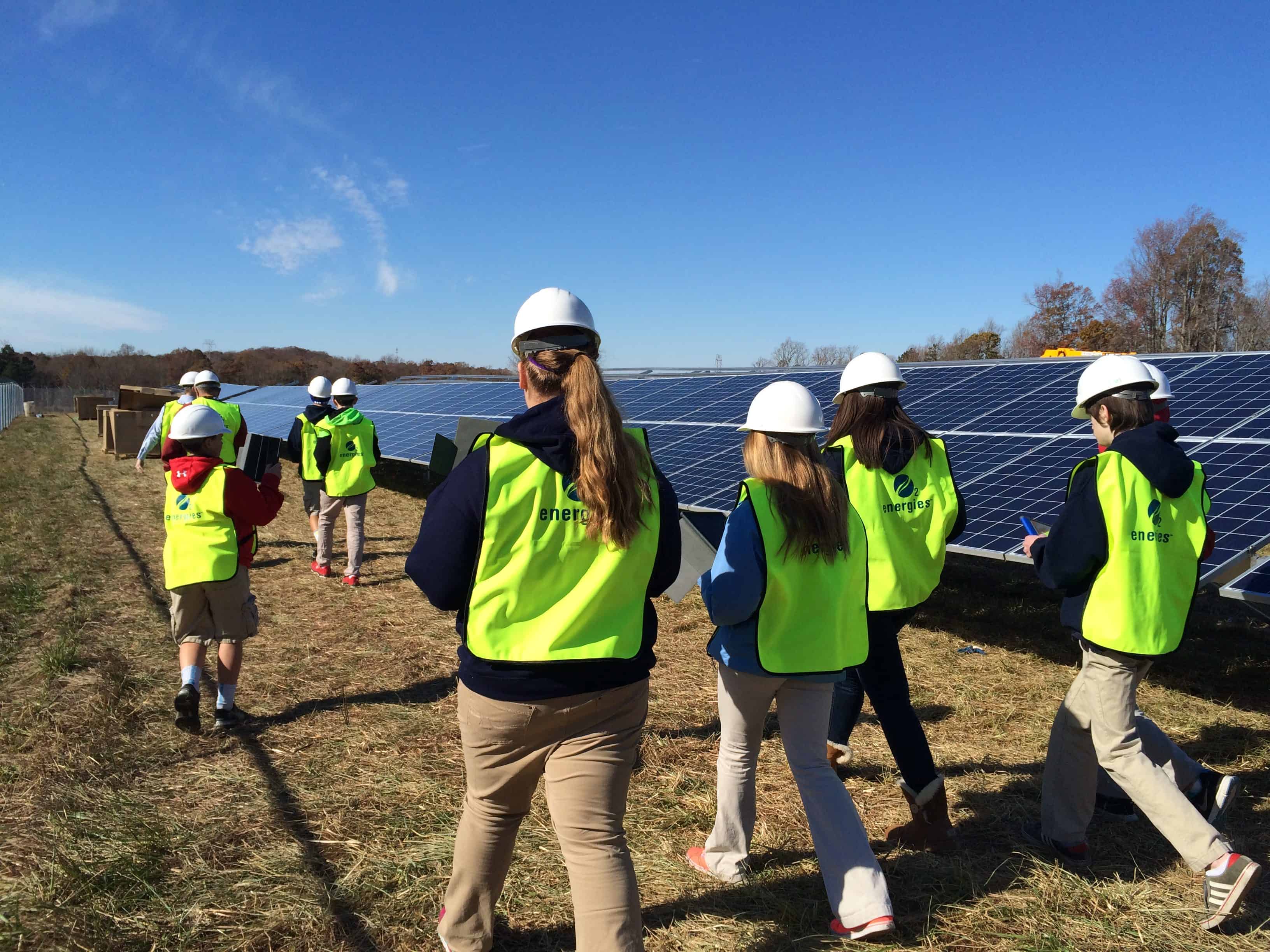
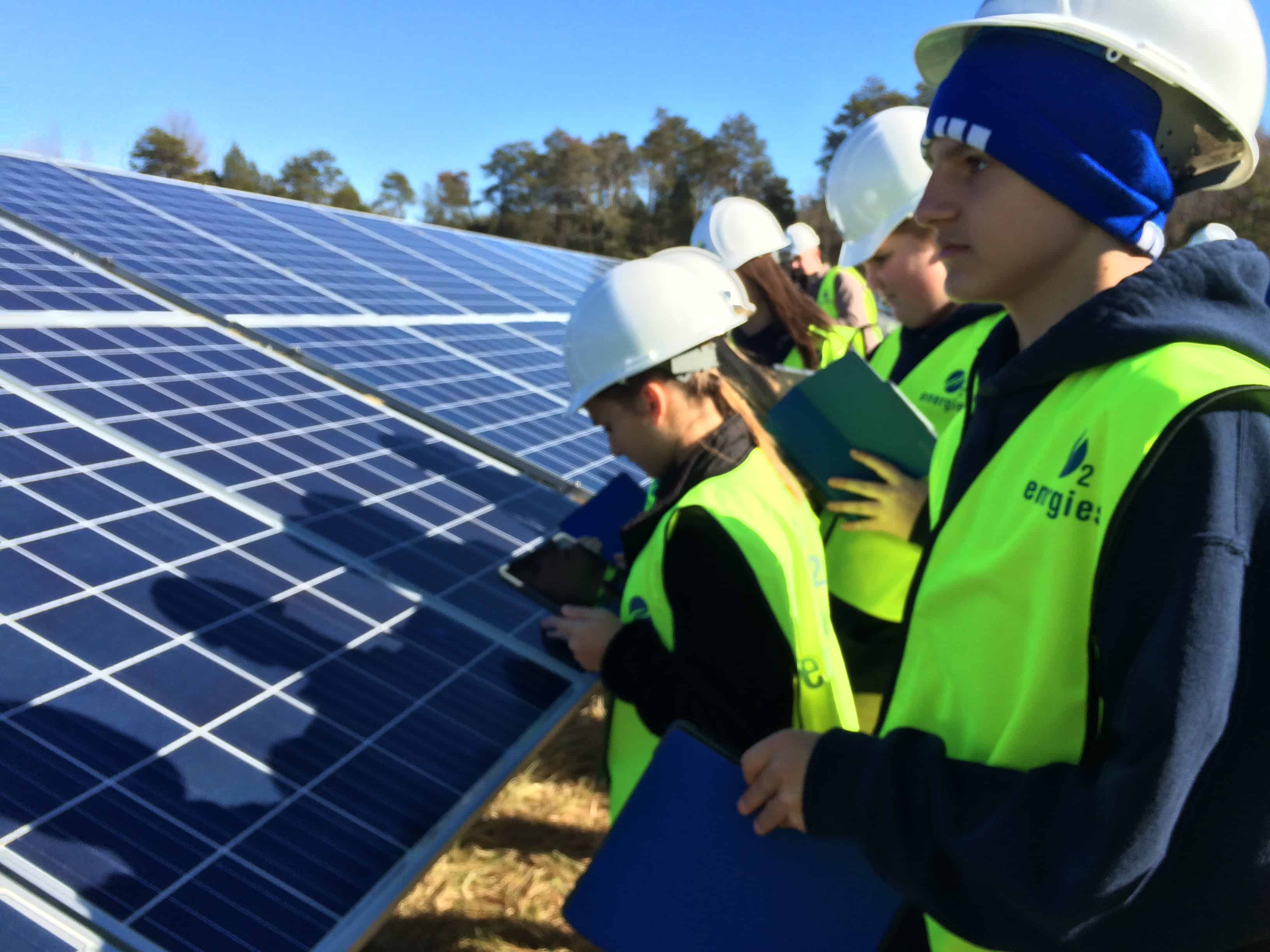
On a Monday in November, middle school students in the Rowan-Salisbury School System received iPads. By Friday, they were out visiting a local solar farm, using their iPads to take photos, video, and notes. Seven students from each of the three 8th grade science classes at Erwin Middle School were chosen to attend, and those students will use the experience to teach the rest of the 8th graders a unit on alternative energy in March 2015. I asked if I could come back to see them teach, and a student named McKenna piped up, “Consider yourself officially invited.” I plan to go.
Solar farms are popping up all across North Carolina in some pretty interesting places. The solar farm I visited in Rockwell with McKenna and her classmates is owned by O2energies, a company founded and run by Joel Olsen. Olsen grew up in Charlotte, attending public schools and then UNC-Chapel Hill before studying abroad in Japan and Norway. It was in Norway that he fell in love with both his wife and solar energy.
Solar energy with local impact
Olsen’s concept marries sustainable agriculture and sustainable energy in a way that promotes private sector investment in rural North Carolina. You need flat land without trees for a solar farm. With North Carolina’s climate, Olsen says he figures this state can produce two times more solar energy than Germany, which relies on solar energy more than any other country in the world. The panels screw into the ground so the impact on the land is minimal. But, in and around the panels, grows grass. Lots of grass.
“[S]olar farms create no sound, no harmful emissions, no traffic, and no waste.”
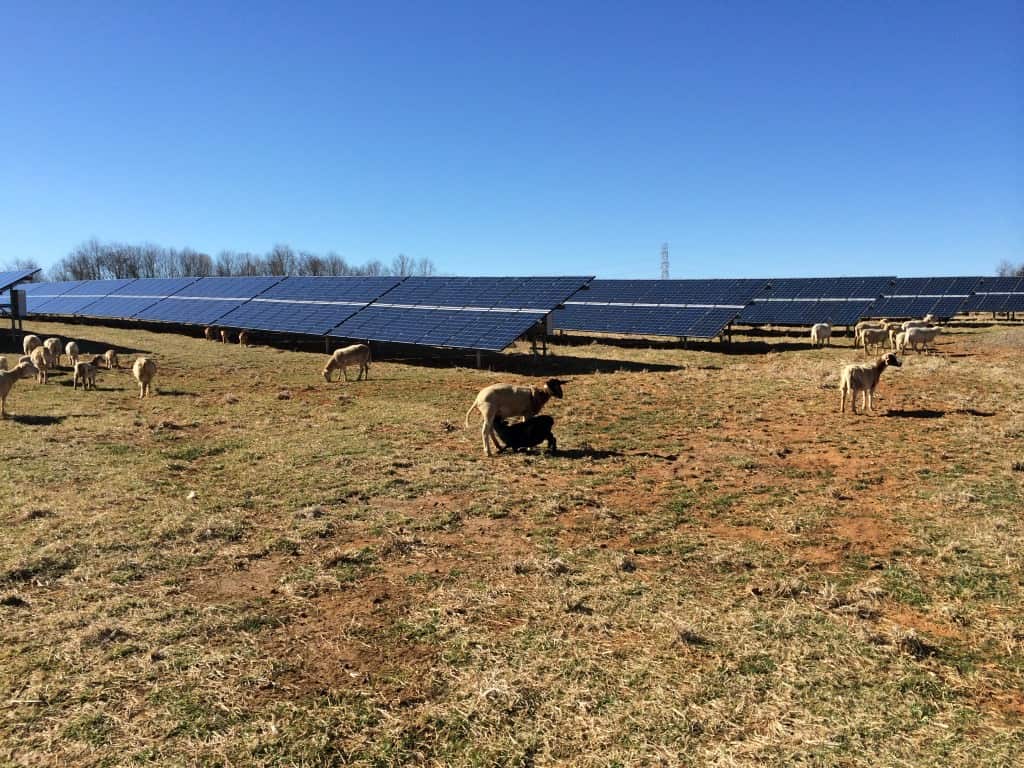
And that’s where the sheep come in. That’s right, sheep. Lots of them. A hundred lambs born each spring. O2energies works with Sun Raised Farms, training local farmers who bring sheep to their solar farms. The sheep keep the grass in check to avoid the use of mowers. The lamb is sold to Whole Foods where you can even find it at the Wade Avenue store in Raleigh – farm to table at its finest.
Olsen says, “Other than the occasional ‘baa,’ solar farms create no sound, no harmful emissions, no traffic, and no waste.” A farmer and local business owner, Todd Mauldin says, “These farms are a win-win for the community, the environment, the farmers, the schools, and the economy.”
Local labor is used to install the farms and, if the workers put in two solar farms for O2energies, they are eligible to apply for an installer certificate. Careers are being built for rural workers right along with the building of the solar farms.
Powering communities, empowering schools
O2energies works with the public school system in the counties where it locates farms to incorporate sustainable energy into the Science, Technology, Engineering, and Math (STEM) curriculum, and it also works with local community colleges to build work force programs.
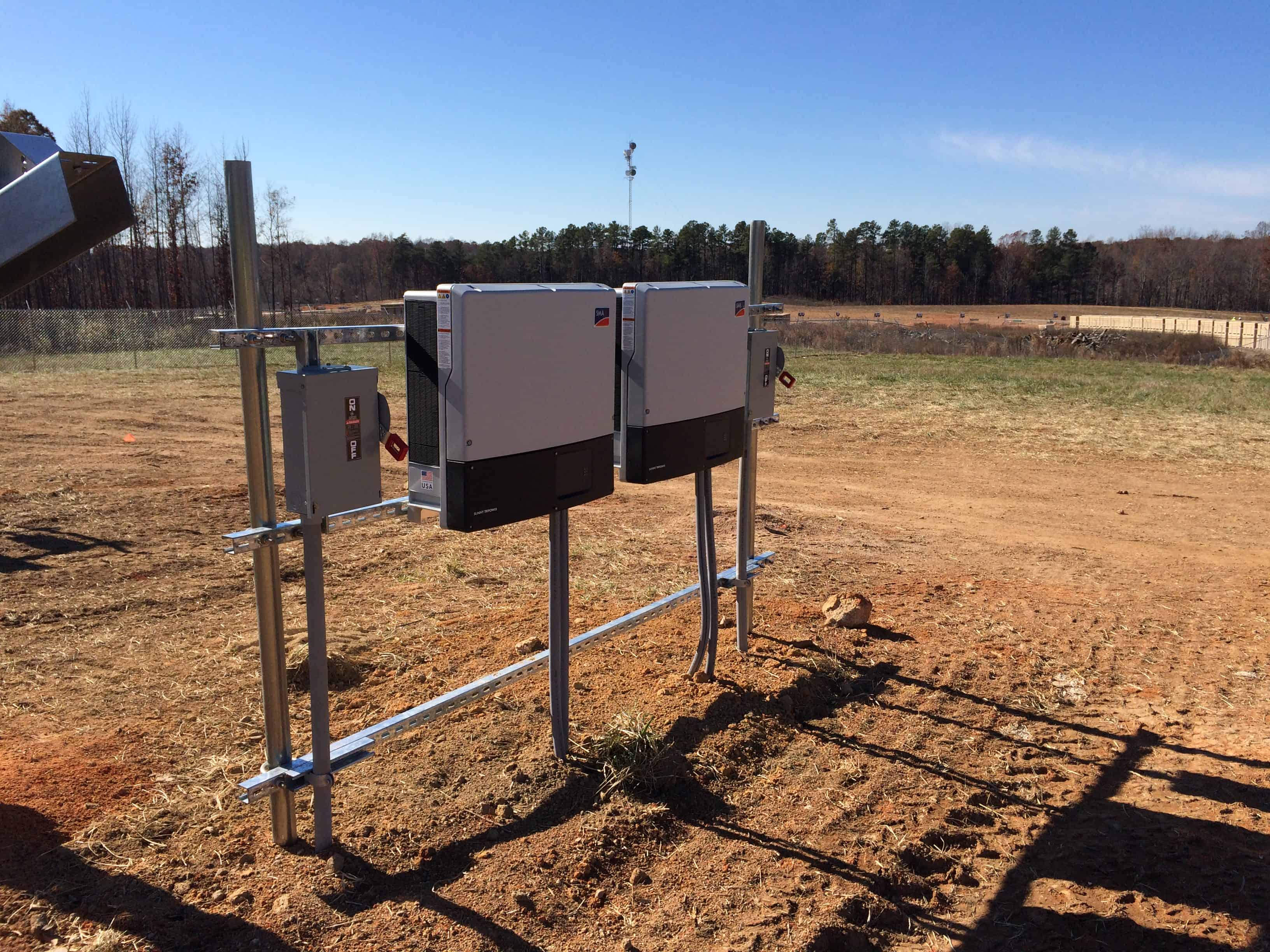
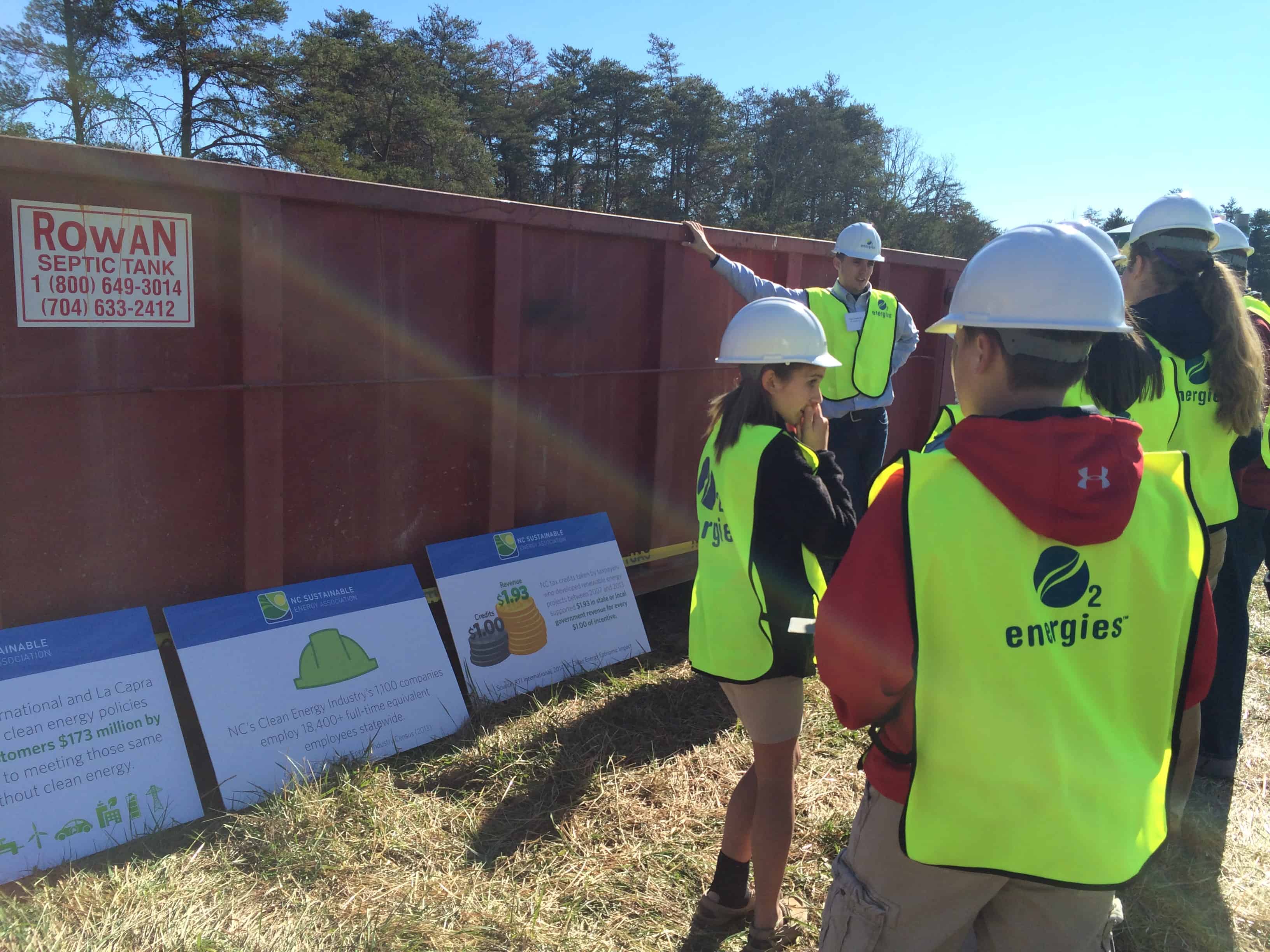
As we walked around the solar farm together, the students learned about the unit of electricity produced, the kWh or the kilowatt hour. They learned about distributed energy. A partnership between O2energies and Duke Energy allows the electricity produced at this farm to power 500 local homes each year. They learned about string inverters, which are used to convert the electricity from DC (direct current) to AC (alternating current) power. They learned about REPS – the renewable energy portfolio standards – and the public policies that have spurred investments across the state in solar energy.1

Olsen says once people visit the farms, “They like this thing, no matter what their political stripes.” He worries about efforts to undo Senate Bill 3, the 2007 law that allows him to sell the energy he produces to utilities like Duke Energy. North Carolina is now fourth in installed solar capacity in the country. Governor Pat McCrory supports solar energy, and dedicated June 2013 as “Solar Energy Month” in North Carolina, noting the importance to both the environment and the economy.
… the system is committed to E3 – Extraordinary Education EveryDay.
It is clear as I observe the students interacting with their teacher, Van Miller, that he is the cool teacher. “We blow stuff up,” he says. He tells me about Lynn Moody, the superintendent of the Rowan-Salisbury School System. Under her leadership, $12 million was invested by the system to make sure each high school student has a laptop and each middle school student has an iPad. Miller says the system is committed to E3 – Extraordinary Education EveryDay. That’s why his students are out on a cold day in November visiting a solar farm with their iPads. “This is a big, huge deal,” says Miller of both the solar farm and the move to research-based education in his district. Miller’s father worked at Duke Energy for 31 years.
The students yell out the careers they are interested in – forensic scientist, immunologist, surgeon, mechanical engineer, pediatrician, physical therapist. I didn’t know what some of those careers were in 8th grade.
Miller credits “Tech Thursdays,” a planning period devoted to professional development for teachers, with his ability to integrate the iPads so quickly into meaningful learning opportunities for his students. “The students are my customers,” says Miller. “I need to keep them happy.” During his 39 years as a teacher, he has served more than 6,000 of his student customers.
These solar farms are powering our communities in many ways – providing energy, jobs, and food. But they are also empowering our students and teachers.
Editor’s Note: O2energies supports the work of EdNC.