
Listen | Interrupted podcast explores views from college during COVID-19
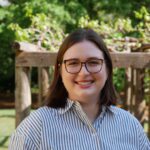
If you’re a college student, how do you weigh your desire for the experience with the desire to get your degree, and then with the preservation of your health? That’s the question confronting students as they start the fall semester.
Many of North Carolina’s public universities and community colleges decided to bring students back to campus for some in-person instruction. This means students are being faced with several choices when it comes to their college experience: should they go to campus, take time off, or go to a community college? That answer depends on a lot.
I spoke to three students — one in college, one incoming college freshman, and a high school senior — about how they’re thinking about these decisions and what the outcome means for them. Here’s a glimpse at what they had to say.
The view from college
Katie Logan moved out of her apartment in Greensboro in July. She’s a student at North Carolina A&T University, and for her, the moment was bittersweet — because it happened a year earlier than she expected.
It was her first time back on campus since the university switched to online instruction in March, when she was a junior. She knew her senior year was going to be strange, but once she found out all her classes for the fall were online, she said it didn’t make much sense for her to go back.
“It’s like I’m going to school, and then I’m going home, going to school. There’s no homecoming. There’s no football right now,” she said. “I’m just in Greensboro, paying rent. Going to class wouldn’t have been anything.”
Now, she’s facing her final year of college, and she’s not really sure what to expect. Earlier this summer, when everything was still up in the air, she was nervous about going to campus. Now that she knows she has online classes and can stay home in Morganton for the semester, she feels a little more reassured.
“Now that I know what’s going on, I’m like, OK, I can deal with anything,” she said. “If it’s just first semester, I can deal with it. I’ll be okay.”
She always planned to go to a four-year university, and A&T was her first choice. She said she felt sad driving away from her home for the last three years, unsure of when she would be back, but at the same time, she’s trying to focus on the future. She hopes to be enrolled in a graduate program next year, and the pandemic hasn’t changed those plans.
“I think that by then everything will be better,” she said. “So I’m still going about applying for schools the same way, like nothing’s really changed about that.”
But for incoming college freshman Angela Lewis, the pandemic has changed her college plans in ways she never expected. She just graduated from William G. Enloe High School in Raleigh, and she was planning to attend George Washington University in D.C. this fall — until the school announced that it was going fully online in July. Now, she’s taking a gap semester, and maybe even a gap year.
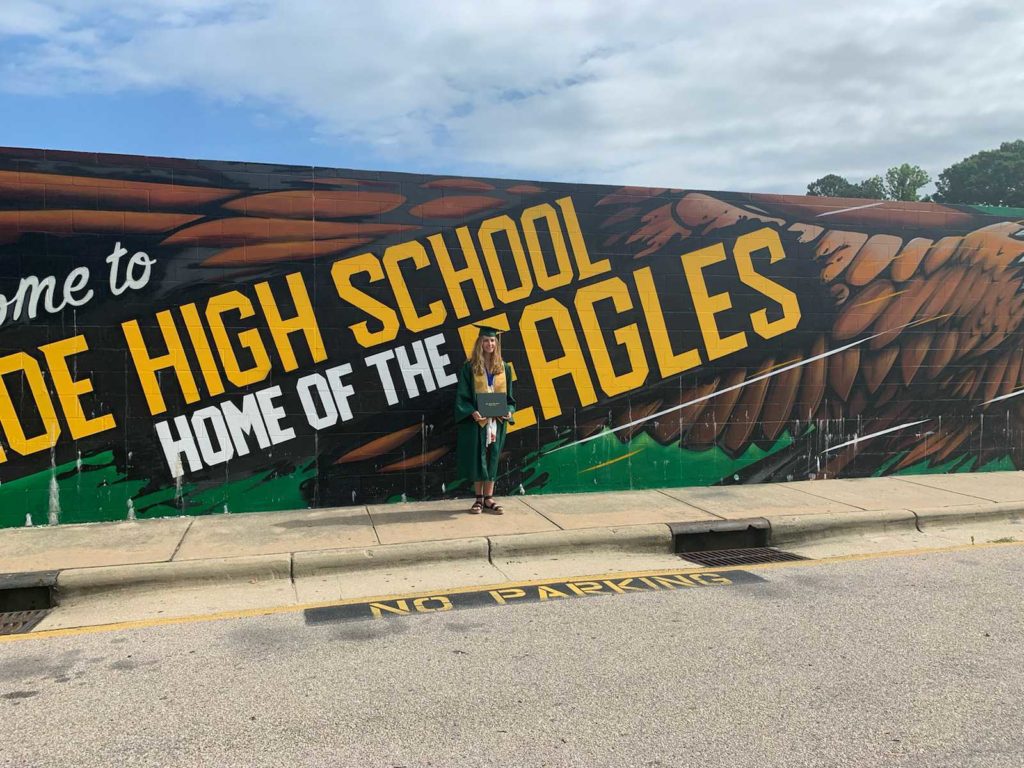
Not only does she say she doesn’t learn as well through online classes, but she also said the classes aren’t the only reason she chose to go to this college.
“George Washington is really known for their clubs and the internships that they offer their students, even during the school year, and none of that’s happening this year,” she said.
She feels that an important part of college would be “getting out there” and discovering what she likes to do, and that won’t be possible this year if she isn’t on campus. That’s why she’s taking time off.
“I’m willing to wait for that if that’s not possible right now,” she said.
That was a big deal for Logan too, but since she just has one year left, she’s just trying to finish her degree and move on. Because Lewis is only beginning her higher education journey, these in-person experiences matter more to her. She also sees it as a way to make up for the spring she just had in high school.
“So many other high school seniors didn’t get that experience that we were promised. I didn’t get prom this year. I already bought my dress, it’s sitting in my closet,” Lewis said. “It’s just hard, and I really held out hope for a long time that I was going to be able to go to college and have at least a semi-normal experience there, and I’m just facing the truth now, and so many other people are facing that truth, that it’s not gonna happen.”
But she is trying to make the most of her time off before she starts her first year of college. She’s looking for a job, and she’s trying to take this rare break from classes to focus on her hobbies, like her artwork.
“Instead of trying to go back to the normal, we have to adapt in a way that fits the situation that we’re in,” she said. “And that’s what I’m trying to do the best I can.”
That seems to be the general mood for students. Logan said while she’s still nervous about what could happen this year, she recognizes that this is all new for everyone, including the universities.
“I think that people are trying the best that they can. I think that the schools are trying the best that they can,” she said. “But at the same time, our health comes first above trying to get us back and get us in.”
The view from high school
It seems that so much changes with this pandemic every day that it can be difficult to plan for next month, let alone next year. Despite this, many high school seniors are having to grapple with the challenges of this year alongside planning for their futures.
That’s exactly what Kiersten Hash is facing as an incoming senior at Mallard Creek High School in Charlotte. Her district, Charlotte-Mecklenburg Schools (CMS), originally was only going to have some in-person instruction for students in the first two week of schools but has then changed course and decided to go fully remote.
Now, she’s adjusting to this new normal of virtual learning while also trying to apply to colleges. She hopes to attend a four-year university, likely one that isn’t in North Carolina, and COVID-19 hasn’t changed that. What it has changed is her outlook on remote instruction.
“I’m a little apprehensive just because it’s my senior year. I want to be able to participate in normal senior activities,” she said.
“But I kind of try to remind myself of the grander picture and making sure I’m remaining knowledgeable about what’s going on, so I don’t feel like my situation is just the worst and being pessimistic about it.”
Basically, if taking online classes for a while means that she can keep herself and others safe from the virus, she’s OK with that, even if it means she won’t get what she feels is the entire senior year, or college, experience.
Like most students, she’s not sure what her expectations should be by the time she needs to commit to a specific university. Until then, she said she’s trying to focus on researching where she’s going to apply, her online classes, and her organization, Queens for Change.
“I think that I’m just grasping the fact that it’s going to impact my college experience, whether I’m doing remote learning, or I do have to be sent back, and I guess that’s just something I’m trying to prepare myself for,” she said.
Most of North Carolina’s universities started in early August, and CMS resumed remote instruction on Aug. 17. Students on the ground are facing just as many questions as educators and leaders are, and they’re considering vastly different things as they make choices for their education. Some students want that on-campus atmosphere, while others are just looking for their degree.
If you want to hear these students’ full stories, along with insight from a college administrator and high school counselor trying to guide students through these times, check out our “Interrupted” podcast series here.
Behind the Story
Anna Pogarcic reported this piece and recorded the podcasts. Alli Lindenberg provided producing and editing support.