
What questions do second graders have for the state treasurer?

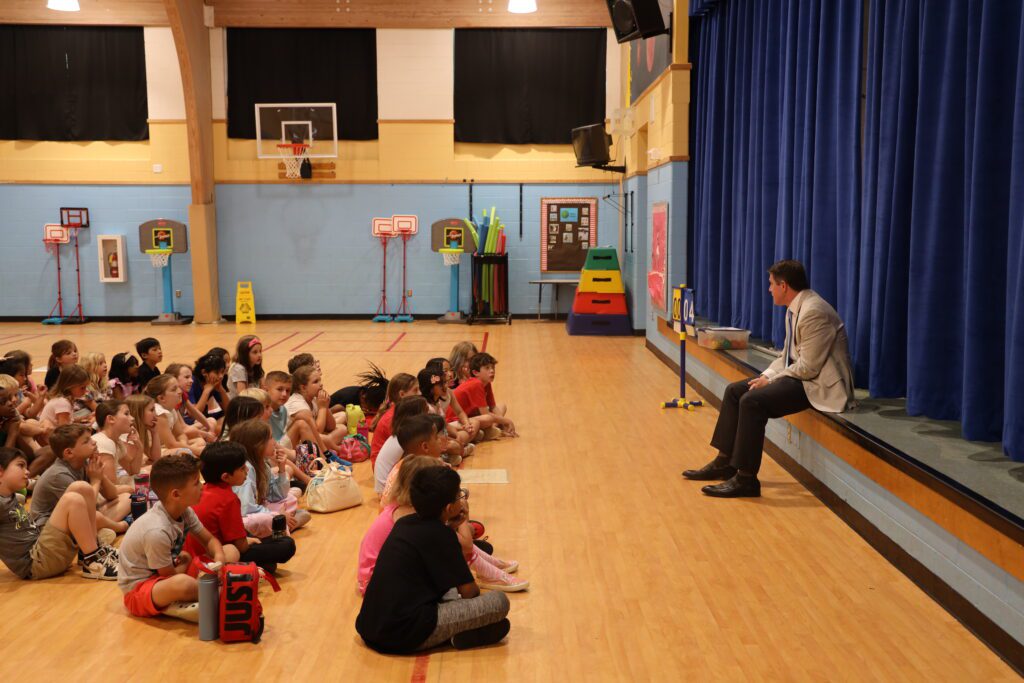
How much money do we have? Where do we keep it? Where does all of it come from? Where do you live? Do you have any pets?
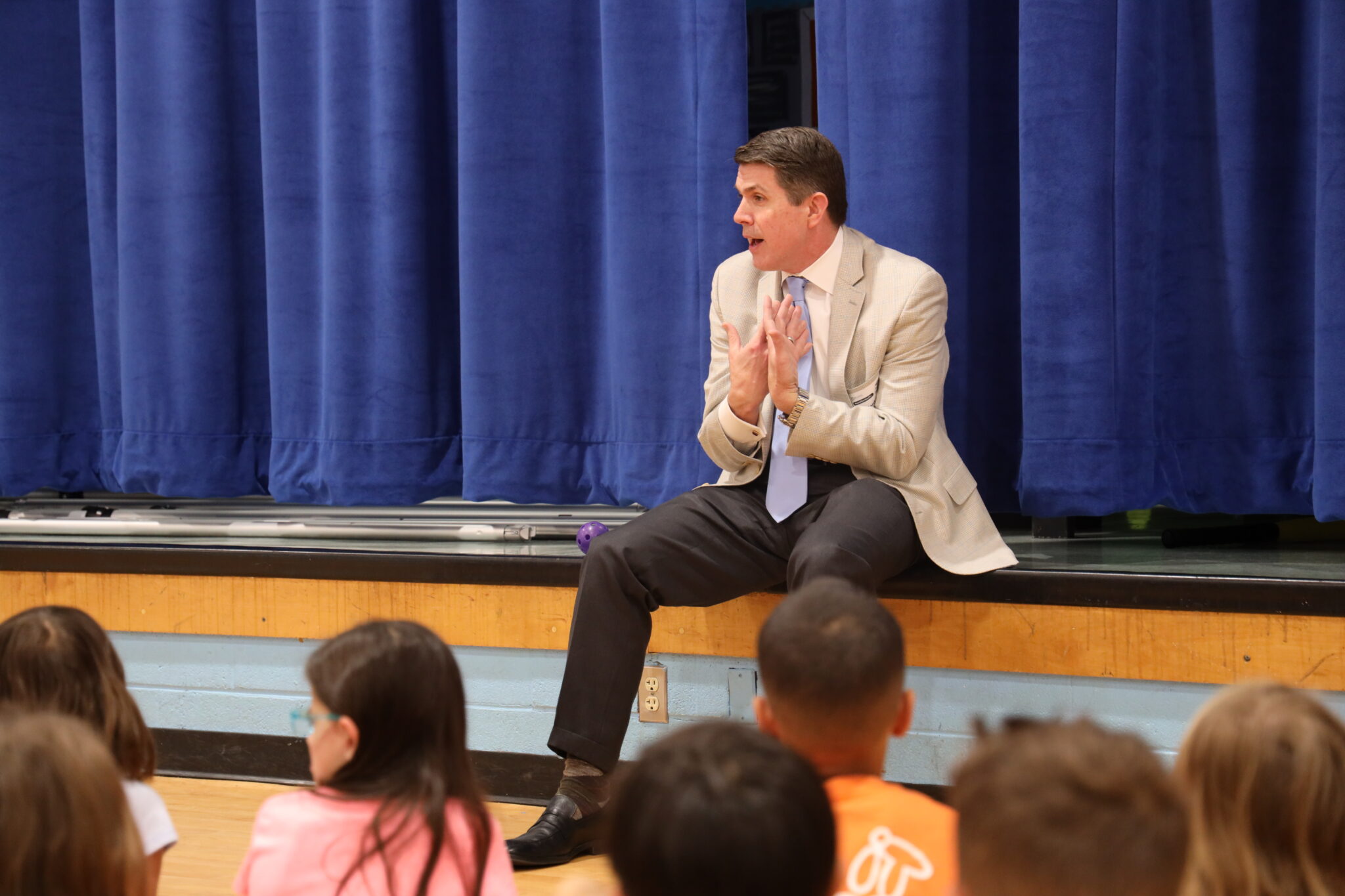
As state Treasurer Brad Briner sat in the gym at Jones Dairy Elementary School during a May visit, these were some of the questions that second graders excitedly asked him. Hands shot up in the air, one after another.
The students were most shocked to hear that the treasurer drove thousands of miles across North Carolina last year, that the amount of money the state has could make it to the moon if we laid it down flat as $100 bills — and that he doesn’t have any pets because he’s allergic.
 Sign up for the EdWeekly, a Friday roundup of the most important education news of the week.
Before they had a chance to get all of their questions answered, Briner took some time to explain what his job as the state’s treasurer entails.
What makes North Carolina great are the mountains and beaches, he said, but what also makes us great is our state’s “treasure.”
“That’s where I come in. My job is to manage our treasure, and we got a lot — we got about $200 billion,” he explained, as gasps erupted from the crowd of students. “My job is to keep all that money safe.”

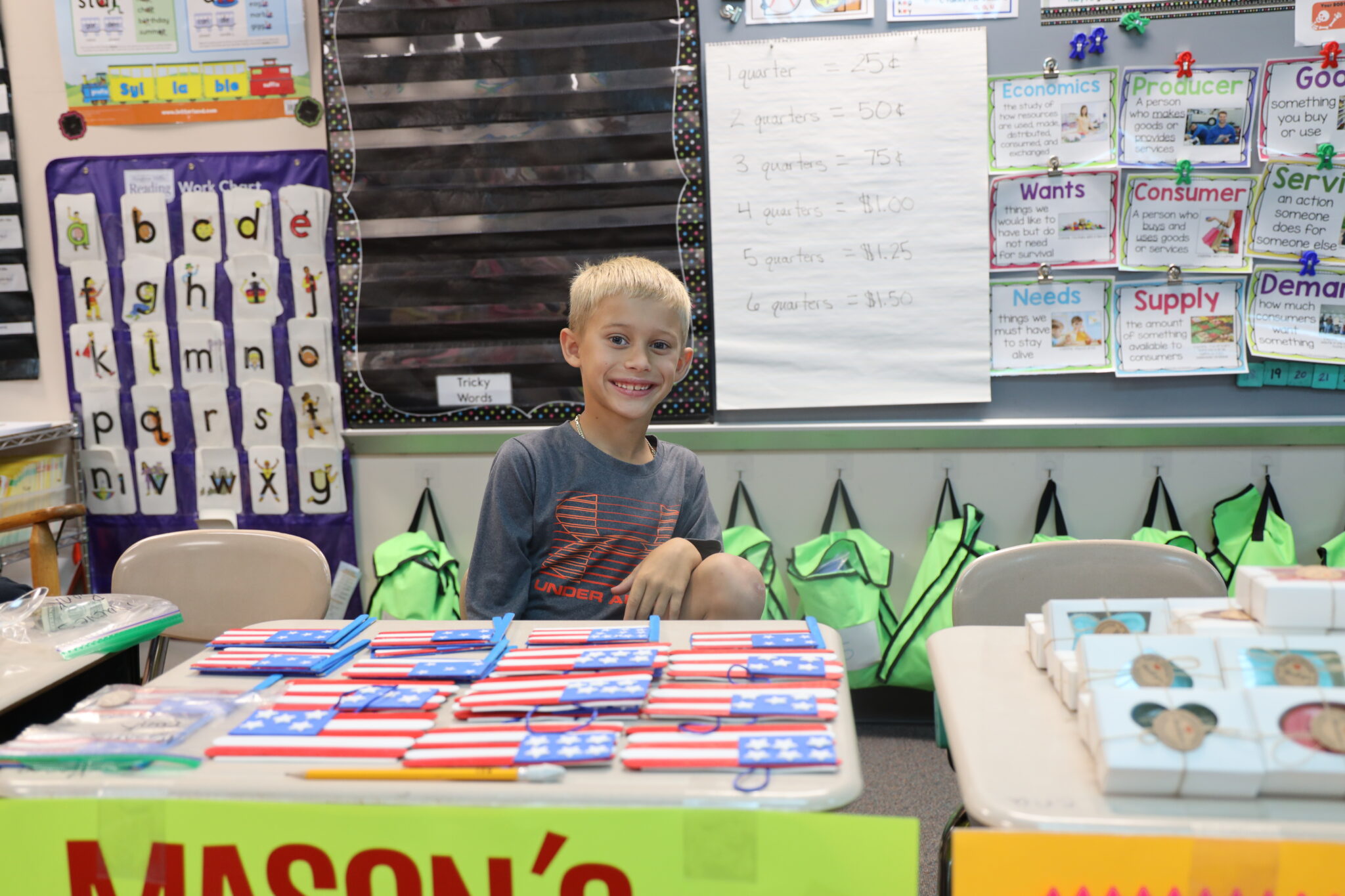
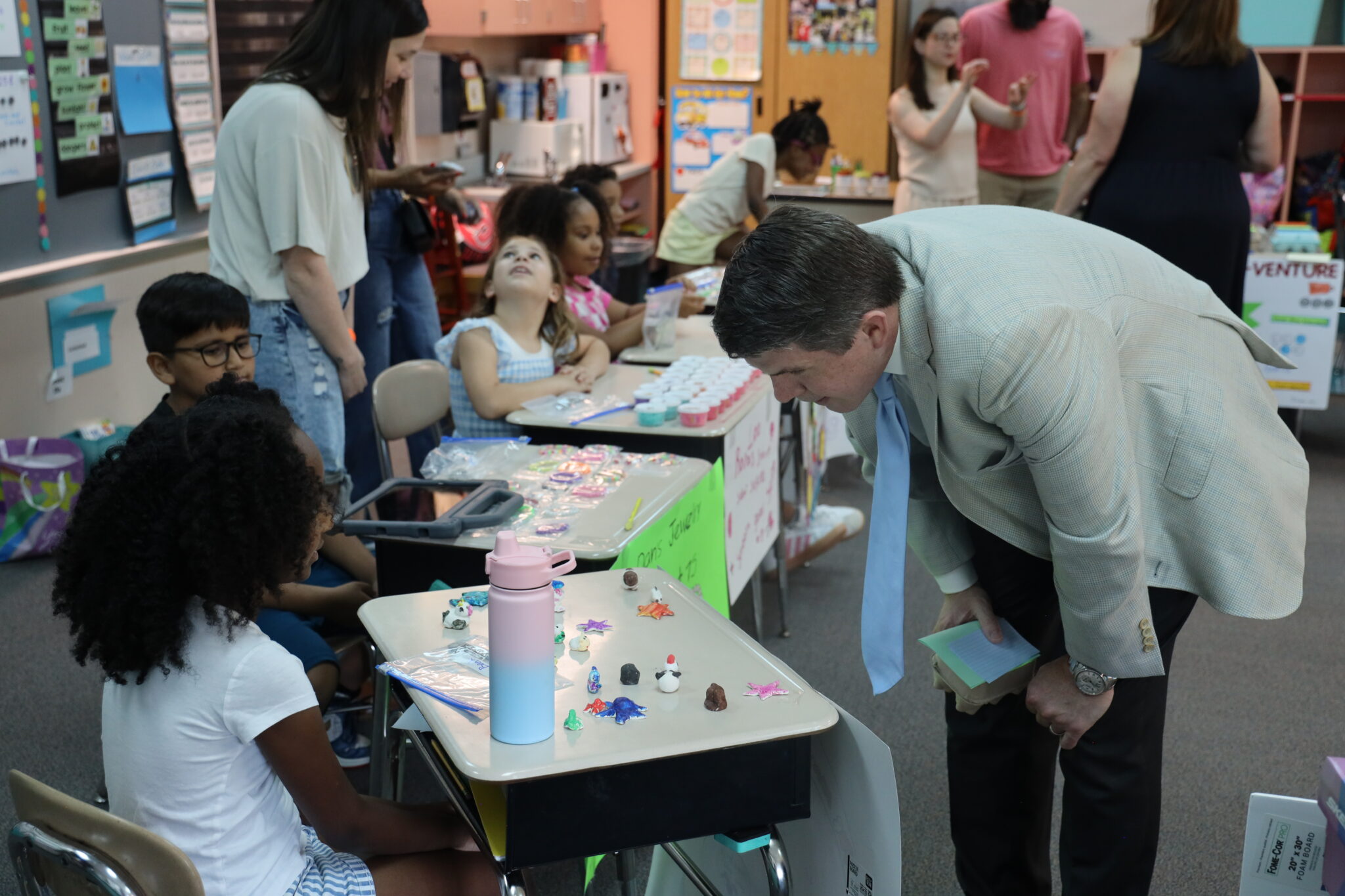
His visit was the culmination of the grade’s economics unit. The school’s five second grade classrooms had spent the previous weeks learning about money, supply and demand, and other basic economics principles. Students then used what they learned to create products for a classroom-wide market.
Students’ desks were covered in everything from magnets and origami figures, to catapults, painted rocks, and necklaces — all for sale. They could sell anything they wanted as long as they were the ones physically creating it.
And the entire market experience was dynamic — students set their own prices and handled their own money, counting out loud to figure how many quarters to give back to the buyer. Different students who made similar items even priced them differently in an effort to compete.
“He priced his first, and she knew it, and she said, ‘If I price it for a dollar, I’ll sell out first,'” second grade teacher Jennifer Rinker said. “But that’s the whole point of the exercise! She really understood it.”
As their supply dwindled, students could put their items on sale, something that the teachers encouraged them to think about just like any business owner would. “What does Target do when they’ve got so many swimsuits and it’s the middle of winter?” Rinker said, giving an example. “We have all kinds of conversations about that.”
Principal Altonia Bransome said this is one of her favorite projects of the school year. The students donate their earnings to local nonprofits, including Savings Grace Animals for Adoption and BackPack Buddies.
“It’s one of those memorable events,” Rinker said. “For years to come, they still think about that economics lesson from second grade.”




Bransome explained that this is just one of the ways that her school’s students exhibit the character that goes along with being a Positivity Project school. The academics are a huge part of what they do, she said, but they are working to make sure they are “helping to raise great human beings.”
The school, located in Wake Forest, has seen a lot of growth in recent years, from roughly 575 to 655 students in just one year. Bransome, who has been principal since 2016, said the school owes a lot of its success to its families and the surrounding community. One example — the PTA held a Kindness Matters fundraiser to renovate their media center, and it raised $43,000 in two weeks. With the money, they were able to create new signage, get ADA-compliant tables, purchase new equipment, and more.
“Our families are phenomenal,” she said. “Students donated their time to do good deeds at a time when we were all kind of down during COVID.”
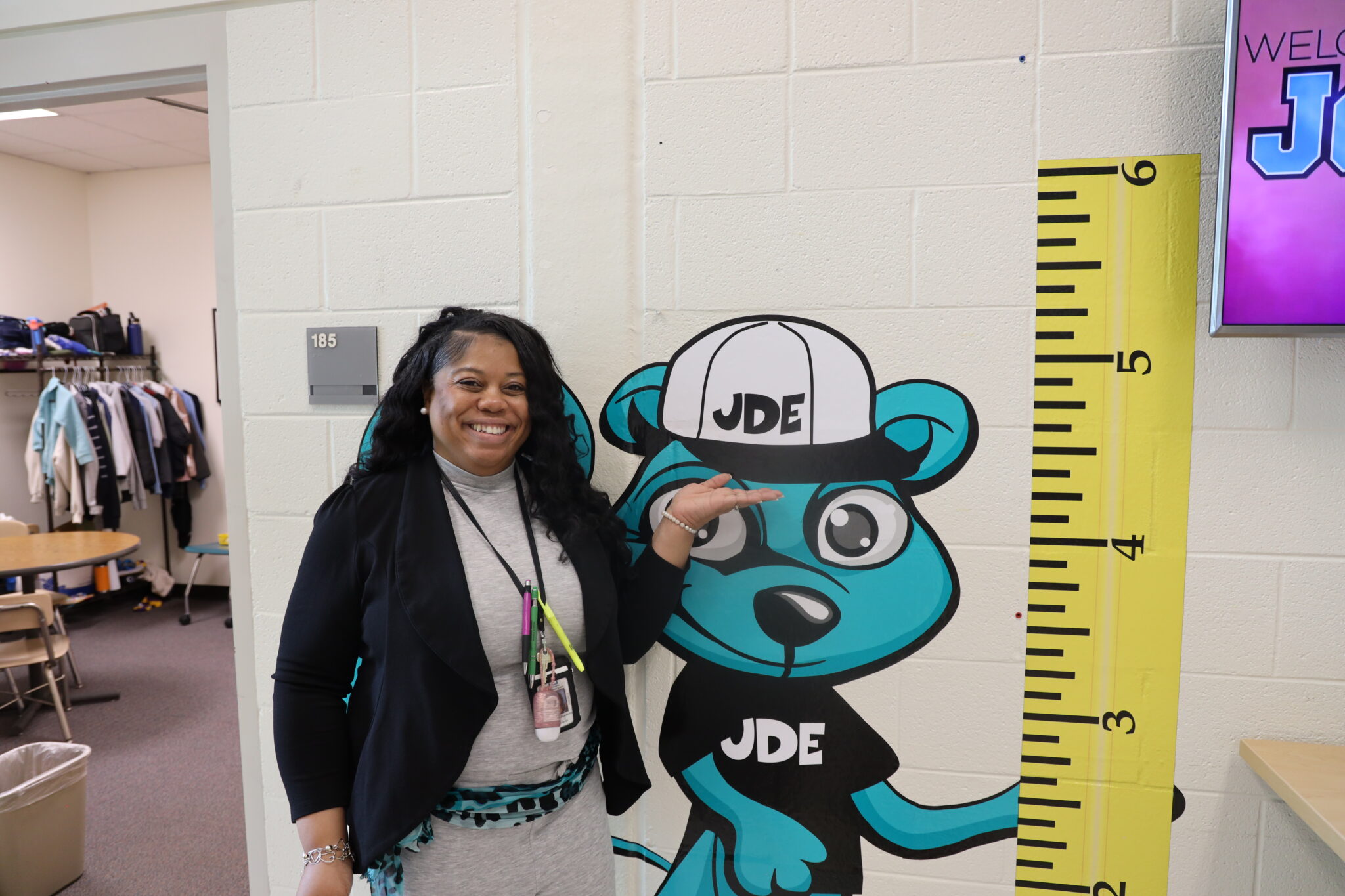

And that continues even when students are no longer in the building, she said. Former students and parents of former students still donate their time, whether it’s during fundraisers or for the school’s theater program.
Last year, the school celebrated 15 staff members who had been there for more than 20 years, Bransome said.
“Once you’re a panther, you’re always a panther,” she said. “…There’s a lot of love here in this building and a lot of people that stay year after year after year because they love this school and community.”