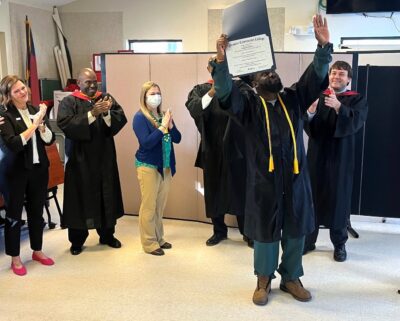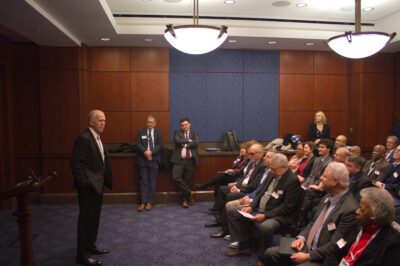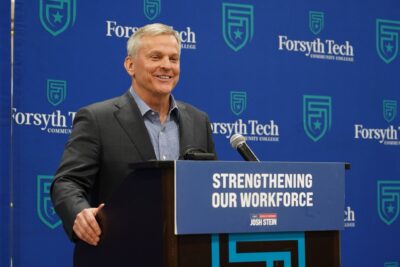
North Carolina currently incarcerates about 32,000 people in its prisons. Of those held in state custody, 95% will go on to be released and return to their communities, according to the North Carolina Department of Adult Correction (NCDAC).
A functional, productive, and smooth transition back to the community after years or decades of imprisonment is essential for many reasons. Chiefly, reentry is about setting up a prosperous life for the person being released.
It is also about public safety. Lower recidivism, the rate at which people return to criminal behavior after being released, means less crime, a lower financial cost of the prison and judicial systems, and reduced prison populations.
Lower recidivism is linked to markers of successful reentry such as stable housing, employment, and education. People who are incarcerated and participate in prison education programs are 43% less likely to return to prison than those who do not participate.
 Sign up for Awake58, our newsletter on all things community college.
Around NCDAC, the state department that oversees more than 50 prison facilities, there is a motto: “Reentry from day one.” From the moment people enter prison, the goal is preparing them for prosperity when they get out.
“When they come in, we look at what are criminogenic factors, and what are people needing in order to be successful when they do release — whether that’s in six months, or six years, or 20 years,” said Brooke Wheeler, senior director of education and program services at NCDAC. “We really try to meet the needs of our people as much as we can.”
In 2024, former Gov. Roy Cooper issued Executive Order No. 303, a comprehensive order that directed NCDAC to lead a whole-of-government effort to improve economic mobility, improve mental and physical health, expand housing opportunities, and remove barriers to successful reintegration for formerly incarcerated people in what his office called “the most significant effort targeted at strengthening reentry in state history.”
That order added North Carolina to Reentry 2030, a national initiative to transform reentry infrastructure by 2030. Under Gov. Josh Stein, North Carolina has continued its reentry work; First Lady Anna Stein has made supporting rehabilitation and reentry programs one of her priority issues.
Reentry efforts are also connected to postsecondary attainment and workforce development. North Carolina is amid a bipartisan effort to meet the state’s attainment goal of having 2 million residents aged 25-44 earn postsecondary degrees or credentials by 2030. In January, NCDAC was awarded a grant from the nonprofit Jobs For the Future (JFF) to expand workforce pathways after incarceration.
A population of workers reentering society presents a valuable opportunity to align with state workforce needs, NCDAC officials said.
All this amounts to the need for a robust education system inside and outside of prisons. EdNC visited state prisons in North Carolina and spoke with students who are incarcerated, people who were formerly incarcerated, prison educators, and prison staff to understand the educational paths a person who is incarcerated might take, what is working and what isn’t in the current system, and the importance of successful reentry.

What prison education looks like
In most of North Carolina’s state prison facilities, people who are incarcerated have the opportunity to enroll in basic education courses, life skills courses, high school equivalency programs, or career and vocational programs. Degree programs are offered in some facilities.
Education programs for adults are provided by community colleges or universities, are taught by community college or university instructors, and are comparable to what a non-incarcerated student would experience. According to NCDAC’s website, it has partnerships with more than two-thirds of North Carolina’s 58 community colleges. Youth programs, which serve people under the age of 22, are taught by state-certified instructors employed by NCDAC.
Not every program is offered at every prison, but it is possible and common for incarcerated people to request transfers so they can enroll in specific programs.
Education programs sometimes require applications or referrals by case managers. There are limits on who can enroll, driven by behavioral history, how much time is left on a person’s sentence, completion of prerequisites, and program availability.
Program availability is a chief concern in ensuring access to prison education. Despite the long list of educational programs offered at prisons, classes fill up quickly and waitlists grow, according to students and instructors. State law instructs NCDAC to give priority to “meeting the needs of inmates who are less than 21 years of age when received in the prison system with a sentence or sentences under which they will be held for not less than six months nor more than five years before becoming eligible to be considered for a parole or unconditional release.”
Jay Lively, who coordinates Asheville-Buncombe Technical Community College’s (A-B Tech) higher education prison programs and is a member of the North Carolina Prison Education Consortium, said North Carolina is working to expand prison education program offerings. Even with high demand, he said, motivated students at the prisons A-B Tech serves can generally find opportunities.
The vast majority of students in North Carolina prisons receive their education at no cost to themselves. A mix of federal, state, and private sources fund most education programs; only a handful of students who are incarcerated pay out-of-pocket tuition for accredited college programs approved, but not offered, by NCDAC.
Federal Pell Grants have been available to incarcerated students since July 2023 under the FAFSA Simplification Act. This comes after some schools in North Carolina, including A-B Tech, were eligible for Second Chance Pell Grants under a previous pilot program.
Prison education by the numbers
- The last state budget bill allocated just over $10.5 million to “offender education,” making up about 0.5% of NCDAC’s total budget.
- In 2024-25, the average daily prison population was 31,858.
- In 2024-25, 12,153 people (38% of the prison population) participated in 20,847 education programs.
- Of the following categories of education programs, postsecondary technical programs had the highest participation in 2024-25:
- Basic: 5,218
- English Second Language: 201
- Human Resource Development: 10,499
- Postsecondary degree track: 1,524
- Postsecondary technical: 11,865
- Among postsecondary technical programs, the programs with the highest participation included custodial/environmental services (1,713), computer basics (1,046), and commercial driver’s license (734). See the full list in Table 3 of this document.
- In 2024-25, associate degree programs were offered in seven correctional facilities and bachelor’s degree programs were offered in four correctional facilities.

Inside the classroom
What does a classroom inside of a prison actually look like?
Those who haven’t been incarcerated might not be able to picture a prison classroom environment. After all, the nature of prisons is sequestering people from the public view.
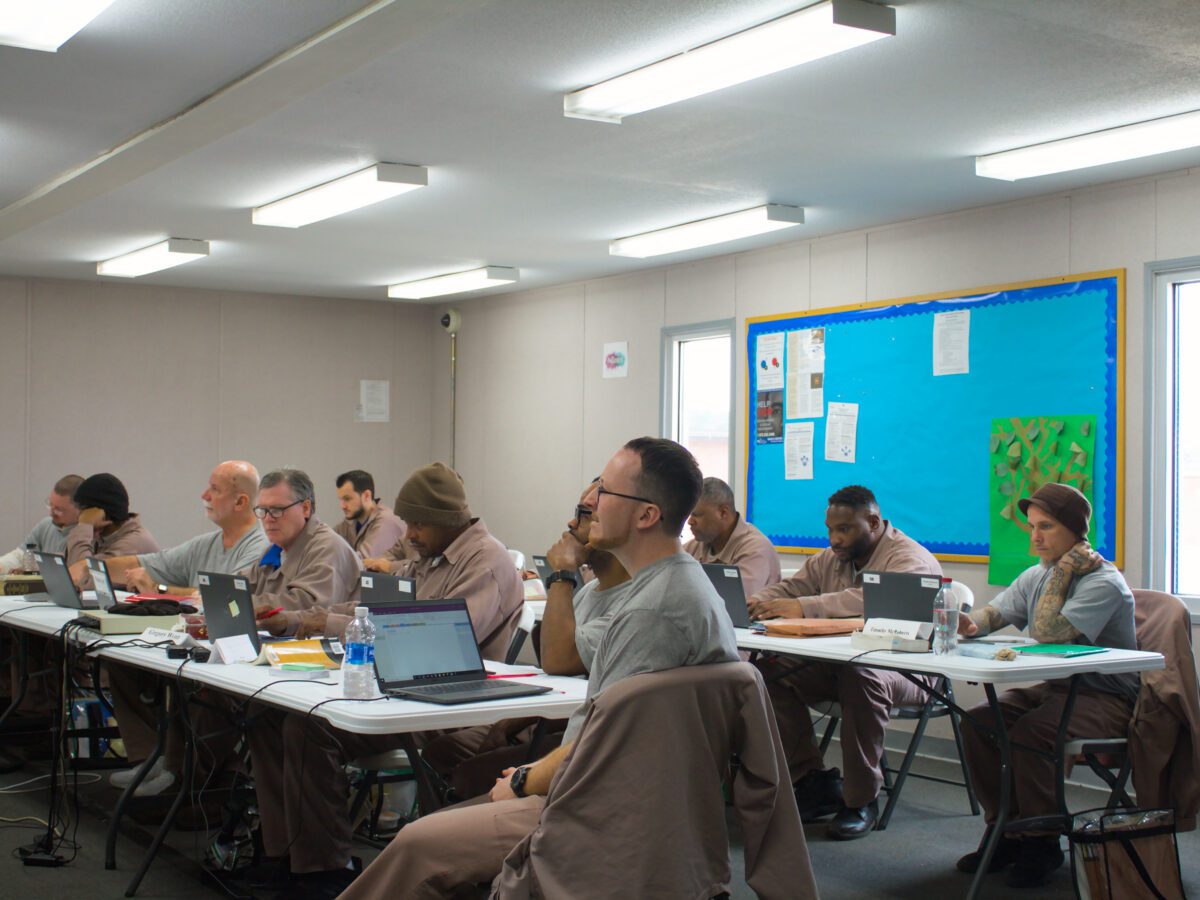
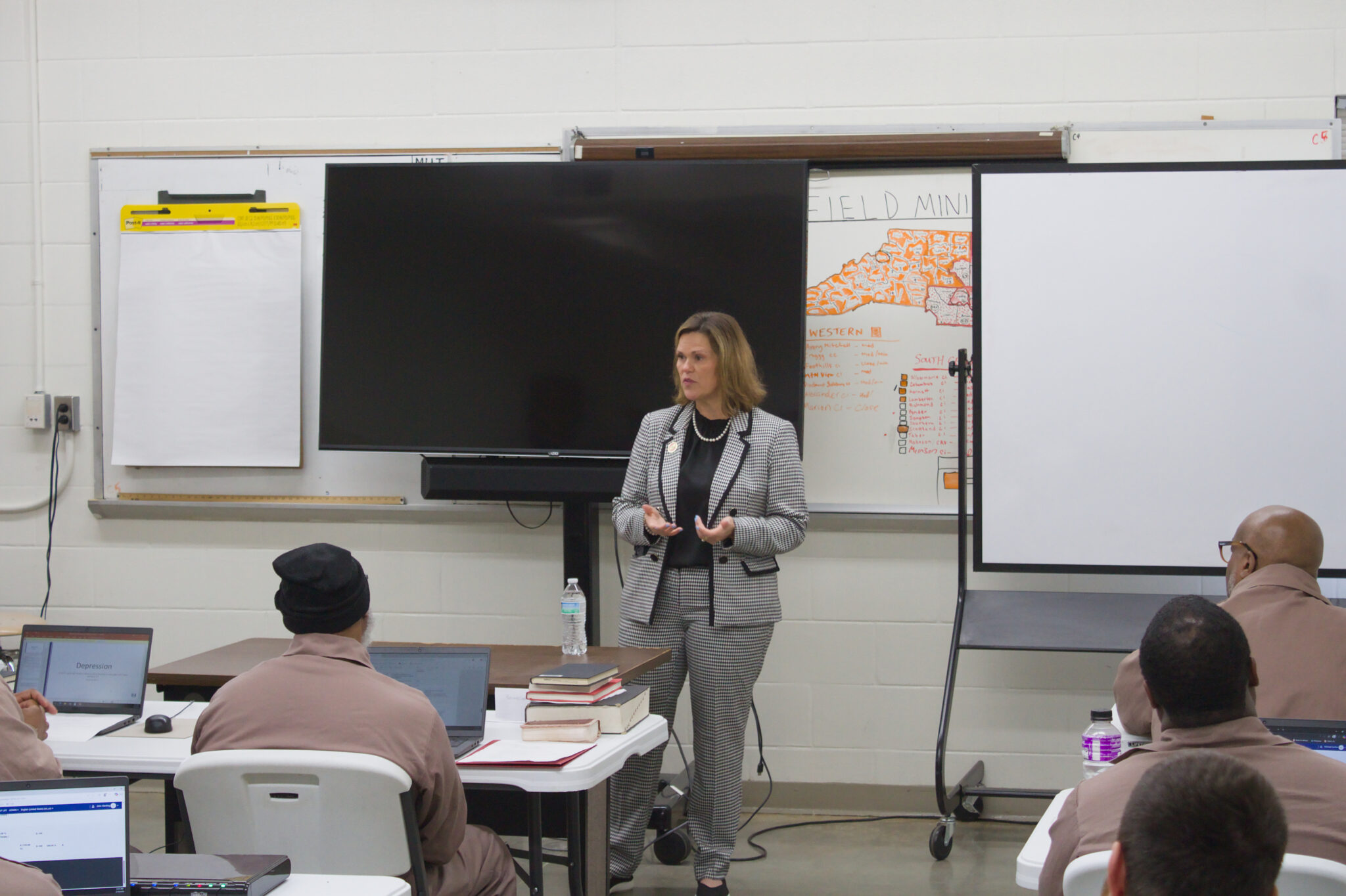
In some ways, prison classrooms are similar to what you might see in a typical high school or college. One morning, in an English Composition II class at Nash Correctional Institution, students were taking notes, trading jokes, and trying to parse the meaning of 17th century poetry.
Nash Correctional students itch for the clock to strike lunchtime, read from their laptops, and study under the umbrage of motivational posters and buzzing fluorescent lights — the same as many public schools on the outside.
But there are obvious differences. The students at Nash all wear brown uniforms; they sit at plastic folding tables in plastic folding chairs; their backpacks are see-through; their laptops only access certain approved sites on the internet; and there is a correctional officer in the corner of the room, behind glass, overseeing class.
Still, students who are incarcerated say a spot in the classroom is heavily sought after and prized.
Nathan Bowie, a student who spent over 30 years on death row, said he did everything that was possible to join the field minister program offered by Judson College.
“All those years I was on death row, I was waiting for the opportunity to do something like this,” Bowie said, during a break from class. “There’s a lot of guys that are there now that could thrive on the same opportunity.”

Alumni of HVAC program thrive after release
Over a decade ago, Ryan Mullins — now a father, a husband, and the owner of Vital Air Solutions LLC in Archdale — was sentenced to six years in prison. Mullins said he entered prison without any direction and was shocked by being plunged into a hostile environment. His turning point came after a stint of over a month in solitary confinement.
A case manager recommended he take the two-year air conditioning, heating, and refrigeration technology (HVAC) program at Albemarle Correctional Institution offered by Stanly Community College. Mullins agreed, partially as a way to get away from areas where he felt unsafe.
Many students that spoke to EdNC said part of the appeal of an education was being in a safer environment, and that the safety was brought on by the pressure of students having something to lose. At Albemarle, there was a separate housing building for students, and students who engaged in altercations risked being dropped from their education program, Mullins said.
However, what Mullins called “prison politics” can still leak into the classroom. He described having to choose between action and inaction when faced with simple situations, like someone cutting the line at lunch. Either reaction could have social risks.
“If I don’t say anything, I’m looked at like, you know, some sort of punk, and I’m going to get taken advantage of,” Mullins said. “(But) if I do say something, now it’s escalated, and I may end up losing the program, and now I’m back to square one.”
Still, he navigated that environment by looking ahead to his release: HVAC could offer him a career if he completed the program and earned a diploma.
His classmate and friend, Matt McIntosh, found out after he was released that most people in the HVAC field don’t have a diploma. Both McIntosh and Mullins left Albemarle Correctional, they said, with a leg up.
McIntosh said a mix of an in-demand industry, an aging workforce, and the right education allowed him to land on his feet when he reentered society. He said he has never been turned down for an HVAC job he’s applied to since his release.
“I have a six-figure salary now, and a wife, and children, and a home, and a nice truck, and a Harley-Davidson, and things that I never would have imagined or dreamed of,” McIntosh said. “I’ve accomplished and been gifted these things in less than six years after graduating from that program. I mean, it changed everything in my life — everything.”

NCCIW students hope for better lives
About 90% of people incarcerated in North Carolina prisons are men. The North Carolina Correctional Institute for Women (NCCIW) in Raleigh is the state’s primary correctional facility for women, housing all custody levels and control statuses, including death row.
NCCIW, which has the capacity to hold over 1,700 people, has a long catalog of educational programs. Class offerings from Wake Technical Community College include basic horticulture, CDL permit study prep, computer basics, financial literacy, hospitality operations, small business management, and many more.
It is also the site of a program that certifies women to work in the cosmetology industry, and the women’s field minister program, the counterpart to the men’s program at Nash Correctional.
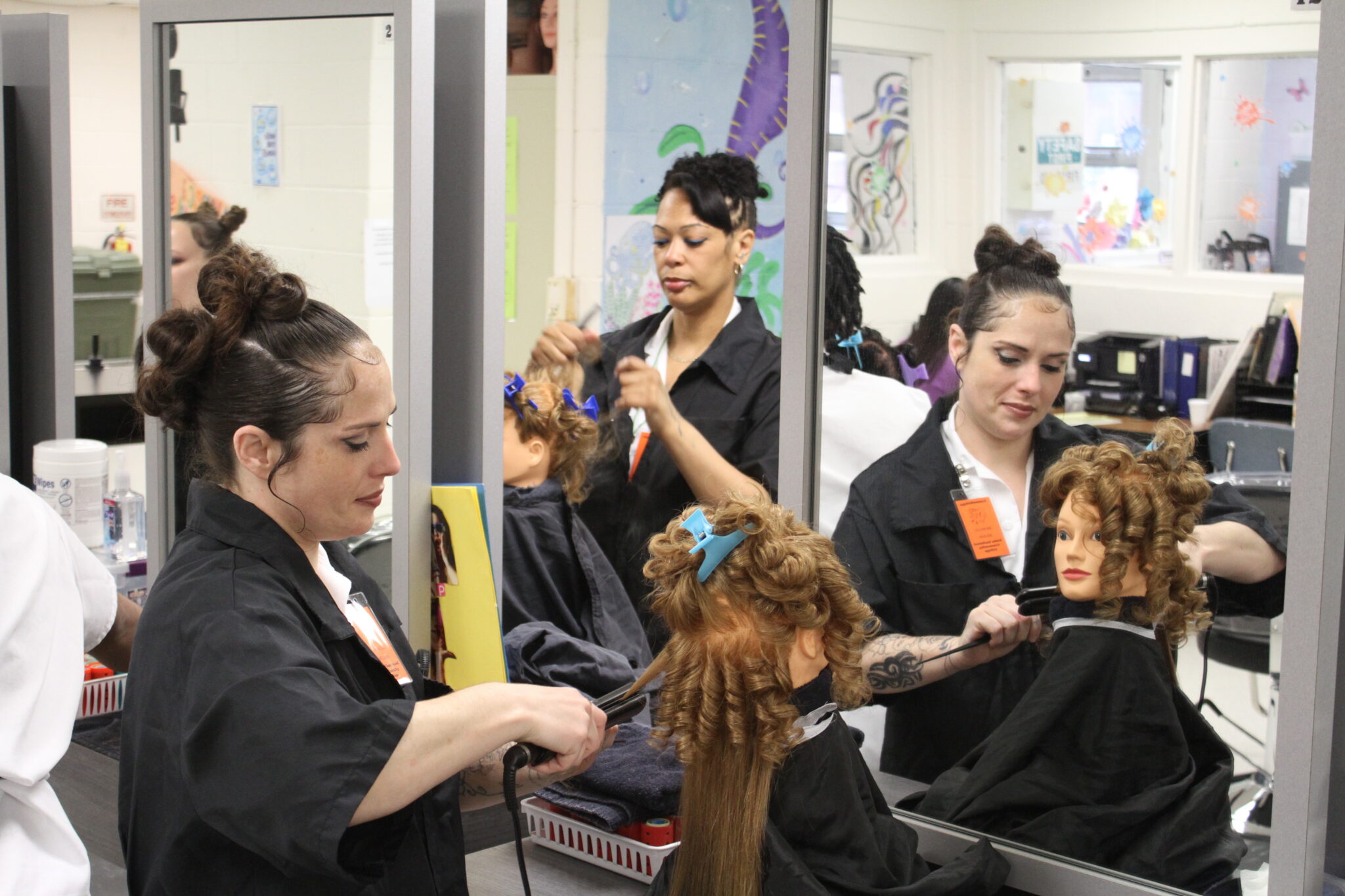
NCCIW’s classrooms were busy on a recent Wednesday morning. Taking a break from studying, students spoke to EdNC about their experience.
“Not having an education, and then you have a record?” said Tahniya Tillman. “You might as well not even waste your time filling out the (job) application. And that’s very discouraging to a lot of people — especially to women, especially to Black women.”
That’s why she’s pursuing her high school equivalency while incarcerated, she said. Tillman is also taking the CDL permit study prep class and plans to drive a truck after being released.
The students, including Tillman, take pride in themselves for trying to leave NCCIW better than they came in.
“Out of everything I’ve done, right or wrong, I did this,” Tillman said.
Patricia Barrett, an interventionist and high school equivalency instructor at NCCIW, said she has seen academics become a “haven” for students.
“That’s a very rewarding part for them, to understand this is a safe place,” Barrett said. “We are here to help.”

Field minister program highlights the humanity of learning
The field minister program at Nash Correctional Institution, offered by Judson College, is somewhat unique as a prison education program in that it targets people who are incarcerated for life, rather than people who will be released soon.
Graduates of the four-year program will request transfers to other state prisons and serve as field ministers in and among incarcerated populations across the state. The program is “grounded in the Christian worldview,” according to its website.
Bryce Hantla, an instructor at Nash Correctional, said teaching in a prison environment poses unique challenges, but also has unique benefits. He echoed Ryan Mullins, the former student at Albemarle Correctional, by saying that prison-specific dynamics and social rules sometimes enter the classroom.
“The men and women at these prisons have gone through domestic violence situations, and have been in wars, and experienced death and gang-related murder, and talk about the full spectrum of life experience … loss, and pain,” Hantla said.
For example, the life experiences and trauma that his students at Nash bring to the classroom lead them to write very different sonnets than the love poems of his 18-22 year old students on Judson College’s campus.
The differences don’t end there. He said his students who are incarcerated are very attentive and highly motivated.
“In my experience, I’ve never had more prepared students,” he said. “Whereas, my on-campus college students, you know, they’re excited to just have gotten the assignment done for that day.”
Patrick Whitley, a student in Hantla’s class at Nash Correctional, said that more people who are incarcerated should be guided toward an education.
“Knowledge is not only power, but freedom,” Whitley said. “People fear. People, generally, will act violently towards what they fear. You can educate away violence.”
What prisons and educators say they need
The stakes are high in prison classrooms. The education provided — or not provided — to people who are incarcerated can be the difference-maker in their lives after they are released.
Levi Perse, a social studies and science instructor at NCCIW, keeps a list of names in the drawer of his desk, at the front of his classroom. The names are of former students who have died — from drug use, from violence — after their release from prison; the list is currently up to 13 names.
“And that’s just the ones I know about,” Perse said. “That’s the hardest part about teaching here — the ones that you don’t reach.”
As NCDAC and educational institutions work to reach more students, prison leaders and educators identified two core needs: increased correctional officer staffing and additional classroom space.
Candra Mullins (who isn’t related to Ryan Mullins) is the associate warden of programs at Albemarle Correctional, and was previously an education coordinator for over 15 years. She said expansion of education offerings is always the prison’s goal.
If Albemarle Correctional offered more classes, it would need more correctional officers to supervise them — and more classrooms. Currently, about 14% of people incarcerated at Albemarle Correctional are in education programs, Mullins said. Most of the rest work jobs in the prison.
“If I had the funding and the staff at this facility to do it, I would have already asked for a second story for programs,” she said. “Between us and (Stanly Community College), we’re constantly talking about those things, about how we can do it in the confines of a prison facility, with the constraints that we have.”
Correctional officer staffing
Kayla Dillard, executive director of NC CURE, a group that advocates for the humane treatment of people in North Carolina prisons, said that, among other difficulties, understaffing and low pay for correctional officers and case managers undermines prison education programs.
Classrooms need correctional officers. Currently, there is a dire shortage. NCDAC’s 2025 annual report said that some prison facilities are facing correctional officer vacancy rates as high as 50%. The report also states that while 2,647 new employees joined the department in 2025, 2,472 left the department — a net gain of just 175.
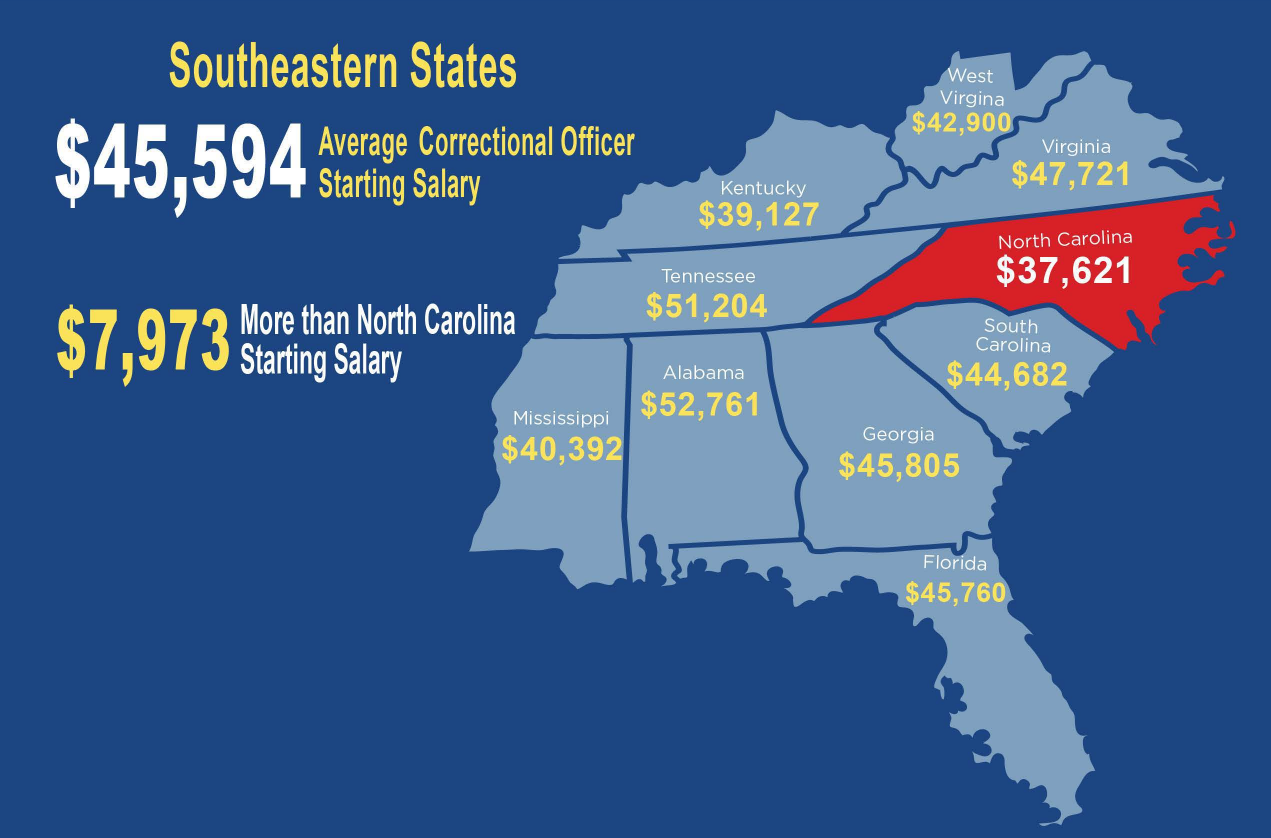
Instructors, prison staff, and NCDAC office staff agreed that correctional officer pay is the main constraint on correctional officer hiring, and that limited expansion of education offerings is a result of that. Although the NCDAC website says a benefit of being a correctional officer is a “competitive salary,” the starting salary is between $37,621 and $41,558.
“I mean, you can make that working as a cook at LongHorn Steakhouse,” Dillard said. She added that the job of a correctional officer can be more demanding and pose higher risks than work for similar pay.
Correctional officers don’t just oversee education programming; in fact, most of their time is spent doing other things, including monitoring dormitories, traveling with people who are incarcerated to medical appointments, and performing intakes on new arrivals. The consensus among those that spoke to EdNC is that correctional officers are spread thin, overworked, and compensated too little.
In January, NCDAC Secretary Leslie Cooley Dismukes gave a statement to the General Assembly’s Joint Legislative Oversight Committee on Justice and Public Safety. Dismukes opened her statement to the committee by saying:
“To put it plainly, our staffing situation is dire and it is dangerous. Dangerous to my staff, dangerous to the people in my custody, and dangerous to the people of North Carolina.”
Dismukes said correctional officers are working mandatory overtime shifts to cover for staffing shortages, and that still doesn’t cover needs. Education programs aside, over 4,000 prison beds were suspended due to lack of adequate staffing in 2025.
Gov. Stein, in his recently proposed critical needs budget intended to bridge gaps left when the legislature did not pass a budget last year, called for a 10% raise for correctional officers.
“If we don’t have custody staff who can help us run these (education) programs, then we cannot provide the programs,” Dismukes said to the committee. “We are, as I said earlier, just warehousing people. We are not making people any better, not giving them any life skills to then return to their communities and not return to our custody.”
Classroom space
Educators and administrators also identified space constraints as a limit on prison education programs, amplified by a growing prison population that requires more staff and more space for basic, minimum operations. Dillard said she has heard of a prison suspending educational offerings because they needed the classroom space for beds.
Additionally, some programs have different space needs than others; more hands-on programs with tools and equipment, like HVAC or plumbing, need more room than general education courses. Many of the programs with higher space requirements are the ones preparing students for high-demand careers.
At Albemarle Correctional Institution, space is the main constraint preventing Stanly Community College from offering more programs, said Jeff Parsons, vice president of academic affairs and chief academic officer at the college. The construction of new buildings on prison grounds can be a tall order.
“We’re really just limited at this point by space, at the present,” Parsons said.
Space and correctional officer availability combine to prevent the expansion of night classes at NCCIW, according to Hollyene Turner, the school principal at NCCIW.
“I would love to expand the night school program, but I don’t have classroom space, and all the night classes are held in (the) academic school, because that’s where we have an officer,” Turner said.
Momentum builds for strengthening prison education
McIntosh, the alum of the HVAC program at Albemarle Correctional, said that despite his conservative values, he would “absolutely” be in favor of his tax dollars being invested in prison education programs.
“They can give someone else that comes from where I come from, and has been through what I’ve been through, the opportunity to make something of himself too,” McIntosh said.
Students, instructors, advocates, prison staff, and NCDAC staff that spoke to EdNC expressed strong alignment: There is a demand for more robust education offerings in state prisons, and strengthening these programs can help the state meet its workforce needs.
NCDAC staff cited the JFF grant the department received earlier this year as evidence that North Carolina is already a leader in the effort to strengthen workforce pathways from prisons. JFF chose North Carolina from more than 30 applicants in part because of its existing efforts to expand economic mobility for individuals with criminal records, according to an NCDAC press release.
Preston Roseboro, regional impact manager at myFutureNC, a statewide nonprofit organization focused on educational attainment, said that the JFF grant and a separate grant to the North Carolina Prison Education Consortium demonstrate that North Carolina is in a good position to grow its prison education offerings.
“I definitely think we’re a leader within the country,” Roseboro said. “We’re definitely focused on it in ways that other states are not, and I think that’s just going to continue to get better with some of the grants that are in the works, and some of the conversations that are being had as well.”
On the ground, prison education programs and reentry efforts are already helping students. NCCIW Warden Michelle Carlton said she is proud of the educational opportunities NCCIW students receive, and that it is rewarding to see students grow and learn.
“We have all kinds of programs that will help our ladies become better citizens and be educated, so that when they leave here, they’re able to provide for themselves and provide for their children,” Carlton said. “That’s the hope — that we can continue to have better educational programs, that our teachers are well compensated, that our staff are well compensated — so that we can do the good business that we do every day.”
Editor’s note: Please email bhumphries@ednc.org with comments or information as EdNC continues to report on prison education and reentry.
Recommended reading