Now in his 27th year in education, Aaron Locklear is the assistant principal of Piney Grove Elementary School.
He began his career with the Public Schools of Robeson County (PSRC) as a seventh grade math teacher. Earlier in his journey as a classroom teacher, Locklear recalled an assistant principal stating that their duties as an administrator consisted of “buses, books, and discipline.”
Now, Locklear’s position as assistant principal does include responsibilities such as coordinating buses, testing, and other tasks. However, he the role is also actively engaged in instruction, pushing into classrooms just as much as academic coaches and principals.
“We have more of a strategic role in being a part of the instructional leadership, not just the managerial piece,” Locklear said.
This shift is in alignment with one of the county’s initiatives to develop principals as instructional leaders, as noted in the 2023-28 PSRC strategic plan.
 Sign up for the EdDaily to start each weekday with the top education news.
District wide approach to leadership
RELAY Graduate School of Education is an accredited not-for-profit higher education institution that serves thousands of educators across the nation and offers several programs including their instructional leadership academies. Leverage Leadership Institute (LLI) Fellowship is one of the RELAY academies, which according to its website, is designed for “high-performing principals and principal managers who serve in traditional school districts and charter management organizations from all over the world.”
In the 2021-22 school year, the N.C. Department of Public Instruction (DPI) partnered with RELAY to form the North Carolina Instructional Leadership Academy (NC ILA), a statewide initiative aimed at building instructional leadership in the state’s highest-needs schools.
That year, PSRC was the pilot district for the program. Twelve schools in the district sent participants to the cohort, which included principals, two teacher leaders from each site, and four central office staff. Since then, the training has expanded to all PSRC schools as superintendent, Dr. Freddie Williamson, noted the district’s intention of establishing alignment and “common language.”
Since the 2024-25 school year, PSRC has had two members complete RELAY’s National Principal Supervisor training, with a current trainee in progress, which allows them to now facilitate leadership training within the district.
At each school, principals, assistant principals, and academic coaches make up the instructional learning teams. Using the LLI model, each school’s instructional team uses the following “LEVERS” of leadership as a guide to support instructional coaching for their teachers:
- Observation and feedback,
- Planning,
- Data-driven instruction,
- Professional development,
- Student culture,
- Staff culture,
- Managing school leadership teams, and
- The importance of monitoring.
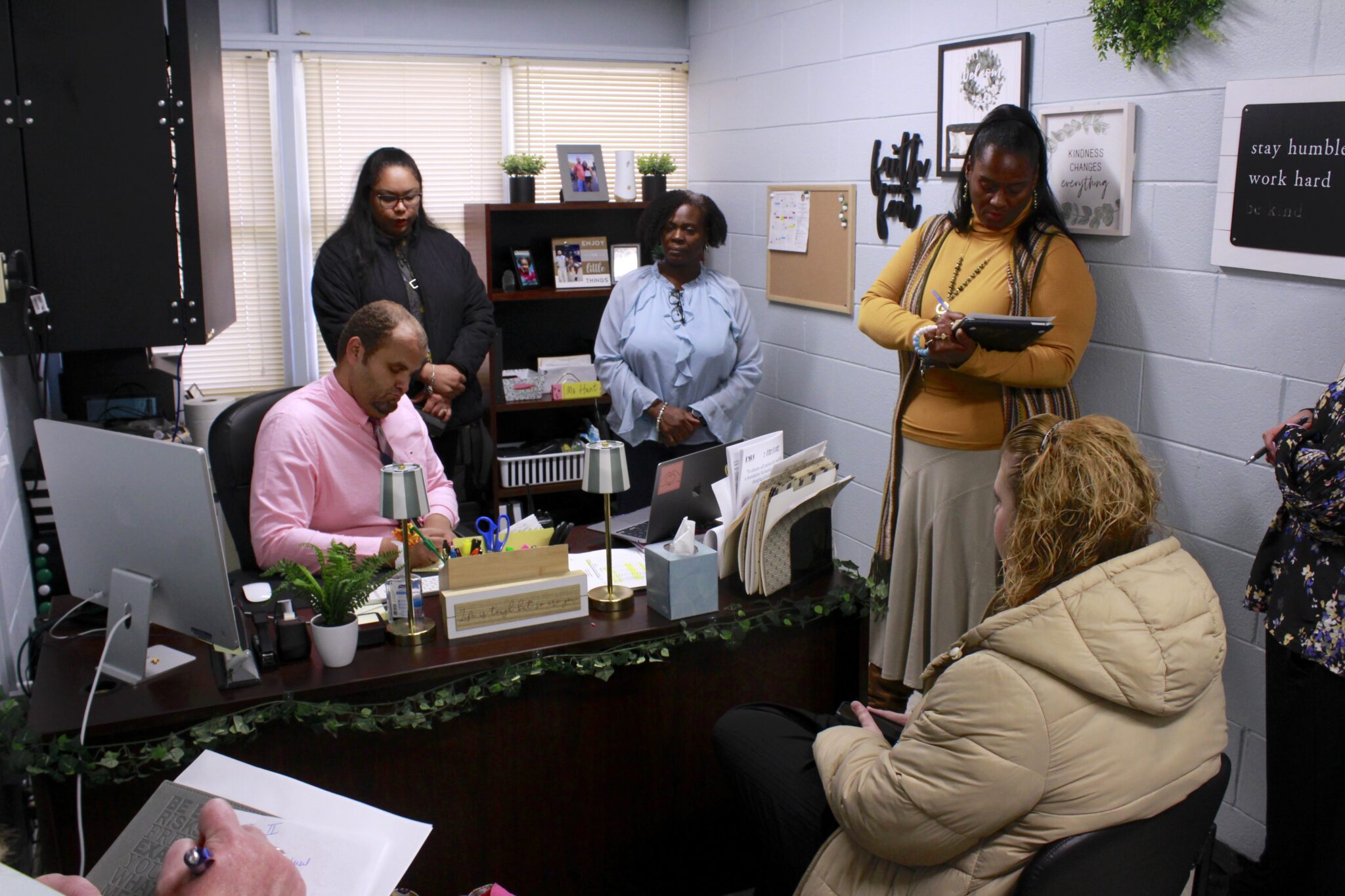
For instance, in alignment with the “observation and feedback” lever, Fairmont High School Principal Dr. Anthony Barton conducted what is called a “calibration walk.”
The calibration walk consists of Barton, an assistant principal, and an academic coach conducting weekly observations in classrooms. Each calibration walk is tailored to individual instructor’s needs based on factors like daily lesson plans or coaching feedback from a prior observation.
Barton noted that an essential component of the walk through is student progress monitoring. During the lesson, the team works to observe gaps in student learning and opportunities for modeling. The observation process concludes with a debrief huddle to share constructive feedback amongst each other to inform the future instruction and coaching.
Using a football analogy Barton explained, “We have coaches up in the top of the press box, and they’re giving real time information from a bird’s eye view down to the folks on the ground because they can see something that the folks on the ground can’t see. Then what do the people on the ground do? They make changes.”
According to Barton, one of the primary aspects of this approach is providing real time feedback. “Sometimes we can see things that they may not be seeing, and it kind of helps us fix instruction in the moment,” he stated.
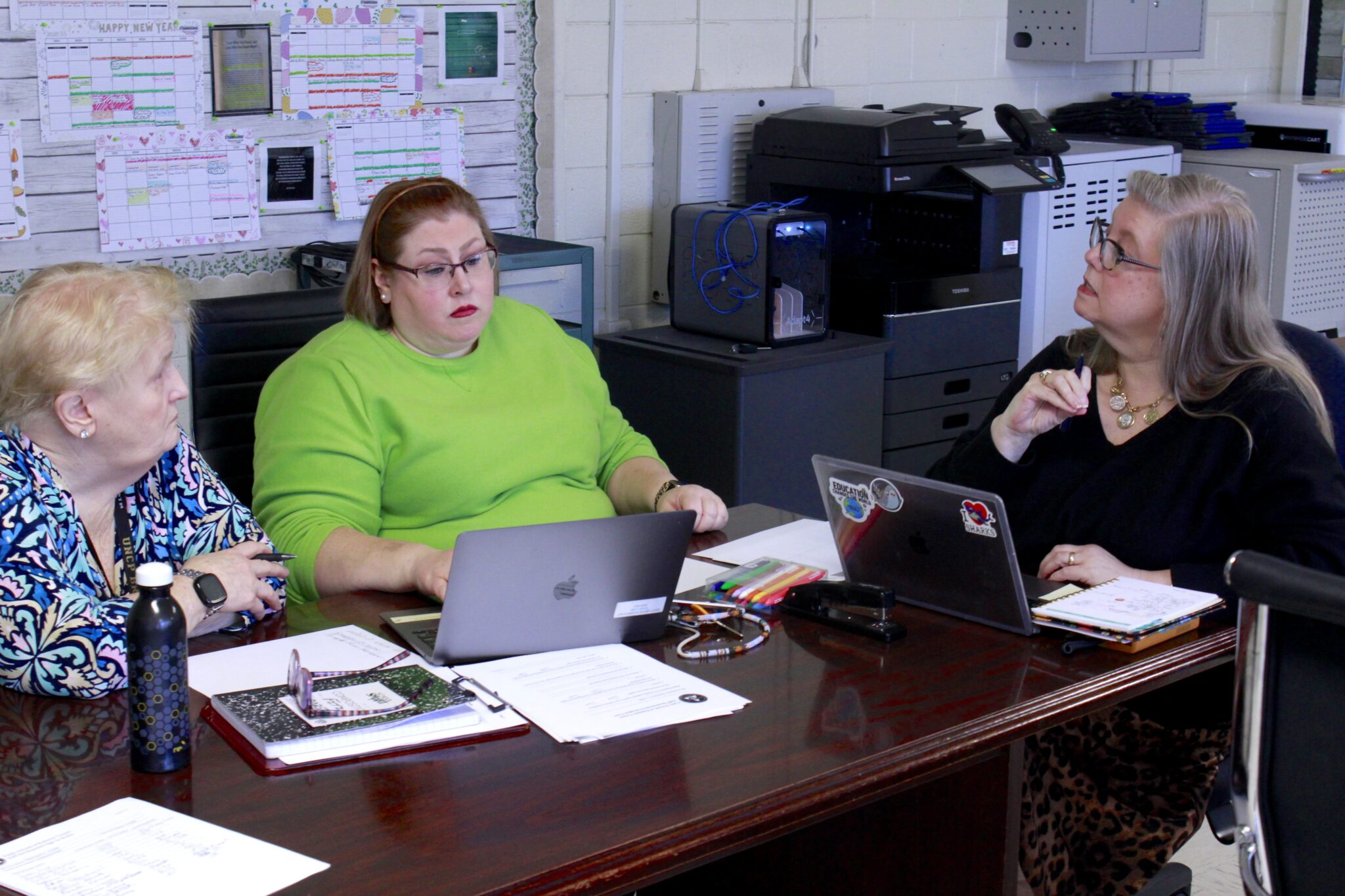
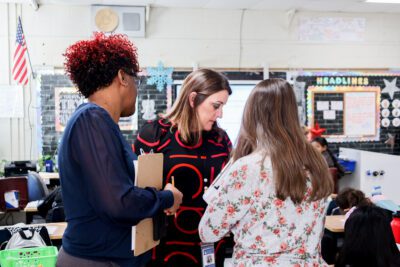
At Piney Grove Elementary’s instructional planning meeting teachers gathered by grade level and received individualized support from a member of the school’s instructional learning team. Piney Grove Principal Kendra Deese explained that before the meeting, she first examines the lessons herself with the goal of identifying potential “productive struggles” in lessons and generating ideas for scaffolding learning for students.
From there, one-on-one support is provided with the teacher during the planning meeting to discuss and align on the instructional approach for the lesson. They also try to anticipate the areas where students might struggle. When Deese prepares for a calibration walk, she and her instructional team are equipped to provide real time feedback along with the ability to monitor student progress and provide direct support to students.
“I’ve learned a lot, and I’m comfortable now going into a classroom, seeing what that teacher is doing, understanding that I can go around and I can help that teacher,” Deese said. “RELAY has put a lot of things in place for us to be very intentional on what we’re doing in the classroom.”
The coaching really has helped me. I feel like it’s helping me be a better teacher, giving me more strategies to use. I’m not just stuck changing things all the time, trying to figure out what works because I’m getting strategies that are helping in making my kids stronger.
— Alisha Lawson, first grade teacher at Tanglewood Elementary School
Data driven meetings to address learning gap
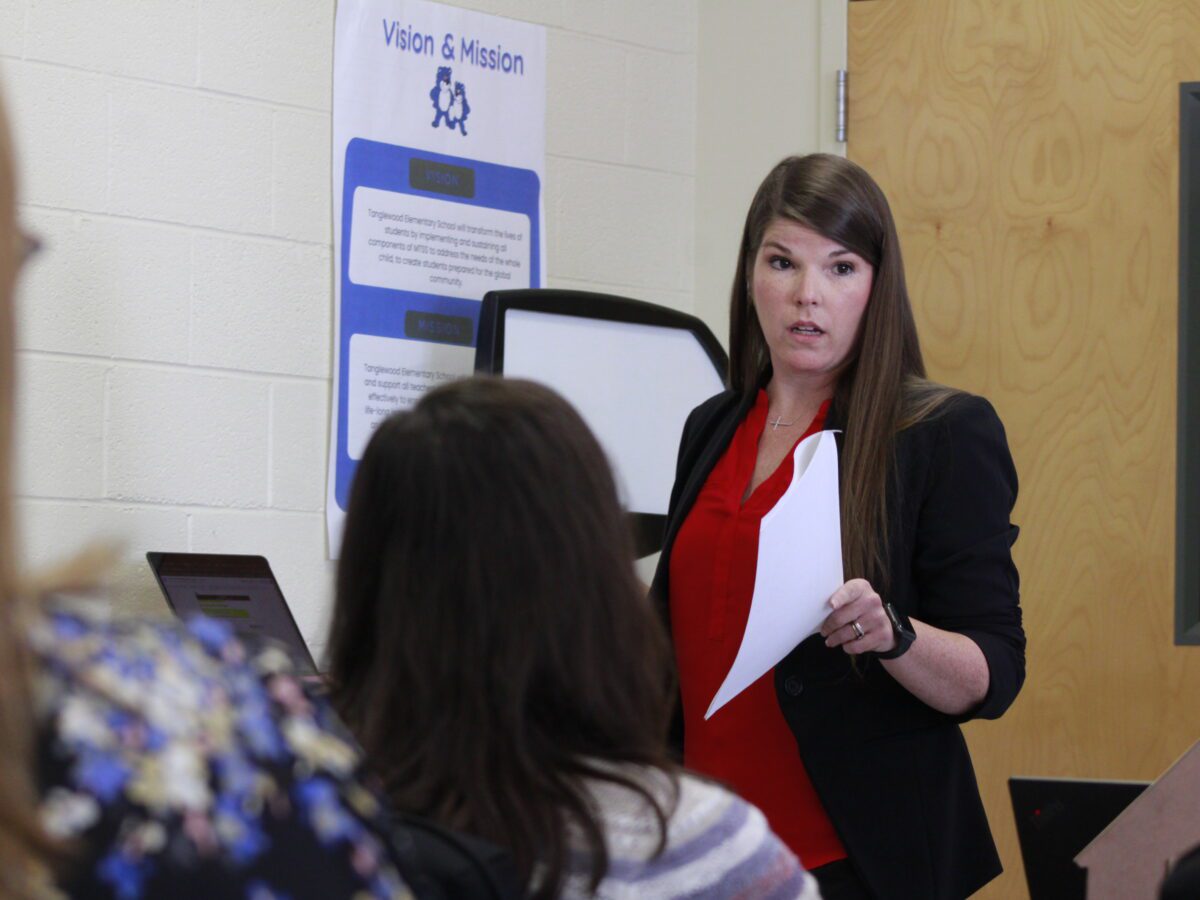
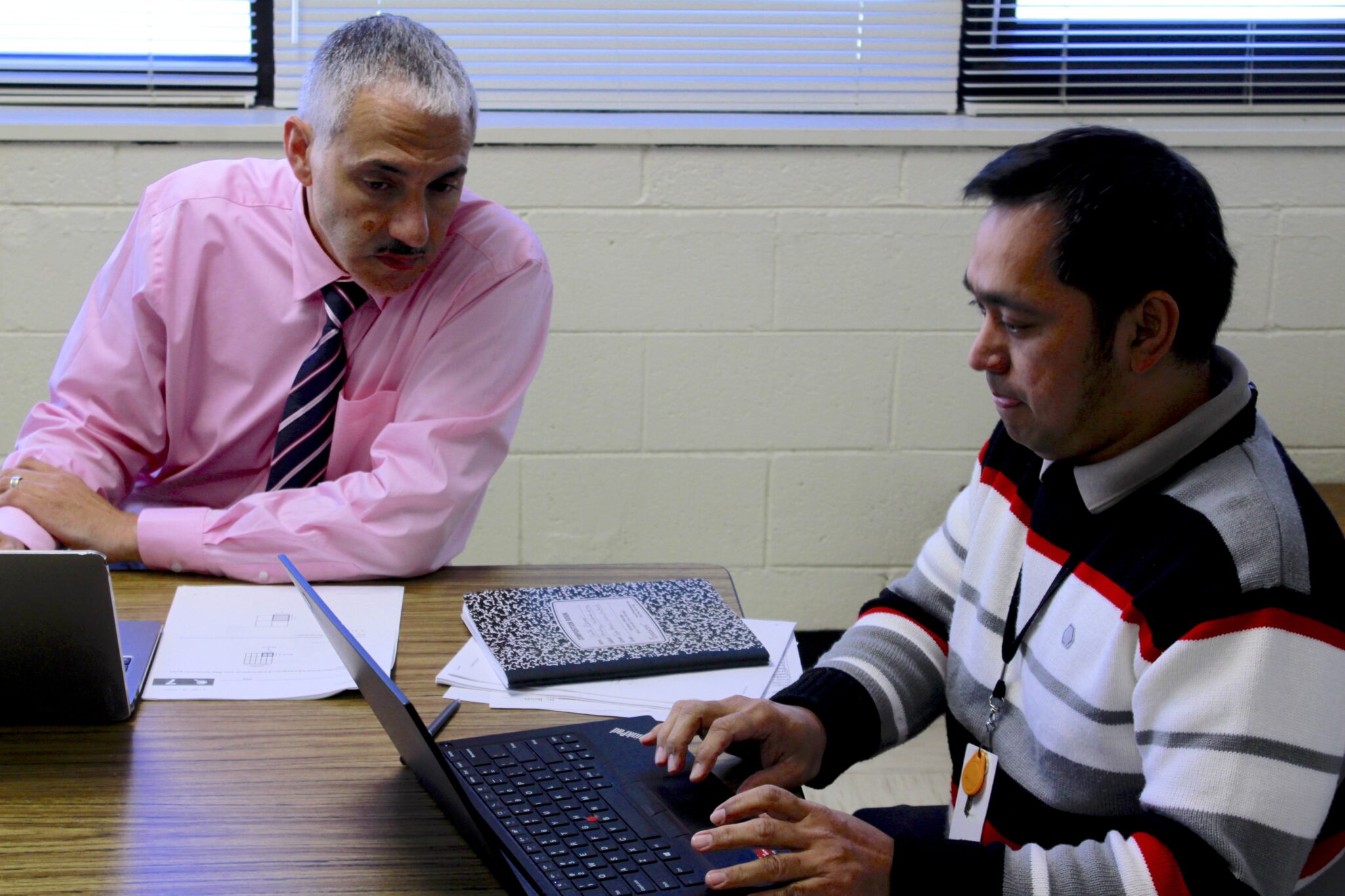
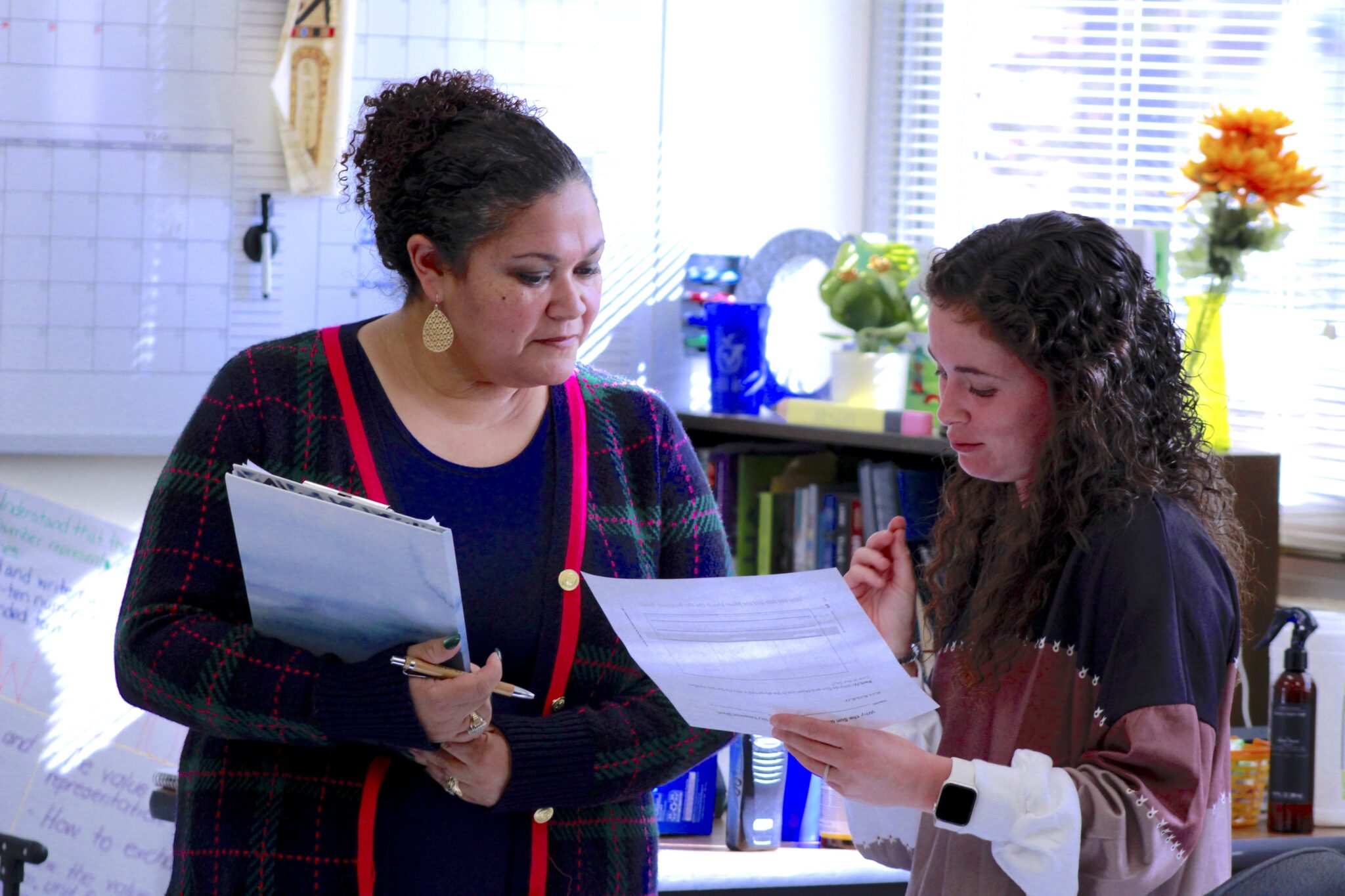
About five miles down the road, Dr. Jessica Floyd, principal of Tanglewood Elementary, demonstrated data-driven instructional coaching by reviewing a lesson with teachers.
“I’ve studied it myself, so I know exactly what they taught leading up to giving the students that paper,” Floyd said, emphasizing her preparation ahead of the instructional meeting. This includes collecting work samples in advance and independently identifying learning gaps.
In the actual data meeting with her instructional team and teachers, Floyd identifies the target standard that the lesson plan is aligned with. Floyd then utilizes a “know and show” chart to help teachers unpack what students need to “know” going into the lesson and the expectation for students to be able to “show” at the completion of the lesson, based on the standard.
Floyd proceeded by assessing work samples with the teachers to identify trends and misconceptions, specifically across classrooms within the grade level. Together, they further explore how to address trends that align with the expected outcomes of the standard.
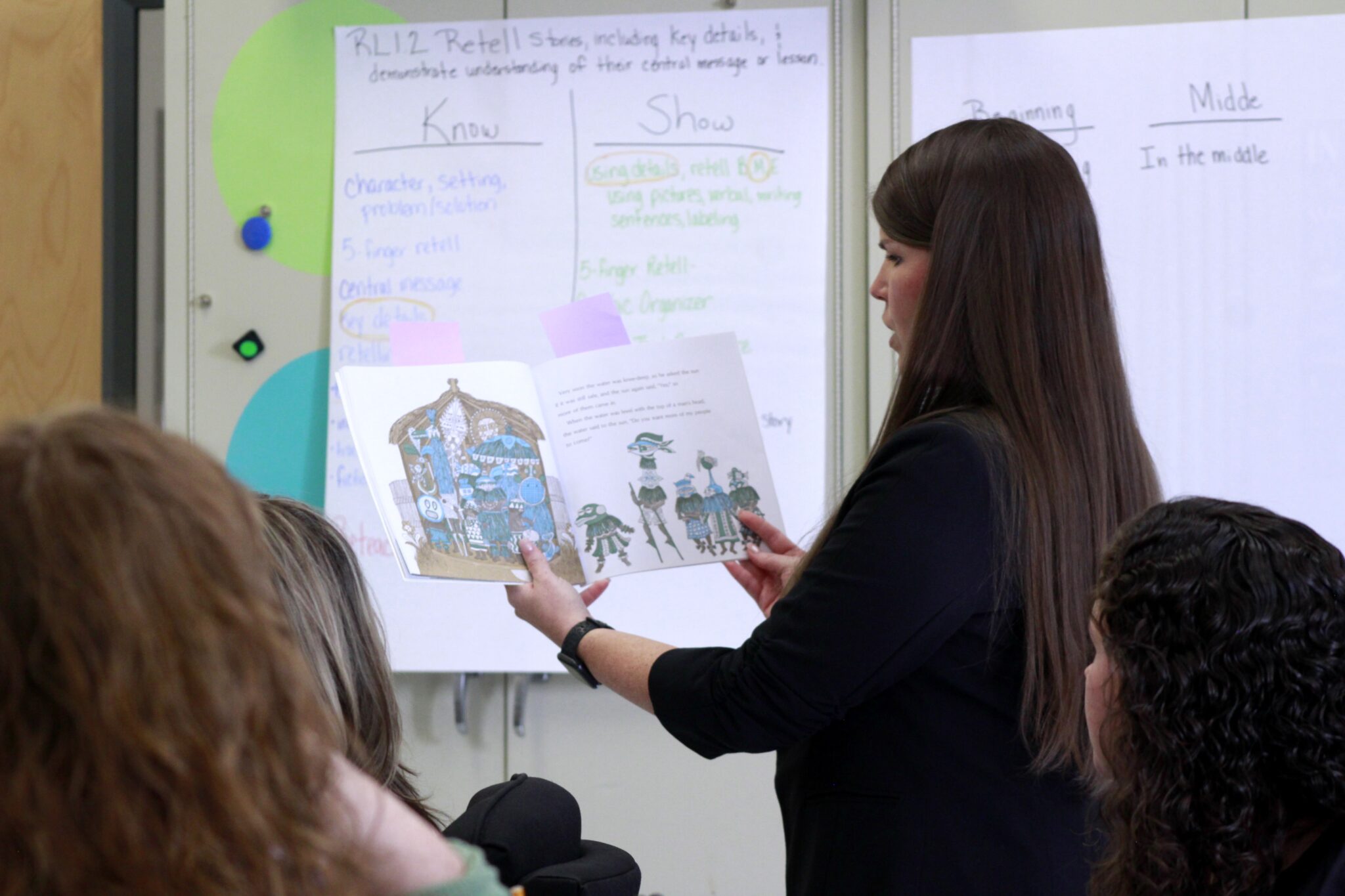
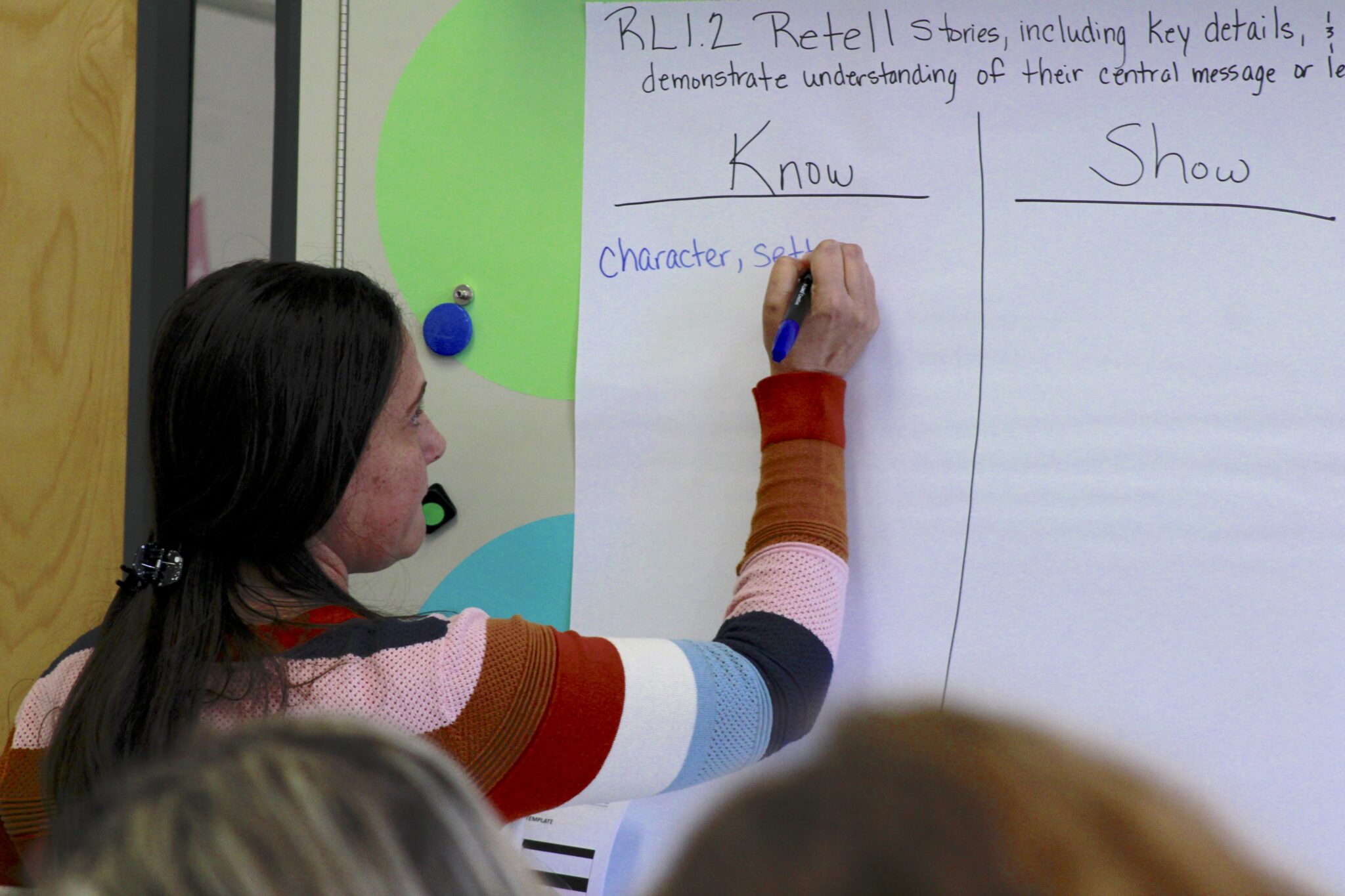
Following, Floyd picked up the children’s book and modeled how a reteaching of the book may look. The grade level discussed the models, their own ideas for reteaching, and then participate in one-on-one role play practice with members of the instructional team. From there, Floyd set forth the timeline for the reteaching, which would present the opportunity for assessing that specific standard through an observation.
Floyd is adamant that the model is a tag team effort with her assistant principal, Kayla Hunt, and the academic coach, Melissa Cox. “I did have to learn quickly that I had to lean into these two ladies quite a bit,” Floyd said. “We continue this cycle. Every week we do this, we meet together as a team.”
Last year was Lorelaine Cortes’s first year teaching kindergarten at Tanglewood after having spent a decade teaching in the Philippines. “The instruction is really different from what I’ve been used to in the Philippines,” she stated, specifically noting that she was not accustomed to having classroom observations.
While Cortes felt nervous during her the initial observations, she’s come to appreciate Floyd and Cox for their intentionality with coaching. “They’re not there to judge. They support,” she added.
Gracie Moore, a second grade teacher at Tanglewood, stated that the coaching that she received has helped build her confidence as a teacher. “I feel like within Tanglewood and our support staff here, the coaching is never a ‘got you’ kind of thing,” she said. “They just want the best for you and the best for the student, to help you fill those gaps that maybe you don’t see as a teacher.”
Impact of relationship through coaching
Dr. Windy Dorsey-Carr, PSRC assistant superintendent of curriculum, instruction, and accountability, highlighted data from the 2024-25 academic year, sharing that 23 of 36 schools in the district met or exceeded growth expectations. She added that the district saw a 20% decrease in schools that were identified as low performing from the year prior — just one school shy of the district being removed from the low performing list. Student scores also rose in 12 of 15 math and reading assessments.
According to Dorsey-Carr, the impact of leadership initiative has been “ensuring that principals had the support they needed in the buildings to be the instructional leaders in each of their buildings.” By doing so, principals can “focus on truly spending time in the classroom, coaching teachers, and having weekly data planning meetings.”
For Piney Grove administrators Deese and Locklear, coaching has impacted the relationships with their staff and contributed to their growth with instructional support. “I’ve learned a lot, and I’m comfortable now going into a classroom, seeing what that teacher is doing, understanding that I can go around and I can help that teacher with whatever they’re doing,” Deese said.
As for Locklear, prior to being trained by RELAY, he was hesitant to give immediate feedback, opting to wait until planning periods. “Now, we can immediately go to that teacher while they’re teaching, and they can actually get some advice from us in that moment,” he said. “It’s second nature.”
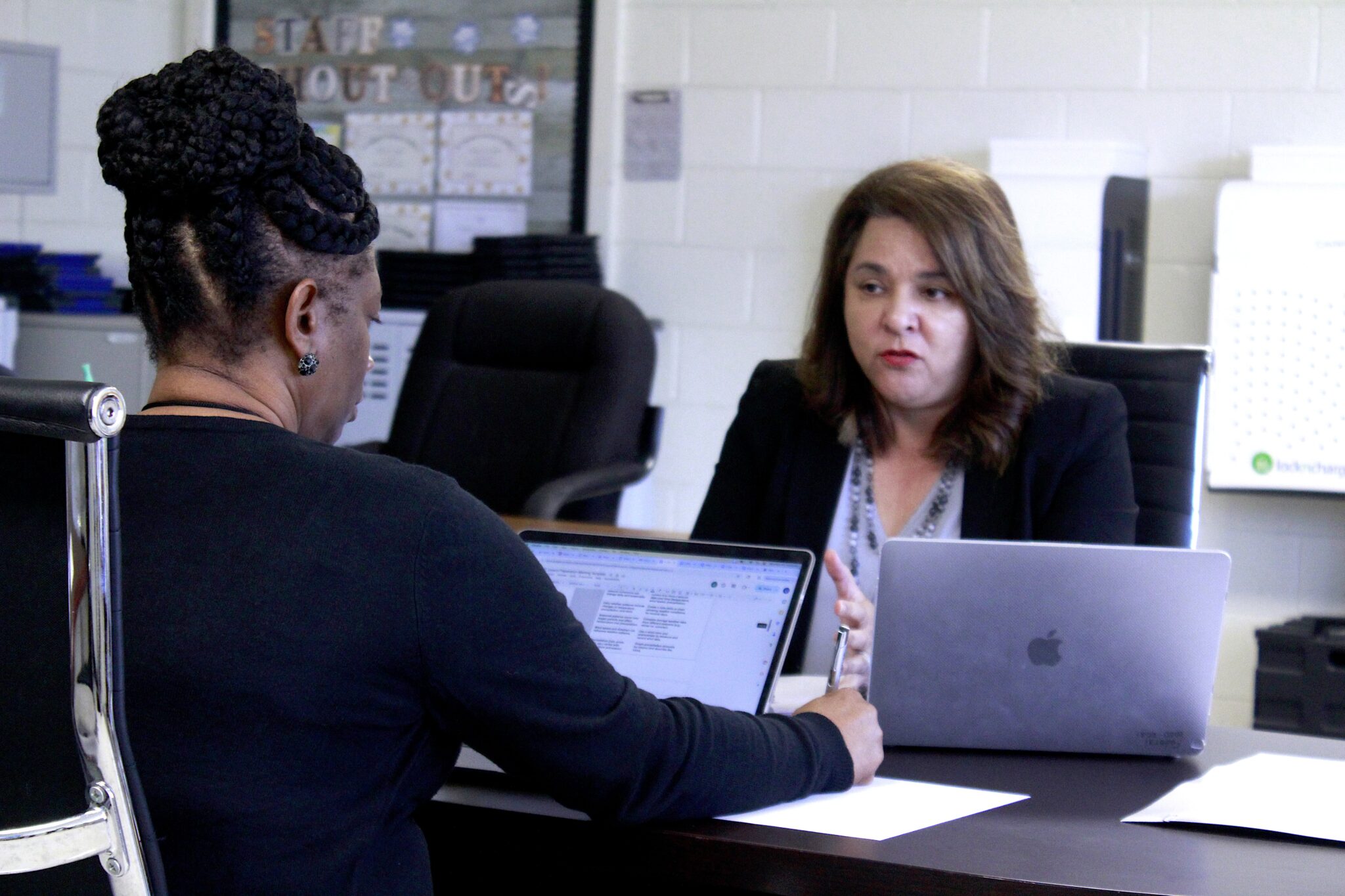
Stefanie Benson, fifth grade English/language arts teacher at Piney Grove, believes that “being visible” is important for administrators. “Being inside and out of that classroom on a daily basis and providing that immediate feedback is the most beneficial thing that we can get as a teacher,” she said.
Benson stated that the coaching and feedback has changed the structure of how she teaches, specifically allowing her to identify gaps in learning for her students.
“We’ve all heard that phrase ‘It takes a village to raise a child.’ The coaching is part of that immense village that we need,” she said.
Recommended reading