
In Camden County, literacy work is changing outcomes and restoring teacher confidence

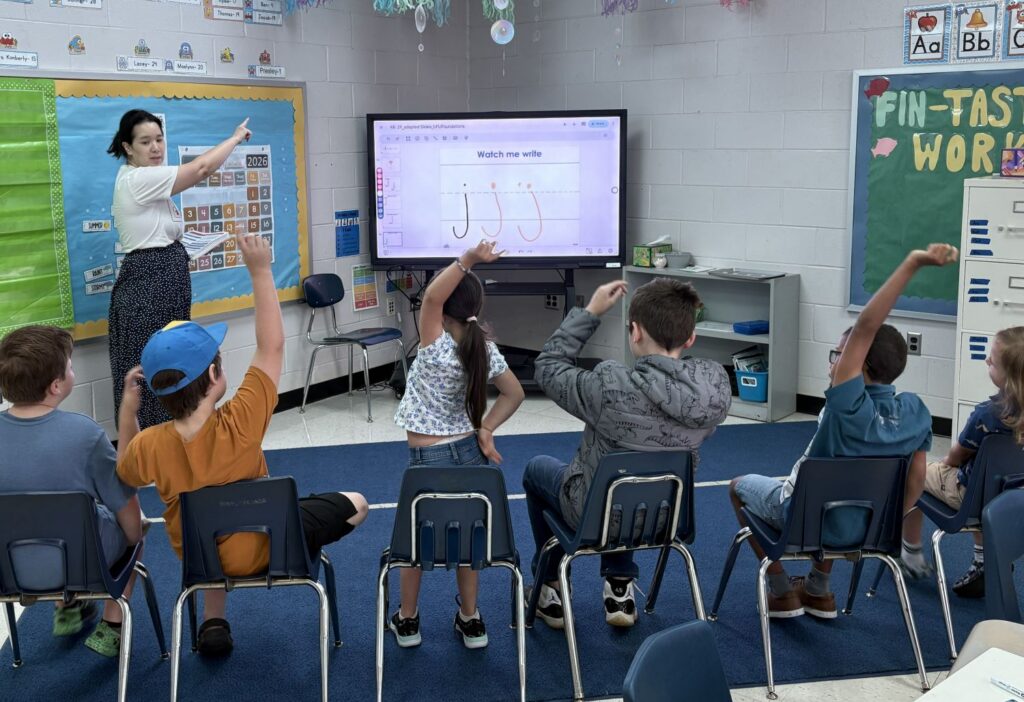
In classrooms across Camden County Schools, the science of reading is not just a professional development initiative. For beginning teachers like Kimberly Klingaman, it became personal.
“I truly didn’t know how many kids didn’t know how to read until I came into the school system,” Klingaman said.
As a second year beginning teacher serving K-5 students with significant needs at Grandy Primary School and Camden Intermediate School, she remembers feeling extremely overwhelmed. “I often went home crying,” she said. “I wanted to do good for the children.”
 Sign up for the EdWeekly, a Friday roundup of the most important education news of the week.
Today, she speaks with confidence instead of fear. After a recent classroom visit, Karen Wood, Northeast regional literacy consultant with the Department of Public Instruction’s (DPI) Office of Early Learning, remembered telling an early literacy specialist, “I think I’m going to cry.” Wood continued, “We always hear that according to research 95% of students can learn to read if provided appropriate instruction. I was able to witness it in Kimberly’s classroom.”
However, this transformation did not happen overnight, nor did it happen alone. It happened because Camden County Schools focused on prioritizing training, coaching, collaboration, and protected instructional time. Add in a passionate teacher like Klingaman, determined to change the lives of every student on her roster, and the outcome makes what seems impossible to most, possible.
Building buy-in before large-scale deployment
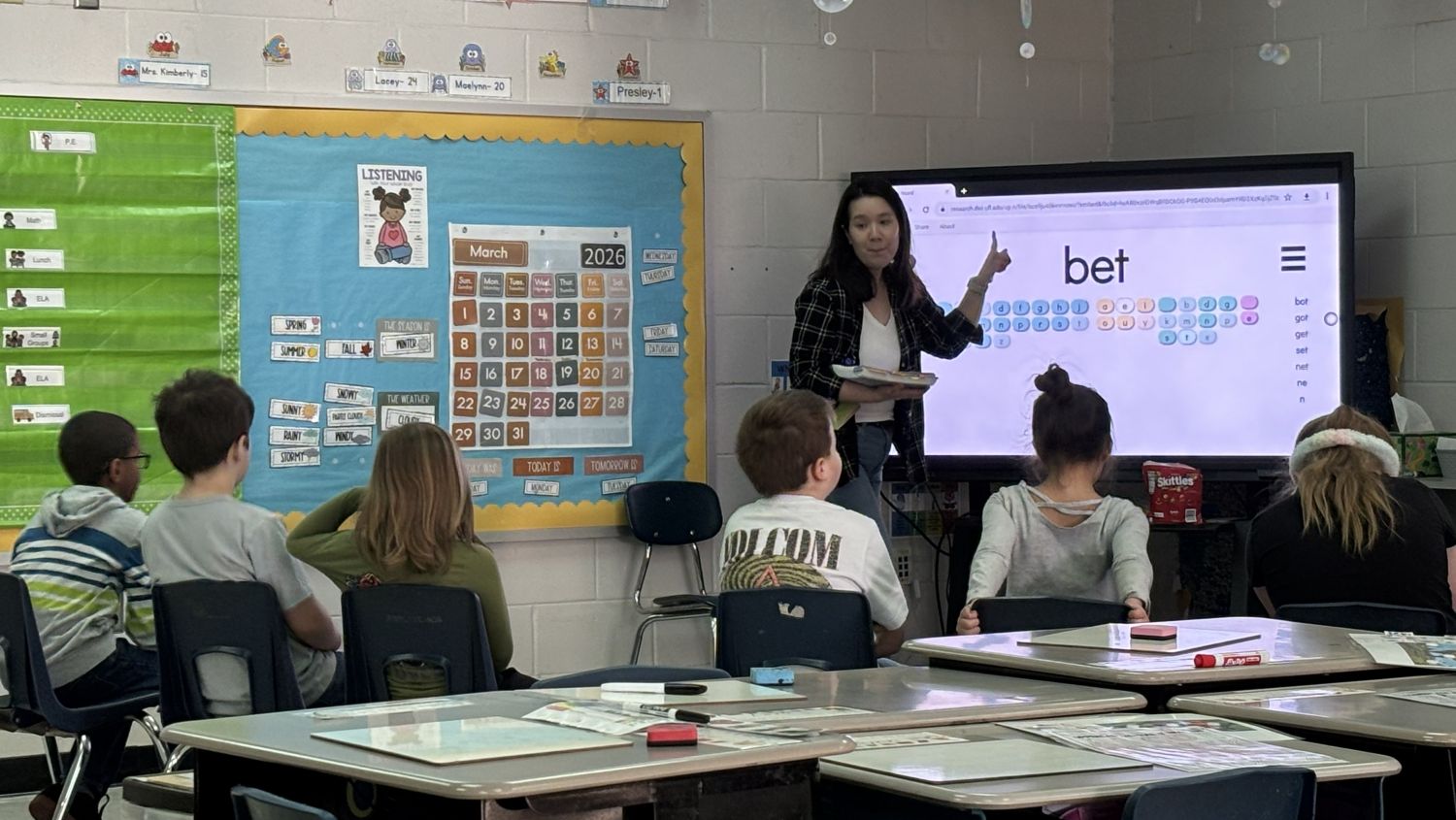
Camden County’s literacy shift began with a committed investment in Language Essentials for Teachers of Reading and Spelling (LETRS) for general education teachers, Exceptional Children teachers, interventionists, and administrators. As a result of their new learning, the district piloted UFLI, a structured literacy program grounded in the science of reading, during the 2023 Summer Reading Camps.
Based on the initial interest and success, teachers were provided the opportunity to choose between UFLI or continue using the previous phonics curriculum during the 2023-24 school year. There was one caveat: implementation fidelity and student data would be closely monitored. This strategy created a unique level of buy-in and accountability. Final data validated the need for a districtwide shift to UFLI curriculum beginning effective the 2024-25 school year.
Kelly Hoggard, chief academic officer, said the district intentionally began by focusing on administrator support first.
“The district spent a lot of time ensuring administration had a deep, meaningful understanding of the program and the articulation from pilot to what those steps will look like as we continue to work through clear schoolwide expectations,” Hoggard said.
That investment changed how principals support instruction and their overall level of content knowledge, which makes a credible difference as they conduct formal and/or informal observations and provide feedback for next steps. Principals understand the curriculum well enough to step in and deliver lessons if necessary.
District and school leaders have committed to honoring a protected block of time each day for UFLI, outside of a true emergency.
At Grandy Primary School, literacy instruction is organized through a unified daily phonics block, embedded within a 120-minute literacy block that also includes core instruction, skill-based small groups, and intentional writing instruction. While UFLI anchors foundational reading instruction, the district uses a more comprehensive curriculum to strengthen language comprehension skills.
Investing in sustainability, not short-term implementation
Camden County has strategically prioritized state literacy funding to support literacy materials, UFLI resources, and ongoing professional development. Rather than relying solely on outside training, the district developed teacher leadership pipelines for sustainability.
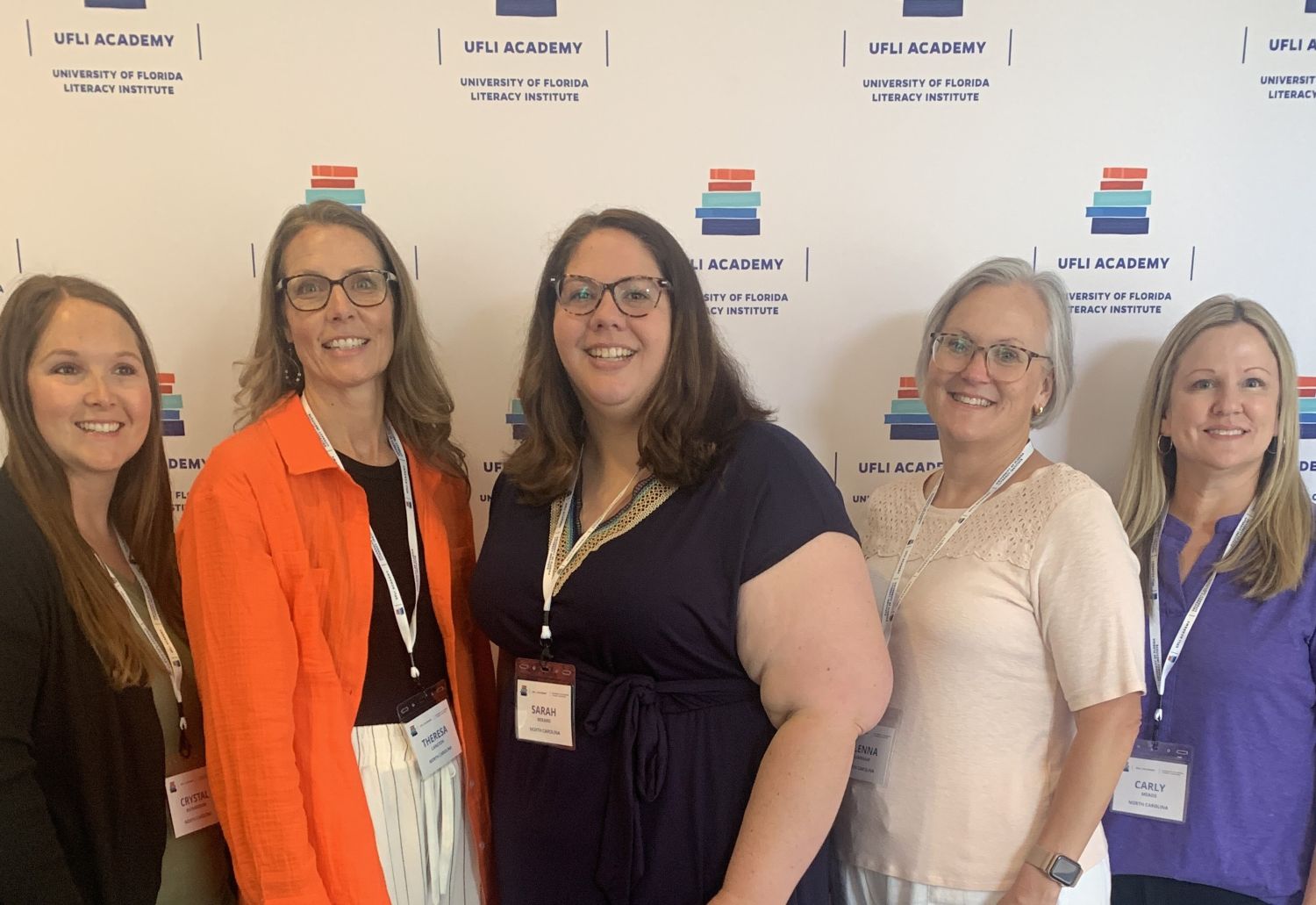
Last summer, Camden selected a cohort of educators to attend the UFLI Academy and return as teacher leaders who are capable of providing real-time coaching and support inside schools. A second cohort will attend this summer, while the original cohort expands its leadership responsibilities.
Educators representing varied roles, experiences, and perspectives were selected to broaden systemwide capacity.
Support has also expanded beyond the classroom teachers. Instructional assistants have also received training to support literacy instruction aligned to research.
Now, assistants have started requested opportunities for more in-depth learning, comparable to classroom teacher training, so they are able to confidently step into instructional roles when needed. This group is being considered in the development of a third training cohort.
A coaching cycle that changed a classroom
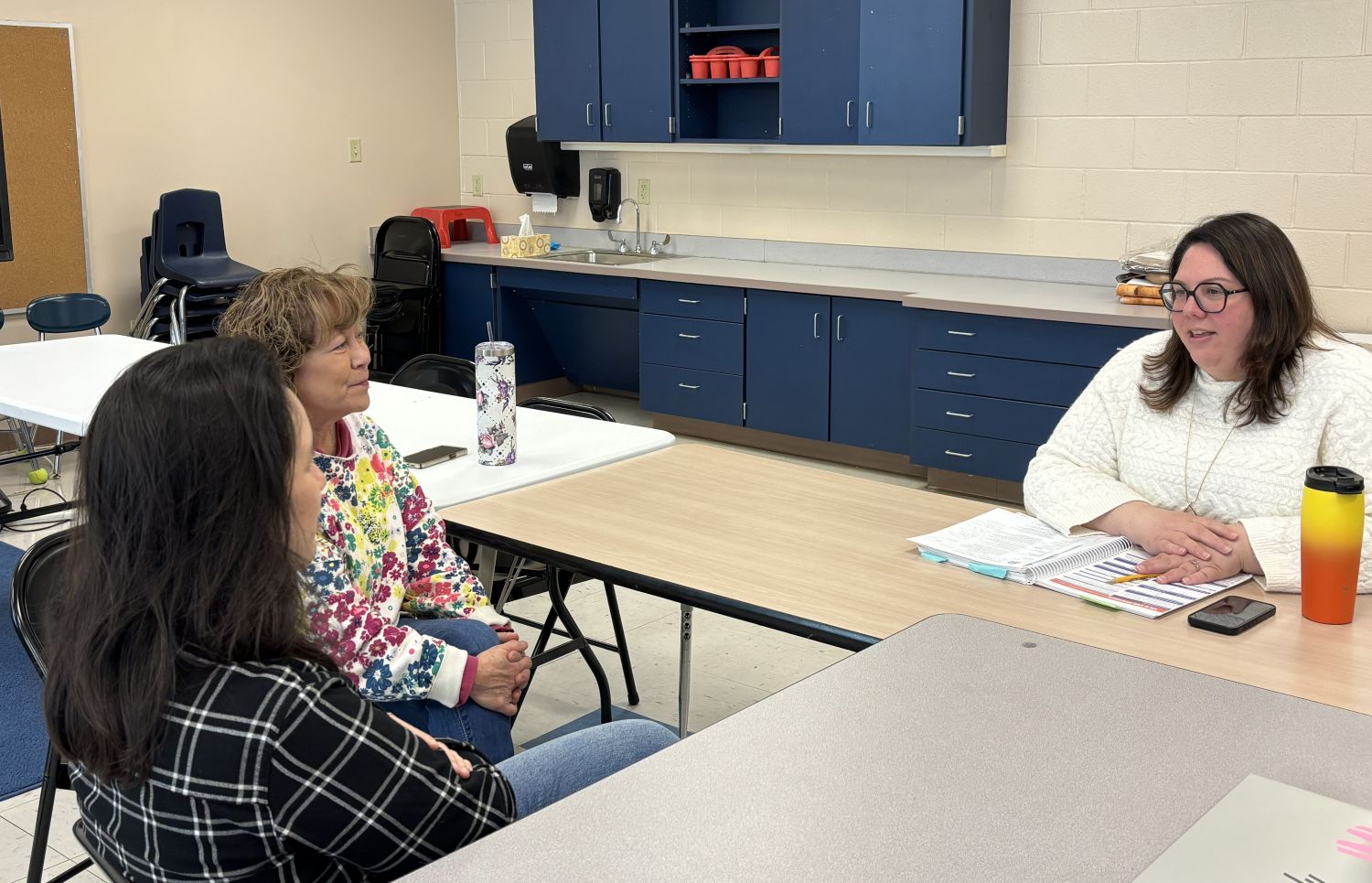
After participating in UFLI professional development, Klingaman reached out to the early literacy specialist, Sarah Berard, asking for additional coaching support. Berard shared an initial resource from the AAC in the Cloud 2023 Conference webinar session by Kate Ahern, titled, Literacy and Learners with CCN using UFLI, that included ideas on how to modify lesson steps for different learners.
Together with Klingaman’s mentor, Camden’s Behavior Support Specialist Angela Eaton, the team began reviewing instructional adaptations and reworking lessons to meet the needs of students in her classroom. What followed was a coaching cycle built on daily collaboration.
Berard said Klingaman continuously revised lessons until every student could meaningfully engage.
“It was never about one and done for her,” Berard said.
The coaching process moved from modeling lessons to co-teaching and eventually to structured observations with ongoing feedback and refinement. The team also developed a gradual release framework designed to balance support with growing independence. The result is a classroom that demonstrates what inclusive literacy instruction can look like when systems align.
“Her classroom is a model for other educators and proof that every student, no matter their challenges or disabilities, can learn to read when someone is willing to put in the effort and eliminate the excuses,” Wood said.
She described Klingaman as “masterful” in engaging students through multiple learning modalities while serving children with significant needs across grade levels.
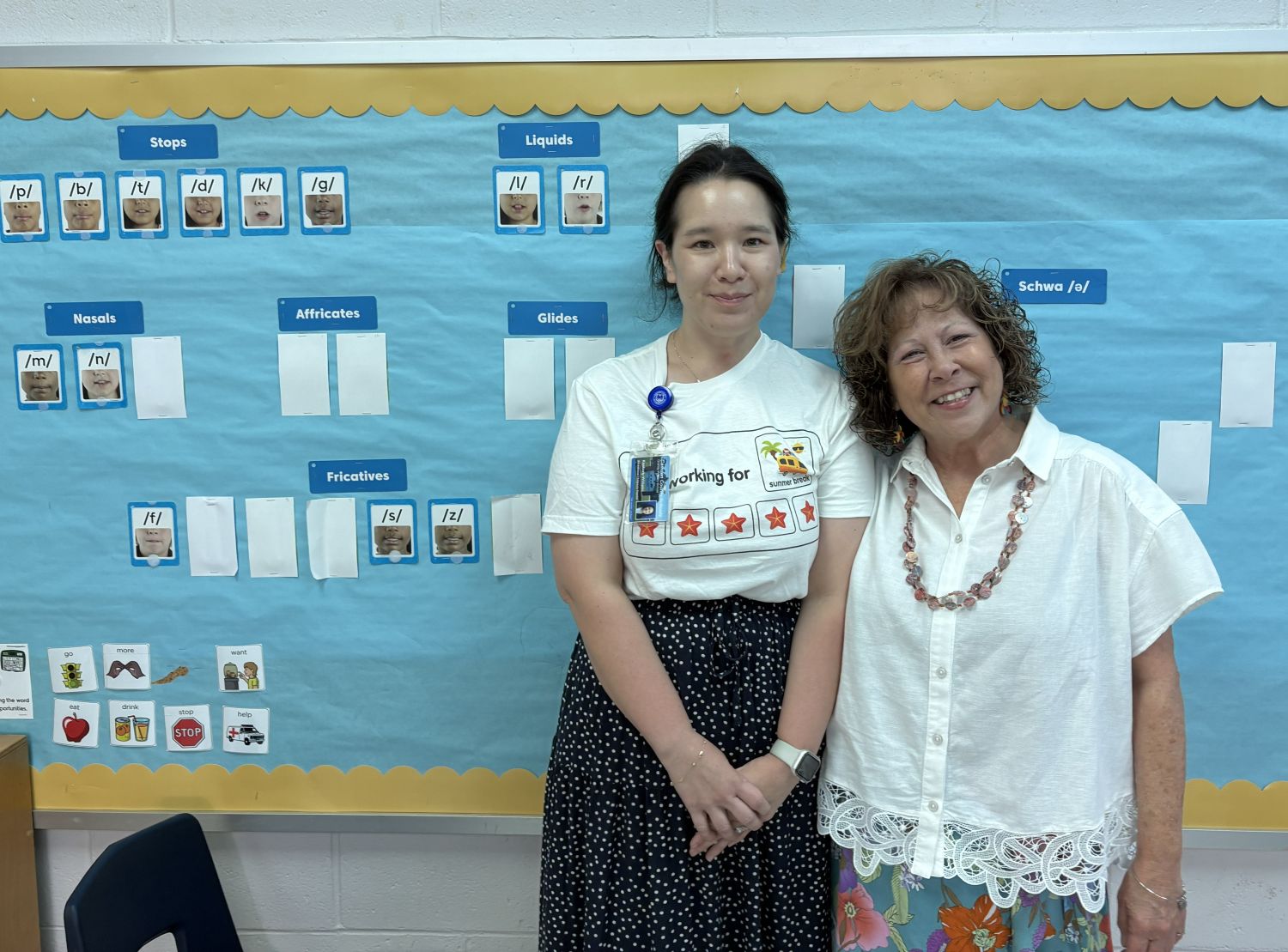
More than student outcomes
Camden’s work also highlights another challenge often left out of literacy conversations: teacher and student confidence.
The Office of Early Learning has intentionally focused on strengthening coaching cycles statewide, believing that instructional support systems directly influence both educator effectiveness and retention. Camden is already seeing quantitative evidence that aligned coaching structures and clear implementation expectations improve instructional practice.
However, some of the most meaningful evidence is harder to quantify. Klingaman, for example, says she no longer feels alone.
“Because of Sarah and Angela, I know how to plan and teach UFLI for all of my students and have the confidence to make it happen,” she said.
 Sign up for Early Bird, our newsletter on all things early childhood.
Additionally, she, and the children’s parents, also see confidence growing in her students too, both at school and at home. Unfortunately, there are no state measures to capture and report teacher or student confidence. However, if every teacher had access to such coaching cycles and partnerships, with protected time and maximized resources, we may see decreased teacher turnover and burnout.
For Wood, Camden’s success can also be attributed to their strong commitment to collaboration.
“They have Sarah, a strong early literacy specialist, working with Kelly, a strong district point of contact, which clearly transfers to the school level collaboration between the early literacy specialist, mentor and teacher,” Wood said. “There are so many levels and layers across systems that if we’re not communicating clearly and collaborating consistently to align the work, we are spinning our wheels.”
She believes the partnership model taking shape in Camden could serve as an example statewide.
“It would be amazing to replicate the genuine partnership modeled in Camden from the state to the classroom,” Wood said, “where everyone is on the same page as they pull together to do what is best for kids.”