
History, education, and reflecting on 250 years of America with the people of ‘Little Washington’
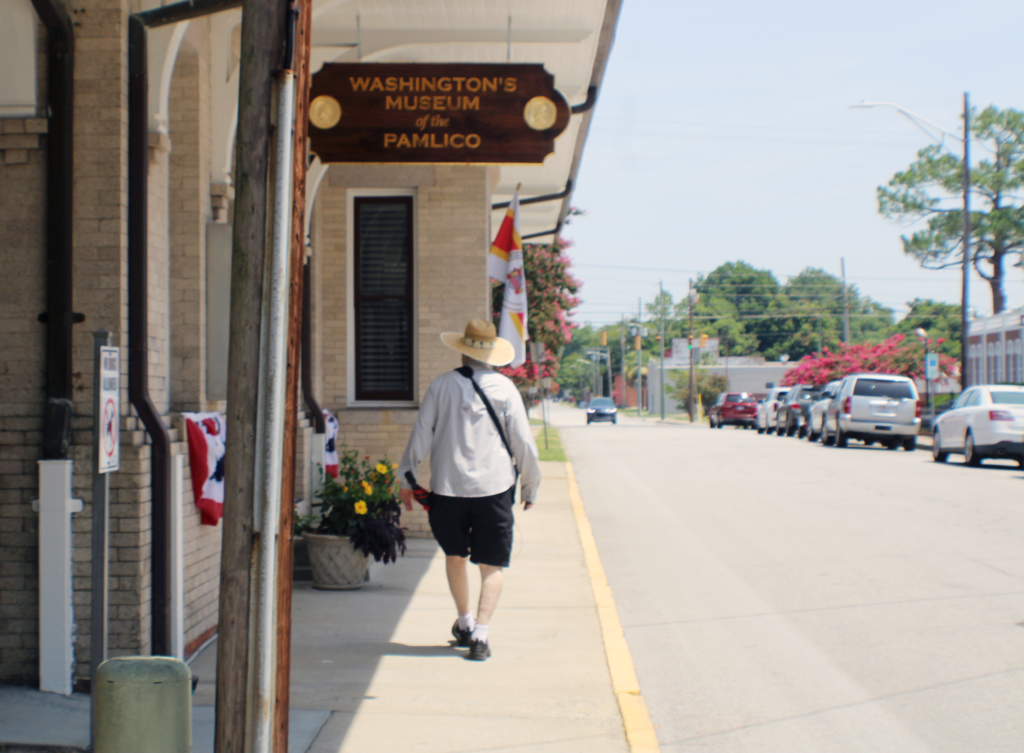
Many North Carolinians flocked to Raleigh on July 4 to commemorate 250 years since the signing of the Declaration of Independence in 1776. However, history was also being made in the coastal city of Washington, North Carolina 250 years ago. The city was the first to be named after President George Washington and was also established in 1776.
During the weekend of July 4, EdNC asked the people of the city known as “Little Washington” what they want history education to look like for the next 250 years. Here are some of their stories.
Museum of the Pamlico
If one were to drive straight to the downtown waterfront, you might be greeted by librarian Stephen Farrell — wearing a tricorn — inside the new Washington Museum of the Pamlico.
The museum opened in downtown Washington on July 3. The idea came after the George H. and Laura E. Brown Library was running out of space for the artifacts they were collecting in their history room. The desire for a museum dedicated to Washington stems back all the way to the 1940s, but work officially began on the museum in 2020.
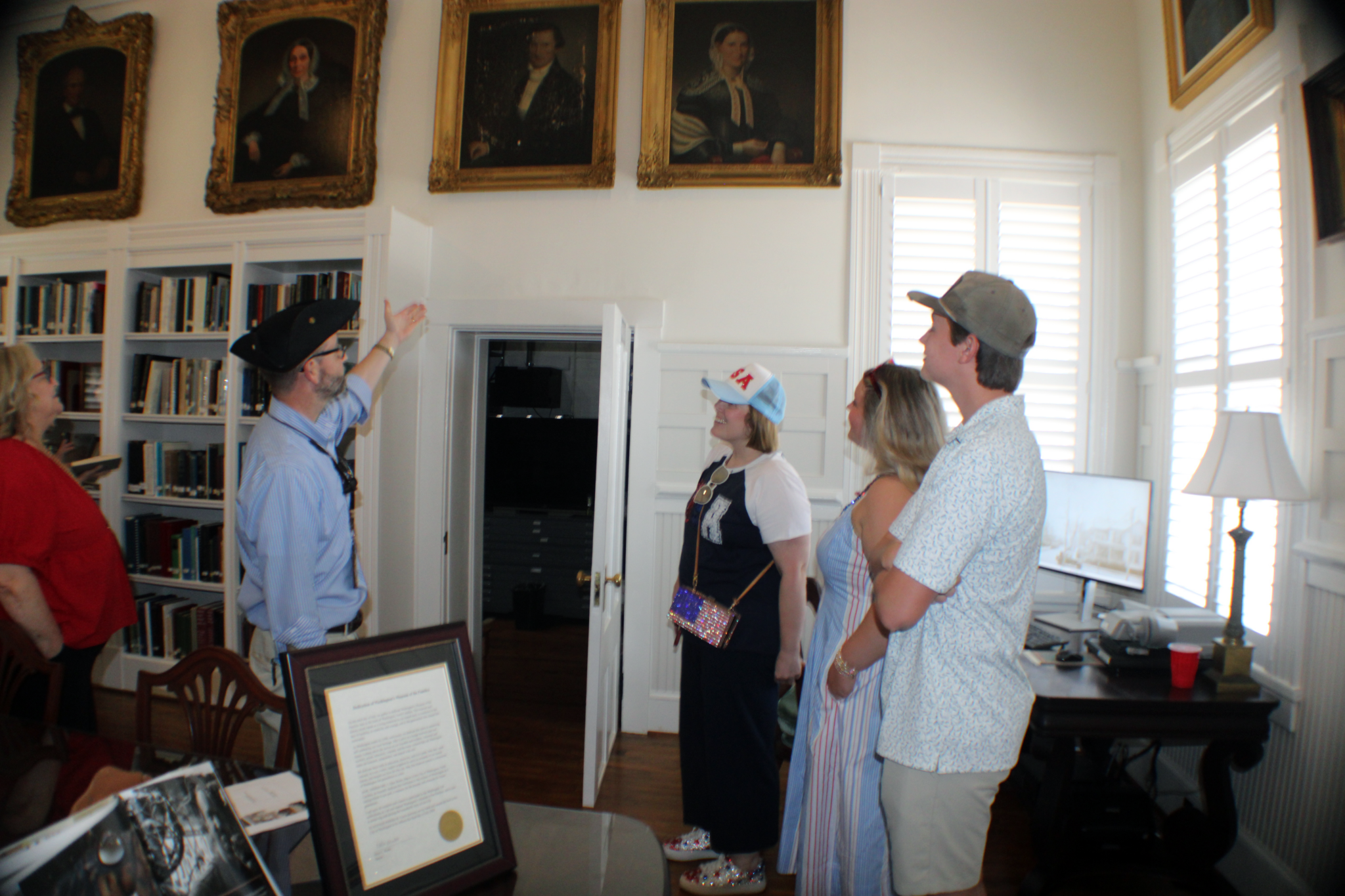
Now, hundreds of books, portraits, and artifacts from the city’s history live at a renovated Atlantic Coastline train depot on Gladden Street. The space provides them with nearly triple the square footage they previously had, library director Kim Davenport said.
Davenport described ways that the new museum is expanding educational opportunities for the community. They’ve already hosted tours of the space for middle, high school, and college students. She said they’ve also already had visits from East Carolina University students doing research.
“We’ve already seen them (young people) get excited about what’s here: the swords, the cannonballs. And once you get them in the door with those cute fun things, we hope they dive in deeper,” Davenport said while greeting visitors to the museum on July 4.
The new museum also frees up space for the library to host more children’s programming. In the future, no one will have to fret about fitting 60 children in for story time with George and Martha Washington, Davenport said.
Much of the planning and curation for the museum was spearheaded by Farrell. He hopes that people of all ages come to see what Washington has put on the map over the past 250 years.
“This (museum) holds Washington, Beaufort County, and a lot of our Pamlico River Basin’s history,” Farrell said. “The cultural history, the history of the land, the people that were here — and it’s free to the public. We’ve got everything from 1685 to current, and it holds all of our area’s treasures.”
 Sign up for the EdWeekly, a Friday roundup of the most important education news of the week.
Underground Rail Road History Museum
In a park around the corner from the museum sits an orange railroad cart. The morning of July 4, Leesa and Milton Jones could be seen setting up signs explaining the Transatlantic Slave Trade and getting into their costumes before they officially opened at 11 a.m.
The railroad cart is the home of the Washington Waterfront Underground Rail Road History Museum, an international destination for those interested in the stories of enslaved people passing through Washington seeking their freedom.
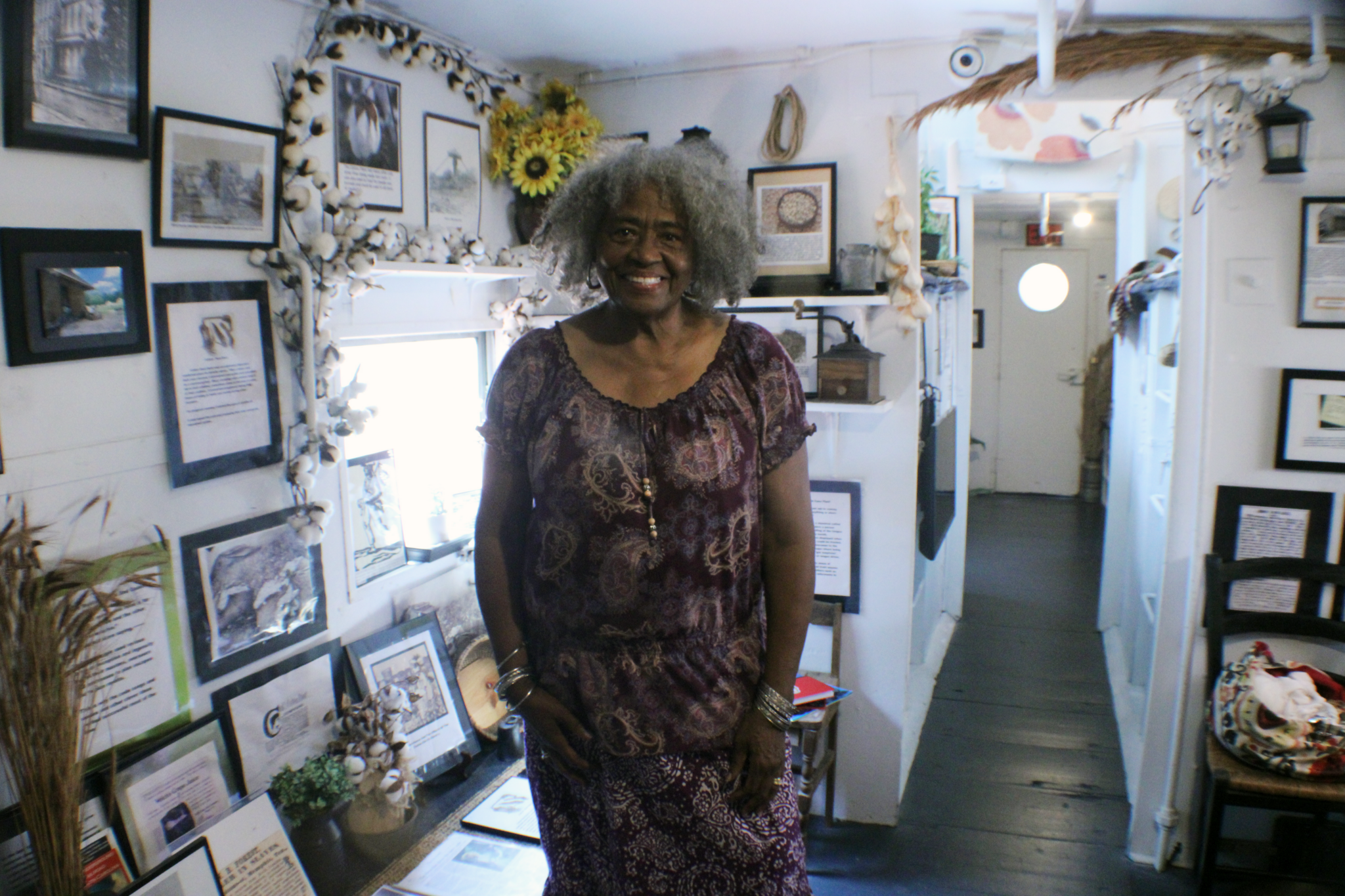
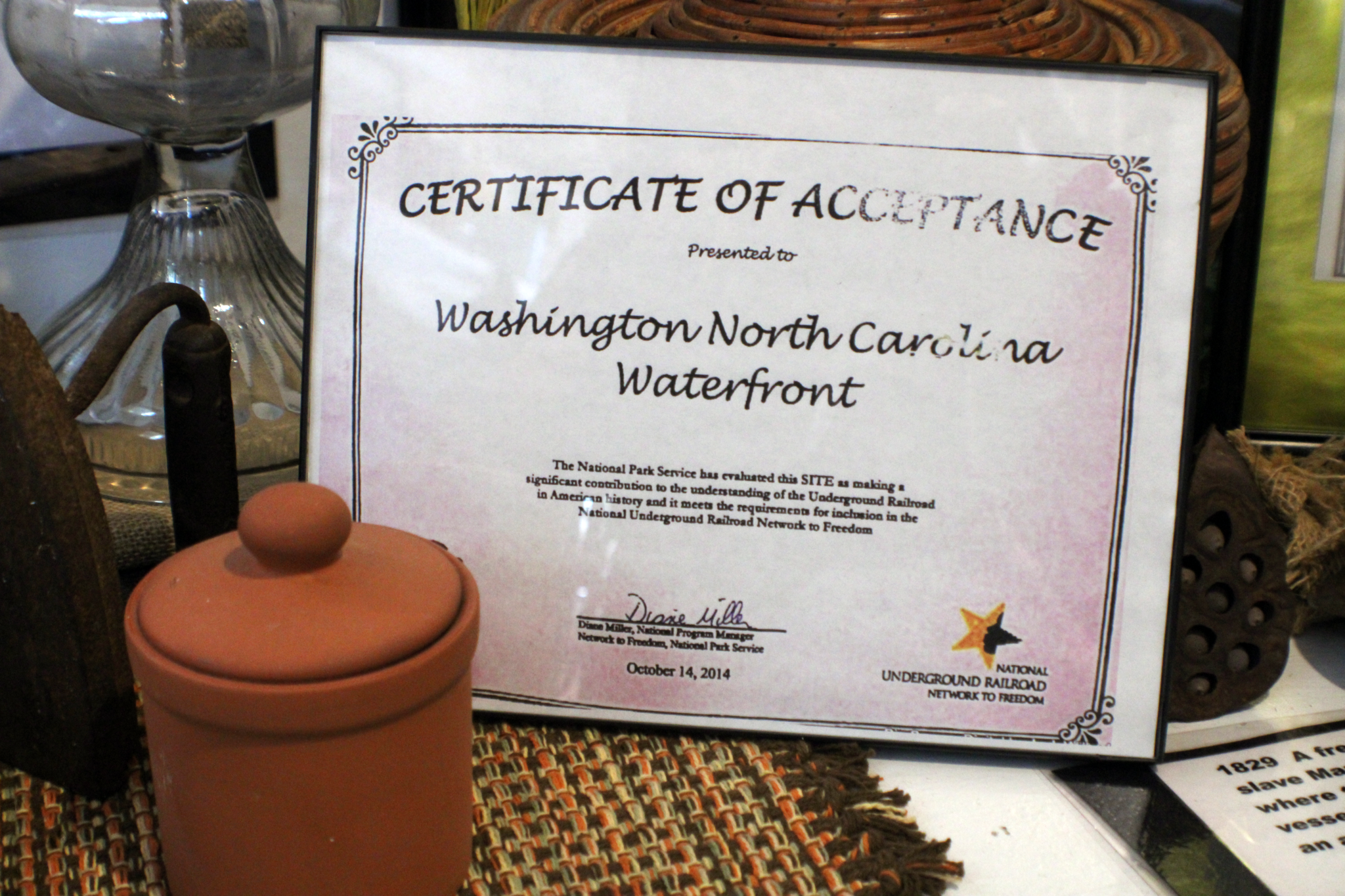
Leesa Jones said her passion is for all people to see themselves in American history. Growing up in Washington, Mrs. Jones said she only received tidbits of the information that she now displays in the museum. What is now a museum spurred from the growing interest her and her husband got for their historical walking tour.
The interior of the railroad cart is littered with old newspaper clippings, photographs, staged artifacts, certificates, and other documents describing the town’s role in the abolitionist movement.
The Joneses visit schools across eastern North Carolina and also have school groups come to them. They share the history in a way that is palatable for each grade level, Jones said.
For example with preschoolers, she said the theme is “sharing and caring.”
“The Underground Railroad was about people helping people, and so to be able to pass that knowledge on age-appropriate, it is a big plus, not only for them to learn history, but to learn history accurately and see themselves in,” Jones said.
As a former preschool teacher, she expressed the importance of “planting those seeds early,” so children do not have to grow up not knowing their history as she did. Gamifying the information with younger students turns them into sponges, Jones added.
Black Oral History project
Setting up shop outside of the museum was Clark Curtis, who is spearheading the Black Oral Histories of Beaufort County project under his nonprofit, Odyssey For Democracy. With support through a grant from North Carolina Humanities, he has recorded 31 podcasts of stories of Black residents in Beaufort County and beyond. He’s heard tales from residents who lived through forced school integration projects.
When asked what he hopes to see in history education for the next 250 years, Curtis said it’s important for students to hear such stories.
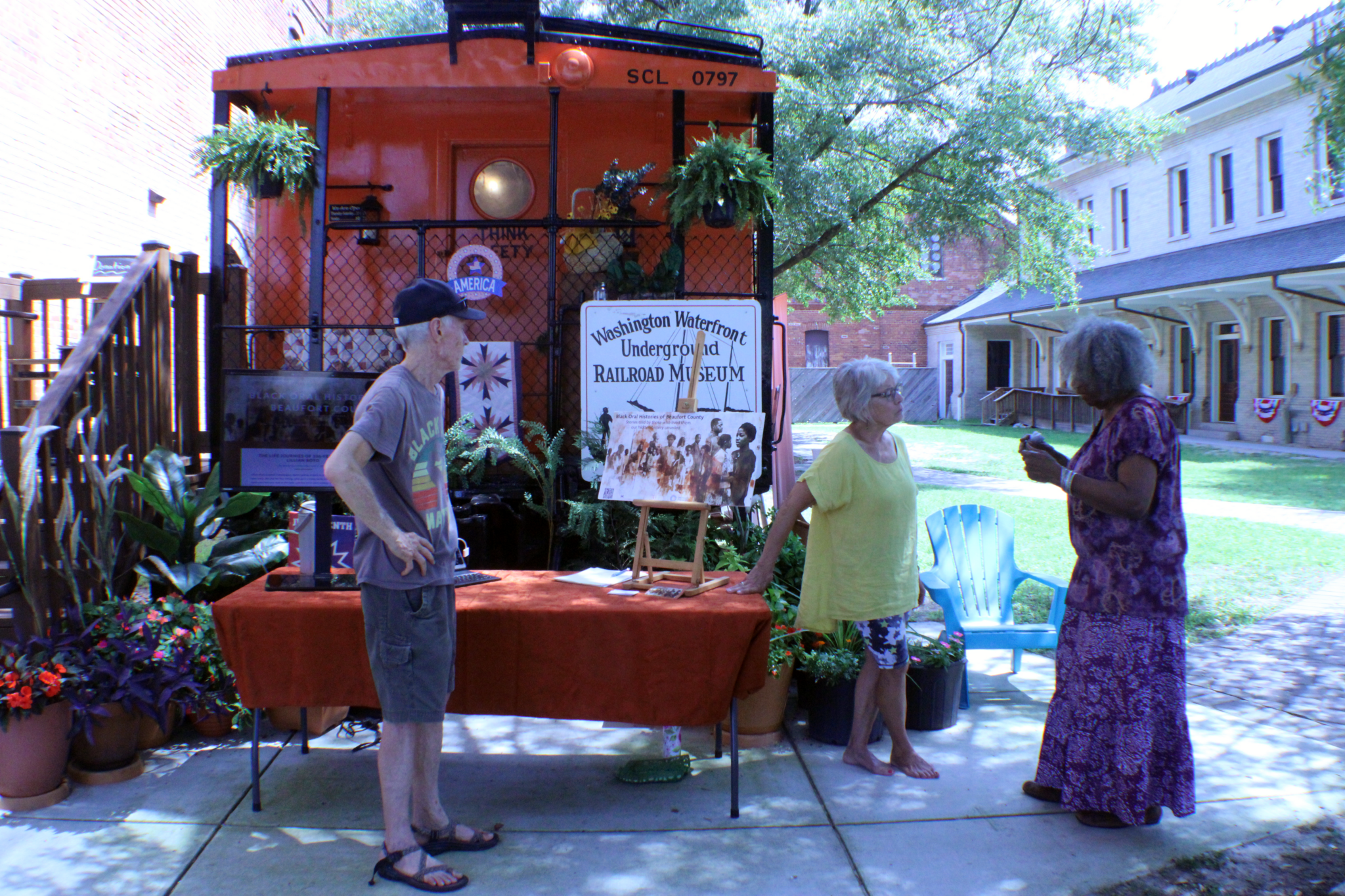
“You can read about it, you can watch a movie about it, but to sit right across from somebody who lived it is totally a different experience,” Curtis said.
In the future he hopes to include students in the project, and mentor them through the interview process.
Read more on Beaufort County
More on the future of literacy and education
Also in the park was Raven Cathey, a Beaufort County Schools educator who was also tabling on behalf of the local chapter National Association for the Advancement of Colored People (NAACP).
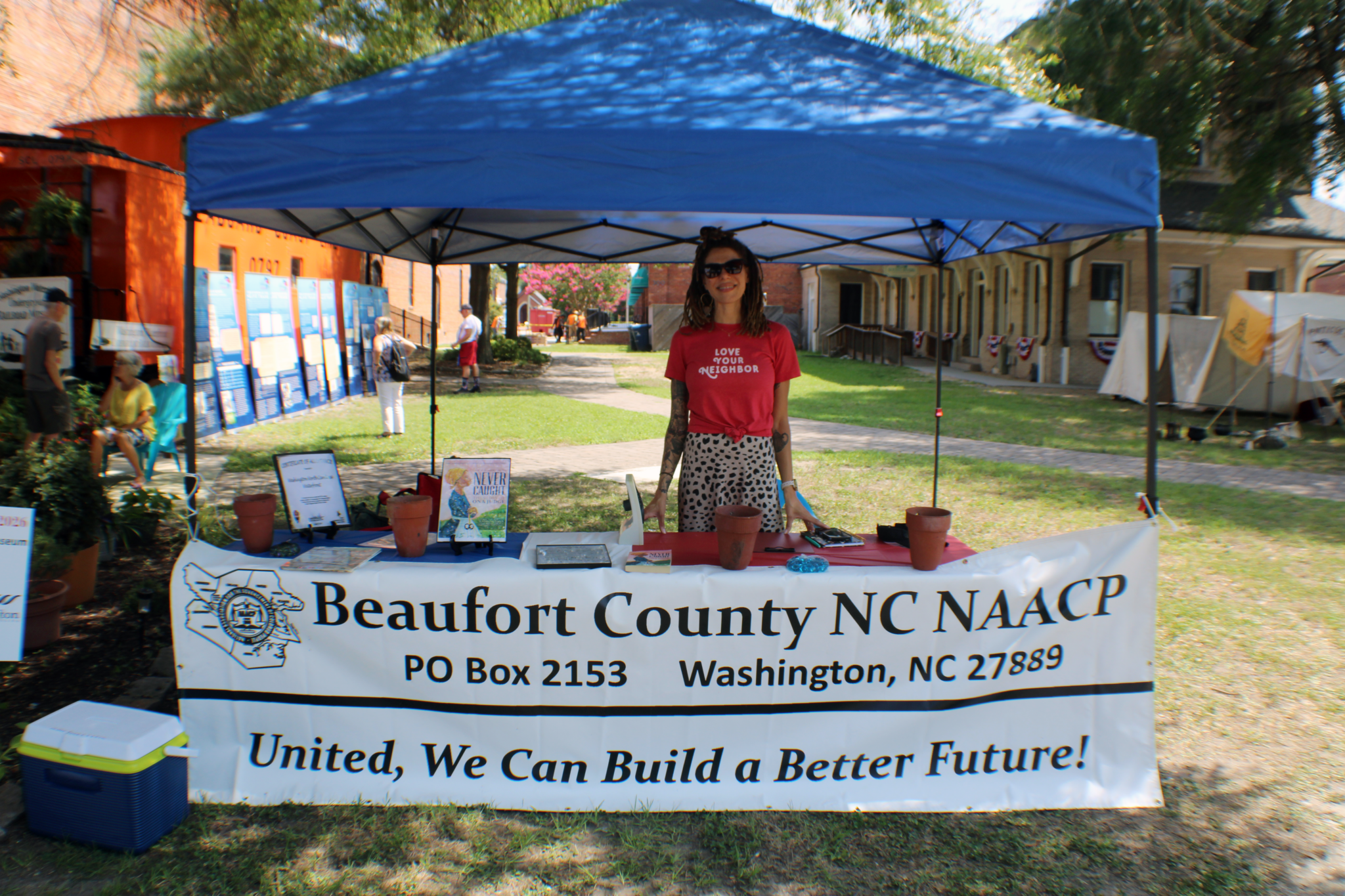
When asked where she would like to see history education go in the next 250 years for U.S. students, Cathey said it’s important to highlight multiple primary sources of information from the past, and teach students to recognize that history is “not just one story.”
“That can be from art, it can be from newspapers, from journals, anything to show kind of what those views are,” Cathey said. “We also can look at some of these sources, like today versus 50 years ago, we can look at the same document and see it in a totally different light.”
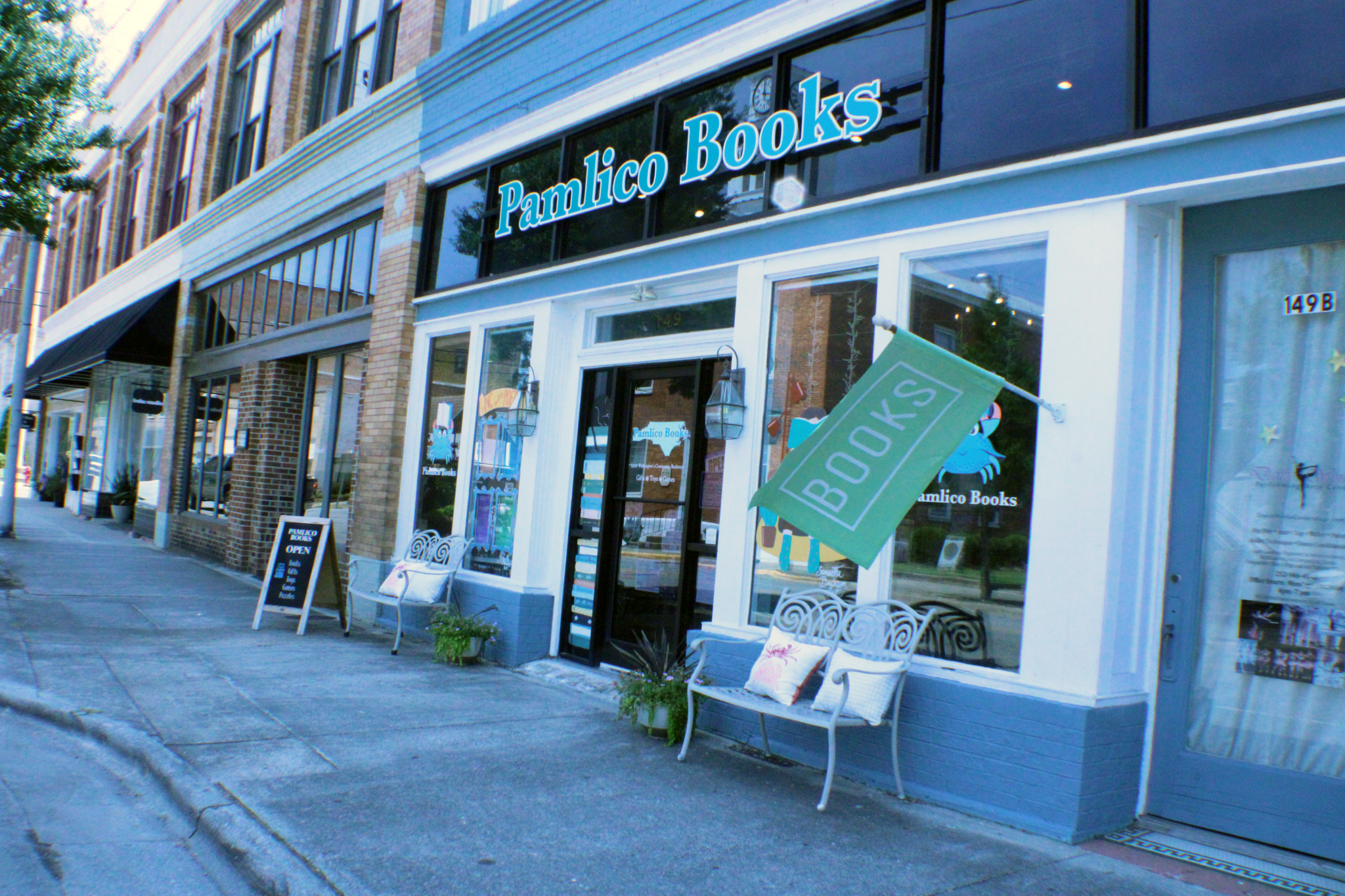
Another person who was passionate about stories was bookstore owner Lindsay Hall. The biggest thing she wants for education for the next 250 years is limiting the use of artificial intelligence (AI) in writing and reading.
“I just hope that we continue to actually write books — people actually write their own books and illustrate their own covers,” Hall said. “And that when kids are reading, they’re actually holding books in their hands and using their imaginations, instead of AI stuff and technology.”
Despite the heat, families were still seen along the waterfront waving American flags and visiting other historical sites and businesses to commemorate Independence Day. Some America 250 events will be going on for the rest of 2026.
To learn more about how the occasion was recognized in “Little Washington” and beyond, visit the state’s America 250 website.