
FutureWork: The 31st Annual Emerging Issues Forum
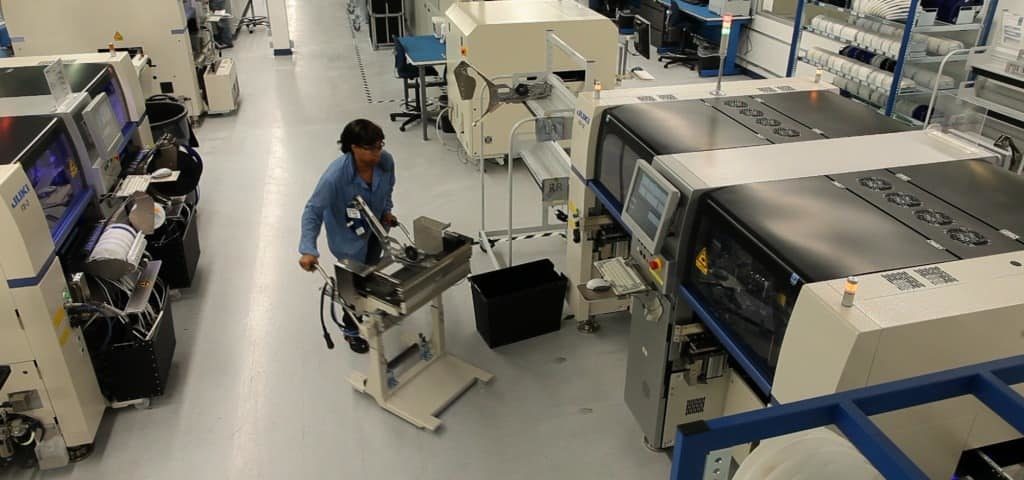

North Carolina faces an enormous “FutureWork” challenge as two big trends converge: the “rise of the robots” means that automation will significantly change or eliminate more and more jobs, and meanwhile our state’s demography is shifting rapidly as we age, grow more diverse, and our workforce welcomes more women.
Click here to take a quiz about FutureWork in North Carolina.
The Institute for Emerging Issues (IEI) has developed the FutureWork Disruption Index for North Carolina, a novel statistical measure of relative exposure to the disruptive impacts of technological unemployment and demographic change for North Carolina’s counties and regions. We provide Index values for NC’s 100 counties and seven economic development regions.
The Index is designed to spark conversation and encourage serious attention to the urgency of the FutureWork challenge, which is the focus of the upcoming Emerging Issues Forum, FutureWork, on February 8-9, 2016, in Raleigh. The FutureWork Forum will examine how North Carolina can best confront shifting technology and demography to create good jobs for tomorrow’s diverse workforce.
Key Takeaways:
In counties across the state, automation threatens large numbers of current jobs. Low-wage jobs are particularly at risk, but automation is reaching up the jobs ladder to threaten many job categories. Counties facing the highest percentage of job losses due to automation are Watauga (41%), Carteret (40%), Dare (40%), Johnston (40%), Buncombe (39%) and Catawba (39%). On average, NC counties face the potential loss of more than 25% of their current jobs and nearly 20% of current wages as a result of automation.
The five counties most vulnerable to disruption are Northampton, Vance, Halifax, Robeson, and Nash; Orange County ranks as least vulnerable. Counties vary widely in vulnerability to disruption; some counties with strong economies nonetheless score high in vulnerability to disruption, a result of the uneven distribution of educational attainment, dependency ratios, and diversity.
Click here for full report and related data resource file. The interactive maps below allow for quick comparisons between counties and regions.
FutureWork Disruption Index by N.C. County
FutureWork Disruption Index by N.C. Prosperity Zone
Anticipated Jobs Lost to Technological Unemployment (by County)
As the FutureWork Disruption Index report demonstrates, the combined disruptive impacts of technological unemployment and demographic change present an enormous challenge to North Carolina.
North Carolina Commerce Secretary John Skvarla discusses the Forum’s big question:
What’s the future of work, and what’s required of us right now to ensure the brightest possible jobs future for our state?
Let’s move beyond vulnerabilities to solutions.
Our 2016 Emerging Issues Forum, FutureWork, represents a new and vitally needed conversation about future job creation in North Carolina. We’ll explore new education approaches, workforce development strategies, and policy innovations required to make North Carolina a leader in the global battle for good jobs for tomorrow’s diverse workforce. Register now.