From phonics to parks: How Letterland is bringing literacy to life in Gates County

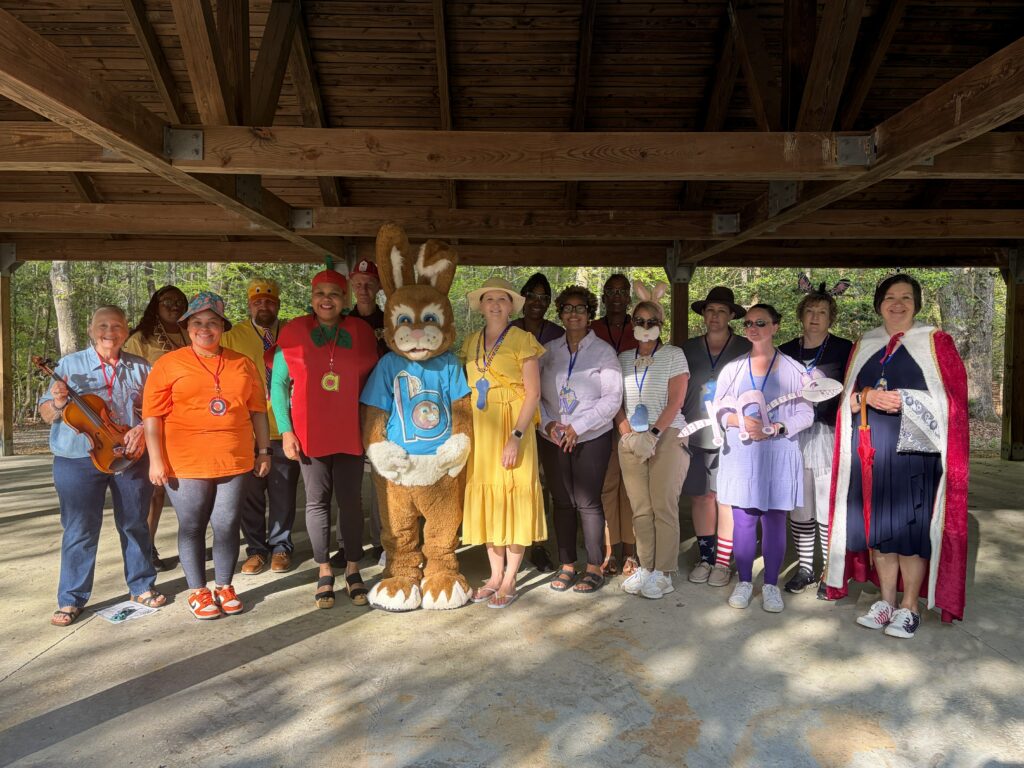
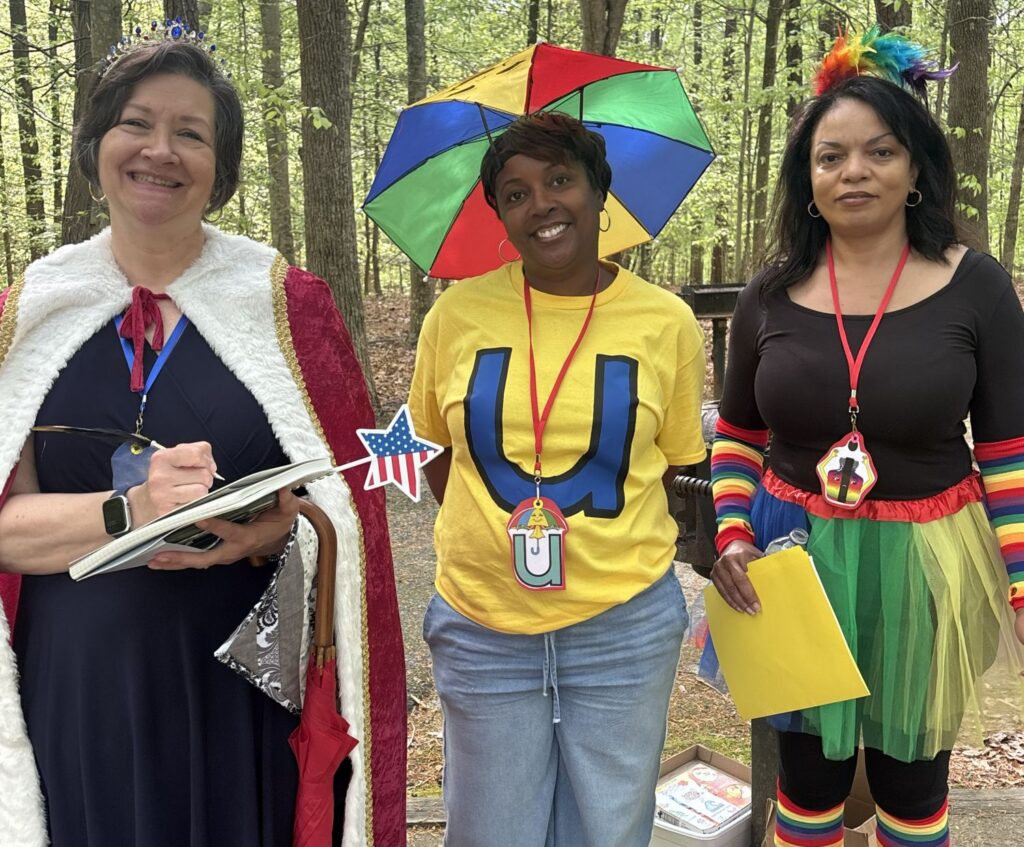
On Monday morning at Merchants Millpond State Park, the sounds of laughter, learning, and Letterland characters echoed through the trees, not just to celebrate a milestone, but to show what’s possible when literacy comes to life.
Lisa Wilkins, an early literacy specialist, crafted this idea by taking the NC Parks Theme of America 250 and combining that with the district’s phonics curriculum, Letterland.
“This concept really helps bring the characters to life for the students. It gives everyone a unique opportunity to visit the park and learn about the many resources and animals that we have here in Gates County,” Wilkins said.
 Sign up for the EdDaily to start each weekday with the top education news.
This event was also a big deal because the last Letterland Day in Gates County took place before the pandemic. On April 13, 2026, students from Gates County Schools stepped outside of their classrooms and into an immersive learning experience where literacy, environmental stewardship, and history intersect.
At the center of it all is a simple but powerful idea: Conservation is revolutionary.
A celebration 250 years in the making
The event was part of the nationwide commemoration of America’s 250th birthday, a moment not just to reflect on the past, but to consider the future.
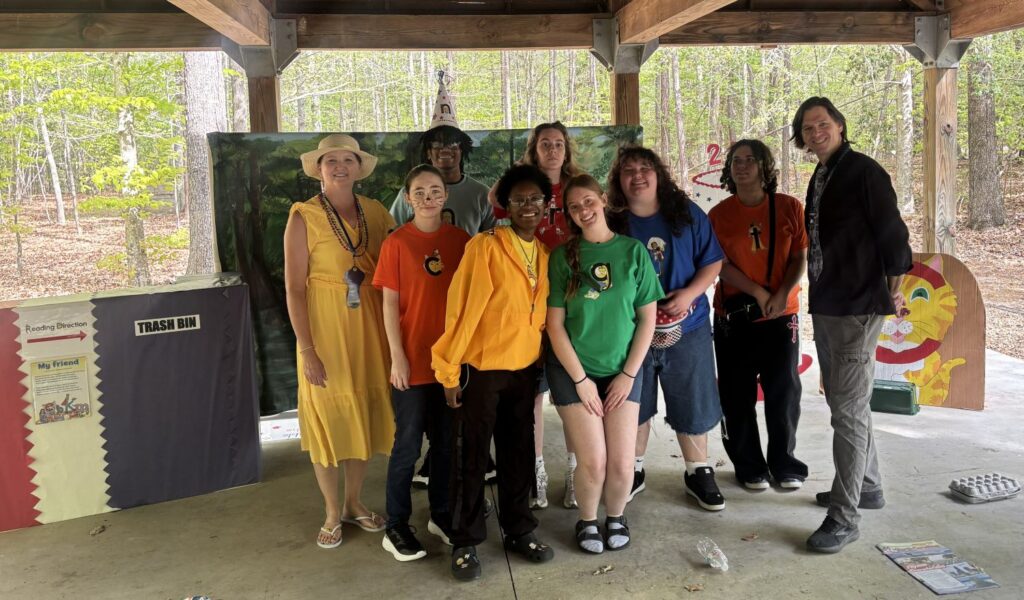
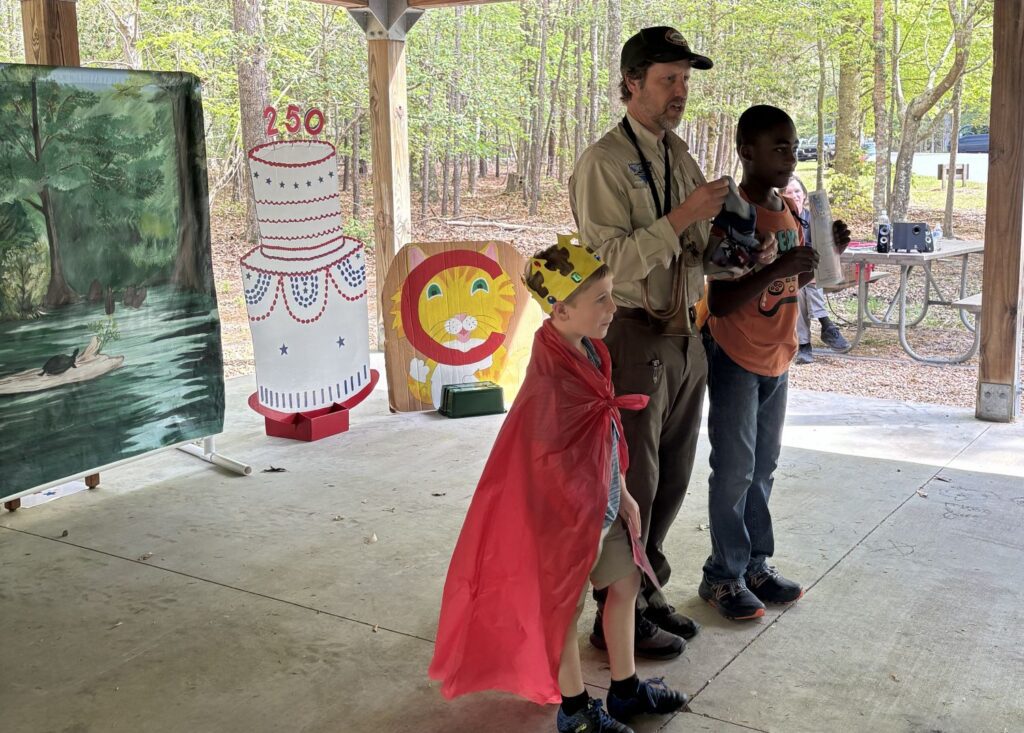
Through a student-led production entitled “Conservation is Revolutionary,” learners in grades K-2 experienced a live Letterland performance that connected early literacy skills with real-world responsibility. Performed by high school theater students, the play brought the characters to life as they explored what it means to care for the land, from picking up litter to protecting natural resources.
“Taking care of the land is part of celebrating it,” Letterland character Noisy Nick told the audience with the intent to ground the performance in both purpose and place.
Learning beyond the classroom
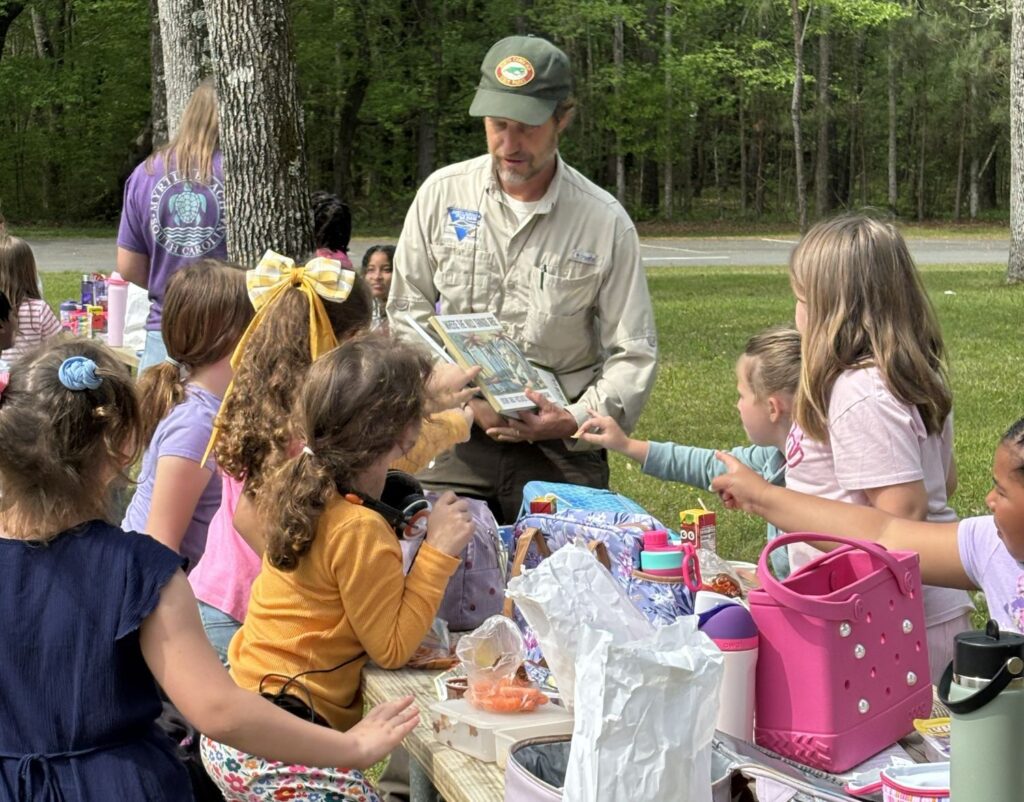
The day was intentionally designed as more than a field trip. It was structured so that students were able to rotate through and engage in interactive, hands-on stations that reinforced both literacy and environmental concepts.
Across the park, students participated in activities like:
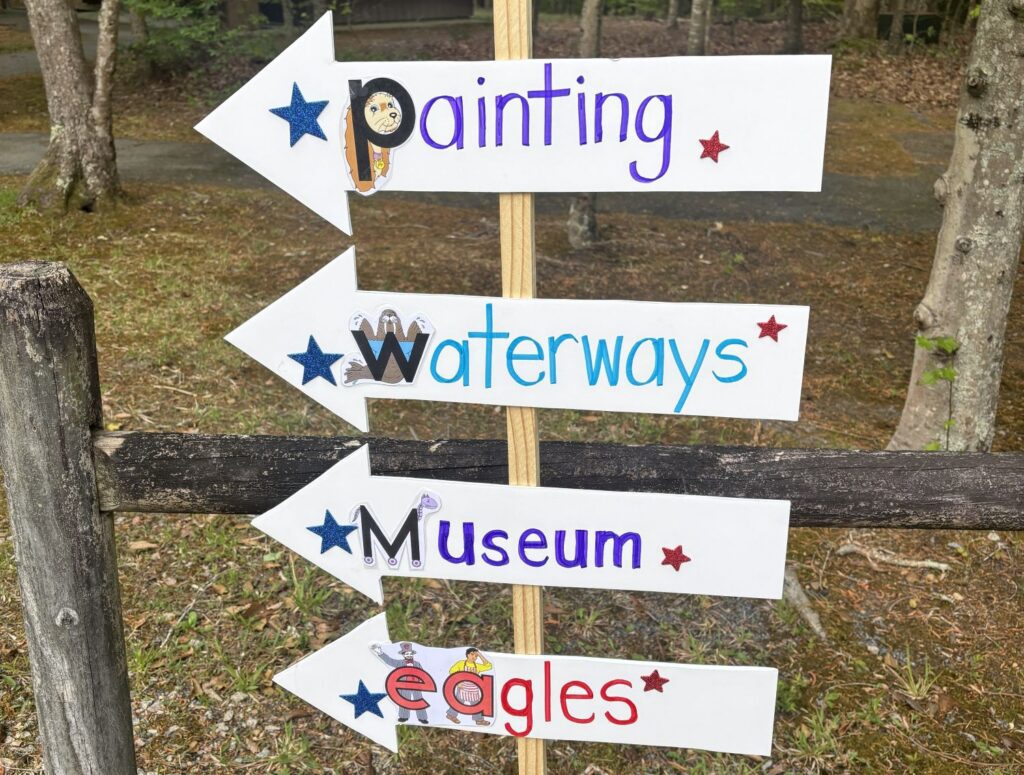
- Soil painting with Peter Puppy,
- Waterways exploration with Walter Walrus,
- Wildlife learning with Sammy Snake and Mr. E, and
- Conservation-focused storytelling and play.
Each station integrated Letterland phonics with science and social studies, creating a cross-curricular experience grounded in play and exploration. Mary Derfel, assistant director of early literacy for the state’s Office of Early Learning, stated that this experience wove all of the pieces of the Science of Reading together by bringing in the phonics, vocabulary, and comprehension skills.
In total, more than 250 students from T.S. Cooper Elementary, Buckland Elementary, and Gatesville Elementary participated in the event.
A highlight for Gates County’s Superintendent, Dr. Barry Williams, was helping students with their lunches. He said, “the kids just brought all of the excitement!”
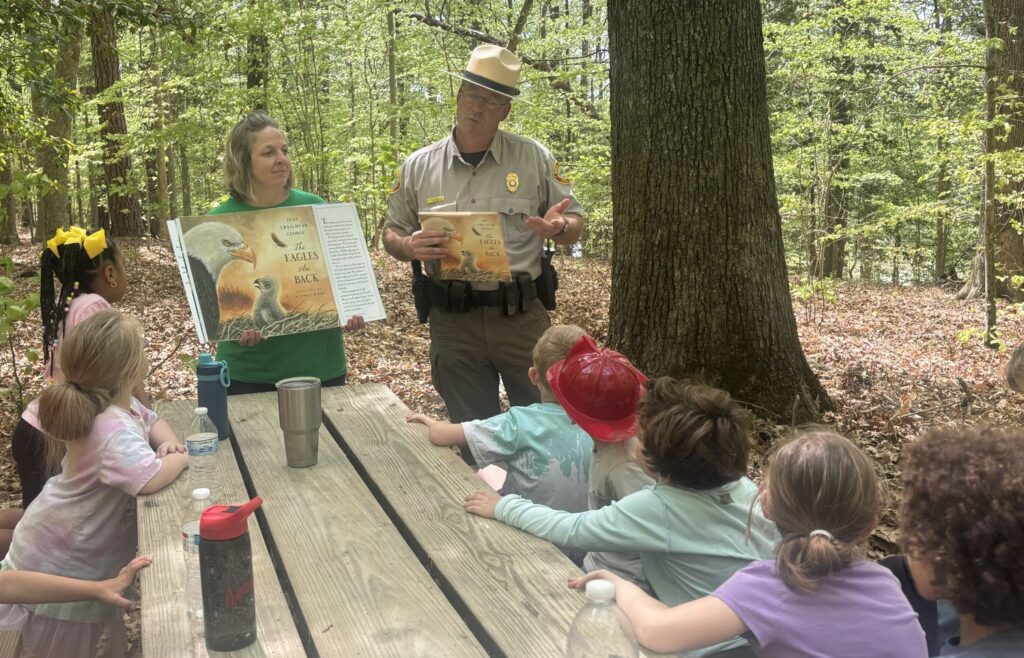
Each student was able to enjoy a picnic lunch at the park while listening to stories read by Sean Higgins, interpretation and education manager at NC State Parks, and Wanda Lassiter, curator of the Museum of the Albemarle.
When literacy meets stewardship
At the heart of the event is a powerful belief: Young learners are capable of understanding big ideas when those ideas are made tangible. During the performance, students didn’t just watch, they participated. They “live spelled” the word conservation, breaking it into syllables, tapping out sounds, and physically building the word together.
It’s a moment that reflected what educators know to be true — that learning sticks when it is active, collaborative, and meaningful. And here, that meaning was rooted in connection to the land, to language, and to one another.
Redefining what a school day can look like
Experiences like this signal a broader shift in education, where instruction moves beyond worksheets and into the real world. By partnering with state parks and community organizations, Gates County educators are creating opportunities for students to apply literacy skills in authentic settings, understand environmental responsibility firsthand, and build a deep sense of place and pride in their community.
It’s not just about content. It’s about cultivating awareness. As one line from the play reminded students: “Stewardship means taking care of the land so it can take care of us.”
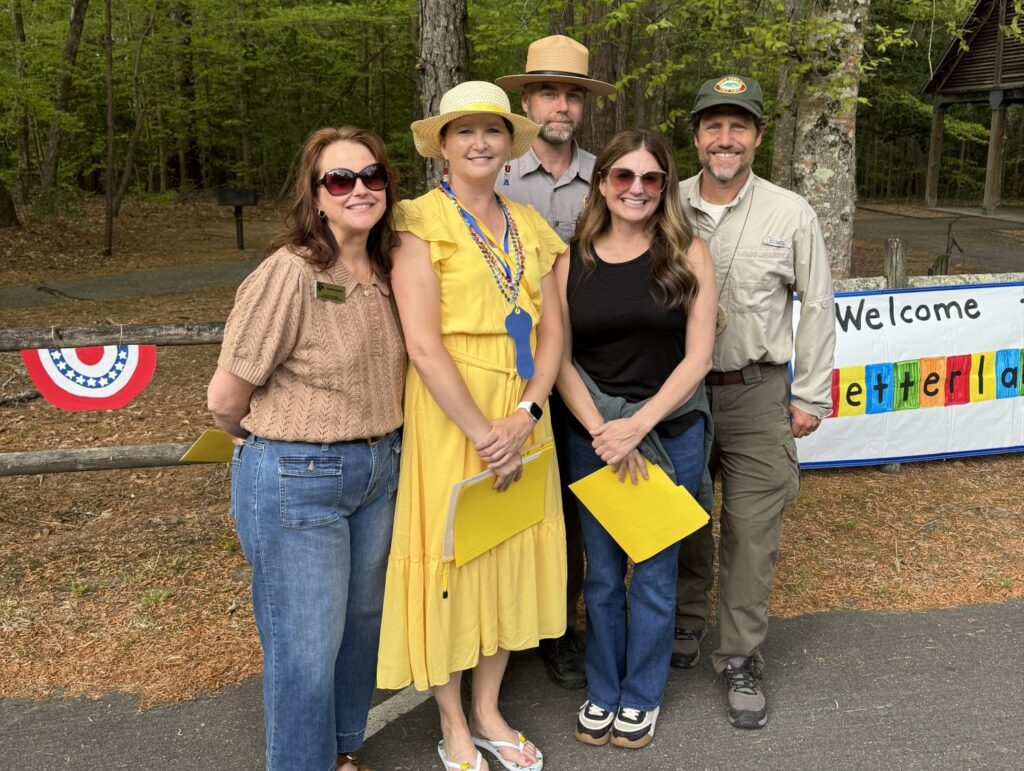
The event was further enriched by special guests from education, state parks, and cultural organizations, including Office of Early Learning leaders Dr. Cynthia Barber, Mary Derfel, and Thomas Merritt; along with Joe Shimel, NC State Parks East District superintendent; Jeffrey Turner, acting superintendent of Merchants Millpond State Park; Stephanie Luedi, Schools in Parks specialist; Austin Paul, park ranger at Jockey’s Ridge State Park; Katie Sanford, park ranger at Salmon Creek; Karen Ipock, associate director of education at the Department of Natural and Cultural Resources; Cody Hinson and Alan Brown, park rangers at Merchants Millpond State Park; and Wanda Lassiter, curator at Museum of the Albemarle.
The message of the day is clear and intentionally repeated: Conservation is revolutionary. Not because it is new, but because it requires action.
For these students, that action looks like small, tangible steps — picking up trash, saving water, noticing their surroundings, and understanding their role in protecting them. In doing so, they were learning something bigger than any single standard or subject. They were learning that they belong to something worth caring for.
Susan Casper, director of curriculum and instruction for the district, shared, “I am so proud of the hard work of Ms. Wilkins and her team of volunteers, who made this wonderful event happen for our students. It was great to see the students’ excitement at seeing their favorite characters come to life.”
Looking ahead
As the celebration concludes with a shared “Happy Birthday” to America, the learning doesn’t end. Instead, it extends outward into classrooms, into communities, and into the habits students carry forward.
If this day is successful, students won’t just remember the characters or the stations. They’ll remember the responsibility. And they’ll understand that even at a young age, they have a role to play in shaping the next 250 years.