Matthew Eckhoff’s first experience in advising came just after he graduated from Suffolk County Community College on Long Island. He worked as a part-time adviser in Suffolk’s Educational Opportunity Program (EOP), which provides academic support and financial assistance to help students earn their degrees.
He didn’t know at the time that his work as an adviser would lead him to CUNY ASAP — a nationally acclaimed and evidence-based model for student support — and later, to leading the replication of CUNY ASAP, called Boost, at Alamance Community College.
“I had an opportunity to work with at-risk students and a lot of students that I could relate with,” said Eckhoff. “Given the fact that I had been through certain challenges in my own life as a first-generation college student, I felt like I had a lot of the answers and a lot of the skill sets to support those students.”
This experience cemented for Eckhoff that he wanted to spend his career supporting people. After earning his bachelor’s degree and a master of social work, Eckhoff decided to return to serving the population he was most passionate about: community college students.
 Sign up for Awake58, our newsletter on all things community college.
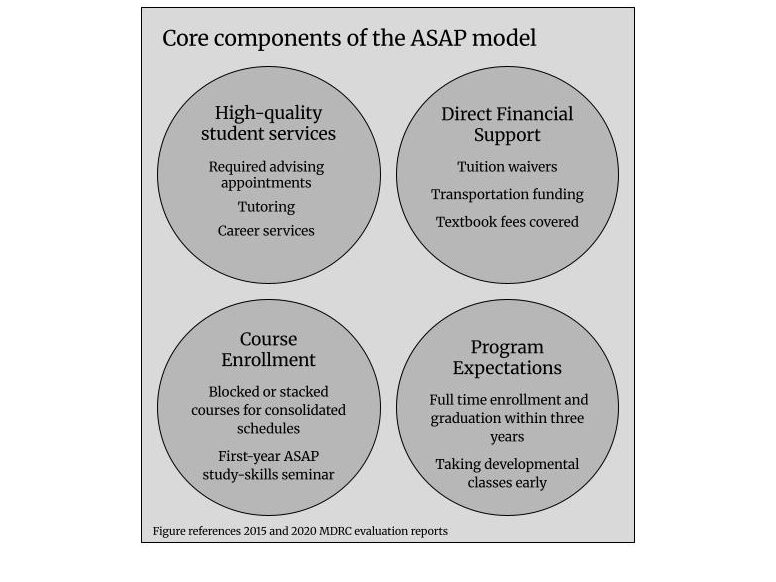
In 2013, Eckhoff became an adviser with a student success program called CUNY ASAP at LaGuardia Community College in Queens, New York. At the time, Eckhoff was excited to work for a program that he believed combined “all the best practices to support student success” in one — including personalized advising and tutoring, career development services, financial assistance, priority registration, and more.
In the years since, rigorous studies have found evidence that the CUNY ASAP doubles three-year community college graduation rates, propelling it as a national model that is now being replicated at community colleges across the country — including in North Carolina.
“It blew my mind that I was aspiring to be part of something advising-related, and I ended up being in a national model unknowingly,” said Eckhoff, who worked as an adviser, senior adviser, associate director, and then director of ASAP LaGuardia.
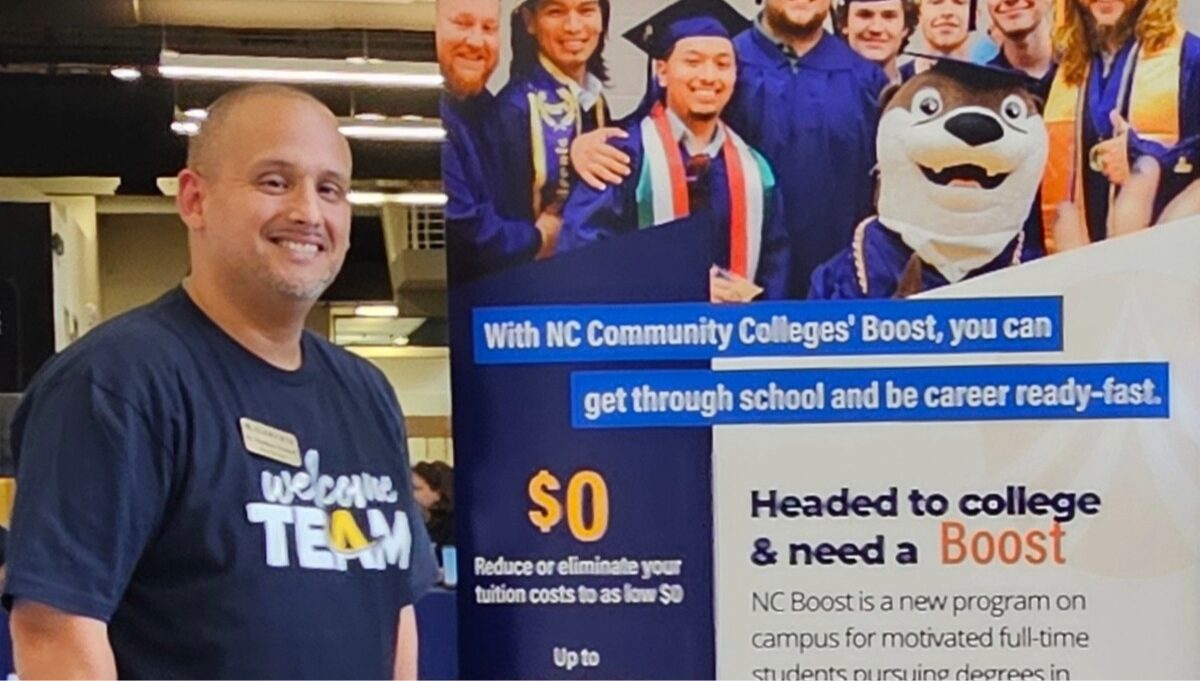
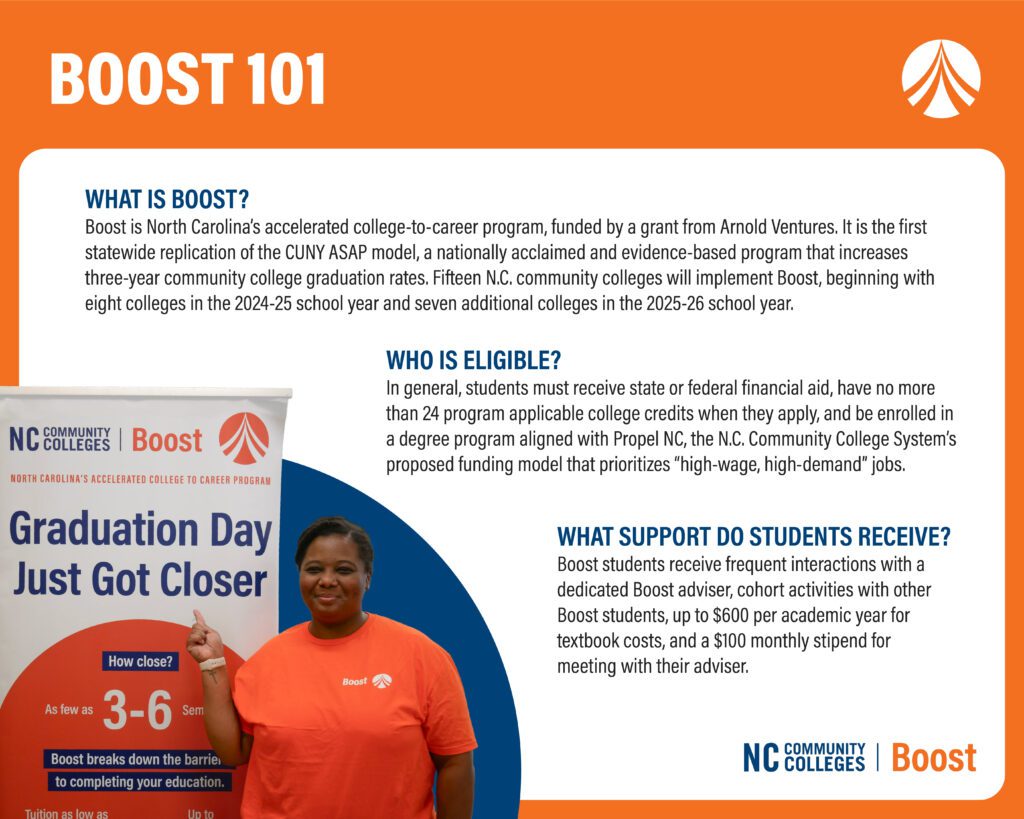
This year, North Carolina is replicating the model by launching Boost, an accelerated college-to-career program designed to increase completion rates and move students into high-wage, high-demand jobs. It is the first statewide replication of the CUNY ASAP model and the first replication tied directly to workforce needs.
Learn more about Boost

NY to NC: Three lessons for Boost
In July 2025, Eckhoff left his role as director of CUNY ASAP at LaGuardia Community College to become the inaugural director of Boost at one of the first eight community colleges to implement it: Alamance Community College.
Reflecting on his more than a decade of experience with CUNY ASAP, Eckhoff is carrying three lessons with him as he launches Boost:
1. Get data structures set up quickly
Eckhoff said working at CUNY ASAP is where he “began to fall in love with data.” The program uses data-driven program management practices to inform the frequency and type of advising experiences students are assigned.
For example, “data helped us to identify students that are at risk and give them more attention,” he said. As Eckhoff works to build the Boost program from the ground up at Alamance, he is prioritizing getting the right data structures in place to serve the program now and in the future.
2. Establish strong collaborations on campus
“Boost isn’t Boost without relationships and collaborations and partnerships across the institution,” said Eckhoff. The CUNY ASAP model, according to Eckhoff, is designed to break down silos and foster strong connections between students and the many other stakeholders around them, both on and off campus.
That is why he is working to establish strong relationships with faculty and staff across numerous departments — including admissions, financial aid, advising, career services, and transfer programs — to ensure they understand Boost and can collaborate to best support students.
3. Foster a sense of community and belonging among Boost students
In addition to encouraging collaborations across campus, CUNY ASAP is designed as a cohort model to help build community amongst participating students, increasing their college integration and sense of belonging. For example, the CUNY ASAP model enrolls students in consolidated “block” schedules where they take classes together.
At LaGuardia Community College, Eckhoff saw how crucial these peer connections were for building a sense of belonging. “Sometimes students listen to each other more than they listen to us,” he said.
Looking ahead
As Boost kicks off at Alamance Community College this fall, Eckhoff is focused on spreading the word about the program and enrolling eligible students. Participating students will receive a variety of supports, including frequent interactions with a dedicated Boost adviser, cohort activities with other Boost students, up to $600 per academic year for textbook costs, and a $100 monthly stipend for successfully meeting with their adviser.
And while the financial support may be most enticing to students at first, the heart of the CUNY ASAP model is high-touch advising, with the same adviser, from enrollment to graduation. This includes support for items such as academic plans, course selection and registration, academic supports, community resources, referrals for personal support, and transfer or post-graduation plans.
“It’s beyond the traditional sense of what an adviser is … the adviser really serves as everything to the students,” said Eckhoff. “The number one thing students came to the (CUNY ASAP) program for was the financial benefits. However, when they left, the one thing they spoke most about was the advising experience. I think that says everything.”
Students at eight participating North Carolina community colleges can learn more about Boost and apply by visiting their college’s website:
- Alamance Community College
- Caldwell Community College & Technical Institute
- Cape Fear Community College
- Central Piedmont Community College
- Cleveland Community College
- Forsyth Technical Community College
- Johnston Community College
- Wake Technical Community College

Recommended reading