Editor’s note: This article is part of EdNC’s playbook on Hurricane Helene. Other articles in the playbook are available here.
Cots lined the ground floor of one community college building, sheltering medically fragile residents. On the second floor, an exhausted president, walkie-talkie in hand, prepared to restart the generator when it inevitably failed. Employees’ names were plastered on the walls, marked off only once they had been accounted for.
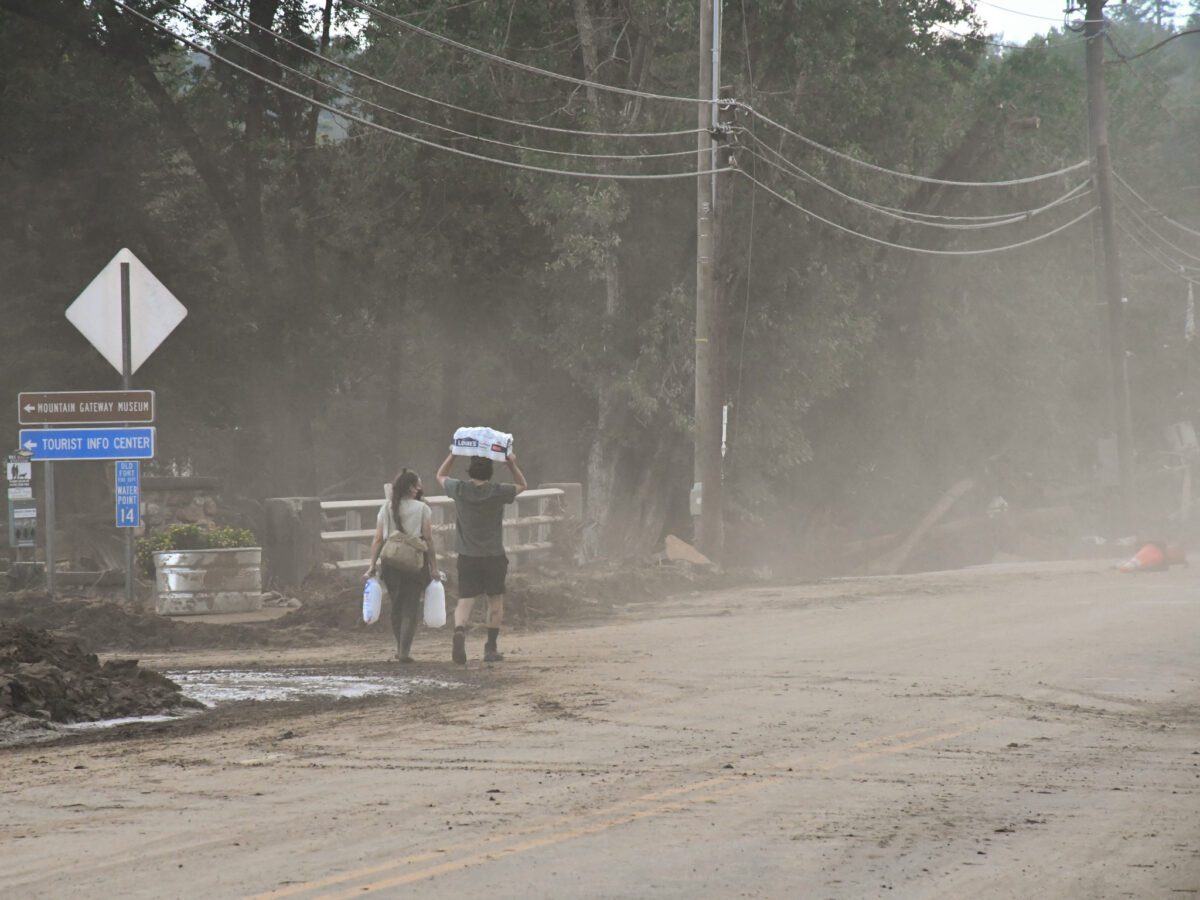
After Hurricane Helene, western North Carolina community college leaders grappled with the catastrophic damage inflicted upon their service areas. Wasting no time, the colleges did what they have always done — pivoted quickly, becoming lifelines for their communities.
This article, part of EdNC’s Hurricane Helene Playbook, explores how community colleges impacted by the hurricane served their communities and details leadership decisions, funding disbursements, and recovery updates. It includes information from before the storm hit in September 2024 through the following year, and we provide considerations throughout for future natural disasters and emergencies.
More importantly, this article highlights the community colleges and their leaders who showed up despite their own disaster trauma, pouring from depleted reservoirs to serve. To our state’s community colleges, your work does not go unnoticed.
Landscape and leadership
“The community’s college” is a frequent tagline used among the 58 that make up the North Carolina Community College System (NCCCS). Each college serves at least one of the state’s 100 counties, making it possible for most residents to reach a college campus in 30 minutes or less.
These two-year institutions are the state’s workforce engines, providing accessible and affordable higher education to historically underserved populations. Their purpose, however, extends far beyond educating residents. Community colleges are anchor institutions — organizational hubs deeply rooted in their service areas that use resources to support and foster local well-being.
In times of disaster, anchor institutions are vital lifelines for residents and government agencies alike. Their ability to operationalize quickly makes them a stabilizing force throughout all phases of disaster. At the same time, community colleges train the very individuals who are on the front lines of disasters leading search, rescue, and recovery efforts.
During and after Hurricane Helene, North Carolina’s community colleges became emergency response centers, providing shelter, basic necessities, internet access, strategic support for small businesses, and space for local, state, and federal agencies.
A total of 14 community colleges were located in counties designated under a major federal disaster declaration: Asheville-Buncombe Technical, Blue Ridge, Caldwell, Catawba Valley, Cleveland, Gaston, Haywood, Isothermal, Mayland, McDowell Technical, Southwestern, Tri-County, Western Piedmont, and Wilkes community colleges.
The storm impacted nearly 74,000 community college students and more than 6,000 faculty and staff.
Among the 14 presidents at affected colleges, seven had served as president of their institution for five or more years, five had been in the role for at least three years, and two had been in the role for less than one year, with one president joining an institution just two months before Hurricane Helene.
Additionally, nearly 50 of the state’s community colleges are rural-serving institutions, which impacts how communication, road infrastructure, internet scarcity, health care, and connectivity affect these areas.
Read more

Preparing for the storm
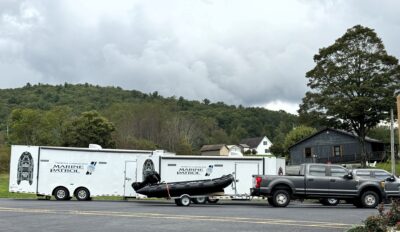
Prior to Hurricane Helene’s arrival in North Carolina on Sept. 27, 2024, colleges projected to be in the storm’s direct path made the decision on Sept. 25 to close their campuses for the remainder of the week.
When there is a risk of extreme weather, most colleges work collaboratively with county officials, emergency management agencies, and local school districts to determine closures. These sectors typically use the National Weather Service to guide decision-making.
However, not all counties operate in the same manner or issue the same warnings when it comes to emergency management. This section describes how counties issued warnings and implemented emergency response plans during and following Hurricane Helene.
Community colleges should build and maintain relationships with key partners to best prepare for a crisis, including:
- County emergency managers
- Local government officials, including county managers
- K-12 school district leaders
- Health agencies
- Utility providers
- Companies critical to cleanup and repair
- N.C. Community College System staff
- Unaffected community colleges
Communicating with employees and students
Colleges alerted employees and students about campus closures using their institution’s main website page, email, text, and social media posts. Some colleges reminded students to sign up for campus alerts, provided tips for weather preparedness, and shared national and local weather updates via social media.
As trusted organizations in their communities, colleges are in a unique position to reinforce natural disaster warnings and remind community members to prepare for the potential of life-threatening emergencies. Colleges can ultimately serve as a key authoritative voice in students’ decision-making.
Knowing how communication moves on your campus and through your community is particularly important in times of crisis. Consider the following:
- Decide who will deliver time-sensitive and important messages to employees and students. Clear, concise, and factual information from fewer college personnel is ideal.
- Engage faculty and advisers in distributing communications, as they have the most direct contact with students.
- Determine which communication methods are most effective for various audiences.
- Create message templates ahead of time, adding relevant information to maximize efficiency.
- Direct students to one landing page for all campus communication.
- Correct misinformation and share details from trusted sources.
Preparing facilities
Colleges were also busy preparing their campuses for the storm. Facilities staff checked roads and attempted to move equipment located in flood-prone areas. Some colleges instructed employees to remove electronics from office floors in the event of flooding. Information technology (IT) staff ensured systems were up-to-date and storm ready.
Days before Helene was expected to hit, Haywood Community College activated its emergency Wi-Fi, a redundant system it had recently acquired. The emergency Wi-Fi system proved critical to countywide operations following the storm.
Immediately following the storm
Widespread power outages and communication blackouts across western North Carolina made staying connected after the storm challenging at best. For many colleges, employees’ contact information and emergency response plans were digitally stored, making key files difficult to access.
Fractured communication required leaders to devise alternate plans for assessing employee well-being. Many implemented phone trees, with college staff passing messages to others on their teams. In some instances, leaders drove to employees’ homes when they could not reach them by phone.
Community colleges should develop a plan for communication disruptions. For example:
- Print copies of emergency response plans for leadership staff. This should include key partners’ contact information and home addresses.
- Ensure leadership staff have cellphone power banks.
- Print and distribute employee contact information, including phone numbers and physical addresses, to campus employees who will be responsible for connecting with staff.
- Implement an outbound conference calling, texting, and emergency notification system like ZipBridge to easily connect college leaders during crisis.
- Use Starlink units and generators to help connect critical leaders and the college campus.
The North Carolina Department of Transportation (NCDOT) reported more than 600 road closures following the storm, with 100 of those on interstates and highways.
Soon after the storm hit, the NCCCS and State Board of Community Colleges coordinated with the State Highway Patrol to deliver Starlink units and generators by helicopter to several impacted colleges.
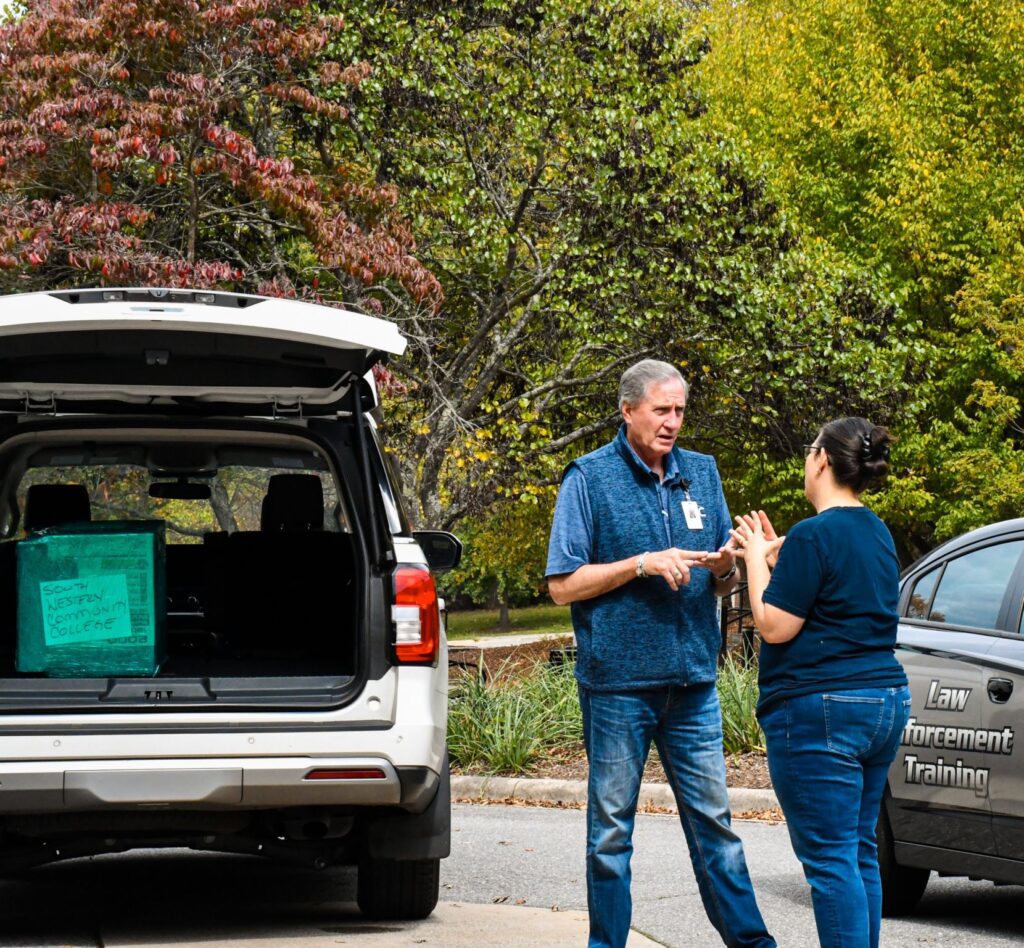
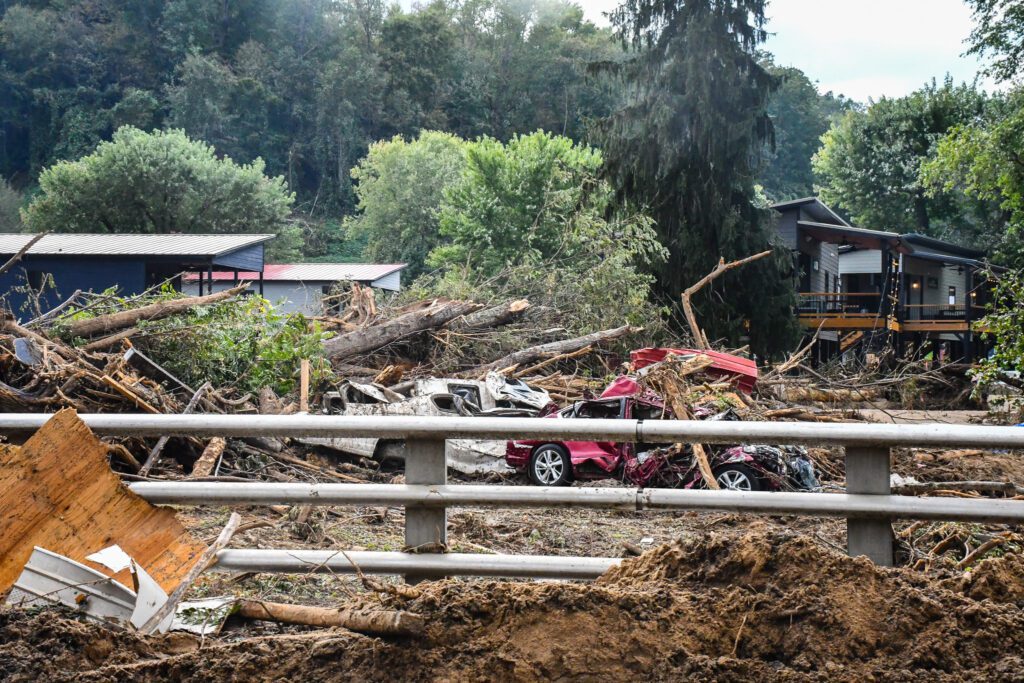
Facilities leaders assessed building damage and cleared trees to open roadways to and from campuses. These assessments included checking buildings for structural and water damage, electricity, and access to safe water. Initial reports from several colleges indicated severe damage, but as communication improved, some of those early damage reports were scaled back.
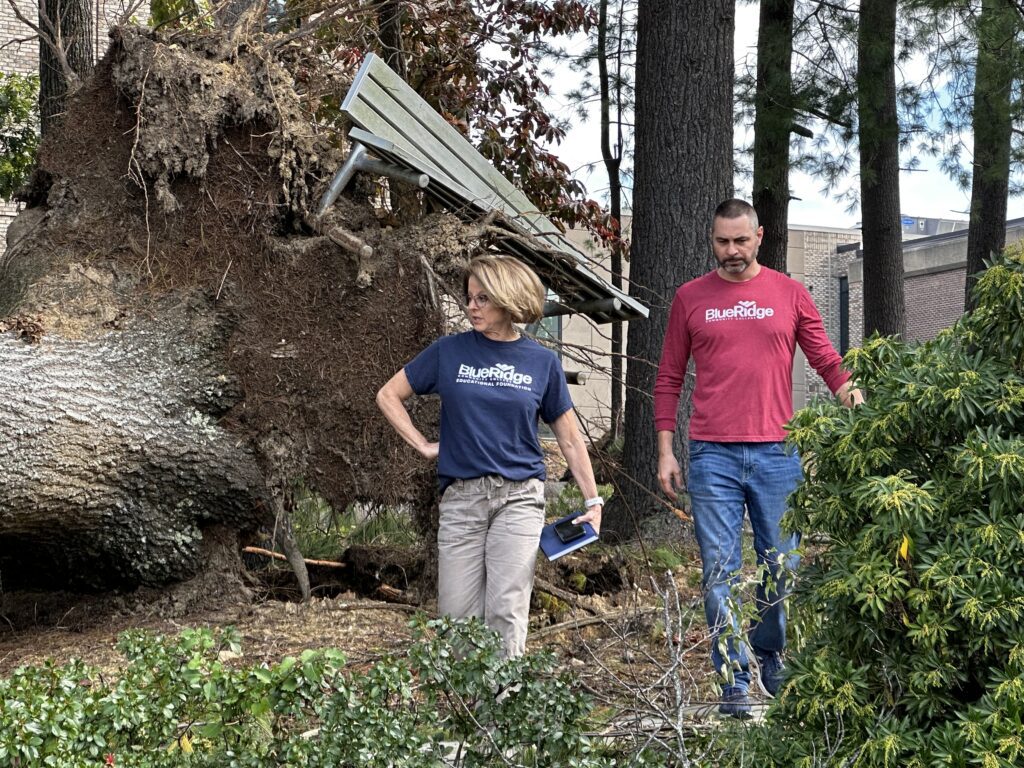
Of the 14 colleges impacted by the storm, many had trees down and some had structural and water damage, but none of the colleges lost buildings.

Community colleges respond
Many community college buildings were designed to be used by the community, and that includes during times of disaster. For instance, a building at Asheville-Buncombe Tech was constructed so that its ground floor could be used as a medical triage space and shelter when needed. A decommissioned armory on Haywood Community College’s campus is used as an additional base for EMS and as an emergency shelter.
College leaders say their default answer is usually “yes” when it comes to the use of college facilities and grounds, because they have strong relationships and trust with key community partners and agencies.
Considerations for community college leaders when considering campus use include:
- Ask yourself: Does the college need the space to fulfill its mission?
- Determine if a formal MOU (Memorandum of Understanding) between the college and the external organization is needed for the space to be used. Keep in mind that facilities or equipment could be damaged or lost if used.
- Decide who will incur the cost for professional cleaning if a space is used for sheltering residents.
- Identify any logistical challenges your college may experience from campus use. For example, loss of parking lots for students and staff and schedule conflicts.

Below are ways North Carolina’s community colleges aided in the regional response during and after Hurricane Helene.
Use of campus grounds and facilities:
- During the storm, one college parking lot was used to host evacuees from nearby campsites.
- Some colleges’ parking lots became temporary headquarters for Federal Emergency Management Agency (FEMA) representatives.
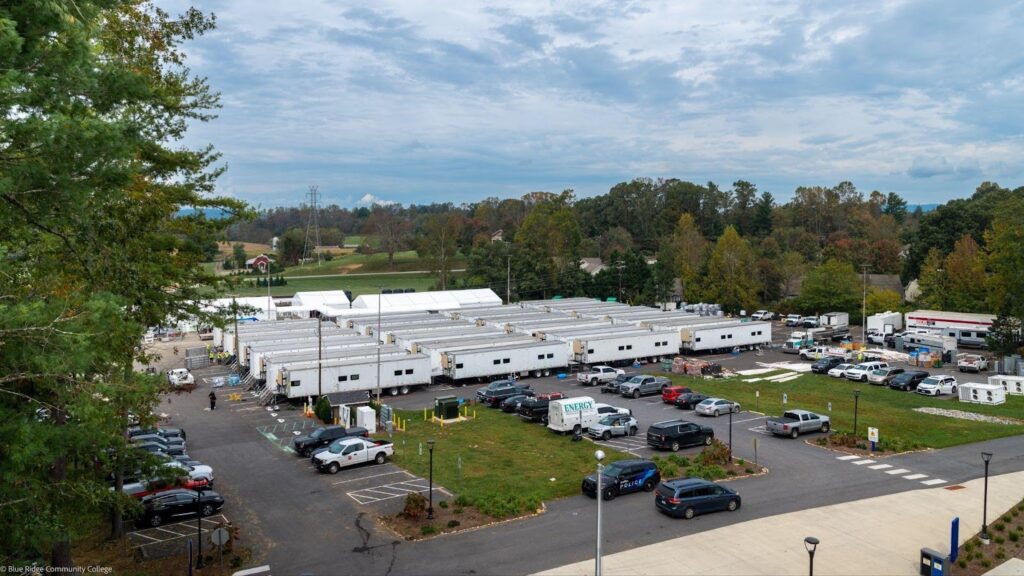
- Colleges used their campus grounds to house swift water rescue teams, land heavy-lift helicopters for disaster relief operations, and secure National Guard equipment.
- Community colleges were among the few locations across the region with reliable Wi-Fi. Several colleges opened their parking lots and buildings for county agency use and for businesses that needed to process payroll.
- Campus grounds doubled as makeshift distribution sites providing food, water, and other support services to the community.
- Colleges housed emergency personnel, utility workers, disaster relief volunteers, and volunteer construction workers.
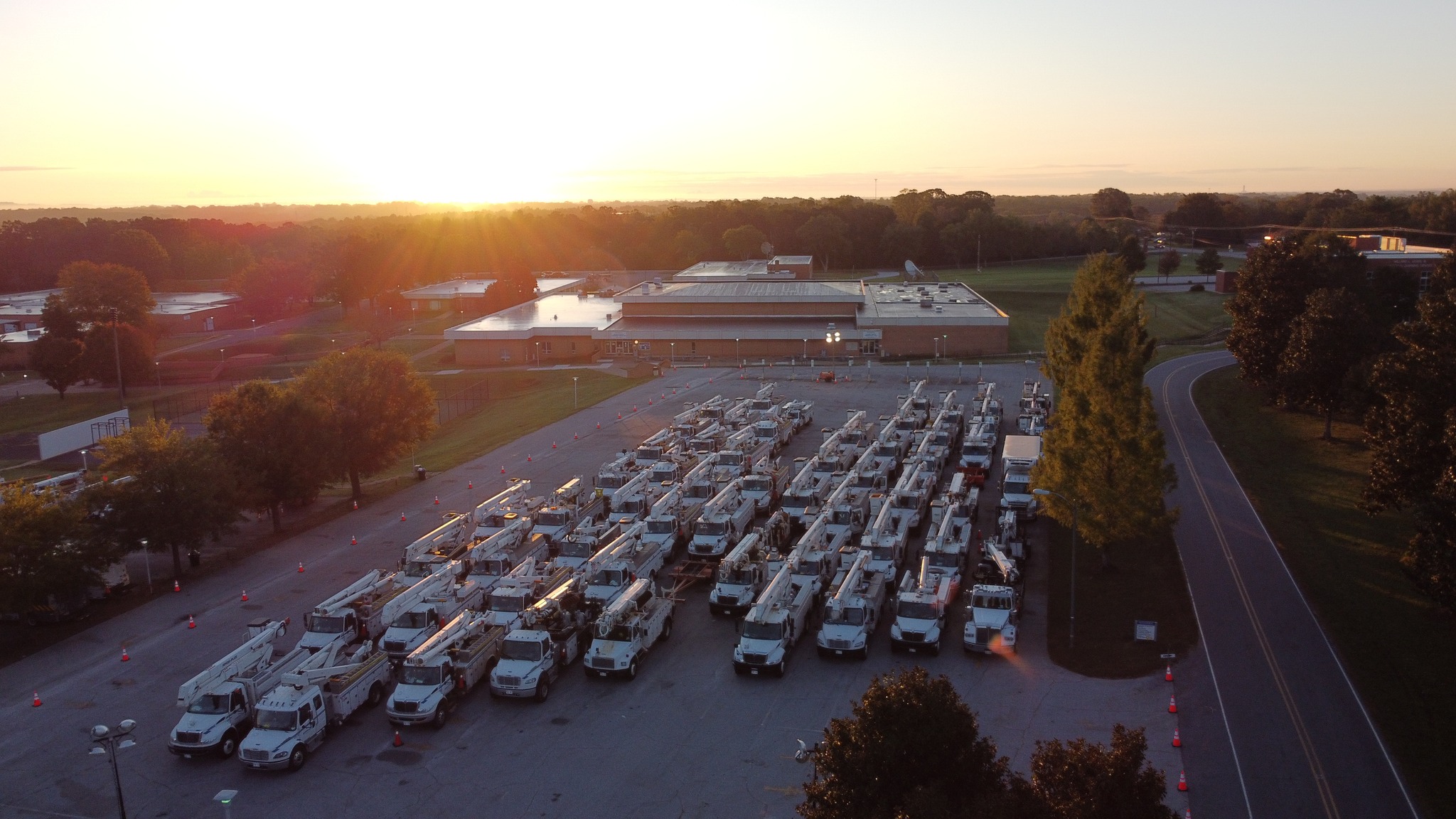
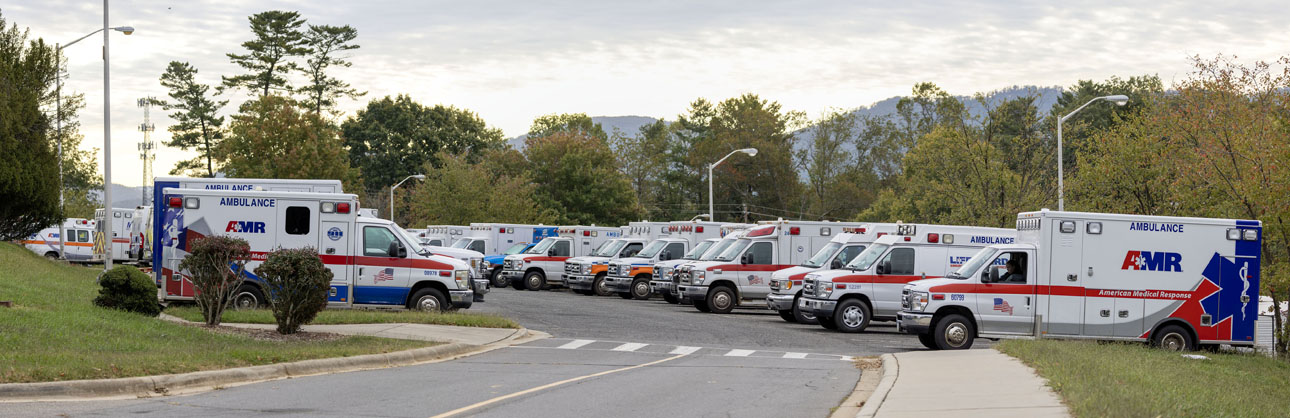
- Many campus parking lots were used to stage and launch emergency vehicles, tanker trucks, and utility trucks for both local agencies and those from outside the region and state.
- One community college offered space for displaced town hall employees after the area’s town hall was lost in the flood. The college was also used as an early voting site.
- College buildings became shelters for displaced residents, with some buildings serving as a makeshift triage space and shelter for medically fragile individuals dependent on power for medical equipment.
- College properties were used for debris removal in the months following the storm.
- A four-year university hosted classes at one community college campus until it was able to reopen.
- After a K-8 school suffered catastrophic damage, one community college made scheduling adjustments to provide space for more than 100 middle school students to finish out the academic year on the college’s campus.
Use of resources:
- Colleges loaned equipment, such as electrical lineworker bucket trucks, to help clear streets. Emergency training vehicles were also used.
- Colleges offered laundry and shower facilities for residents and employees without access to water.
- One college’s culinary department prepared up to 800 meals each day for frontline workers.
- College faculty and students used class equipment to aid in recovery — including chainsaws, construction materials and tools, heavy operating equipment, and health supplies, among other things.

The system, State Board, and other community colleges respond
Beginning on Oct. 4, 2024, the NCCCS organized weekly phone calls with presidents in western North Carolina to discuss impacts and needs. These calls continued for the remainder of the fall semester.
During an October 2024 State Board of Community Colleges meeting, it was reported that 15 system office employees were in western North Carolina assisting with local recovery efforts. The system also hired a public relations contractor for a limited time to help identify needs and lift up stories from impacted colleges.
The system, the Board, and the North Carolina Community Colleges Foundation (NCCCF) mobilized to create the Hurricane Helene Community College Response and Recovery Fund.
The idea was to provide a starting point and central hub for companies and individuals to donate in support of colleges. The NCCCF distributed funds to the affected community colleges to help colleges rebuild and provide critical resources to students and staff.
A statewide effort also emerged to support community colleges in the western region. The “Adopt a College” program was organized by the North Carolina Association of Community College Presidents (NCACCP), and institutions within the NCCCS rallied to provide monetary donations and other resources.
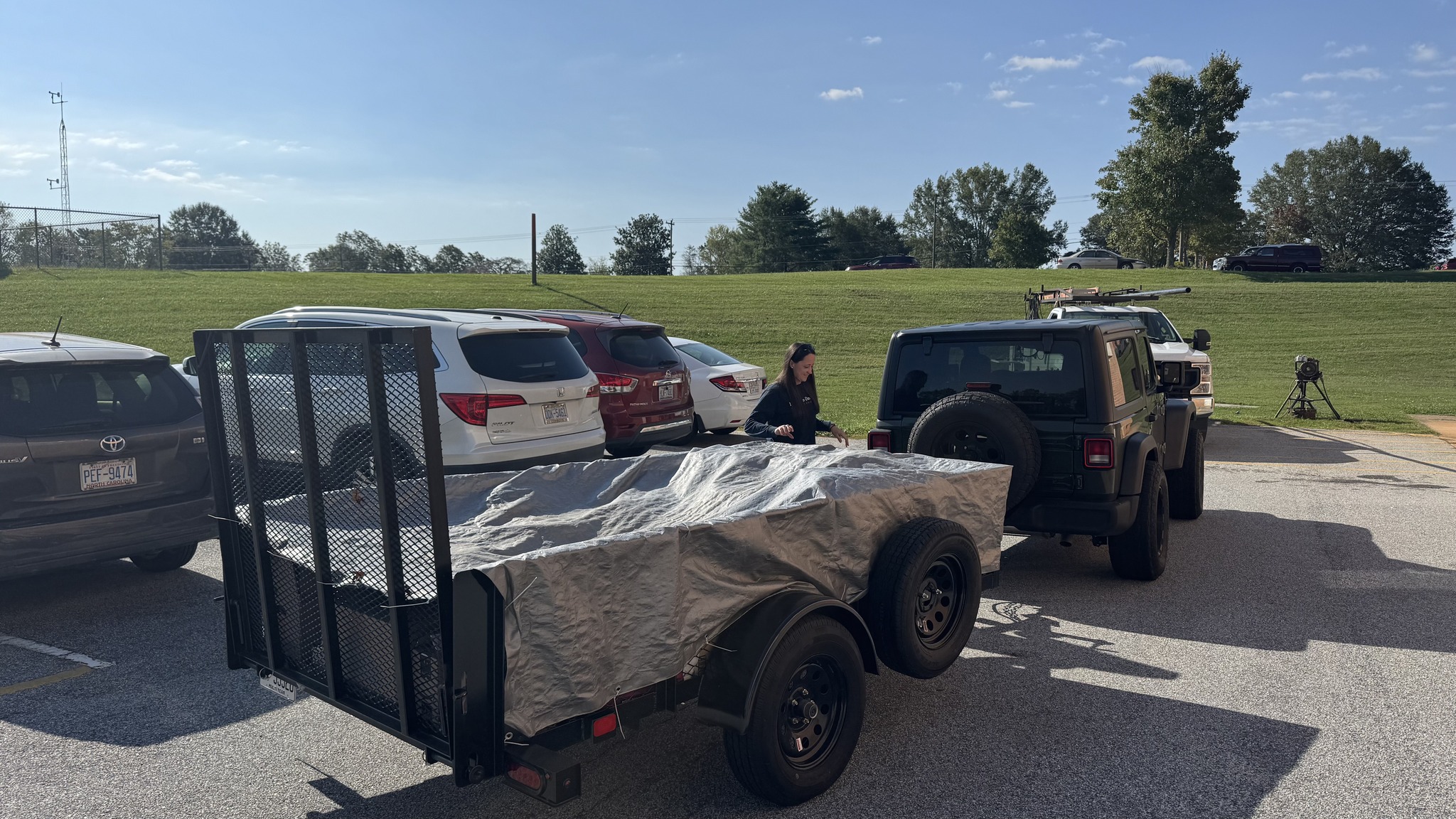

Other colleges within the system launched messaging campaigns across their campuses and communities to raise awareness about the storm’s impact and direct individuals to donate to relief efforts. Employees at several colleges collected basic necessities and personally delivered them to impacted campuses. Months later, several colleges continued their efforts by collecting cold-weather items for affected communities.
A neighboring community college in South Carolina also joined the effort, delivering food, water, hygiene products, clothing, blankets, and gas-powered generators.
During the October 2025 State Board of Community Colleges meeting, the Board discussed a report produced by the John M. Belk Endowment on the system’s response to Hurricane Helene. You can find the post-Helene risk mitigation and disaster recovery assessment here.
Considerations for supporting colleges impacted by a natural disaster include:
- How can system office and staff from unaffected community colleges best be used to support colleges impacted by a natural disaster?
- Should a protocol exist for on-site needs assessment from the system office?
- In the event of regional disaster, can space be identified early on where distribution items can be stored?
- Should colleges impacted by natural disasters have access to shared grant writers?
- Are college leaders adequately trained to respond to natural disasters? If not, who should lead professional development trainings?
Small Business Centers respond
In 2024, North Carolina was home to 1.1 million small businesses that accounted for more than 99% of the state’s businesses. Small businesses are the cornerstone of many communities in western North Carolina and play a vital role in the local economy.
After a natural disaster, FEMA reports that 40% of small businesses never reopen, and the Small Business Administration estimates that almost 90% of small businesses fail within the first two years after being struck by disaster.
Hurricane Helene devastated many small businesses in the state’s western region. A 2025 local business impact survey of more than 700 small business owners across 23 counties found that 93% of small businesses surveyed reopened after Helene. However, there is no concrete data on the number of small business closures following the storm.
The Small Business Center Network (SBCN) is North Carolina’s largest state-supported small business assistance initiative. At least one Small Business Center is located at each of the state’s 58 community colleges.
These centers focus on small business and economic development, assisting with startups, early-stage planning, and disaster assistance while collaborating with federal, state, and local entities. Throughout Hurricane Helene recovery efforts, community colleges’ small business centers continued to meet the needs of the region’s small businesses.
Support from Small Business Centers included:
- Providing disaster counseling and helping business owners navigate recovery challenges.
- Offering guidance on insurance claims, loss assessments, rebuilding financial records, and marketing.
- Assisting clients with applications for grants and recovery loans to replace inventory and restore damaged property.
- Helping small businesses secure temporary incubator space when physical locations were destroyed.
- One Small Business Center launched a recovery center that provided space and support for three local businesses, including office equipment, internet access, and expert counseling.
- Another center helped the owners of a pub and marina reopen after Helene destroyed their $500,000 marina.
- A nursery owner lost nearly $2 million in plants, and the local college’s Small Business Center helped the owner secure over $34,000 in recovery grants, allowing the nursery to reopen and rebuild.
Students and employees step up
Leading in crisis does not solely fall to college presidents and their executive teams. In the wake of their own personal tragedies, community college students and employees stepped up to aid their communities, helping with cleanup and other relief efforts.
For example, nursing faculty and students at several community colleges volunteered their time, often working 12-hour shifts in makeshift medical shelters. These students and faculty found cots for those needing medical care, secured medications and oxygen tanks, and found ways to refrigerate insulin using generators.
With the help of student and employee volunteers, one community college distributed 50,000 pounds of supplies to its campus community. Students from several community colleges coordinated deliveries to classmates with supplies such as diapers, baby food, paper products, and water.
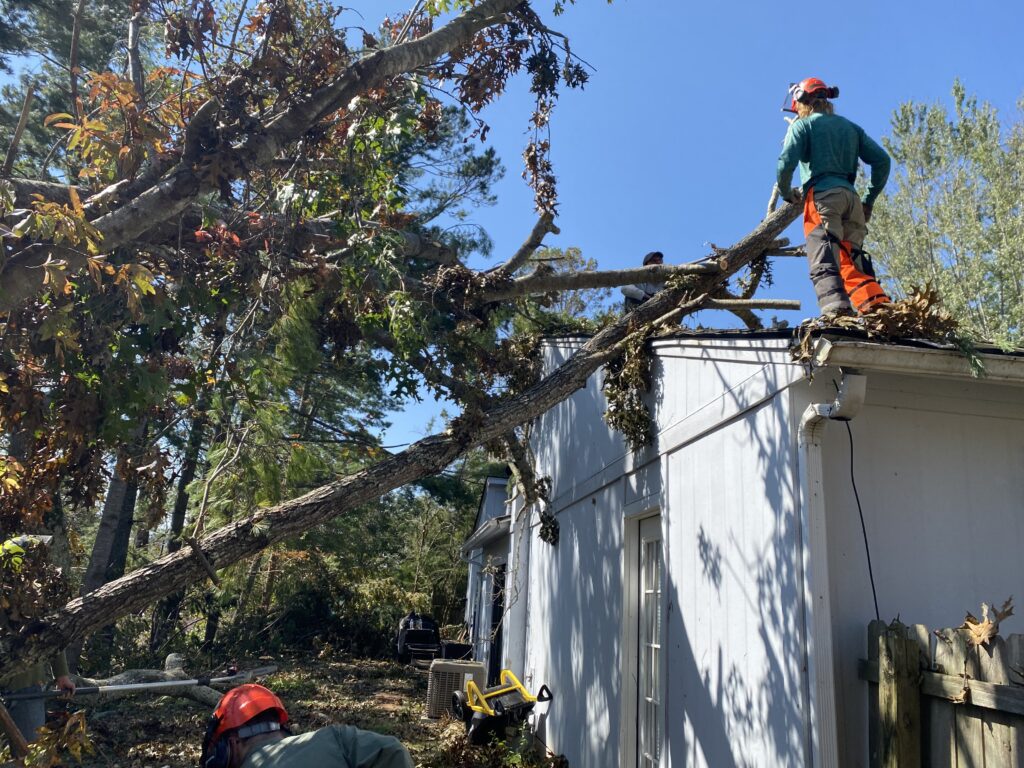
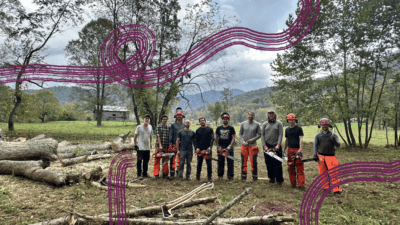
Professional crafts fiber students began making custom blankets for the community with 129 pounds of wool secured from a yarn store set to close its doors. Students from one college’s forest management technology program assisted with community cleanup efforts. Using skills learned in class, students removed downed trees, mucked houses, and backpacked food and other supplies to those who could not be reached by vehicle. Staff and students with skills to repair power lines, plumbing, and electrical work jumped in to help affected areas. Students in culinary programs prepared meals for disaster volunteers and emergency personnel.
In 2025, a student at A-B Tech was recognized by USA Today as one of 61 “Women of the Year” for running an entire disaster distribution center from her front lawn.
One of the hardest hit community colleges, Mayland, allowed faculty and staff to use one workday per week as a volunteer day for recovery efforts.
And at A-B Tech, President Dr. John Gossett said he couldn’t mandate volunteerism, but he celebrated and encouraged it.
Read more about WNC students


Meeting student and employee needs
As communication barriers eased, colleges learned that employee and student needs were great and spanned the entire western region of the state. Students and employees lost loved ones, homes, cars, financial stability, and access to basic necessities. Mental health concerns were significant as communities processed the trauma inflicted by the destruction of the storm.
Some colleges were able to create website landing pages quickly, directing students and employees to pertinent information and resources. These dedicated pages listed where to find supplies, food, water, showers, and clothing. In some cases, students could apply on the page directly for financial support and indicate their current needs.
Social media was also used to distribute information and provide ways for students to stay connected to community updates. One of the most impacted colleges in the region sent a survey to all curriculum students to assess needs. Two weeks after the storm, about one-third had responded, and roughly 40% of respondents had internet access.

In the months following the storm, some colleges referred students to campus success coaches and directed them to existing student support services, such as TimelyCare, which provides 24/7 medical and mental health services, and Single Stop, a platform that connects students to resources like food, housing, and financial assistance.
Although these services were available, a 2025 report from the Belk Center for Community College Leadership and Research found that, out of 143 students surveyed in January 2025 across three impacted institutions, only 51% of students were referred to a success coach, and 34% engaged with a coach to support their recovery. Additionally, only 12% of respondents used Single Stop, and 8% used TimelyCare, though both groups reported high levels of satisfaction with the programs.
In the report, focus group participants suggested that low usage of TimelyCare was due to students being unfamiliar with the service, a lack of proper training for staff and faculty to promote its use, and unreliable internet access. For barriers to using Single Stop, survey respondents referenced the program’s “overwhelming” application process.
Considerations for communicating about student resources include:
- Make accessing student support services easy and clearly visible on your website.
- Create a template with ongoing student supports that can easily be updated in times of disaster with relevant campus, county, state, and federal support information.
- In the days before a potential natural disaster, regularly communicate with students about your colleges’ support services.
Operational decision-making
Within days after the storm, community college leaders organized on their campuses and communicated with other impacted leaders to discuss various key operational decisions.
Expenses
In the immediate aftermath, colleges had to pivot quickly, making financial decisions about a number of expenditures, including part-time employee pay, hiring external vendors for campus debris removal and cleaning services, and securing resources to meet basic needs, among others.
Most colleges paid for services or resources out of their own budgets because time was of the essence. Some college presidents said waiting for outside funding or navigating the process of tracking expenditures for federal reimbursements was too time-consuming when decisions needed to be made immediately and many colleges had limited staff capacity.
Upon reflection, one president said a process should be in place for tracking every expenditure in real time.
Payroll
Some college leaders faced difficulties processing payroll due to technology barriers, road closures that prevented personnel from getting to campus, and major storm impacts affecting those responsible for payroll.
Currently, colleges manually process payroll. One college leader expressed a desire for payroll to be automatic for full-time employees during times of disaster.
Decisions also had to be made about paying part-time employees. Most colleges opted to pay their part-time employees, despite not knowing when campus would reopen. Several colleges had to use philanthropic funding for this, which meant part-time employees received back pay.
Relocating
The system office issued guidance on relocating instruction in the event that a campus or off-campus instructional site was impacted. Colleges were instructed to submit an emergency temporary relocation of instruction request to Southern Association of Colleges and Schools Commission on Colleges (SACSCOC).
Colleges were advised to initially request approval for up to 120 days of relocated instruction. If additional time was needed, a follow-up request could be submitted for up to one year, which would require approval from the SACSCOC Board of Trustees.
No request was required if the relocation lasted fewer than two weeks.
Academics
On Oct. 17, 2024, the system office sent a memo providing guidance to impacted colleges on issuing emergency incompletes and withdrawal grades, tuition and title IV financial aid implications, instructional time make-up, and work-based learning. An earlier version of the memo was sent on Oct. 9, 2024.
Colleges were instructed to introduce two new grades into their local curriculum grading schemes: EI (Emergency Incomplete) and EW (Emergency Withdrawal).
These grades were to be applied to impacted students’ records when incomplete or withdrawal grades were a direct result of Hurricane Helene. According to the memo, these grades and proper documentation would be critical for satisfactory academic progress (SAP) calculations and important if future emergency funding became available from state or federal sources for impacted students.
As for tuition and fees, the system office does not have the authority to allow colleges to fully refund tuition and fees for impacted students. The memo stated that applying paid tuition to future terms might be possible through future waivers or if emergency funding became available.
Impacted colleges were also instructed to follow their institution’s alternate instruction policy when making up missed instructional and clinical time to ensure that program and student learning outcomes were met. A list of acceptable processes and alternative assignments was included in the memo.
Course substitutions or waivers of course requirements were permitted for work-based learning courses due to limited placement opportunities in the region.
Here is the memo with guidance from the system office.
Waivers
The State Board approved a waiver of certain Board code provisions due to Hurricane Helene during its October 2024 meeting.
The waiver allowed impacted colleges to:
- Use excess bookstore revenue for repair projects not covered by insurance or FEMA reimbursements through spring 2026. Colleges could also use student activity fees to address Helene impacts through spring 2025.
- Enroll, distribute an academic credential, or issue a transcript to an impacted student with an outstanding balance for tuition, registration fees, or other monetary obligation arising as a result of Helene through spring 2026.
- Apply tuition paid by impacted students in fall 2024 to offset tuition for courses taken by impacted students in spring 2025, summer 2025, fall 2025, or spring 2026 terms (if the student drops out of fall 2024 courses).
- Waive a prerequisite required by the Combined Course Library for an impacted student if the Chief Academic Officer or designee determined that the impacted student had adequate prior knowledge to successfully perform in the course. This waiver applied through the spring 2026 term.
Reopening
Reopening was staggered across the region. Colleges with minimal campus impact reopened within one week. Colleges in areas that experienced more significant damage reopened two to three weeks later. Mayland and A-B Tech community colleges, whose service areas sustained more widespread damage, reopened on Oct. 28, 2024.
Reopening allowed colleges to resume some sense of normalcy, providing much needed stability for students and staff. Many college leaders instructed faculty to be cognizant of student needs, easing back into academics and allowing appropriate time for students to discuss and process their experiences.
Before reopening, college leaders should ensure:
- Buildings are safe and do not pose threats due to:
- Significant water damage,
- Structural damage,
- HVAC system damage, or
- Municipal sewage system damage or sewage backup in buildings.
- Roads are accessible.
- Temporary toilets and handwashing facilities are in place if onsite facilities have been damaged.
- Electrical power has been restored or sufficient power is available via generator.
- Buildings have reliable fuel supply for heating.
- Communication is available via land line or cell.
- Fire alarm systems are operational.
For campuses that have been used for shelter and staging areas, leaders should ensure:
- Shelter residents’ personal items have been removed.
- Areas have been cleaned and inspected to ensure chemicals, medications, or other hazards are removed.
For additional reopening guidance, here is a checklist.
Funding
North Carolina’s community colleges receive most of their funding from state appropriations, which are largely based on full-time equivalent (FTE) student enrollment. Colleges are also funded in arrears, meaning they receive funding based on the current year’s FTE or an average of the previous two years’ FTE. Unlike K-12 school districts and universities, the state’s community colleges cannot roll over operating fund balances at the end of the year, meaning they do not have rainy day funds for emergencies and disasters.
There were considerable funding concerns among college leaders when Hurricane Helene hit. Initially, leaders focused on how to meet the immediate needs of students and employees while also offering their campuses and resources to support their communities. There were also concerns about the long-term implications if students paused their education and the impact it would have for years to come.
For many leaders, those concerns still exist as recovery efforts continue in a region facing an estimated financial need of $59.6 billion.
How the state funded community colleges following Hurricane Helene
First relief bill
On Oct. 9, 2024, the General Assembly unanimously passed a $273 million Hurricane Helene relief bill with bipartisan support. Gov. Roy Cooper signed the bill into law on Oct. 10, 2024. The first relief bill did not include funding for community colleges.
Western community college presidents received communication two weeks after the storm indicating that a group of presidents, trustees, and system office staff were working to develop legislative requests related to Hurricane Helene. During the October 2024 State Board meeting, the system said it was asking lawmakers for student support funds and stabilization dollars to address enrollment losses at impacted community colleges.
The system’s recovery package request was informed by requests following past hurricanes. After Hurricane Florence in 2018, the NCCCS received $18.5 million for disaster relief — including repairs and renovations — along with $6.4 million to offset FTE losses caused by the hurricane. Of the $18.5 million allocated to the NCCCS for disaster relief, $5 million was required to go toward emergency grants for students. Those grants provided up to $1,250 to “eligible postsecondary students who have suffered financial hardship due to the damage and destruction from Hurricane Florence.”
Second relief bill
The second Hurricane Helene relief bill, which included $16.75 million to the NCCCS, was signed into law by Cooper on Oct. 25, 2024.
The bill established a Hurricane Helene Emergency Grant Program for postsecondary students, providing emergency scholarships grants of up to $2,500 per student to eligible postsecondary students who suffered financial hardship due to Hurricane Helene. The NCCCS received $10.5 million in funding for these emergency grants, which could be used for tuition, fees, and emergency expenses for community college students.
The system also received $5 million toward spring 2025 tuition grants for eligible students at six community colleges “which were designated most or medium impacted by the Community College System Office.”
Those colleges were: Asheville-Buncombe Technical Community College, Blue Ridge Community College, Haywood Community College, Mayland Community College, McDowell Technical Community College, and Western Piedmont Community College.
Students enrolled in curriculum or continuing education courses at one of the six community colleges were eligible for the tuition grant. The bill noted that, “in the event there are not sufficient funds to provide the full tuition grant amount to each eligible student as provided by this section, each eligible student shall receive a tuition grant equal to the pro rata share of funds available.”
The bill also included $1.25 million to expand mental health services for students and staff at impacted communities colleges.
The second relief bill did not include enrollment stabilization dollars.
NCCCS allocated state-funded emergency grants
In November 2024, the State Board of Community Colleges allocated emergency grant funds to the 14 community colleges located in one of the 27 designated counties under a major federal disaster declaration. The funds were allocated to colleges “based on the level of impact in the college’s service area and the size of the student body attending the respective college,” according to a 2025 NCCCS report.
The system also retained $50,000 “to allocate to students living in a county impacted by Hurricane Helene but who are attending a community college other than the fourteen affected community colleges.”
Catawba Valley Community College voluntarily returned the full $367,516 in emergency scholarship grant funding it was awarded, which was then dispersed to the other 13 impacted colleges. Gaston College also returned a portion of its emergency scholarship grant funding. These two institutions were designated as moderately impacted, according to the NCCCS.
In April 2025, the NCCCS reported that the majority of the scholarship funds spent went toward living expenses and transportation. Students also used the funds for expenses like child care, relocation, and replacements of food, clothing, and computers.
The law authorized the colleges to use the remaining funds in subsequent semesters. The law did not include a date by which funds must be spent.
Fifth relief bill
The third and fourth relief bills did not include funding for community colleges. On June 27, 2025, Gov. Josh Stein signed House Bill 1012 into law, making it the fifth relief bill.
The bill reallocated “unused and underutilized funds” provided to the NCCCS for the tuition grant program that was established in the second relief bill.
The bill stated that approximately $2.5 million would “instead be used for community colleges located in the affected area that experienced enrollment declines from the 2023-2024 academic year to the 2024-2025 academic year.” An additional $1.2 million would “be used for funding for students to pay for tuition, fees, and emergency expenses that impact a student’s ability to remain enrolled.”
Funding updates
In August 2025, the State Board of Community Colleges extended the spending deadline to June 30, 2027 for state relief aid allocated in the second relief bill for community colleges impacted by Hurricane Helene. The State Board of Community Colleges had previously established a spending deadline of June 30, 2025.
The relief aid provided funding for emergency scholarship grants and expanded mental health support services for affected students at 13 community colleges.
The Board also approved “a reallocation of $1,106,081 to six community colleges designated as most impacted by Hurricane Helene,” for funding that was originally appropriated to the system for the tuition grant program established in the second relief bill. Those funds could also be used until June 30, 2027.
According to a June 2025 press release from the Governor’s Recovery Office for Western North Carolina (GROW NC), more than 45,000 scholarships and grants had been awarded to Helene-impacted students, and at least 20,725 students enrolled at community colleges received a total of nearly $23 million in emergency funds.
Additional funding sources
The Hurricane Helene Community College Response and Recovery Fund was established by the NCCCS, the State Board of Community Colleges, and the NCCCF in the weeks following Hurricane Helene.
Once the fund was established, money quickly started pouring in, including generous donations from the John M. Belk Endowment (JMBE), Blue Cross and Blue Shield of North Carolina, and Wells Fargo.
JMBE committed $2 million in funding to support students, faculty, staff, and communities in their recovery efforts. This funding provided vital assistance to the 14 impacted community colleges, including:
- Nearly $300,000 in direct support: JMBE disbursed $280,000 in discretionary funding, offering $20,000 to each of the 14 impacted colleges to help meet urgent local needs. These funds were made available to the colleges by the end of October 2024.
- More than $1.7 million in flexible support: Additional funds to support a variety of needs as identified by the system and colleges. This includes wrap-around services such as transportation, child care, food assistance, and mental health support, as well as strategic consulting for emergency response. Over 2025 and 2026, flexible funding will be available for continued recovery and rebuilding efforts.
The Lenoir Community College Foundation gave $20,000 to help the colleges in the western part of the state, noting that when their college faced a similar disaster years ago, other colleges stepped up to help.
Nearly 200 donors gave $5-$249 to the relief fund, including individual community college students from other parts of the state. In total, the NCCCS Foundation said 256 donors gave to the Hurricane Helene recovery fund and $560,000 had been distributed across four rounds of funding as of Feb. 21, 2025.
Additionally, many individual foundations of impacted community colleges provided funds for student support and local recovery efforts.
Colleges used state and philanthropic funding in a variety of ways, including:
- One college directed foundation relief funds to an existing emergency scholarship at their school. The scholarship is used to assist students during times of financial hardship, whether from economic or natural disaster. Impacted students receive assistance for tuition, fees, books, and computers.
- Some colleges used the funds to provide emergency financial assistance for students who needed housing, food, car and household repairs, and clothing.
- Another college used some of the funds to extend their marketing and financial aid capacity, keeping students enrolled and connecting them to workforce opportunities.
- Other colleges used philanthropic funding to pay part-time employees while campus was closed.
- One college implemented telehealth counseling for the first time.
Ongoing recovery
It’s no secret that North Carolina’s community colleges are workforce engines, enrolling more than 630,000 students in the 2024-25 school year. What may be less clear is how imperative these students and graduates are to the state in the aftermath of natural disasters.
“Think about who went running,” Gossett, president of A-B Tech said. “It was our law enforcement, EMTs, fire, rescue — all these people we have trained. They were the ones who ran immediately into the storm.”
Gossett was describing the thousands of emergency personnel and lineworkers who risked their own safety to save lives and restore power, many of whom attended a community college.
Running Towards Disaster

In addition to graduating frontline workers who respond during emergencies, community colleges train individuals for some of the most in-demand jobs, including construction, skilled trades, engineering, information technology, and health care — jobs that are critical to rebuilding and recovery.
Community colleges also prepare individuals for jobs that emerge after natural or economic disasters through programs that can often be completed in a short amount of time, sometimes in less than 16 weeks.
The nimbleness of community colleges is part of what makes them unique, allowing them to pivot out of disaster mode and create solutions that meet the evolving needs of their communities.
Grow NC
In January 2025, Stein established GROW NC, a team that prioritizes rebuilding safe housing, restoring infrastructure, and revitalizing western North Carolina’s economy and communities. GROW NC includes a leadership team and an advisory committee comprised of experts and people directly impacted by Hurricane Helene.
The latest information about the team’s progress can be found on this recovery dashboard. You can also find an update on state and federal recovery funding here.
The Good Jobs Economy initiative
National nonprofit America Achieves launched the Good Jobs Economy initiative in July 2025 to partner with a bipartisan group of governors and leaders from states and local regions, connecting residents to good jobs while helping employers access skilled talent.
At its core, the Good Jobs Economy is about building talent systems that work — helping “local communities and states ensure everyone has a clear path to a good job, no matter who they are, where they live, and whether or not they have a college degree.”
The initiative is particularly timely for western North Carolina. Jon Schnur, CEO of America Achieves, spent time in the region during the summer of 2025, helping local community college leaders and state and national philanthropists dream big when it comes to recovery and the region’s future.
Reflections
In the aftermath of Hurricane Helene, college leaders and their teams served their communities in remarkable ways despite their own loss, fear, fatigue, and uncertainty.
“Individually, we learned the value of resilience, compassion, and unity,” said Dr. Laura Leatherwood, president of Blue Ridge Community College. “Collectively, we saw that our greatest strength lies in the people and institutions that step forward to help.”
There is no doubt that the ways community colleges respond in times of crisis create ripple effects that spread across the state. The partnerships these institutions build and maintain with local officials, K-12 school districts, and businesses remain a crucial element of that impact.
What’s more, these colleges are anchors for the people they serve, not only in times of crisis, but on “blue-sky days” too, offering hope and stability.
We hold steady in the storm and navigate quickly to the people and places who need us most.
— Dr. Shelley White, president of Haywood Community College


Considerations for current and future community college leaders include:
- Do not neglect your own personal well-being in times of distress. Lean on others, seek mental health services, and delegate when possible.
- College presidents are crisis leaders. Consider professional development opportunities for crisis management and disaster training.
- Never underestimate the power of building teams centered on trust.
- New leaders’ orientation should include disaster response and recovery training.
- For new leaders, quickly establish a strong network of people, including college leaders within the region and community leaders.
Resources for leaders

It is not a matter of if another catastrophic storm hits, but when. Whether the next disaster is natural or economic, preparation is key, as is remembering that the past can serve as a guide for the future.
…Knowledge of what happened in one place can be useful in understanding what is happening in the other.
— Kai T. Erikson, “Everything in its Path”
Checklist for community college leaders
- Do you know your service areas’ county managers? Do you know where emergency management meetings will be held? Are you included on emergency management communications?
- Do you know your service areas’ emergency management plan, and does it include hurricanes?
- Does your college have a plan for catastrophic weather events?
- Do you have multiple hard copies of your business continuity plan? Have they been dispersed to applicable team members?
- Do you have a printed document with the names, home addresses, and phone numbers of key community leaders and agencies?
- Do you have a printed document with employees’ names, home addresses, and phone numbers?
- Do you have cash on hand, hard copy map, access to Starlink, access to portable power, a generator, and fuel for your car and generator?
- Do you have a back-up for getting in touch with employees in the event of communication black outs?
- Do facilities and IT staff have a robust checklist for storm preparation?
- Do you have weather-related event messaging templates that you can easily update with current information? Do you have a landing page you can quickly update with support services for students and employees, including college support
- Do employees and students know how to access campus updates?
- Do you have a plan for how facilities will be used? Do you have a staffing plan? Do you have a standard MOU template for facility usage?
- Do you have a plan for tracking disaster-related expenses as they occur?
- Do you have a plan for cleaning facilities if they are being used as shelters or distribution sites?
- Do you have guidance and a checklist for assessing facilities before reopening?
Editor’s note: The John M. Belk Endowment and Blue Cross and Blue Shield of North Carolina support the work of EdNC.
Recommended reading