
Early college equips Greene County students with competitive skills

Editor’s Note: This article is the second of a three-part EducationNC series on Greene County’s STEM (science, technology, engineering, and math) program. Read the first article on how teachers’ student-driven curriculum here.
Though Greene County students are being exposed to STEM material in elementary school and can choose a STEM-focused pathway starting in middle school, Greene Early College High School is where the most hands-on learning happens.
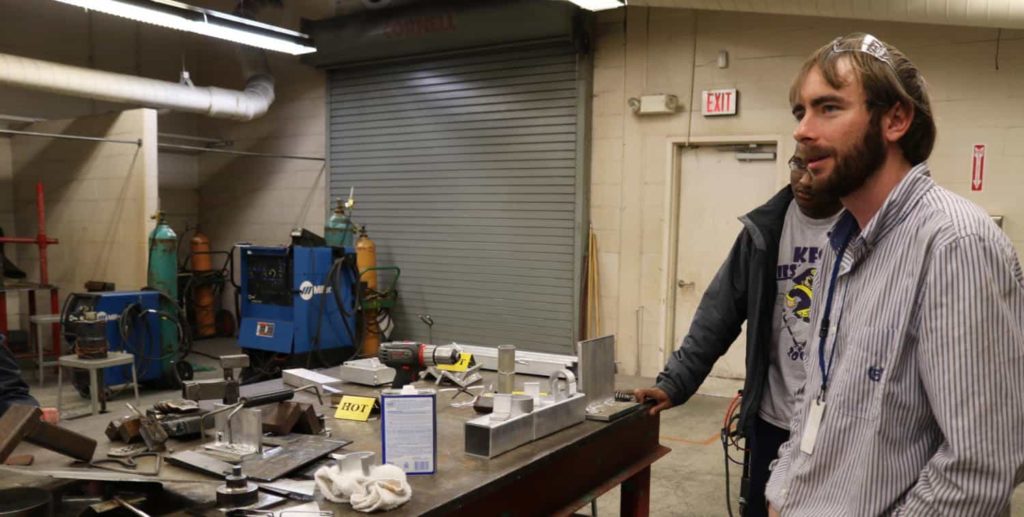
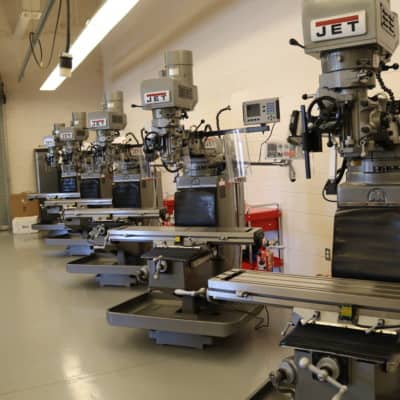
Walking into Russell Hill’s early college classroom, one notices it doesn’t look like a classroom at all. There are a few desks but the majority of the space is filled with large machinery.
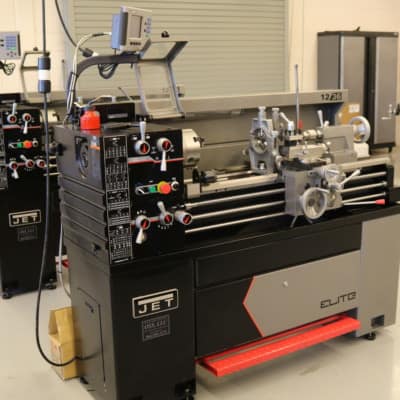
Hill explained the lathes in the room are used to turn metal down to “just about anything.”
“Rubber for tire on your car, your phone, a basketball,” Hill said. He is invested in making sure his students are prepared for jobs they can have right out of high school. Teaching students how to use the lathes — as well as $200,000 worth of advanced machinery the school system purchased through a Golden Leaf grant — is an important part of the process. Hill said being able to operate that level of machinery is impressive to employers who would typically have to train newcomers on the operation.
Partnering with Lenoir Community College’s Snow Hill campus, Greene Early College High students have the opportunity to earn an associates degree before graduating high school, along with a variety of certifications and skills that are valuable in the workplace.
Hill teaches 18 students a day that he says are eager to learn.
Before getting into how to use machinery, Hill said he makes sure kids know the fundamentals — how to read blueprints, how to adhere to appropriate safety measures, and how to read and take measurements. Hill knows the gaps in beginning workers’ skills and wants to make his students high-quality workers.
“Some people show up at the factory and don’t know how to read tape,” Hill said.
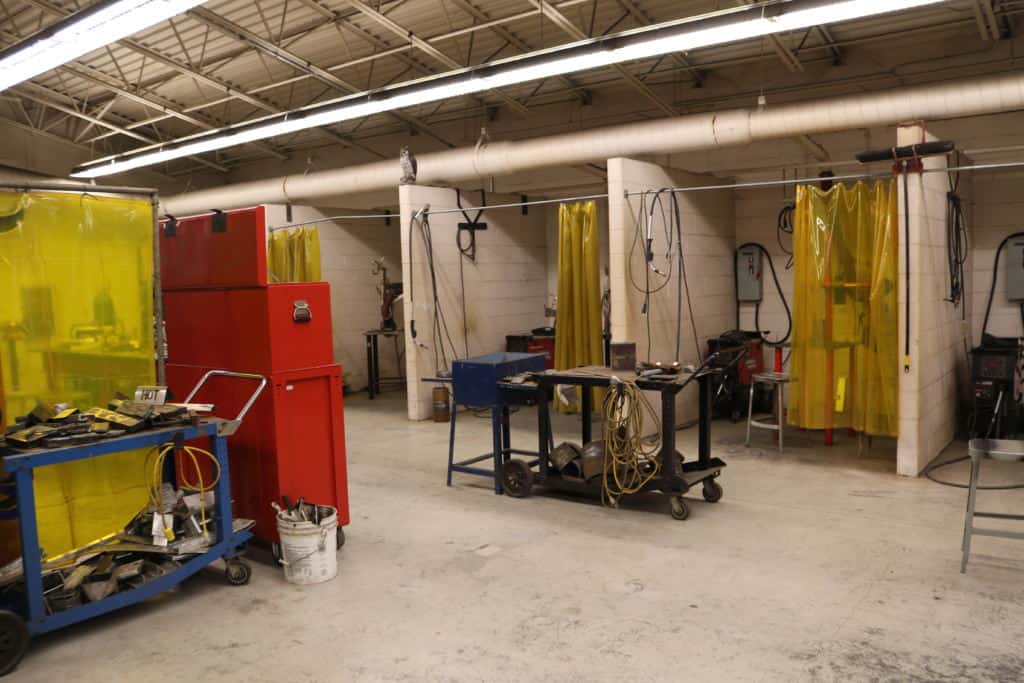
Greene County Schools Chief Academic Officer Frank Creech said the school system is partnering with local businesses to know their needs and to equip graduates with the expertise to meet those needs. He said students can become proficient in carpentry, welding, and electrical work.
“These are jobs that can get students to a point where they earn a decent living,” Creech said.
Hill said the majority of the workforce in these professions is approaching retirement age, so there is a big opportunity for students to fill those positions and make good livings.
Workforce development and work-based learning are phrases that come up often at the state level. Governor Roy Cooper mentioned workforce development as a main goal in his State of the State address to the legislature, touting NC Grow (Getting ready for Opportunities in the Workforce), a scholarship program in his budget proposal that would cover tuition and fees for recent high school graduates to attend community college.
Superintendent of Public Instruction Mark Johnson said one of his priorities is making sure students have career-oriented opportunities out of high school if they choose that they’d rather go straight to work than pursue higher education.
And Tuesday, Rep. Craig Horn, R-Union, introduced a bill to the House K-12 education committee that would require local districts to establish business advisory councils and to provide more work-based opportunities for students. If the legislation passes, the idea is that these councils would be doing the work Creech mentioned — forming relationships with businesses, figuring out how to bring work into the classroom, and closing the skills gap by exposing students to job opportunities.
Horn said he researched electricians in the state and found that the average age of an electrician is 56 years old. He said the number of electricians in the state has been cut nearly in half over the last decade. Although the state is growing in many ways, Horn said there are large empty spaces in the workforce.
“We’re a booming state,” Horn said. “The construction trades are exploding all across our state — well, almost all across our state. Part of the problem is we don’t have enough people that can wire a house, pursue plumbing. And many of these people, by the way, will end up owning their own electrical contracting company, their own plumbing contracting company, and truly have opportunities to make a lot of money.”
Hill said he has students who have gone on to be employed by businesses in the area like Spirit Aerosystems, Telair U.S. Cargo Systems, or Crown Equipment Corporation directly after school. Seeing students be successful in a field that they’re interested in, Hill said, is rewarding.
“It makes you feel like you’ve done something.”