Defining dyslexia and identifying students who have it is critical

For students with unidentified dyslexia, the effects of no intervention may last their entire lives. Dyslexia is neurobiological in origin and affects the ability to manipulate phonemes (the smallest units of sound). Understanding how a dyslexic student’s brain functions is vital to identifying and addressing it in students.
The International Dyslexia Association defines dyslexia as: “A specific learning disability that is neurological in origin. It is characterized by difficulties with accurate and/or fluent word recognition, and by poor spelling and decoding abilities. These difficulties typically result from a deficit in the phonological component of language that is often unexpected in relation to other cognitive abilities and the provision of effective classroom instruction. Secondary consequences may include problems in reading comprehension and reduced reading experience that can impede the growth of vocabulary and background knowledge.”
According to an NIH-funded study, dyslexia is not related to intelligence. In fact, research shows students with dyslexia have average to above average intelligence and can make good progress with early identification and educational instruction. Many very frustrated (and organized) parents have grown a grassroots movement called Decoding Dyslexia.
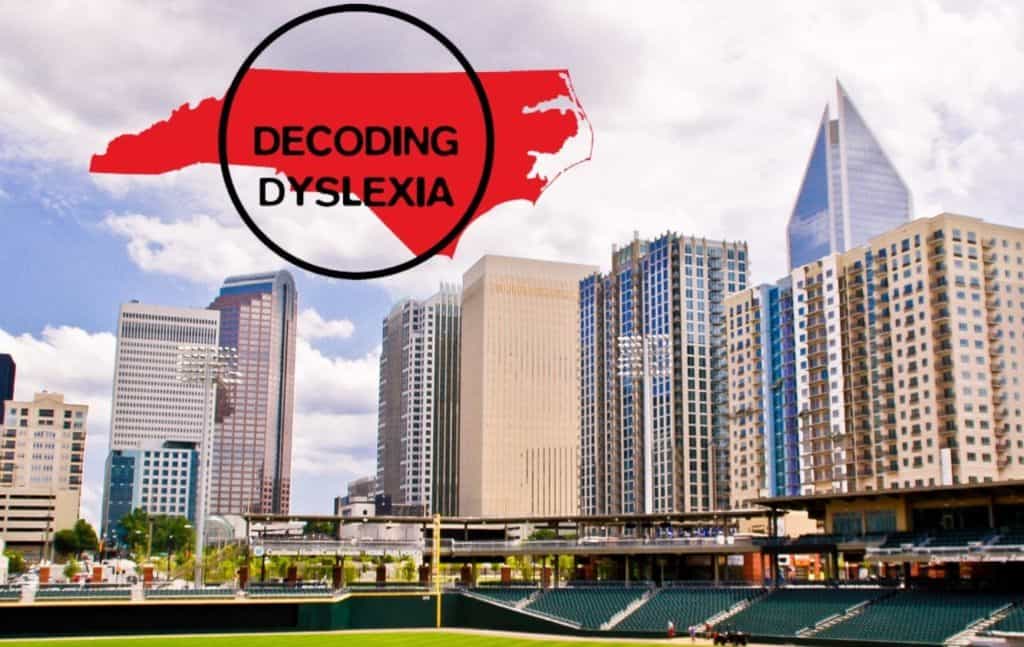
The 50 state chapters of Decoding Dyslexia are educating, advocating, and legislating for the rights of individuals with dyslexia. In North Carolina, Decoding Dyslexia NC (DDNC), is working to advocate for students and families. The work of the North Carolina chapter is made more difficult by the fact that North Carolina is one of only 11 states without dyslexia legislation or protection.
We hear from parents daily who struggle with schools that do not use the word “dyslexia” despite federal guidance from the U.S. Department of Education stating that every state and all school districts must use the word “dyslexia” and must provide identification and treatment.
Dyslexia affects as many as 1 in 5 students or 20% of our population, according to Dr. Sally Shaywitz, a leader in dyslexia research from the Yale Center for Dyslexia and Creativity. Dyslexia is the most common and well-researched cause of reading failure: 80% of children with Specific Learning Disability or SLD have dyslexia, according to the National Institute of Child Health and Human Development.
We have access to decades of research and data about dyslexia, and yet it is not being addressed deeply or accurately in our state. The long-term societal consequences are significant. In fact, approximately 80 percent of the current prison population is functionally illiterate, and research indicates that individuals with dyslexia are overrepresented in prison populations.
DDNC wants to define dyslexia so that teachers, parents, and students can utilize evidence-based interventions and make educational decisions based on valid scientific research to overcome outdated myths. When state laws identify and support students with dyslexia, educators have a working definition of dyslexia so that they may provide appropriate instruction and accommodations. Students, parents, and teachers are surprised when they discover a brilliant and inquisitive child lacks the skills required for reading. Unless a student is taught using early direct instruction or structured literacy (SL), the child can fall behind academically as well as emotionally.
Students with dyslexia are easily identifiable with a screening process that includes: 1. Phonemic Awareness (PA), 2. Rapid Automatized Naming (RAN) and 3. Letter-Sound Knowledge (LSK). Current early intervention rarely includes the necessary screening procedures.
Just as with hearing and vision, early identification of dyslexia at the outset of school (in kindergarten) is the optimal time for screening and beginning intervention or instruction that significantly improves reading outcomes. The earlier the identification, the more successful the outcome. More importantly, direct, explicit, evidence-based instruction would benefit all children in North Carolina. If we addressed reading instruction using Structured Literacy (SL), all students, not just students with dyslexia, would benefit.The results of saving state resources by closing the reading achievement gap and potentially shrinking the prison populations could have significant positive outcomes.
DDNC has five state leaders including Lisa Eakins, Christie Eakins, Jennifer McBee, Donna Gargett and Linda Cansler William; four parent advocates: Jessica Flegel, Jeanette Meachem, Megan Mehta, and Kristy Privette; and one dyslexia consultant: Susan Lowell.