
Debate on role of charter schools divides panel
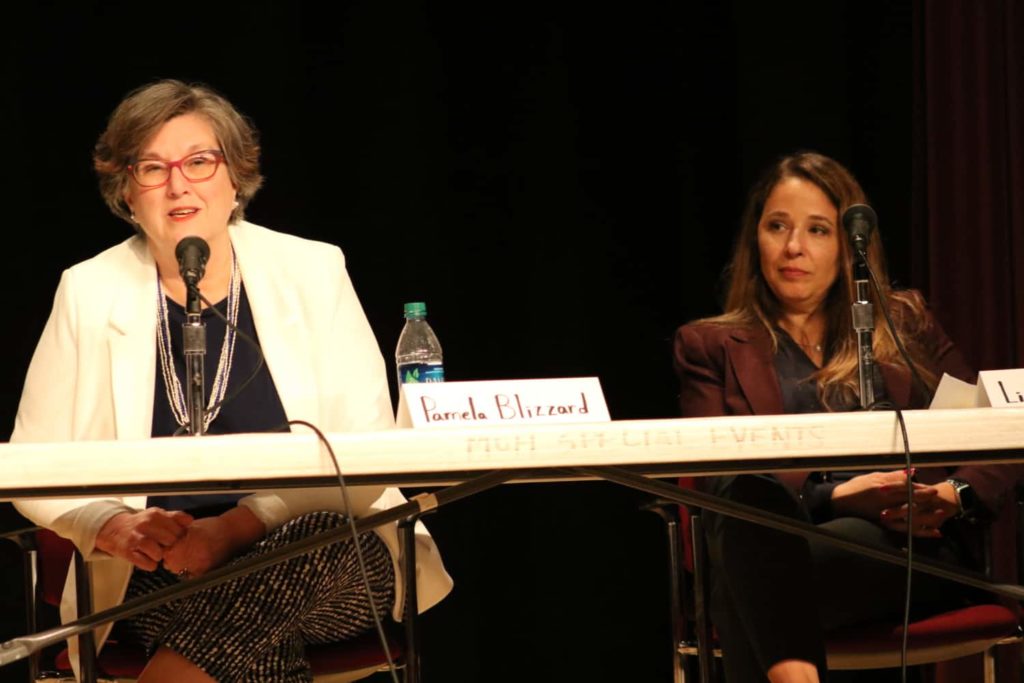

Five panelists argued over the place charter schools should occupy in the state’s educational system Monday night.
To Helen Ladd, the Susan B. King professor emerita of public policy and economics at Duke University, charter schools should be confined to the “fringe” of the system — with a few schools offering new ideas and sharing them with traditional public schools.
“If you limit them that way, you can pay attention to quality assurance,” Ladd said. “You can authorize the best charter school proposals, and then make sure they have the support they need so that they can work well.”
But Lisa Gordon Stella, co-chair of the NC Association of Public Charter Schools, said the state needs more, not fewer, charter schools. She argued charters and charter-like models, with decentralized control and flexibility, are the beginning of needed reforms in a changing landscape.
“Why are we sending our children to schools that are not changing with the information age?” Stella said. “We should all be outraged and demand change.”
The News and Observer, in partnership with ABC 11, hosted the event as one of the monthly community forum events. Monday’s conversation was moderated by Ned Barnett, N&O editorial page editor.
Natalie Beyer, Durham board of education member and Parents Across America member, said she wants more accountability attached to charter schools which receive taxpayer money. Beyer suggested a magnet school model instead.
“In my mind, that is what a charter school should actually be,” Beyer said. “Better charter school policy would be for charter schools to be operated under local boards of education, so that you, as a taxpayer in the community, could go and vote for a board of education member to have oversight of the charter school.”
Tawannah Allen, associate professor in the School of Education at High Point University and member of Bridges2Success, an organization that supports male students of color throughout their educational experience, said the flexibility charters are given helps better serve specific populations in creative ways.
Allen is on the board of Global Scholars Academy, a high-poverty and high-minority charter school in Durham. She said students from low-income families, often students of color, are falsely associated with low academic standards and outcomes.
“… How do we look at creative ways of educating kids of color?” Allen said. “How do we look at engaging them? And a benefit of charter schools is that … they do have the innovation and the creativity to engage kids so that learning can be optimal.”
Pamela Blizzard, managing director and founder of Research Triangle High School, a charter school, said she sees the role of charter schools as an important one. “This is a ship that has sailed,” Blizzard said of the charter movement.
“I would welcome a conversation tonight to talk about how charters, as this unique piece of the public education system, can do more for our students,” Blizzard said. “What innovations can we bring with the flexibility and site-based control that we do have, that’s in our hands, to help all children succeed, and how can we increase the opportunity for us to do that?”