
Commission moves forward with new rules for educator preparation programs

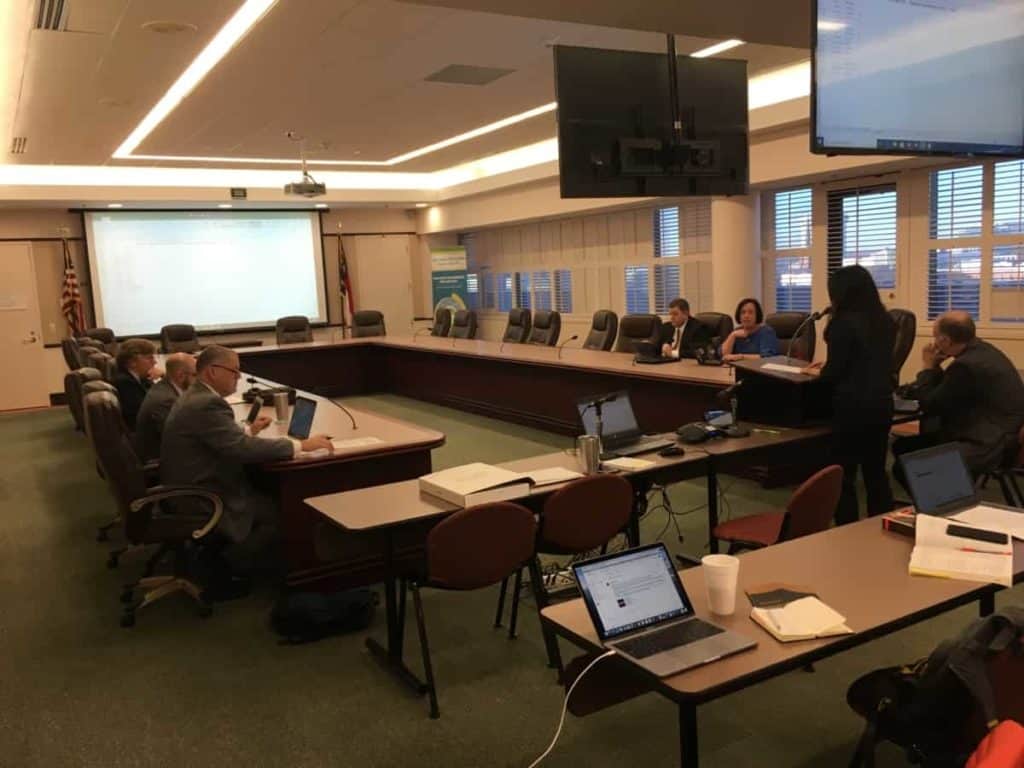
North Carolina’s Professional Educator Preparation and Standards Commission (PEPSC) signed off on a new plan for evaluating educator preparation programs (EPPs) today.
Under the new plan, educator preparation programs would be judged based on the performance of an EPP, its retention rate, and stakeholder perceptions.
The new criteria are an attempt to circumvent a potential problem written into Senate Bill 599, which created the commission. The law establishes the sanctions EPPs should face if their scores for these performance measures fall short.
“This is the culmination of a little more than a year’s work,” said Andrew Sioberg, director of educator preparation for the state Department of Public Instruction (DPI).
The law as written essentially says that if EPPs fail on any one of the current required accountability standards, they would be sanctioned. If EPPs repeatedly fail, this could lead to probation and eventually revocation of state authorization for the EPPs to produce teachers. All the criteria are weighted equally, so the end result is that an EPP could do great on two criteria and less great on a third and still face sanctions.
Additionally, the law requires not only that EPPs as a whole meet certain performance targets, but that subgroups do as well. However, some EPPs have relatively small gender, racial, or ethnic subgroups, meaning that poor performance by these groups could lead to EPP sanctions.
The new accountability model would give different weights to different performance targets. Initially, it was thought the accountability model would have four domains, and an example was given of what that might look like.
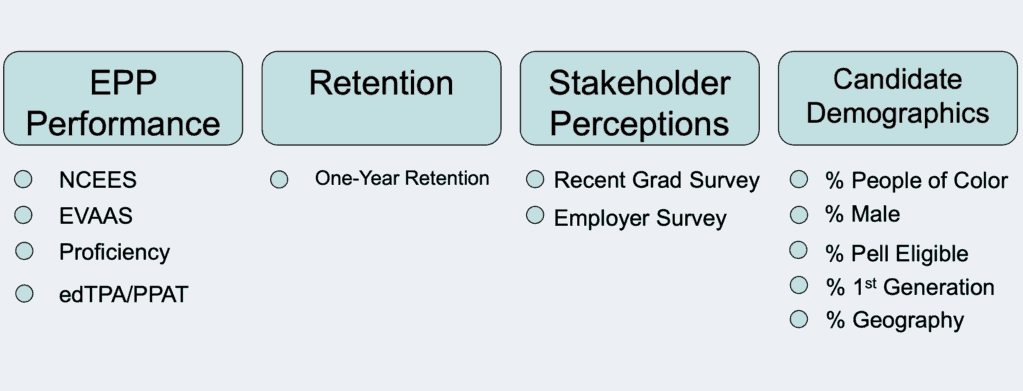
The commission was also shown a possible weighting formula for the four-domain model. Under the example, the highest weight would go to EPP performance. That would be weighted for 45% of the total score. Retention would be 10%, stakeholder perceptions would be 35%, and candidate demographics would be 10%.
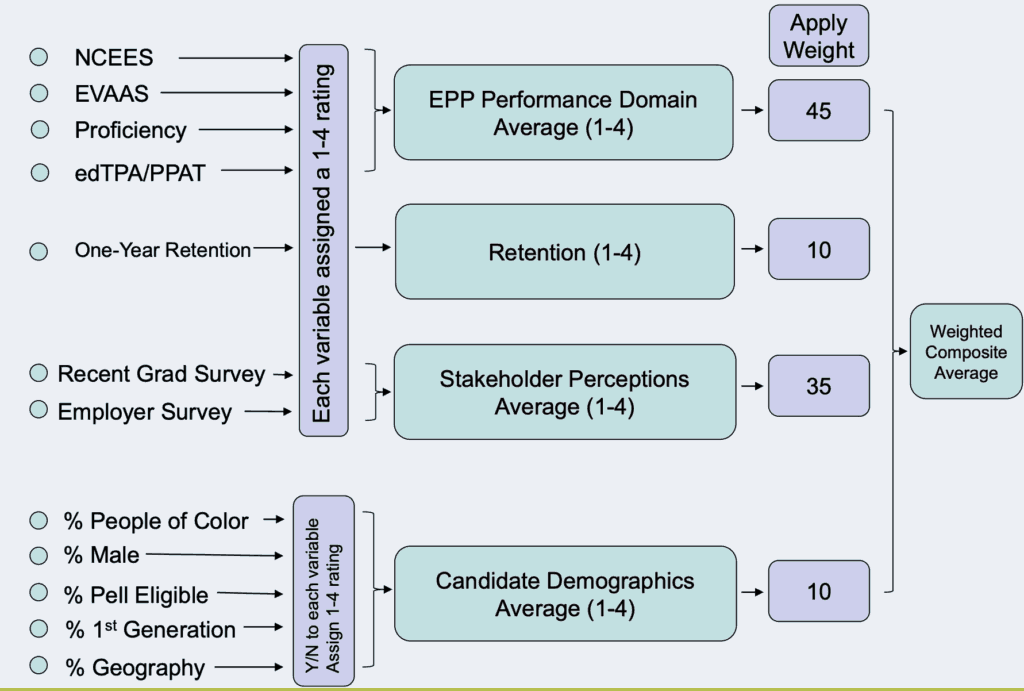
Ultimately, the commission decided to have three domains, and make the fourth domain — demographics — a two-year pilot domain so that the state could collect data about the potential consequences of actually incorporating it into the accountability model. Under that plan, demographics wouldn’t impact the score an EPP receives.
The commission members all agreed that doing something about ensuring diversity at educator preparation programs is important but decided more information was necessary before incorporating it into the accountability model.
The commission also decided to weight the three remaining domains as follows:
- EPP Performance: 55%
- Retention: 10%
- Stakeholder Perceptions: 35%
Making demographics a pilot domain was done to address concerns about the ability of educator preparation programs to meet the standard.
Sioberg said some stakeholders have expressed concern about the ability of educator preparation programs when it comes to this area. For example, if an educator preparation program was pulling from a college population that was mostly white and female, that may make it difficult to meet diversity requirements through no particular fault of their own.
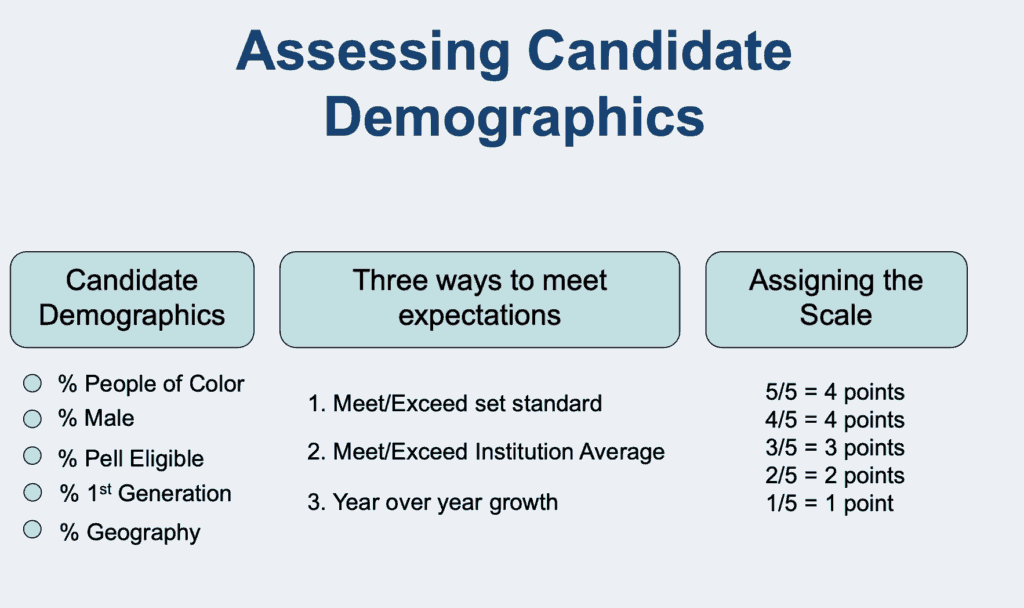
There was considerable discussion about the components of the candidate demographics “domain,” with concerns being expressed about how certain demographics would be determined, and questions about whether the scale needed to be adjusted so that colleges that wouldn’t be able to meet a demographic — such as an all-female school — wouldn’t be unjustly disadvantaged.
One potential way to address this would be to give educator preparation programs different ways to meet expectations in this area. For instance, one way to meet the expectation could be to meet or exceed the institution’s average in that demographic.
The accountability model will go next to the State Board of Education in January. From there, it will be passed on to the General Assembly in February for a final decision. This whole process was made possible by another law, House Bill 107, which gave the commission the leeway to come up with “a formulaic, performance-based weighted model for the purposes of comparing the annual report card information between each educator preparation program.”