At Woodfin Elementary, urgency, trust, and small groups are changing early literacy outcomes after Helene

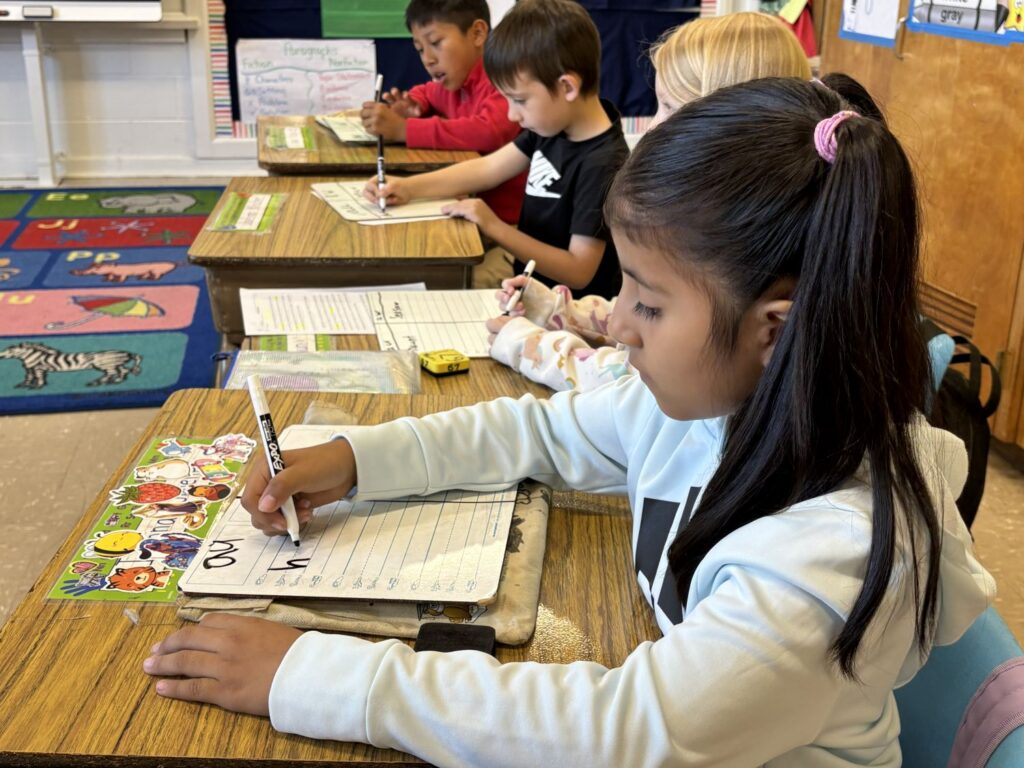
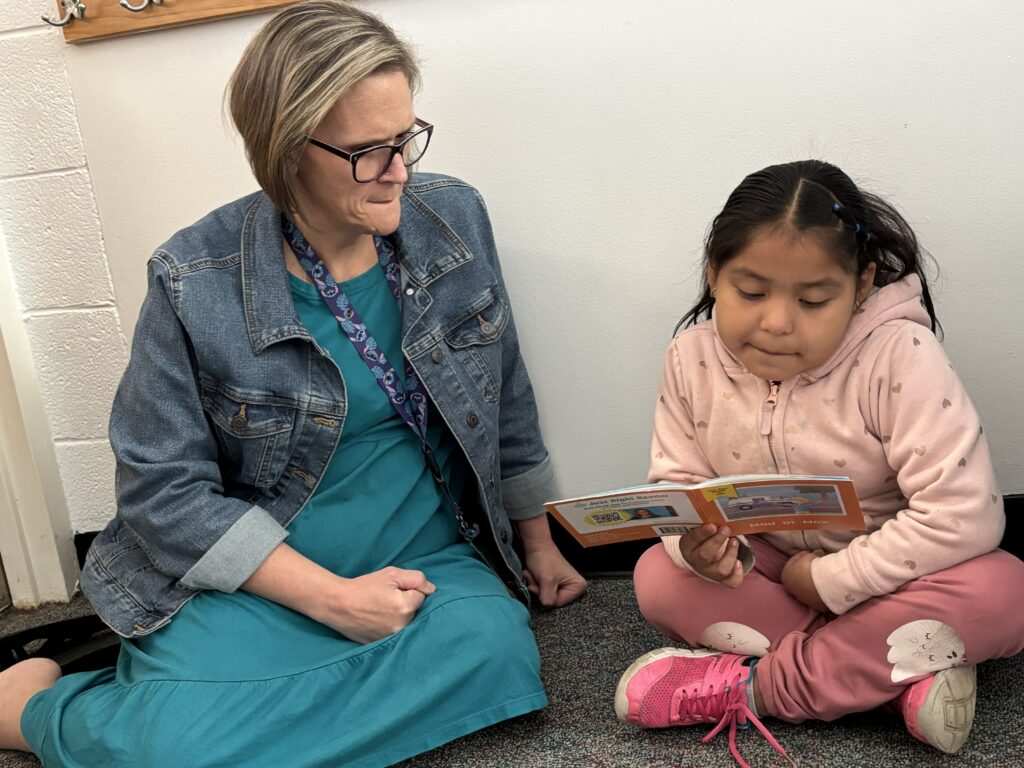
At Woodfin Elementary School in Buncombe County, kindergartners are already reading decodable texts aloud with pride. First graders move fluidly through “Walk to Read” groups based on current data. Staff members talk about double and triple dipping students by providing extra targeted small-group instruction during the school day to accelerate learning.
That momentum matters anywhere. At Woodfin, it carries added weight.
When Hurricane Helene struck western North Carolina in September 2024, Buncombe County was among the hardest hit areas. Flooding, landslides, displacement, and extended disruptions to water and power reshaped daily life across the region. In Buncombe County alone, at least 36 deaths were directly tied to the storm, and hundreds of structures were destroyed.
For the school principal and teachers, recovery meant more than reopening classrooms. It meant rebuilding routines, restoring trust, and regaining lost learning time with urgency.
Starting over
Principal Miranda Wheeler is in her second year leading the school. She arrived in July, just months before Helene.
“By the time we came back, we had to basically start over,” Wheeler said, describing the interruption to learning after families were displaced and students relocated to live with relatives outside the district.
Now, the school is seeing stronger results than last year.
“This year we have so many kindergarten students that can already read decodable texts, and they are so excited to read to you,” she said.
Woodfin serves a community where nearly 59% of students are Hispanic and 48% are English learners. Many families are navigating economic pressures and, more recently, broader fears tied to the national immigration climate.
Wheeler said relationships have been essential.
“Our Hispanic families have learned to trust us,” she said. “This is a result of the relationships our staff have built with the families and communities.”
A system built on data and flexibility
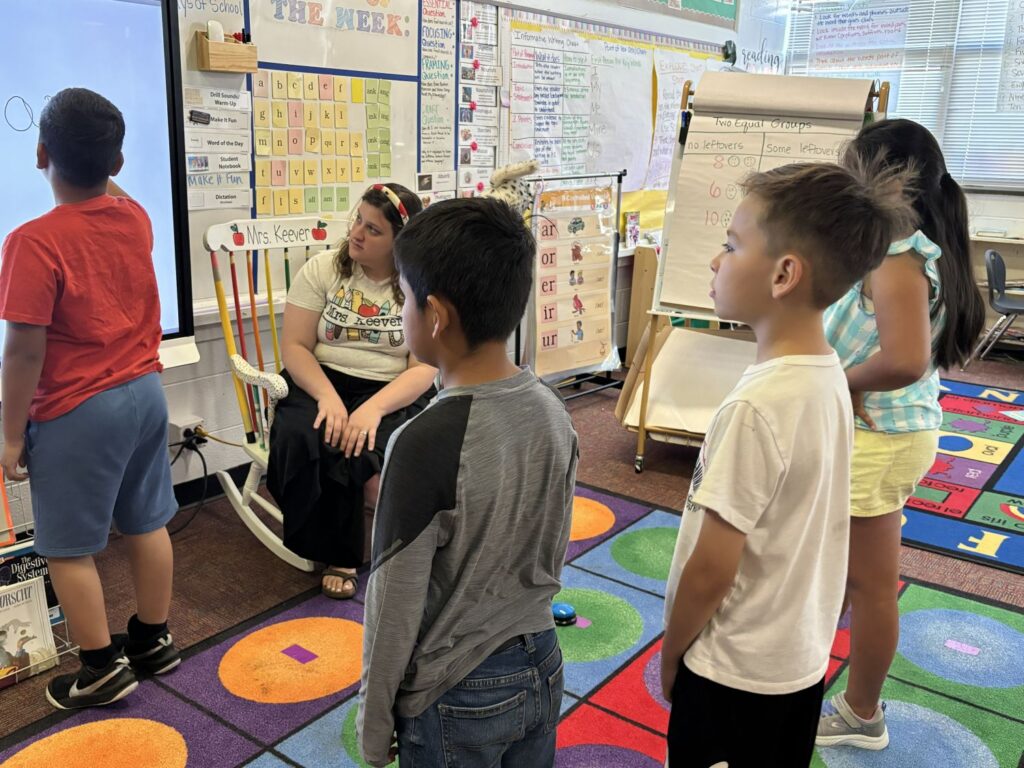
Teachers describe a school-wide approach that uses regular assessment data to group students by need and quickly adjust support.
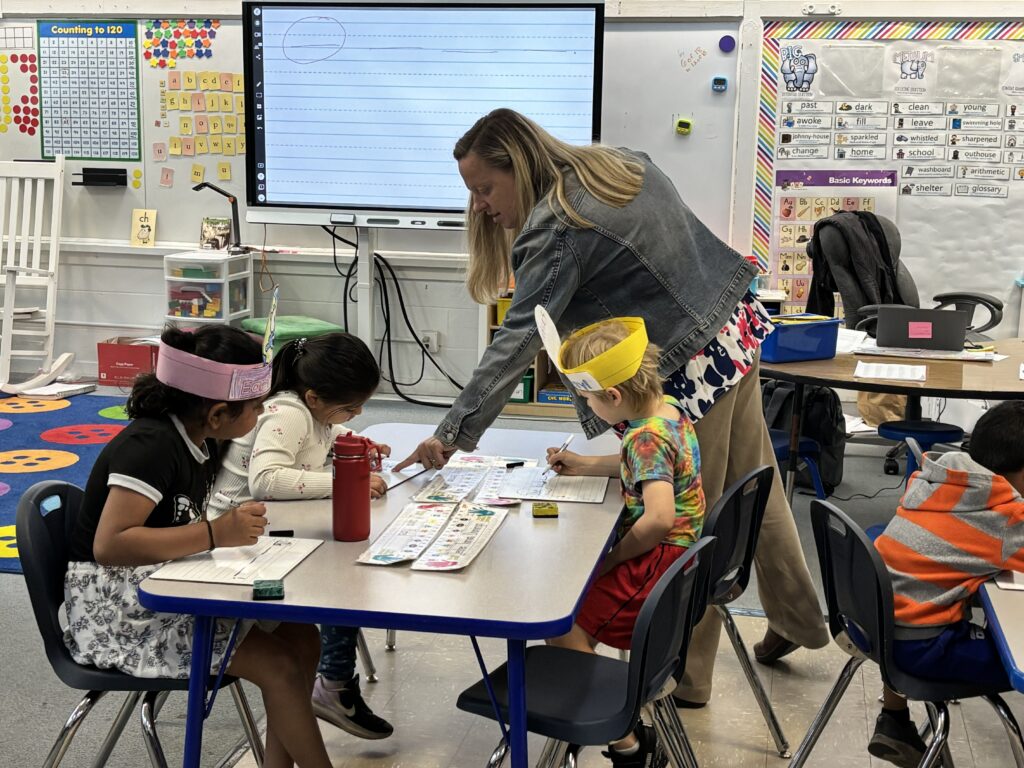
First grade teacher Nikki Surrett said teams maintain a shared spreadsheet of student data and meet regularly to review progress. She said the goal is for students to score at 80% or above.
Teachers meet monthly to do a deep dive into student data progress across a continuum of literacy skills. The purpose of the meeting is to monitor whether students are making adequate progress and whether any students need to transition to a new group based on growth or gaps.
That flexibility is especially important for multilingual learners and students entering school with minimal to no prior experiences.
“Kindergarten is not a prerequisite in North Carolina, nor is pre-K,” Surrett noted.
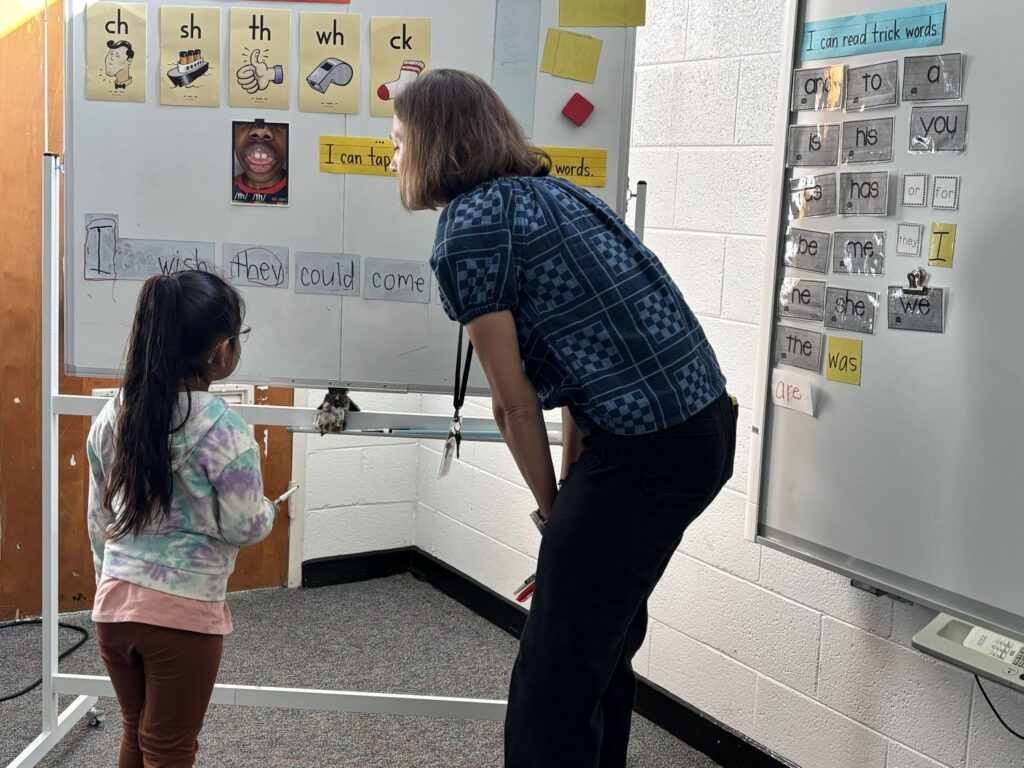
Rather than waiting for students to fall further behind, staff intervene quickly with additional small-group instruction layered onto core reading instruction.
Everyone is growing
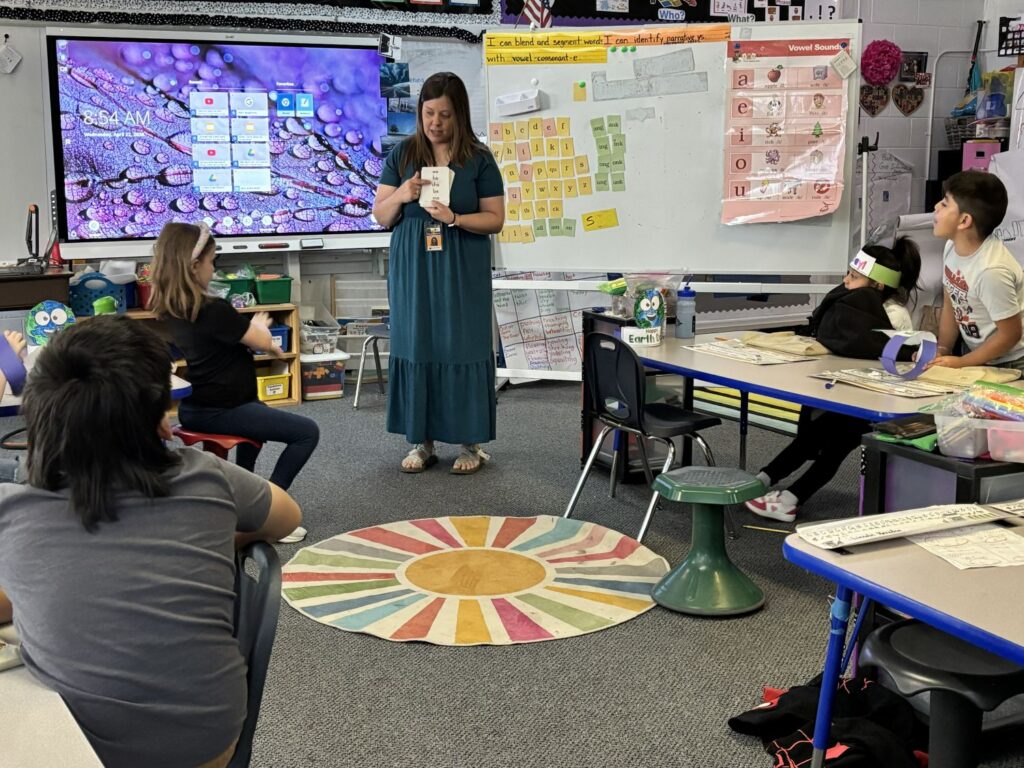
Kindergarten teacher Peggy Morgan said this year’s incoming class arrived with a wide range of readiness levels. Some students entered already recognizing letters, others knew names but not sounds, and some had little prior literacy exposure.
Teachers began with whole-group core instruction, then used data to create targeted groups.
Only three of Morgan’s 18 students currently need an extra review group. Those students still receive grade-level core instruction while getting added practice with foundational skills and automaticity.
“They are already close to finishing in only two weeks, although it’s a six-week unit,” Morgan said. “This is the power of double dipping students in small groups with low teacher-student ratios.”
She emphasized: “Data continues to tell us that every kid has shown growth.”
Leadership, buy-in, and community support
N.C. Department of Public Instruction Early Literacy Specialist Melissa Solesbee credits Wheeler’s leadership for helping the school shift its approach.
“She came to me and said we have to do something different,” Solesbee said. “She listened, talked through it, and made it a priority. The staff followed her lead.”
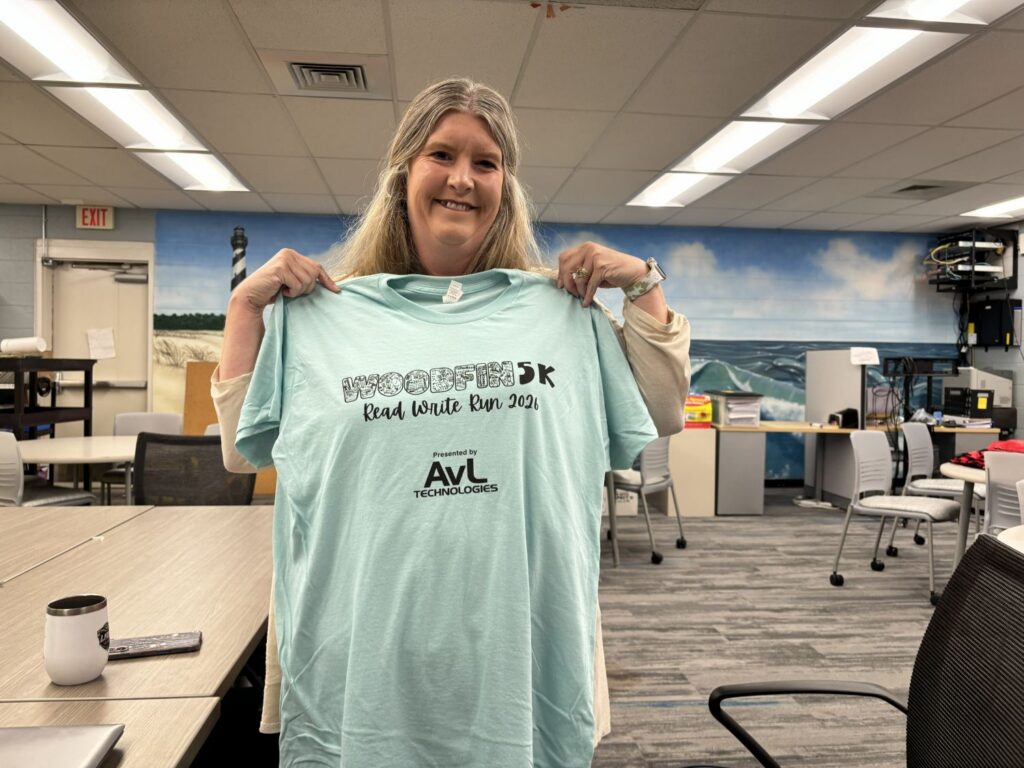
The school’s efforts have also been strengthened by community partnerships. Each year, the Woodfin 5K helps fund a tutoring position. The event has raised $180,000 since 2013 to support literacy-related teachers and resources for students, Board Chair Charlie Glazener said.
“Over the past 13 years, the Woodfin 5K Board team of a dozen volunteers has, with pride and pleasure, promoted and managed 11 Woodfin 5K family/neighborhood events,” Glazener said. “… We are delighted that hundreds of young students have improved these skills as they prepare for successful school and life pathways.”
Additional donors have supported after-school tutoring, expanded reading support for upper elementary students, and professional development focused on serving multilingual learners.
“Our community partners don’t just talk about supporting us,” Wheeler said. “They do it.”
A model of urgency
Woodfin staff repeated the same two key factors to the growth they are seeing this year: intention and urgency.
Not urgency rooted in panic, but urgency grounded in the reality that early literacy windows matter and that every month counts for students recovering from disruption.
At a school still carrying the aftershocks of disaster, teachers have chosen not to lower expectations. Instead, they tightened systems, deepened relationships, and expanded support.
The result is visible in classrooms, where young readers are sounding out words with confidence and where educators believe catching students up is not only possible, but already happening.