
After Helene, Transylvania nonprofit SparkPoint fosters connection and well-being
Recently, the supervisors at ALULA started noticing something about rain. The company, formerly Transylvania Vocational Services, has employed adults with disabilities here since 1967, blending and packaging granola pouches, dry mixes, supplements, and the dry milk that once went to the U.S. Agency for International Development (USAID).
After Hurricane Helene, every time it rained, the people on that line couldn’t focus. Tasks went unfinished, the anxiety didn’t lift, and their supervisors didn’t know how to help. So they called SparkPoint, a Transylvania nonprofit fostering community well-being rooted in connection.
Nobody trains a line supervisor in emotional recovery. ALULA’s managers spotted the pattern and went looking for help. Having come through the same storm, “The managers hadn’t received support themselves,” said Sarah Hankey, SparkPoint’s founder and director, “let alone a population of people that are already different thinkers.”
 Sign up for the EdWeekly, a Friday roundup of the most important education news of the week.
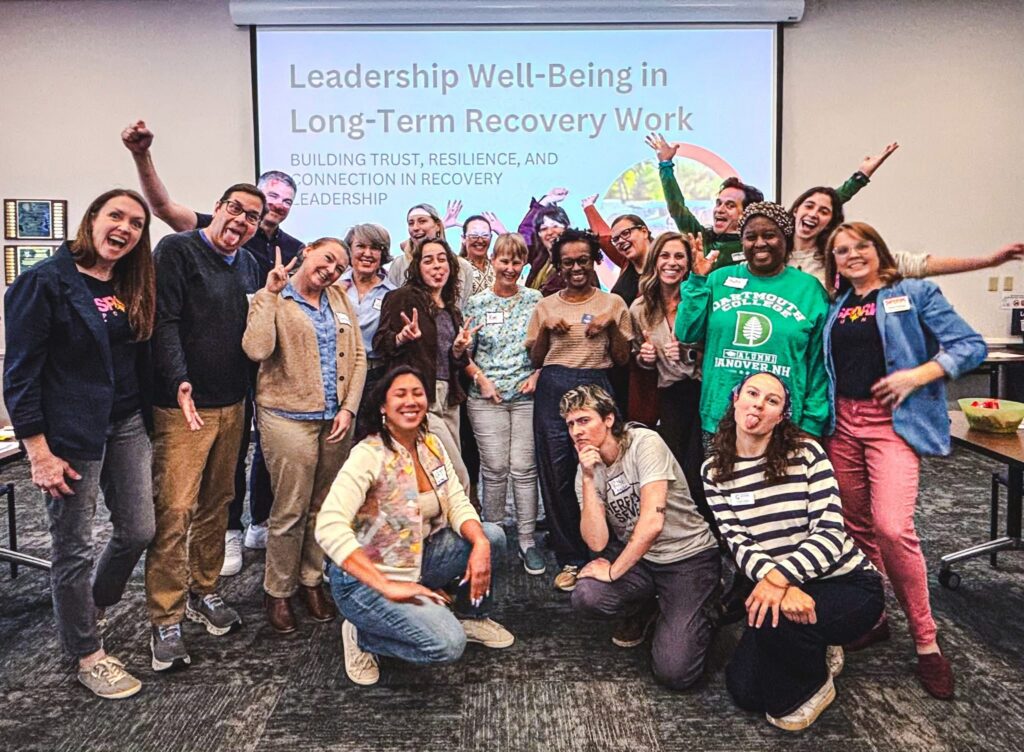
SparkPoint designed 10 hour-long sessions for ALULA that are running twice a month through December. “These are blue-collar workers. Some of them never have received any emotional regulation tools or support, and the language is all new to them,” Hankey said.
That’s how it works. Someone names a problem, SparkPoint builds a workshop around it, and grant money covers the cost so participating nonprofits pay nothing; for-profit businesses who work with SparkPoint tend to pay on a sliding scale. The ALULA sessions came out of a phone call. So did the leadership well-being series, which Hankey says has been very popular, and draws people struggling to manage recovery in a business, “whether they’re the CEOs, or they’re the small business owner of a bakery.”
It came out of a four-year experiment. In 2019, Brevard signed on to the Blue Zones Project, run by for-profit Sharecare and funded by Pisgah Health Foundation. Hankey worked on it, then ran it, and the town became the country’s 50th certified Blue Zones community.
When the four years ran out, Hankey and Charlotte Shackleford, SparkPoint’s program manager, had to decide what to carry forward. Blue Zones had been good at reaching people already minding their health — the ones at the yoga class or the natural-foods store. What reached everybody else was harder to put in a grant application: potlucks, walking groups, workshops about purpose.
“When you brought people together, consistently, they had each other’s back and making healthier choices became a little easier,” Hankey said.
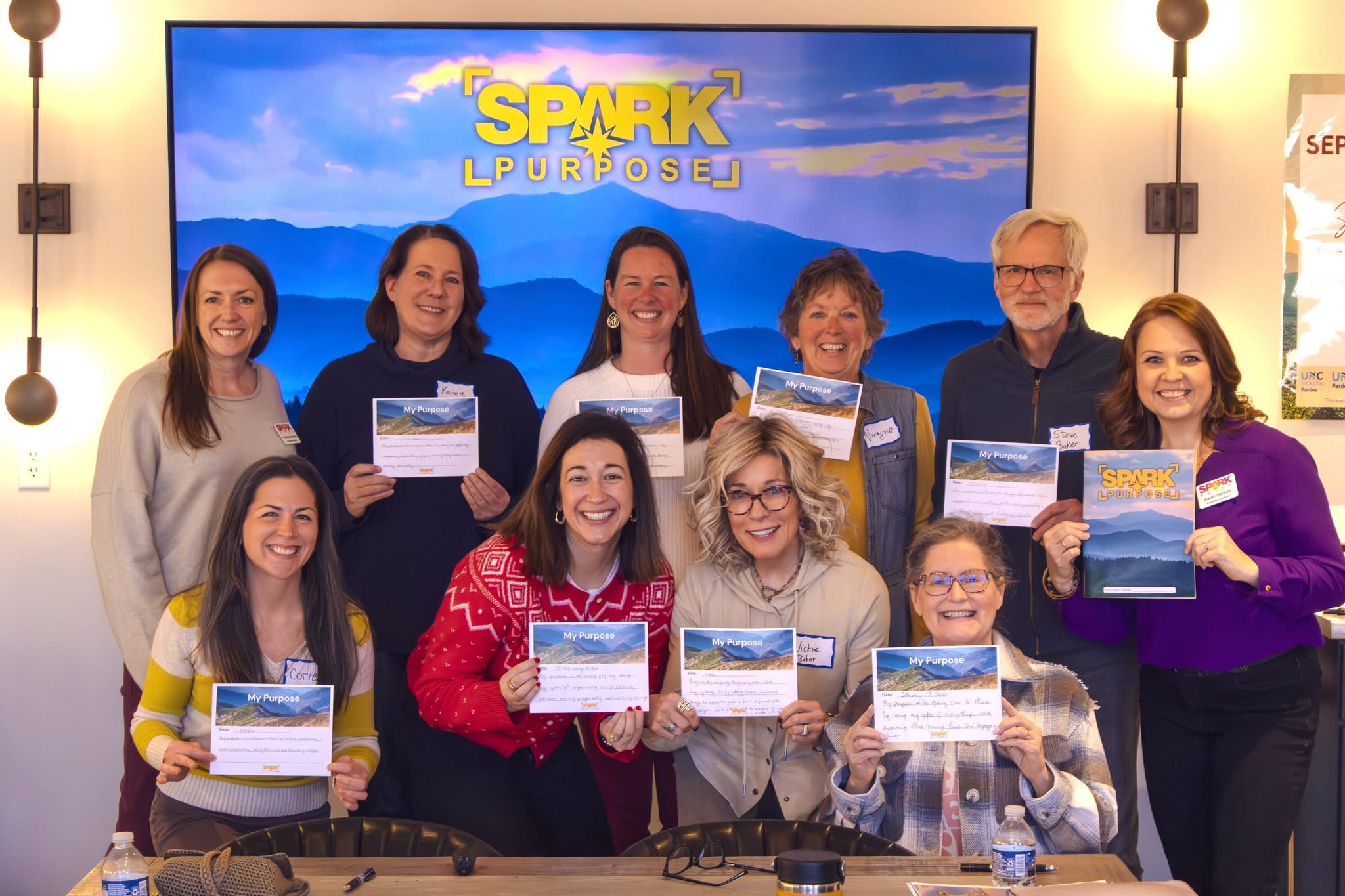
One of those workshops survived. Rewritten with current mental health and emotional intelligence data and renamed SparkPurpose, it’s offered for every senior in Transylvania County Schools and anyone at a hinge point, ending by pointing people toward volunteer opportunities with local nonprofits or ways to stay connected to their community.
“Your presence on campus today was wonderful and really made a lot of students and staff smile,” wrote Marion Hawsey, a Blue Ridge Community College student. “You made a great impact on campus.”
SparkPoint opened April 1, 2023 — the day after Blue Zones closed — with seed money, donated office space, and two people.
With the help from Dogwood Health Trust, a Centers for Disease Control and Prevention (CDC) planning grant came next — which almost never happens for a nonprofit that new — and it bought a year of sitting down with 40-odd nonprofits and residents to write a four-year plan they called Wellness Rooted in Connection. Four years of funding was supposed to come with the grant and planning process, but federal funding cuts took it within a year.
Then Helene.
“It was a wake-up call, but it also provided the silver lining,” Hankey said. Isolation is hard to sell as a health crisis; a county with no phone service or power is not. SparkPoint moved into psychological first aid and long-term recovery work, funded by the American Red Cross through November.
“It wasn’t a nice to have,” Hankey said. “It was a have to have.”
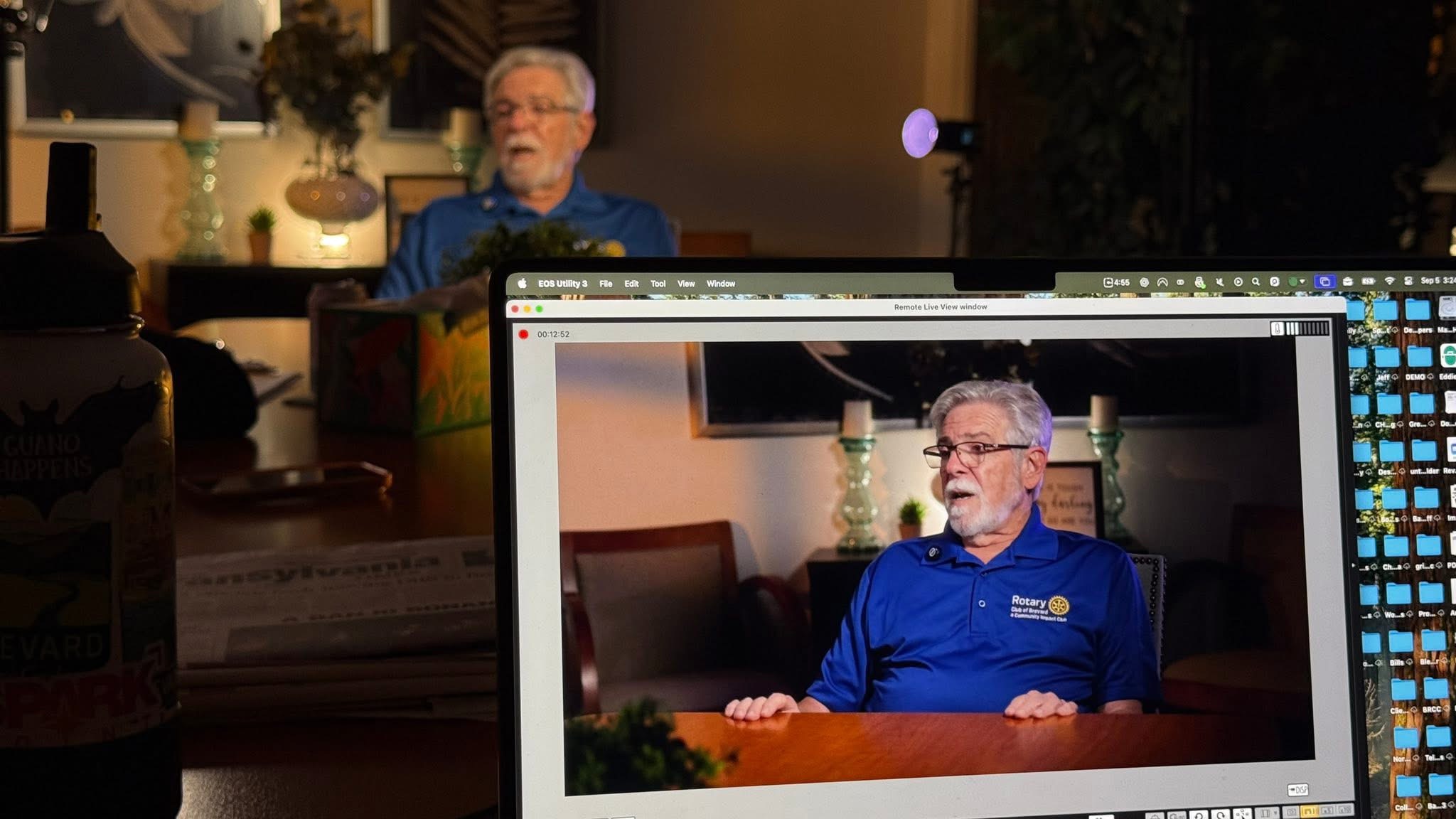
Jeff Bannister, the marketing manager and a founding board member, led the team’s story collection. His team recorded 120 interviews at 10 sites and stripped out names and identifying details before the stories went into a database anyone can search. “It’s community data,” he said. “Nobody owns it. It’s open to everybody.”
The prompts stayed off the topic of damage. Who showed up for you, and what did your neighbors do?
“We kind of really found the line of not living in the trauma of it,” Bannister said. The question he likes best still comes at the end: “Who should hear this? Should the county hear this? The police, your first responders?” Then people are asked to name their own story.
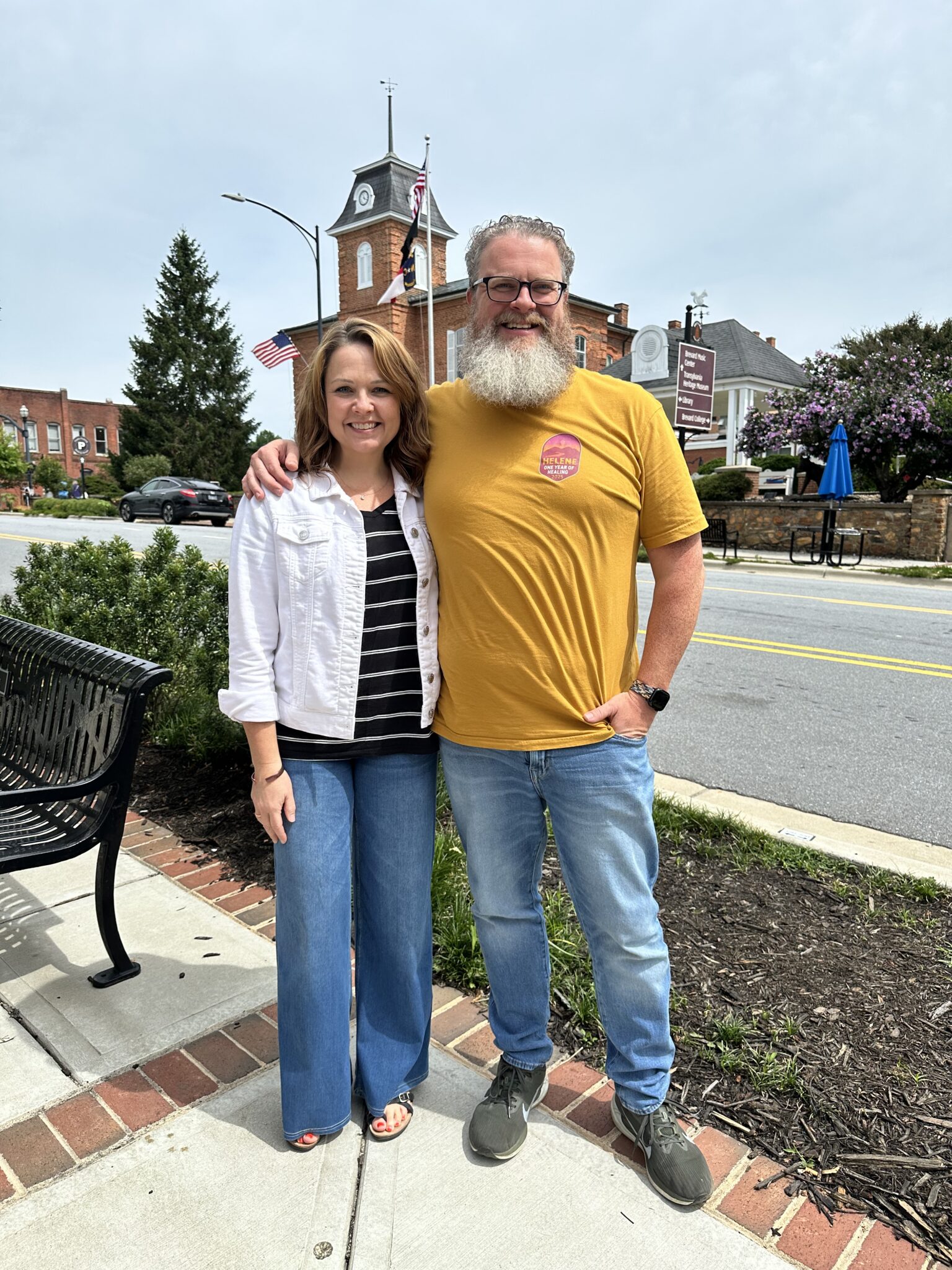
“This is a very insular community,” he said. Trust had to come first. Then the stories went back out to the county in a 45-minute film cut from the interviews and shown at a public event, so people could see how many had relied on each other and see neighbors stepping up.
Last year, SparkPoint counted 3,622 people across 68 events, about one in nine county residents. “We really spent time getting out there and talking to them and going to them,” Bannister said. Out of the 120 interviews, 42 people were connected to help. “They didn’t know the resources existed.”
The listening kept surfacing a type of person: not an agency, but a neighbor who knew who to call, which road was open, where the water was.
In May, SparkPoint put more than 50 people in a room with the American Red Cross and FWRD Transylvania County (a long-term recovery group), not to launch anything, but to listen. Community Connectors grew from that, aiming at Connection Points countywide. No title required. “This group is one of our favorites,” said Dan Courtine, founder of Jameson’s Joy. “They put feet in motion to back up their words, all with the hope of building our community up.”
Those 42 people connected to help are the case for what SparkPoint wants to build next. If the problem is that help exists, and nobody can find it, the answer is a door people can walk through. The room is already theirs: 1,700 square feet on Caldwell Street, where United Way used to be. Plans call for a resilience hub — a lobby of other nonprofits’ resources, a volunteer desk, a shared workshop room, and StoryLab, where Bannister trains paid fellows to do production work for nonprofits that can’t afford a specialist. The nonprofit is still raising funds to finish the hub.
“Western North Carolina is still recovering, and much of the best work is done by small organizations that know their neighbors,” said Sen. Kevin Corbin, R-Macon, who represents Transylvania County. “SparkPoint earned that trust the hard way, by showing up. The Resilience Hub is a good investment, and I want to help them get there.”
On Oct. 1, SparkPoint will host the N.C. Rural Health Association’s Western North Carolina convening, its first in the region since COVID. The event will convene hospital CEOs, legislators, and nonprofit directors in mixed “families” for a day-long connection event with a federal rural healthcare simulation experience.
“The root of all of us thriving lies in our ability to tune into who we are, and how we want to show up in the world,” Hankey said. “If you open up, other people open up to you.”
Bannister calls the sum of the work “social infrastructure: all the ways you connect people once a group gets bigger than one, like a road system.”
If you want to help — by volunteering, becoming a Community Connector, or supporting the new space — contact SparkPoint: P.O. Box 2452, Brevard, N.C. 28712; 828-554-7010; info@yoursparkpoint.org; yoursparkpoint.org.
The Dogwood Health Trust supports the work of EdNC.